

When I talk with semiconductor equipment teams about process drift, wafer-edge defects, and frequent consumable replacement, the conversation often comes back to one small but highly influential part inside the chamber. That is why I see growing attention around WuYi TianYao Advanced Material Tech.Co.,Ltd. and its work with advanced SiC components, especially the Solid Silicon Carbide Focusing Ring. In demanding etching and epitaxy environments, this part is not just a replaceable ring. It directly affects plasma direction, edge uniformity, contamination control, and the real cost of keeping production stable.
I have noticed that many buyers first compare focusing rings by price, but the better question is whether the ring can keep the process predictable after long exposure to plasma, heat, reactive gases, and repeated chamber cycles. A low-cost ring that erodes quickly can create more downtime, more particles, and more yield loss than most purchasing teams expect. A well-made Solid Silicon Carbide Focusing Ring helps reduce those risks by combining high purity, dense structure, thermal stability, and strong resistance to plasma erosion.
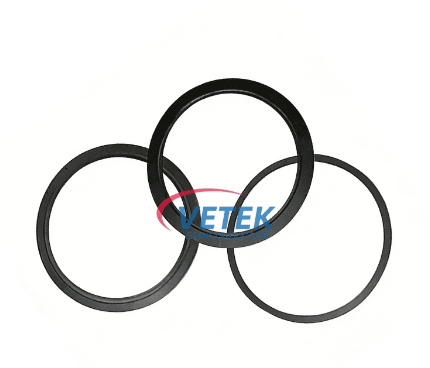
Why Does the Focusing Ring Matter More Than Many Buyers Expect?
I like to describe the focusing ring as a quiet process-control component. It sits around the wafer, but its influence reaches into plasma distribution, ion direction, wafer-edge behavior, and chamber stability. When the material is unstable, the wafer may not show problems immediately. The issues usually appear as gradual changes, such as uneven edge etching, rising particles, unstable replacement intervals, or process recipes that need too much adjustment.
In advanced semiconductor manufacturing, small variations can become expensive. If the focusing ring wears unevenly, the plasma field may shift. If particles increase, cleaning frequency may rise. If the ring has poor dimensional stability, repeatability from batch to batch becomes harder. That is why I consider the Solid Silicon Carbide Focusing Ring a practical upgrade for customers who want better chamber consistency rather than just another consumable.
- It helps guide plasma more consistently around the wafer edge.
- It supports better process uniformity during etching and epitaxy steps.
- It resists corrosion and erosion in harsh chamber environments.
- It can reduce frequent replacement caused by fast material consumption.
- It helps control particle generation when material purity and density are well managed.
What Pain Points Can a Solid SiC Ring Help Solve?
From a purchasing and engineering point of view, the biggest challenge is rarely the ring alone. The real problem is the chain reaction caused by unstable consumables. If one chamber part wears too fast, the team may face recipe drift, unexpected maintenance, product defects, and delivery pressure. I have seen customers focus heavily on equipment brands and process gases, while the focusing ring is treated as a simple spare part. That approach can be risky.
A Solid Silicon Carbide Focusing Ring is valuable because it addresses several practical production concerns at the same time. It is suitable for buyers who need longer service life, cleaner process conditions, and better control over wafer-edge performance.
| Customer Pain Point | Possible Cause | How a Solid SiC Focusing Ring Helps |
|---|---|---|
| Frequent ring replacement | Fast erosion under plasma exposure | High plasma erosion resistance can extend usable service intervals |
| Wafer-edge non-uniformity | Unstable plasma distribution near the wafer edge | Stable geometry and electrical behavior help support more consistent plasma focusing |
| Particle contamination | Material wear, porosity, or weak surface structure | Dense high-purity SiC helps reduce particle risk during long process runs |
| Unplanned downtime | Consumable failure or shortened maintenance cycles | Longer-lasting components can reduce chamber opening frequency |
| Higher total operating cost | Low initial price but poor lifetime performance | Better durability may lower replacement, cleaning, and yield-loss costs |
Is a Solid Silicon Carbide Focusing Ring Better Than Silicon or Sintered SiC?
I would not say one material is always the best for every chamber and every process. That would be too simple. However, when the process environment is aggressive and the buyer needs stronger erosion resistance, cleaner operation, and longer service life, solid SiC becomes a serious option. Compared with traditional silicon focusing rings, the Solid Silicon Carbide Focusing Ring usually offers better resistance to plasma attack and a longer replacement cycle. Compared with sintered SiC, solid CVD-based SiC parts can offer advantages in density, purity, and particle control, depending on the manufacturing route and quality control level.
| Comparison Item | Silicon Focusing Ring | Sintered SiC Focusing Ring | Solid Silicon Carbide Focusing Ring |
|---|---|---|---|
| Plasma erosion resistance | Generally lower | Moderate to good | Strong for harsh plasma environments |
| Particle control | Can be affected by material consumption | May be affected by porosity and microstructure | Dense structure helps support cleaner chamber performance |
| Thermal stability | Limited under some high-stress conditions | Good | Excellent for repeated thermal cycling |
| Service life | Often shorter | Longer than silicon in many cases | Designed for extended lifetime in demanding processes |
| Best-fit buyer concern | Initial cost control | Balanced performance | Process stability, lower downtime, and long-term value |
Which Features Should I Check Before Buying a Solid SiC Focusing Ring?
When I evaluate a focusing ring supplier, I do not only look at the product name. Two rings can both be called SiC rings, yet perform very differently inside a plasma chamber. The details that matter are purity, density, machining accuracy, surface quality, dimensional tolerance, and whether the supplier understands semiconductor process requirements.
For a Solid Silicon Carbide Focusing Ring, I would pay close attention to the following points before placing an order.
- Material purity because impurities can become a contamination risk in sensitive semiconductor processes.
- Dense SiC structure because porosity may increase particle generation and reduce long-term reliability.
- Dimensional accuracy because ring geometry affects wafer-edge behavior and chamber compatibility.
- Surface finish because rough or unstable surfaces can influence particles and plasma interaction.
- Thermal shock resistance because chamber parts must tolerate repeated heating and cooling cycles.
- Customization capability because different tools and processes may require specific dimensions or design adjustments.
- Quality inspection because semiconductor consumables need repeatability, not just one successful sample.
How Does Solid SiC Improve Long-Term Cost Control?
I often see buyers compare unit prices first. It is understandable, but it can hide the bigger cost picture. A focusing ring that costs less but wears faster can create hidden expenses through more frequent replacement, more chamber cleaning, additional tool downtime, and unstable process output. In semiconductor production, the cost of stopping a chamber can be far higher than the price difference between two consumables.
This is where the Solid Silicon Carbide Focusing Ring becomes attractive. Its value is not only in material hardness or corrosion resistance. Its value is in helping the process run with fewer interruptions. When the ring keeps its shape, surface condition, and performance for a longer period, production teams can plan maintenance more confidently and reduce unexpected variation.
| Cost Factor | Short-Life Ring Impact | Solid SiC Ring Advantage |
|---|---|---|
| Replacement frequency | More frequent part changes | Longer service intervals may reduce labor and spare part pressure |
| Tool downtime | More chamber openings and production pauses | Better durability can support more predictable maintenance planning |
| Yield stability | Higher risk of drift and edge-related defects | Stable plasma control helps protect process consistency |
| Cleaning workload | Particles and residues may increase cleaning demand | Dense high-purity SiC can help reduce contamination-related work |
| Purchasing risk | Low price may lead to repeated quality issues | Higher reliability supports long-term procurement confidence |
Do Semiconductor Buyers Need Custom Focusing Ring Designs?
In many cases, yes. I would be careful with any supplier that treats focusing rings as completely standard parts. Chamber design, wafer size, process recipe, plasma conditions, and tool compatibility can all affect the required ring design. Even a small difference in dimension, edge profile, or surface treatment may influence how the part behaves in production.
A strong supplier should be able to discuss drawings, tolerances, application conditions, and inspection requirements. For buyers who use etching equipment, epitaxy systems, or other high-temperature semiconductor processes, customization is not a luxury. It is often the difference between a part that fits physically and a part that performs reliably.
- Custom outer diameter and inner diameter based on chamber requirements
- Specific thickness and edge geometry for process compatibility
- Precision machining for stable installation and repeatable performance
- Surface treatment options based on contamination and plasma requirements
- Inspection support for critical dimensions before shipment
What Makes This Ring Suitable for Etching and Epitaxy Applications?
Etching and epitaxy processes place different stresses on chamber components, but both require stable materials. Plasma etching demands resistance to ion bombardment, chemical attack, and particle formation. Epitaxy environments often involve high temperatures, reactive gases, and strict contamination control. A well-manufactured Solid Silicon Carbide Focusing Ring can serve these needs because SiC combines chemical inertness, high-temperature strength, thermal conductivity, and wear resistance.
I also value SiC because it supports a more stable process environment over time. In a real production line, stability matters more than a perfect specification on paper. A focusing ring must survive repeated cycles and still help the chamber behave predictably. That is exactly the type of performance buyers should look for when they are trying to reduce risk in advanced semiconductor manufacturing.
| Application Area | Process Challenge | Relevant SiC Benefit |
|---|---|---|
| Plasma etching | Ion bombardment and material erosion | Strong erosion resistance and stable surface performance |
| Wafer-edge control | Edge non-uniformity and process drift | Consistent ring geometry helps support stable plasma distribution |
| Epitaxy process | High temperature and reactive process gases | Thermal stability and chemical inertness |
| Clean chamber operation | Particle contamination from consumable wear | Dense high-purity SiC helps reduce contamination risk |
| Long production runs | Unplanned part changes and downtime | Longer service life supports more predictable operation |
How Can I Choose a Reliable Supplier Without Overpaying?
I would never recommend choosing a supplier only because the price looks attractive. For semiconductor consumables, the wrong part can cost far more after it enters the chamber. A reliable supplier should understand the product function, the process environment, and the importance of consistent quality. The best purchasing decision balances technical performance, customization support, lead time, and long-term cost.
Before buying a Solid Silicon Carbide Focusing Ring, I would ask the supplier about material route, machining capability, inspection standards, tolerance control, packaging, and whether they can support drawings or samples. A professional answer usually reveals whether the supplier is only selling a product or actually understands the application.
- Ask whether the ring is suitable for your specific etching or epitaxy process.
- Confirm dimensional tolerances before approving production.
- Check whether custom drawings can be supported.
- Discuss surface quality and particle-control expectations.
- Review packaging methods for clean and safe delivery.
- Consider lifetime value instead of only the initial purchase price.
Is the Solid Silicon Carbide Focusing Ring Worth Considering for Your Next Chamber Upgrade?
If your team is dealing with frequent focusing ring replacement, wafer-edge instability, chamber contamination, or rising maintenance pressure, I believe the Solid Silicon Carbide Focusing Ring deserves serious consideration. It is not just a material upgrade. It is a way to make the process more stable, predictable, and easier to manage over time.
For buyers in semiconductor manufacturing, the right chamber consumable should help protect yield, reduce avoidable downtime, and support consistent production. That is why I see solid SiC focusing rings becoming more important in advanced etching and epitaxy applications. When the ring combines high purity, dense structure, precise machining, and reliable thermal performance, it gives engineers and purchasing teams a stronger foundation for long-term process control.
If you are looking for a dependable Solid Silicon Carbide Focusing Ring for semiconductor etching, epitaxy, or custom chamber applications, I recommend sharing your drawings, process requirements, and expected operating conditions with the technical team. Leave an inquiry today or contact us to discuss a suitable SiC focusing ring solution for your equipment and production needs.