

Is a Folding Container House the Most Practical Way to Build Fast and Live Comfortably?
2026-01-09
When I first started researching modular buildings for temporary and semi-permanent use, I kept running into the same question from buyers and project managers alike: how do you balance speed, durability, and real comfort without overspending? That question is exactly what led me to look more closely at the Folding Container House. As I explored different suppliers and real-world applications, I noticed how Ante gradually stood out, not because of aggressive branding, but because their solutions kept appearing in practical projects where time and space truly mattered.
From construction sites to emergency housing and even remote offices, the Folding Container House has become more than a trend. It is increasingly a response to very real problems that traditional buildings struggle to solve.
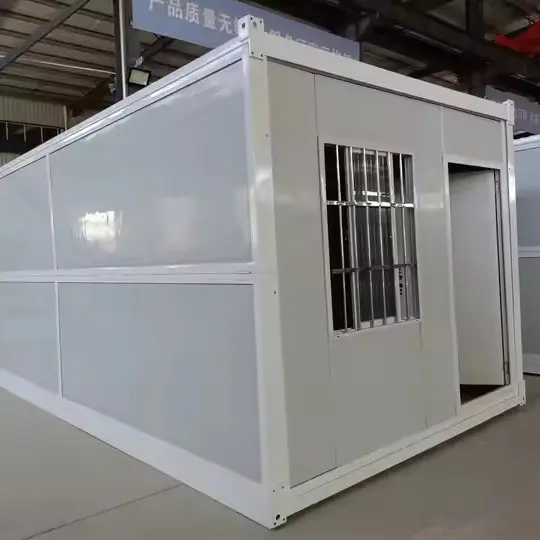
Why Are More Projects Turning to a Folding Container House Instead of Traditional Buildings?
From my perspective, the shift is easy to understand. Traditional construction often involves long timelines, unpredictable labor costs, and weather-related delays. In contrast, a Folding Container House arrives largely pre-engineered, allowing teams to focus on deployment rather than prolonged construction.
- Shorter setup time compared to brick or concrete structures
- Factory-controlled quality instead of on-site variability
- Reduced disruption to surrounding environments
- Predictable costs that are easier to budget
These advantages matter most when projects are under pressure, whether due to deadlines, limited labor, or remote locations.
How Does a Folding Container House Solve Common Space and Logistics Challenges?
One of the biggest challenges I see buyers face is transportation. Moving full-size modular units can be expensive and inefficient. This is where the folding design changes the equation. A Folding Container House significantly reduces transport volume, making logistics simpler and more cost-effective.
| Logistics Concern | Traditional Modular Units | Folding Container House |
|---|---|---|
| Transport Volume | High and inflexible | Compact and foldable |
| Shipping Cost | Often unpredictable | Lower and more stable |
| On-site Assembly | Labor-intensive | Fast and straightforward |
In practical terms, this means fewer trucks, lower fuel costs, and quicker deployment once the units arrive on site.
Can a Folding Container House Really Offer Comfort and Safety at the Same Time?
This was one of my initial doubts. Speed and convenience are great, but only if the living or working environment feels secure and usable. Modern Folding Container House designs focus heavily on insulation, structural stability, and interior layout.
- Insulated wall panels for temperature control
- Steel frames designed for repeated folding and unfolding
- Electrical and plumbing systems integrated during production
- Layouts that support both residential and commercial use
From what I have seen, these features help bridge the gap between temporary housing and long-term usability, especially in regions with demanding climates.
What Makes a Folding Container House a Smart Investment for Long-Term Projects?
Beyond initial deployment, buyers often think about reuse and lifespan. A well-designed Folding Container House can be relocated, reassembled, and repurposed multiple times. This flexibility is something traditional buildings simply cannot match.
| Investment Factor | Traditional Building | Folding Container House |
|---|---|---|
| Relocation | Not practical | Designed for reuse |
| Project Flexibility | Low | High |
| Lifecycle Cost | Higher over time | More controllable |
For companies managing multiple sites or phased developments, this adaptability often translates into measurable savings over the long run.
Is Choosing the Right Folding Container House Supplier as Important as the Product Itself?
Based on my experience, the answer is yes. Design consistency, material selection, and after-sales support all influence how well a Folding Container House performs in real conditions. This is where suppliers like Ante become part of the conversation naturally, especially when buyers are looking for solutions that integrate smoothly into existing workflows rather than creating new problems.
Clear communication, customization options, and reliable delivery timelines are just as important as the structure itself.
Are You Ready to Explore Whether a Folding Container House Fits Your Project?
If you are evaluating fast, flexible building solutions and want something that balances efficiency with real usability, a Folding Container House may be worth serious consideration. I have found that asking the right questions early can save time, cost, and frustration later.
If you would like to discuss specifications, use cases, or deployment options, feel free to contact us and share your project requirements. A clear inquiry today can be the first step toward a smarter and more adaptable building solution.