

Wholesale Electric Motocross Bikes Are Transforming Off-Road Riding
2026-11-20
Off-road riding is changing fast, and the shift isn't coming from louder exhausts or bigger engines—it's coming from instant torque, quieter operation, and far lower running costs. For dealers and fleet buyers, wholesale electric motocross bikes are no longer a fringe experiment; they're becoming a practical, high-demand category. Among the brands pushing this change forward, Arctic Leopard stands out by building electric motocross machines that handle aggressive trail and track use without the maintenance burden of traditional gas bikes. In this article, we explore why wholesale electric models are moving from the sidelines to the center of off-road riding—and what that shift means for riders, shops, and the industry as a whole.
Silent Torque Is Rewriting Trail Etiquette
A few years back, the sound of a dirt bike or ATV was the unofficial announcement that you were about to share the trail. Now, electric mountain bikes and e-motos slip through the trees with barely more than tire crunch and the click of a freehub. That quiet has forced a shift in how riders, hikers, and horseback riders read each other’s presence.
Without engine noise to broadcast approach, speed becomes the only warning. But too often it arrives late, leaving a hiker spinning around to find a bike already ten feet away. The old rule of “announce yourself” is giving way to a sharper one: slow down before you’re seen, not after. Politeness is no longer about being loud; it’s about being predictable.
Riders are also learning that silent torque changes the social contract. Where a loud engine once cleared the path, the quiet motor now asks for eye contact, a nod, or a hand raised off the grip. The trail isn’t just shared space anymore—it’s a conversation conducted at three miles an hour.
What Dealer Lots Gain When Two-Strokes Disappear
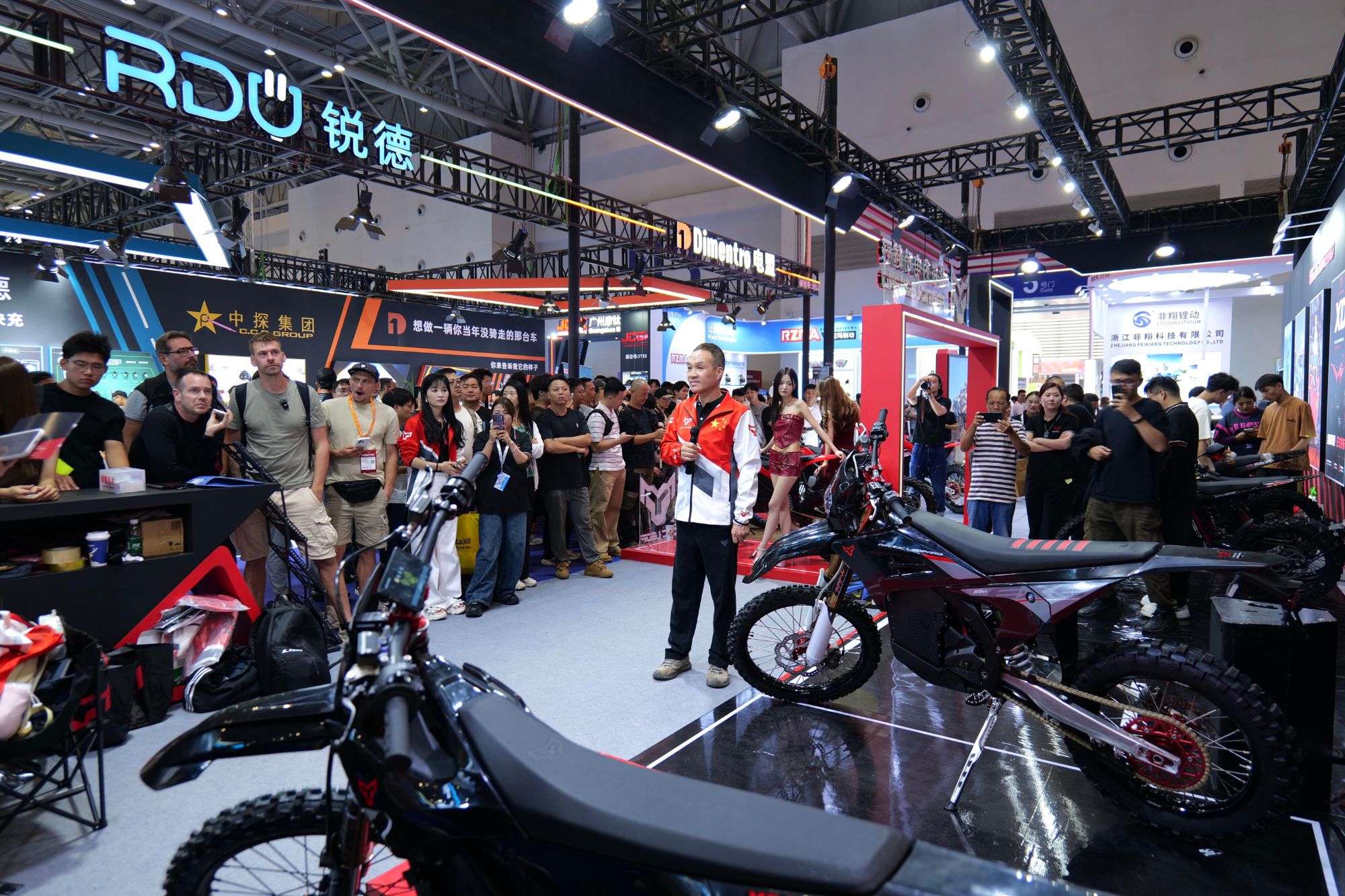
Walk through a dealership lot after the last two-stroke leaves the floor, and the first thing you notice is not the absence of smell or smoke. It is the quiet restructuring of value. Floor space once dedicated to explaining oil injection ratios and warming up temperamental engines now hosts a broader range of four-stroke models that hold their resale numbers longer. Dealers stop stocking niche rebuild kits, piston rings, and premix oil that gathered dust. Instead, inventory turns faster because the customer base no longer splits between die-hard two-stroke loyalists and everyone else. The lot becomes easier to sell from, not because the machines are simpler, but because the story around them is cleaner.
Service departments feel the shift most directly. Two-stroke engines demand a specific kind of mechanic, someone who can diagnose a seize before it happens and listen for a lean condition in a high-pitched rattle. Those skills are expensive to keep on payroll. When those units vanish, dealerships reallocate labor hours to quicker, more standardized maintenance. A four-stroke top end rarely requires the same bench time as a ring and piston job on a 250cc two-stroke. Warranty claims drop, comeback rates drop, and the loaner bike pool stops being dominated by machines waiting on backordered two-stroke parts. The result is not just lower overhead; it is a service bay that actually books profit instead of babysitting temperamental hardware.
There is also a subtle gain in customer trust. Shoppers who walk in without deep mechanical knowledge no longer feel pressured to choose between a bike that screams and one that lasts. The disappearance of two-strokes removes a confusing fork in the sales conversation. Dealers can focus on fit, purpose, and financing rather than defending a dying platform or apologizing for its quirks. That shift lets sales teams close deals faster and with fewer post-sale regrets. Over time, the lot builds a reputation for consistency, and that reputation compounds with every clean trade-in that does not require a compression test before the paperwork gets signed.
The Margin Math Behind Electric MX Floor Stock
Electric MX floor stock sits at an odd intersection: the units pull attention, but the margin math is less forgiving than most gas-model comparisons suggest. A typical invoice-to-MSRP spread may show 18 to 22 points on paper. Floorplan interest, insurance, battery conditioning, firmware update labor, and the occasional demo ride all start trimming that number before a buyer even signs. Units held past 90 days routinely lose four to six points of gross, which is why a busy showroom can hide a cash-flow problem.
Attachment revenue changes the picture less than dealers expect. Charging hardware, spare batteries, and protective accessories carry thinner point margins, and buyers often negotiate them down after focusing on the bike's price. If a store overpacks freight and setup into the quote, the electric buyer tends to walk, because the segment is small and word travels fast through rider groups. The practical margin becomes a race between what you capture at closing and what carrying the unit costs you each week it sits.
The real calculation is annualized return per inventory dollar, not the number printed on the tag. A $10,500 electric MX with a 15-point front margin and a 120-day hold may net out in the high single digits after flooring and prep. A cheaper or faster-moving unit that turns in 45 days at 11 points can generate more gross profit from the same floor space. That shift in thinking changes how many units you stock, how you price them, and how quickly you move the old stock before the next model year resets the value.
Who’s Actually Buying These Bikes by the Crate
It’s not the weekend warrior grabbing one frame off a showroom floor. The crate buyers are usually small shop owners in places where a single imported bike costs more than a month’s rent, or event organizers who need thirty identical machines for a rental fleet that gets abused daily. They think in terms of spare parts, downtime, and whether a bent derailleur can be swapped in ten minutes behind a food truck. One buying cycle tells you more about a neighborhood’s potholes than any city survey.
There’s also a quieter group: co-ops and community workshops that strip new bikes down to the bare frame, rebuild them with better bearings and brake pads, then sell them at cost to delivery riders who log eighty miles a day. Those buyers don’t care about brand heritage or weight savings. They care that the crate arrives with consistent wheel true, matching axles, and a fork that won’t snap when a rider hops a curb with forty pounds of hot food strapped to the rack.
Then you have the oddballs — a retired mechanic in Ohio filling a barn with steel commuters because he believes imported bikes will triple in price, or a bike-polo club that bulk-buys frames and treats them as consumables. They rarely show up in marketing data, but they’re the ones who keep the crate orders steady when the casual market dips. Ask them why they buy by the crate, and the answer is usually not about savings. It’s about knowing exactly what you’ll get when you cut the straps.
Battery Swaps and the End of the Tune-Up
The phrase “tune-up” used to mean something concrete: fresh spark plugs, a new distributor cap, maybe a carburetor adjustment and a timing light session. Electric vehicles quietly made most of that ritual obsolete. There is no idle mixture to set, no valve lash to check, and no belt to tension. When a battery pack can be swapped out in minutes at a dedicated station, the old idea of periodic engine calibration disappears even further. Owners begin to think of the battery as a serviceable module rather than a permanent piece of the car, and that shift changes what “maintenance” even means.
A swap-ready design pushes the remaining upkeep toward cooling circuits, electrical contacts, and software diagnostics. Technicians now inspect high-voltage connectors for corrosion, verify thermal management, and run battery health reports instead of replacing points or adjusting carburetors. The work is quieter and cleaner, but it demands different instincts. A worn spark plug once gave a rough idle as an early warning; a degrading cell may only show up as a subtle drop in range or a temperature anomaly buried in a diagnostic log.
The end of the tune-up does not mean the end of service visits. It means the visit looks less like a mechanical ritual and more like a quick exchange or a data check. For drivers used to oil change stickers on the windshield, the absence of those reminders can feel strange. But the trade-off is a maintenance schedule that shrinks to tires, brakes, cabin filters, and occasional battery inspections. In a world built around swapping rather than tuning, the service bay starts to resemble a clean logistics point more than a greasy workshop.
Building an Off-Road Brand That Doesn’t Need Gas
Building an off-road brand around electric drive is less about swapping a fuel source and more about rewriting what a trail-ready vehicle can do. Instant torque turns rocky climbs into throttle-feathering exercises rather than clutch-smoking fights. The silence is not a gimmick; it exposes tire bite, suspension travel, and the actual sound of terrain, which changes how drivers read a line.
The packaging freedom matters just as much as the power. With no engine block, driveshaft, or exhaust to route, a manufacturer can place the battery low between the axles, seal it against water and dust, and tune each motor separately. That gives the brand a design language based on clearance, breakover angles, and underbody protection rather than hood scoops and tailpipes.
The community around such a brand tends to form around route planning, energy recovery on long descents, and the strange satisfaction of a silent crawl through a canyon. That is a different kind of loyalty—one tied to places you can reach, not the noise you make getting there.
FAQ
Riders used to worry about weak power and short range, but newer models deliver instant torque that hooks up well on loose dirt and technical climbs. The lack of clutch work also lets people focus more on body position and line choice rather than shifting.
Wholesale pricing makes it easier to build a fleet for training, rentals, or demo days without the same upfront risk as gas bikes. It also lets smaller shops stock a lineup with fewer models and still give customers a clear path into electric riding.
You hear tires, suspension, and the trail itself much more, which can feel strange at first but quickly becomes informative. Riders often say they can practice in areas that were previously off-limits because of sound complaints.
Battery life depends heavily on terrain and pace, but many current machines can handle a solid moto or a few hours of singletrack. Swappable batteries are becoming more common, so some riders carry a spare in the truck instead of waiting on a charge.
There is no air filter, carburetor, or engine oil to deal with, which removes several routine jobs. You still need to watch chain tension, brake pads, coolant if the battery and motor use liquid cooling, and suspension service intervals.
Focus on battery capacity, peak power, chassis geometry, and parts availability rather than just top speed. A bike that feels balanced and has local support for controllers and battery cells will save more headaches than a slightly cheaper unit with no backup.
Charging infrastructure in remote riding areas is still thin, and cold weather can reduce range. Riders who do long backcountry loops may need to plan differently, but for motocross tracks, trail systems near power, and practice days the trade-offs are shrinking quickly.
Conclusion
The shift toward wholesale electric motocross bikes is doing more than swapping one power source for another—it is changing how trails are shared and how dealers think about inventory. Silent torque lets riders climb technical sections without the familiar two-stroke bark, and that quiet operation is softening conflicts with hikers, landowners, and other trail users. On the dealer side, fewer two-strokes means fewer carburetor rebuilds, fuel mixing mistakes, and stale premix complaints. Floor stock moves differently because an electric MX bike can sit without draining fluids or gumming up, and the real margin story is now tied to battery health, controller updates, and fleet support rather than repeat engine work.
The buyers pulling these bikes by the crate are not always individual riders. Rental fleets, off-road parks, and resort programs want machines that can be swapped, recharged, and sent back out without a tune-up between sessions. Battery swaps are replacing the weekly maintenance ritual, and that changes the staffing and parts budget for operators. It also opens room for a new kind of off-road brand—one built around access, lower noise, and predictable operating costs rather than exhaust note and displacement. As crate-level purchasing grows, the definition of a capable dirt bike is quietly expanding beyond the gas tank.
Contact Us
Contact Person: Jack
Email: [email protected]
Tel/WhatsApp: +86 15657688888
Website: https://www.arctic-leopard.com