

UV Marble Sheets Hot Stamping Foil: Top 10 Suppliers Revealed
2026-06-19
When it comes to elevating the look of UV marble sheets, the right hot stamping foil can make all the difference. But with so many suppliers claiming to be the best, how do you separate the real deal from the rest? In this exclusive roundup, we uncover the top 10 suppliers worldwide—and reveal why industry leaders like GUMPTION are setting new benchmarks. Whether you're chasing flawless finishes or reliable supply chains, this guide will steer you in the right direction.
The Hidden Craft Behind Premium UV Marble Foil
Premium UV marble foil isn’t just another decorative surface—it’s a marriage of material science and optical precision. At its core lies a UV-cured coating that transforms a simple printed film into a texture-rich, light-reflective canvas. Unlike conventional laminates, this coating is engineered to capture and bend light in ways that mimic the delicate veining and depth of natural stone. It’s not about laying down a flat image; microscopic layers of clear resin are cured under ultraviolet light to lock in a dimensional topography you can feel with your fingertips. The result is a surface that shifts subtly as you move past it, mirroring the quiet complexity of real marble without the weight or cost.
What sets the finest UV marble foils apart is the calibration of gloss and texture. Every sheet starts with a high-fidelity print of genuine marble, but the real magic happens when a precisely formulated clear coat is applied. This layer is not uniform—it’s selectively deposited to follow the natural highs and lows of the printed pattern. Think of it as a sculptor’s tool: the resin pools in crevices, creating darker, glossier veins, while thinner applications on the “stone” body deliver a matte, honed finish. The UV curing process freezes this interplay instantly, ensuring that the tactile finish won’t wear away under daily use. It’s a technique that demands strict environmental control; even slight variations in humidity or UV intensity can dull the final effect.
Behind the glossy showroom samples is a craft deeply rooted in trial and error. The best manufacturers guard their coating recipes the way chefs guard a signature sauce, blending oligomers and monomers to achieve just the right viscosity and scratch resistance. The real art, though, is balancing the reflective quality with anti-fingerprint properties—too much gloss and every touch leaves a mark, too little and the foil looks plastic. Some producers add a whisper of matting agents into the clear coat, scattering light just enough to hide smudges while preserving depth. This is not industrial manufacturing by textbook; it’s a continuous refinement where even the tension on the backing film during UV exposure can alter the marbled illusion. And that’s the hidden craft—a process far more nuanced than simply printing stone onto PVC.
Why Some Suppliers Dominate the Market
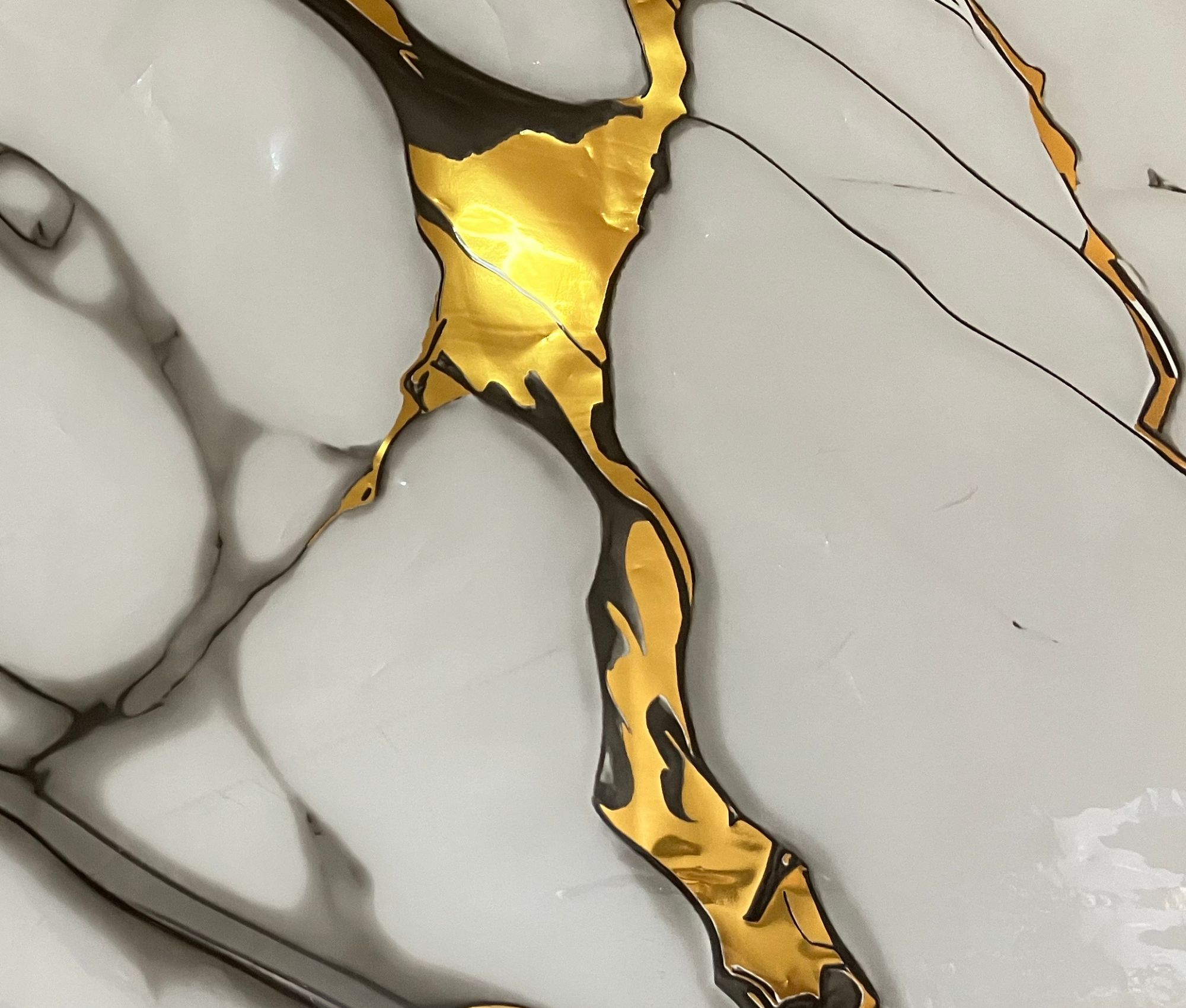
Market dominance rarely stems from a single advantage. It's often a slow accumulation of trust, timing, and an almost obsessive attention to the parts of the business that others dismiss as too mundane. When a supplier consistently solves problems before the buyer even articulates them, it ceases to be a vendor and becomes infrastructure. The ones who dominate aren't necessarily the cheapest or the flashiest—they're the ones whose absence would cause immediate operational pain.
Consider the role of asymmetric information. A supplier who understands a client's supply chain better than the client themselves holds a quiet, formidable power. They can anticipate inventory pitfalls, navigate regulatory hurdles, and tailor solutions in ways that make switching costs feel insurmountable. This isn't lock-in through contracts; it's lock-in through competence. Over time, their institutional knowledge becomes a moat that competitors can't replicate with a lower price tag.
Then there's the psychological layer. Dominant suppliers often master the art of making the complex feel effortless. They strip friction out of procurement, standardize quality to a point where inspection becomes an afterthought, and build relationships that extend beyond the transactional. When a buyer stops comparing alternatives because the current partner has become the default safe choice, market dominance has truly taken root. It’s a quiet, durable advantage built not on grand gestures but on thousands of small, correct decisions.
Spotting Quality Before You Buy
Ever picked up an item that looked flawless on the shelf, only to have it fall apart after a few uses? Discerning quality isn't about reading labels or trusting brand names blindly. It's about training your eye to catch the subtle signals that separate a lasting piece from a fleeting disappointment. Start by paying attention to the materials—run your fingers along seams, weigh the fabric in your hand, and observe how light interacts with the surface. These tactile clues often reveal more than a description ever could.
Next, examine the construction. Even stitching, reinforced stress points, and neatly finished edges are quiet indicators of care in manufacturing. A crooked thread or a zipper that snags may seem minor, but they point to shortcuts taken elsewhere. Look for symmetry in patterns, consistent coloring, and hardware that feels solid instead of hollow. The best items rarely shout about their craftsmanship; they simply demonstrate it under scrutiny.
Finally, consider how the item ages before you even buy it. Quality tends to develop character over time—think of leather that softens gracefully or wood that gains patina—while poorly made goods simply degrade. A scratch test on a hidden spot can reveal if a coating will peel, and a quick smell check can tip you off to subpar materials. When you learn to read these signals, every purchase becomes an investment rather than a gamble.
From Raw Material to Lustrous Finish
It begins with the quiet arrival of base stocks—unassuming coils, plates, or ingots that hold little hint of what they might become. These raw forms, often carrying the subtle marks of rolling or casting, are inspected for hidden flaws before any transformation takes hold. The early steps are more about uncovering potential than applying skill: a careful cleaning to strip away the film of mill scale, a precise cutting that respects the grain of the metal, and a gradual shaping under controlled force that coaxes the material toward its intended silhouette without rushing its nature.
The middle phase is where character emerges. Through a sequence of abrasive steps—coarse grits giving way to ever finer ones—the surface starts to tell a different story. The scratches of initial grinding are slowly replaced by a matte uniformity, then a low sheen that catches light in tentative flashes. Here, the craftsman’s familiarity with pressure, speed, and pattern becomes indistinguishable from the material itself; a slight tilt of the workpiece or a pause at just the right moment can mean the difference between a flat reflection and one that seems to hold depth. Chemistry sometimes enters the process too, with compounds that react beneath a buffing wheel to draw out richer shades or create a patina that feels earned, not applied.
The final shift is the most delicate. When the ground work is done, the surface is cleaned of every residual particle, then guarded with a thin film—perhaps a wax, a lacquer, or an oxide layer—that seals the underlying brilliance without muting it. The result isn’t simply shiny; it’s a surface that invites touch, that changes with the ambient light, that reveals the journey from rough stock to a finish that seems to glow from within. There is no single moment of completion, only a sensed threshold where the material stops being an object in progress and becomes something worthy of being seen.
Supplier Secrets That Save You Money
Most people treat suppliers like order-takers, but the real savings come when you understand their business almost as well as they do. Instead of just asking for a discount, learn their production schedules, raw material costs, and slow seasons. If they have idle capacity during certain months, you can negotiate lower rates by placing orders when their factory would otherwise be underutilized. One furniture buyer I know shifted his entire ordering cycle to align with a factory's downtime, and he slashed unit costs by 18% without any quality compromise.
Stop obsessing over the unit price and start digging into the hidden cost drivers that suppliers rarely mention. Packaging, shipping, and customisation fees can often be reduced dramatically if you’re willing to adapt slight design tweaks or consolidate shipments. For example, a simple change in box dimensions to match standard pallet sizes can cut logistics costs in half, but your supplier won’t suggest it unless it benefits them. Always ask to see a full cost breakdown and then brainstorm together on where you can jointly reduce waste or inefficiency.
Building a genuine partnership with a few key suppliers beats squeezing the last cent out of many. When you commit to longer-term contracts or share your growth forecasts, suppliers are often willing to invest in better machinery or dedicated production lines for your products, which leads to lower costs over time. I’ve seen small businesses get exclusive access to premium materials at standard rates simply because they were loyal and paid on time. That level of trust turns into savings that no online marketplace can match.
The Future of Hot Stamping Foil Technology
Hot stamping foil technology is quietly entering a new phase where adaptability and environmental responsibility go hand in hand. Traditional metallic finishes are no longer the sole focus; instead, manufacturers are exploring bio-based carriers and pigments that break down more readily without sacrificing the distinct visual impact. This shift isn’t just about meeting regulatory pressure — it reflects a broader industry realization that luxury aesthetics can coexist with greener processes. The foil itself is becoming thinner, more precisely layered, and compatible with recycled substrates, opening doors for packaging and label converters who need to maintain brand integrity while reducing material footprints.
On the application side, the integration of digital foil systems is rewriting what’s possible with short-run and variable data work. Rather than relying on fixed dies and long setup times, brands can now switch patterns instantly — enabling personalized packaging at speeds that were unthinkable a few years ago. This changes the economics of embellishment, making it accessible for smaller batches, seasonal editions, and even fully customized direct-mail campaigns. The precision of these machines also reduces waste during registration, a detail often overlooked but crucial as margins tighten.
Looking ahead, the true breakthrough may lie in functional foils that do more than catch light. Conductive and thermally responsive materials are being embedded into foil structures, potentially turning a decorative layer into an interactive one. Imagine a foil that changes opacity with temperature or transmits a subtle signal when touched — not as a gimmick, but as a practical feature for authentication or user feedback on product packaging. While still in early adoption, these smart surfaces hint at a future where hot stamping participates in the product’s usability, not just its visual appeal.
FAQ
It’s a specialized decorative foil used to apply a marble-like pattern onto surfaces through heat and pressure. The UV-cured layer gives it extra durability and a realistic stone finish, often seen on furniture, panels, and decorative items.
Unlike laminates which are glued as a full sheet, hot stamping foil transfers only the design layer. This makes it lighter and allows for more precise pattern placement, plus the UV coating adds scratch and fade resistance that many laminates lack.
You’ll find them extensively in interior design, especially for wall panels, doors, and kitchen cabinets. The automotive industry also uses them for interior trim, and they’re popular in consumer electronics for casing finishes.
Cost and weight are the main drivers. Real marble is expensive, heavy, and needs regular maintenance. UV marble sheets offer a convincingly authentic look at a fraction of the price, with easier installation and greater design flexibility.
Be wary of suppliers who can’t provide consistent color matching or realistic pattern depths. Also avoid those with vague lead times or unwillingness to share samples. A lack of technical support for heat settings and machinery compatibility is another warning sign.
Yes, that’s one of the foil’s strengths. With the right tooling and technique, the foil conforms to gentle curves and detailed edges, making it ideal for contoured furniture legs, moldings, or rounded appliance fronts.
The leading names often stand out through in-house pattern development, faster delivery, and tighter quality control. Many also offer custom color matching, eco-friendly foil options, and dedicated after-sales support that smaller suppliers might skip.
Conclusion
Crafting UV marble sheets hot stamping foil involves a precise layering process that starts with a polyester carrier and builds through release coatings, tinted lacquers, and vacuum-metalized aluminum. The true artistry hides in adjusting these components to produce the swirling, marbled reflections that define premium grades. Top-tier suppliers maintain an edge by controlling the entire workflow—from polymer resin selection in the base film to the curing conditions of the top coat—ensuring that the final foil can withstand heat, pressure, and abrasion without losing its luster. Market leaders have perfected color consistency across runs, a challenge that trips up many smaller operations, which is why their products appear in high-volume furniture and panel manufacturing. Careful inspection during sourcing, such as checking the foil’s elongation under heat and its pigment distribution under UV light, can quickly separate durable offerings from those likely to craze or peel after lamination.
Shrewd buyers tap into supplier insights that lower total cost—negotiating for mixed palette shipments, opting for narrow-width rolls to cut trim loss, and aligning with factories that run just-in-time production. Such collaboration often reveals lesser-known manufacturers with comparable quality but keener pricing than the famous brands. The field is shifting toward water-based release systems and digital hot stamping techniques that promise less solvent emission and faster changeover times, trends that the best performers are already prototyping. A shortlist of ten standout suppliers was compiled by weighing production scale, R&D activity, and actual performance data from flooring and panel converters. This roster moves past superficial claims to spotlight facilities that consistently deliver bond strength, gloss stability, and responsive technical support. For companies serious about upgrading their foil sources, it serves as a practical entry point for deeper evaluation.
Contact Us
Contact Person: Hsien
Email: [email protected]
Tel/WhatsApp: +86 57387072688
Website: https://www.gsfilm.cn