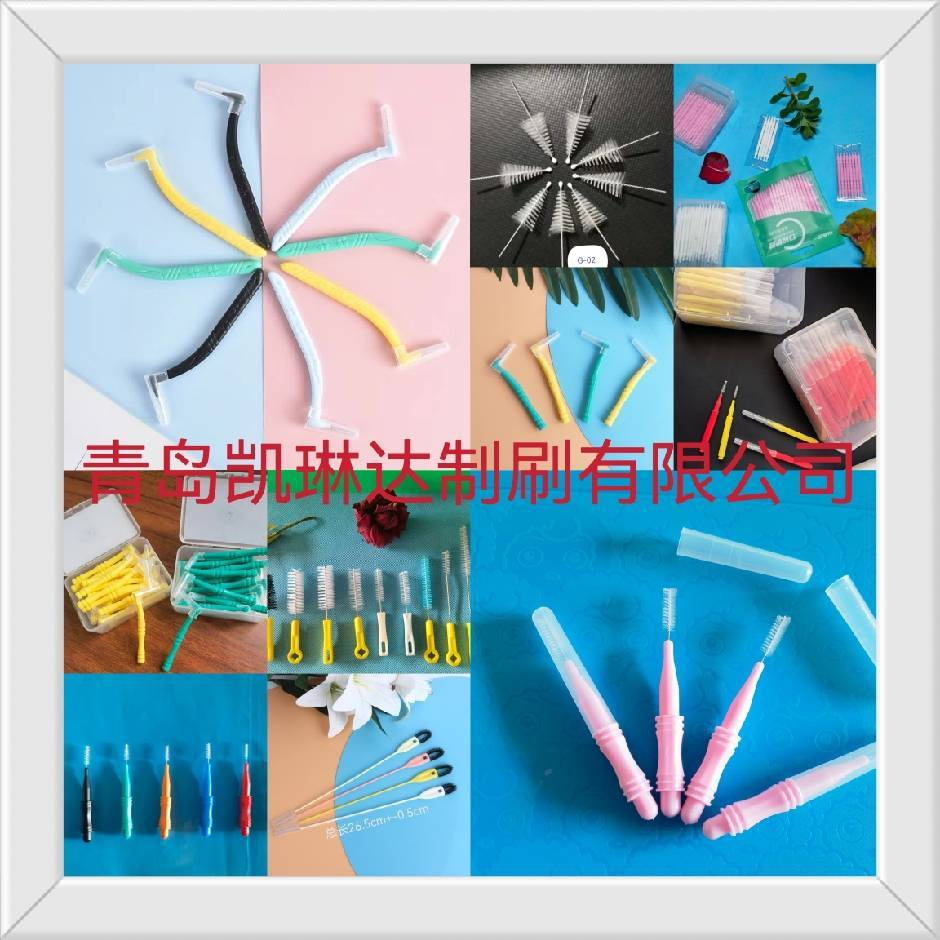

Top Eyebrow Brush Manufacturer Insights: Crafting Tools for Effortless Definition
2026-11-02
Perfectly defined brows don’t happen by accident—they’re shaped by the right tools. But with so many brushes promising precision, how do you separate genuine craftsmanship from marketing noise? That’s where KLDZS steps in. As a top eyebrow brush manufacturer, we’ve spent years decoding what makes a brush deliver effortless definition, from bristle density to handle balance. In this post, we’re pulling back the curtain on those insights so you can choose—or create—tools that actually perform. Ready to see what goes into a brow brush that works as hard as you do?
The Anatomy of a Brush That Feels Like an Extension
Most handles are turned on a lathe and left perfectly round, which forces your fingers into a constant, low-grade clench. This one is pared down with a barely visible flat facet along one side, so the pad of your thumb and the first knuckle of your index finger find a natural resting plane. The balance point sits a third of the way up from the ferrule, not at the middle, which shifts the weight into the heel of your palm and lets the brush head float rather than drag.
The ferrule itself is crimped at a slight forward angle, so the hair doesn't sprout straight up like a shaving brush but leans into the direction of your stroke. Under the bristles, a small internal shelf prevents the knot from splaying after repeated use, while the outer hairs are cut slightly shorter than the core, creating a soft shoulder that bends first and a firmer center that snaps back. Taken together, it means the brush stops reading as an object you hold and starts behaving like the last two joints of your own hand.
Why Bristle Blends Matter More Than Bristle Count
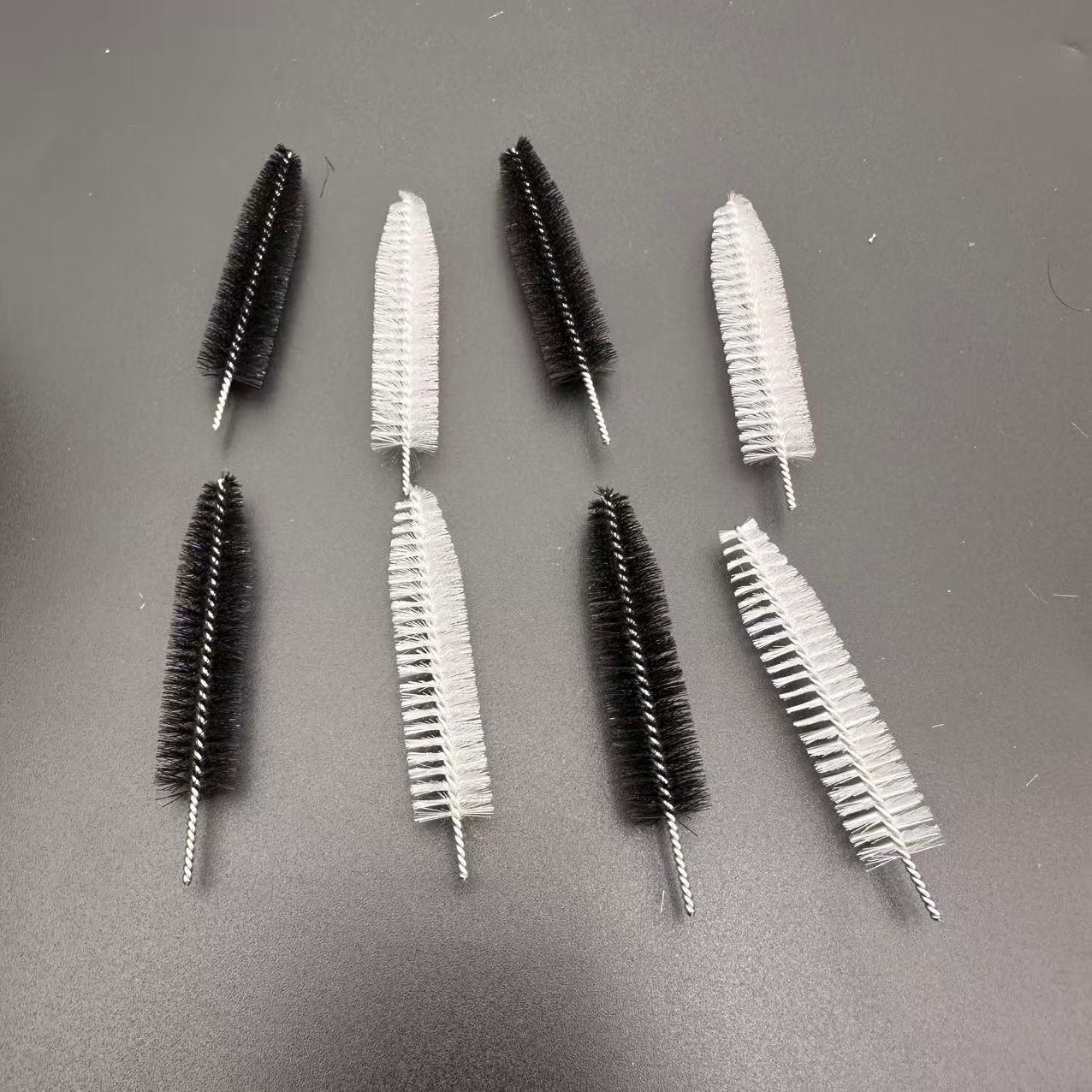
A brush packed with thousands of identical bristles can still feel flat on the scalp or drag through hair if those bristles all behave the same way. Blending different bristle types changes how the brush moves, flexes, and distributes pressure across the surface. That variation is what creates the difference between a tool that simply contacts the hair and one that actually works with it.
Natural and synthetic fibers each bring something distinct to the mix. A stiffer bristle can help lift and separate, while a softer one smooths and polishes. When they are combined in the right proportions, the brush can handle multiple needs at once without requiring you to switch tools mid-routine.
The total number of bristles matters less than how those bristles are arranged and how they respond under tension. A lower count with a thoughtful blend often outperforms a dense, uniform brush because the mixed bristles create a more dynamic contact pattern. That synergy is what makes the blend the real benchmark of quality.
Balance and Weight as the Overlooked Ergonomics
Most discussions around ergonomics fixate on shape, contour, and adjustability, yet the physical balance of a tool in your hand quietly dictates how your muscles respond. A device that tips forward or backward forces your wrist into constant micro-corrections—work you never consciously register but your tendons certainly do. Think of a well-balanced chef's knife versus one with a handle-heavy bias; the former lets the blade do the cutting, the latter demands your forearm stabilize every stroke.
Weight rarely gets the attention it deserves either. Lightweight isn't automatically better; too little mass can make a tool skittish, demanding a tighter grip that feeds tension into the palm and forearm. Conversely, excessive weight drags on the shoulder and elbow over long sessions. The sweet spot lies in how mass is distributed—whether it sits close to the joint or hangs out at the far end, creating a lever arm that multiplies strain. A cordless drill with its battery packed near the grip feels entirely different from one where the weight sits forward, even if the scales read identical.
These factors become glaring in prolonged tasks: a stylus that's slightly top-heavy will fatigue the index finger after an hour of sketching, while a balanced one disappears in the hand. Designers who treat balance and weight as afterthoughts miss the quiet feedback loop between tool and body. It's not about luxury—it's about avoiding the low-grade, chronic strain that accumulates from tools that fight your natural posture instead of working with it.
Keeping Edges Consistent from Prototype to Production
The gap between a polished prototype and the shipped interface often shows up first in the edges. A button that looks crisp in Figma but gains an extra pixel of rounding in code, or a card whose corners don't match the original spec, can quietly erode the product's feel. Locking down edge values early—whether radius, stroke width, or spacing—is not about being rigid; it's about preserving the design intent when someone else implements it.
Design tokens help but they're only as good as the translation. If the prototype uses 8px radius on cards and 4px on inputs, that distinction needs to survive the handoff. Many teams treat edge consistency as a one-time checklist, yet drift creeps in with every new component or rushed fix. A better approach is to keep the prototype and production components referencing the same source of truth, then spot-check edges during code review like you would catch a typo.
Prototypes are forgiving; production isn't. Small mismatches compound across screens. When edges stay consistent, the product feels intentional rather than assembled. It's not flashy work, but it's the kind of detail users sense even when they can't name it.
Reading the Market Without Chasing Every Trend
Most traders treat market signals like a buffet—they pile on every setup, every breakout, every rumor. But reading the market isn't about consuming everything; it's about knowing what to ignore. The real skill lies in filtering noise from structure, not reacting to each tick like it's a mandate.
A market that's trending hard will show it through volume, breadth, and repetition. You don't need to jump on the first green candle or panic at a single red one. Instead, watch how price behaves around key levels: does it hold, stall, or reject? That's the conversation worth listening to. Chasing every micro-move just leaves you exhausted and over-traded.
Think of it like reading a room. You don't respond to every cough or glance—you pay attention to the overall mood. Let the market reveal its hand over hours or days, not seconds. By the time a trend is obvious, the best entries are often already gone, but the durable ones remain. Patience here isn't passive; it's a filter that separates professionals from button-mashers.
What Buyers Should Demand in a Private-Label Partnership
Insist on full visibility into sourcing and production. A trustworthy private-label partner should share batch testing results, factory audit summaries, and material origins without you having to pry. If they hesitate to name their subcontractors or hide behind proprietary processes, walk away.
Negotiate order flexibility up front, not as an afterthought. Minimum order quantities that lock you into excess inventory can sink a small brand. Ask for staggered shipping, reorder windows tied to actual sell-through, and the right to adjust packaging specs between runs. Also demand a single point of contact who can make decisions, not a rotating account manager.
Protect your formulas and designs with clear contractual language. You want exclusivity clauses that prevent the manufacturer from producing a near-identical product for a competitor, plus defined penalties for late deliveries or quality failures. And don't overlook exit terms—how you can retrieve molds, digital files, and remaining inventory if the partnership ends.
FAQ
It comes down to obsessive attention to ferrule construction and bristle density. The best manufacturers calibrate each brush head by hand, ensuring the angle and stiffness allow for both broad strokes and hair-like detail without product clumping.
They focus on the brush's edge geometry and bristle taper. A slightly angled, densely packed synthetic head with staggered lengths lets you sketch fine lines along the brow's tail and blend through the body in one motion.
Most top manufacturers now favor synthetic fibers, not only for vegan demands but because they offer better control with pomades and waxes. High-grade taklon or PBT can mimic natural hair while resisting buildup.
Request a sample run and inspect the ferrule crimping, handle adhesion, and bristle alignment under magnification. Reputable makers test for shedding and shape retention after repeated washes, often providing batch-level consistency reports.
Customization goes beyond handle color. It includes adjusting the brush angle to fit a specific application technique, choosing bristle stiffness, length, and density, and engraving or hot-stamping the handle without affecting balance.
Reliable manufacturers use deep-set epoxy anchoring and crimped aluminum or brass ferrules. Some pre-treat bristles to reduce static and use a two-step trimming process to lock the tip shape before final packaging.
The ferrule determines weight distribution and prevents water or product from seeping into the handle. A well-balanced, seamless ferrule also reduces hand fatigue during detailed work.
There's a push toward multi-functional designs—like an angled brush on one end and a spoolie on the other—plus biodegradable handles and silicone-tipped blending tools for travel-safe kits.
Conclusion
The best brow brushes feel less like tools and more like a natural extension of your hand. It’s not about counting bristles; it’s about blending the right fibers so each stroke deposits just enough product without tugging or skipping. Whether synthetic or natural, the way those fibers respond to pressure and release powder or pomade defines the difference between a sharp arch and a smudged line. Weight and balance rarely make the spec sheet, yet they determine whether a brush sits comfortably between your fingers during a full makeup routine. A well-balanced handle shifts the focus from grip adjustment to the artistry of defining each brow hair with intention.
Manufacturers dedicated to excellence keep edge consistency from the first prototype to the final shipment, refusing to let minor deviations slip through. They read the market without chasing every micro-trend, instead identifying which innovations actually serve the user rather than just the marketing calendar. For buyers pursuing a private-label partnership, the key is demanding not just attractive samples but a transparent process—control over bristle blends, balance testing, and tight tolerance checks. This is how tools are crafted for effortless definition, not simply assembled for shelf appeal. The result is a brush that feels personal from the first stroke, because every decision behind it was made with the user’s hand in mind.
Contact Us
Contact Person: Caiju Zhang
Email: [email protected]
Tel/WhatsApp: +86 14763963294
Website: https://www.kldbrush.com