Top Chevron Belt Company Offers Reliable Conveyor Belts for Every Industry
2026-11-02
When a conveyor belt fails, everything stops—production, deadlines, and patience. That’s why industry operators don’t gamble on just any supplier. For chevron belts that grip under pressure and hold up across demanding environments, XAN has built a quiet reputation for getting the job done. From aggregate handling to food processing, their solutions are engineered to keep things moving without surprises. Here’s a closer look at what makes their approach worth your attention.
Matching Belt Profiles to Incline Angles and Material Types
Getting the right belt profile isn't just about grip—it's about matching the surface pattern to both how steep the conveyor runs and what's actually sitting on it. A shallow incline moving dry sand calls for a different profile than a 30-degree slope carrying wet clay or sharp gravel. For angles up to about 20 degrees, a rough-top or low-profile chevron often does the job, keeping fine materials from sliding without making the belt hard to clean. Push past 25 degrees, though, and you'll want taller cleats or aggressive chevron patterns that can hold larger, heavier lumps in place as they travel upward.
Material type also drives the choice. Abrasive ores and crushed stone wear down thin, flexible profiles quickly, so a thicker, more durable pattern with good release characteristics makes sense. On the other hand, sticky materials like wet sand or clay need profiles with wider spacing and a smoother release angle to prevent buildup between cleats. Powders and fine granules often work best with a fine-textured rough top that offers extra friction without large voids where material can pack in. Matching the profile to the combination of incline angle and material behavior means fewer spills, less belt cleaning, and a longer service life.
The Difference a Strong Carcass Makes Under Heavy Loads
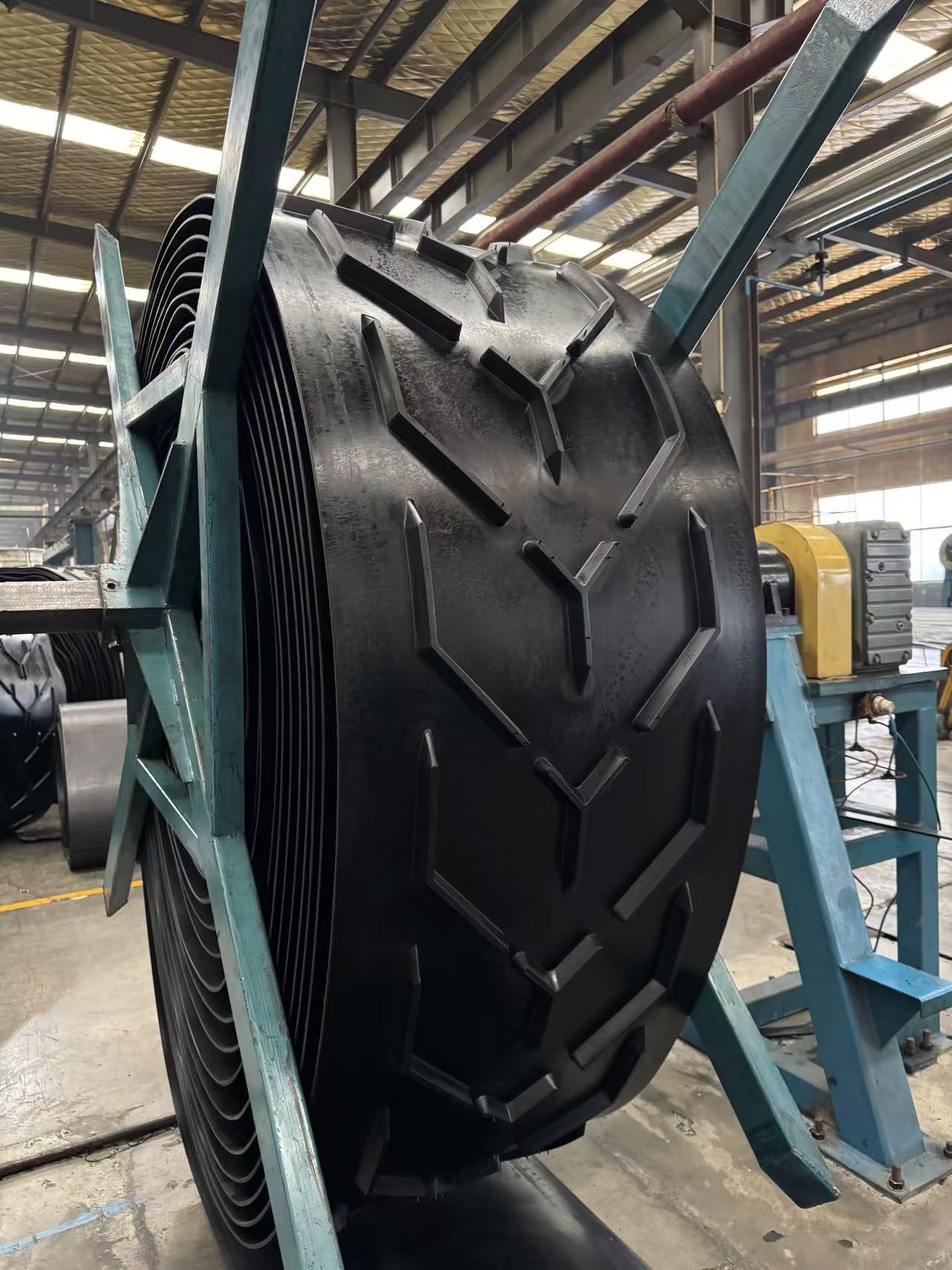
A carcass that holds its shape when the pressure piles on does more than just keep the tire round. It spreads the load evenly across the contact patch instead of letting the sidewalls bulge and overheat. That means fewer stress points, less wandering on rutted pavement, and a noticeably steadier feel when you're running close to max capacity.
Where weaker builds start to squirm and scrub away tread, a reinforced carcass keeps the footprint stable. You notice it most mid-corner with a full load—the sidewall doesn't roll over, and the steering stays direct. Over a long haul, that stability translates into slower, more even wear and fewer unpleasant surprises when you hit a dip or a rough expansion joint at speed.
Reducing Carryback and Spillage on Steep Conveyor Lines
On steep conveyor lines, material that clings to the belt after the discharge point rarely drops straight down—it rides the return run and falls wherever vibration or gravity wins. This carryback eats into idlers, pulleys, and floor space, and the cleanup burden grows with the incline. Tightening the primary cleaner at the head pulley is the obvious first move, but incline-specific angles often call for a secondary set of blades positioned just before the belt leaves the head pulley to catch the thin, damp layer that a single scraper misses.
Spillage along the carry side tends to get worse as the slope rises, since fines shift and bounce over skirtboard seals that would hold on a flat line. One approach that consistently helps is extending the skirtboard zone further down the incline and pairing it with dual-seal strips: a stiffer outer strip to block larger chunks, and a flexible inner strip that stays in contact with the belt even when the trough angle changes under load. Adding impact idlers with rubber cushions just before the loading zone also keeps the belt from flattening and letting material escape under the skirting.
Belt tracking has a quieter but real effect on carryback and spillage. On steep runs, even a slight misalignment near the transition point can push the belt edge under the skirtboard or lift it off the center rollers, opening gaps that let fines leak continuously. Checking the alignment of tail and bend pulleys after any change in tonnage or moisture pays off more than adding more cleaners. In several plants, correcting the transition distance and switching to low-friction liner material on the chute walls reduced spillage enough that operators stopped scheduling mid-shift cleanup.
What to Look for in a Chevron Belt for Wet or Oily Materials
When evaluating a chevron belt for wet or oily conditions, start by checking the rubber compound. The surface needs enough grip to prevent material slip-back, but not so aggressive that it traps fines and moisture. Many operators overlook the durometer rating — a slightly softer cover often conforms better to irregular loads under slick conditions, while a harder compound may glaze over and lose traction quickly.
Next, look closely at the chevron profile height and spacing. Taller cleats provide better carry on steep inclines, but if they're spaced too tightly, oil and water can create a hydroplaning effect between the lugs. A moderate height with wider gaps allows fluids to channel away while still supporting the load. Also inspect the cleat-to-belt bond: poor adhesion will lead to cleat peeling when liquids act as a release agent on hot rubber.
Finally, consider the belt's edge construction and troughing ability. In wet environments, edge wear accelerates if the belt lacks sealed or cut-edge reinforcement. A chevron belt that doesn't flex properly in the trough will leave stagnant wet zones near the center, causing material buildup and premature cover cracking. Ask the supplier for wet-grip test data rather than dry-surface ratings, because performance on oil-saturated fines can be drastically different.
Keeping Replacement Cycles Longer with Abrasion-Resistant Covers
Equipment downtime rarely announces itself politely. It shows up as a worn-out cover that finally gives way, sending a whole line into standby. Swapping in abrasion-resistant covers changes that timeline. Instead of treating protective layers as consumables to be replaced every few months, these covers take the friction, impact, and grit in stride, buying you extra weeks or even months before a swap becomes necessary.
The real difference comes down to material choice and edge design. A cover made from reinforced polyurethane or rubber compounds with a high durometer rating doesn't just resist surface wear; it spreads stress across a wider area, preventing the kind of localized thinning that leads to early failure. That means fewer scheduled replacements, less money tied up in spare parts inventory, and more predictable maintenance windows.
In practice, the payoff shows up in the logbook. One aggregate plant running high-volume conveyors moved from replacing covers every six weeks to doing it twice a year after switching to abrasion-resistant material. The upfront cost stings a little, but when the replacement cycle stretches that far, the math takes care of itself.
Choosing the Right Belt Width and Cleat Height for Your Operation
A belt that's too narrow forces material to pile up and spill over the edges, especially on steep inclines or when handling irregular lumps. Start by measuring the largest chunk you expect to carry—belt width should be at least three to four times that size to keep it stable. For fine or uniform products, you can get away with a slimmer belt, but leave enough margin so occasional surges don't send material tumbling off the sides.
Cleat height works hand in hand with the incline. As a rule, taller cleats handle steeper angles because they give the load something to push against, but they also reduce effective carrying space between ribs. If your product is dense or wet, slightly lower cleats paired with a textured belt surface often outperform aggressive tall profiles that trap material and make discharge messy.
Finally, think about how belt speed and feed rate interact with both dimensions. A wider, slower belt can move the same tonnage as a narrower, faster one while reducing dust and impact wear. Adjust cleat spacing to match product flow—closer ribs for powders, wider spacing for bulky pieces—so the load stays balanced from loading point to discharge.
FAQ
Chevron belts have raised, V-shaped patterns that grip loose or bulk materials, preventing rollback on slopes. Flat belts often let materials slide, but the chevron profile keeps everything in place even at angles up to 30 or 40 degrees, depending on the material.
You'll find them in mining, quarrying, agriculture, recycling, and construction. Anywhere materials like gravel, grain, sand, or crushed stone need to move up an incline without sliding back, a chevron belt is usually the go-to choice.
For abrasive materials, focus on the cover compound and the height of the chevron profile. A thicker top cover with high abrasion resistance, like a quality rubber compound, paired with a medium to high cleat height will give you longer service life and better grip.
Yes, but you need to specify food-grade materials. The company offers belts with FDA-approved covers and profiles that resist oils, fats, and cleaning chemicals. These are ideal for moving bulk food items like grains or potatoes on inclines without contamination risks.
They assess factors like material type, incline angle, belt speed, and load capacity. Based on that, they adjust the chevron height, pattern spacing, belt width, and cover compounds. This keeps the belt performing well whether it's in a dry quarry or a damp recycling facility.
Regular visual checks for edge wear, cuts, or missing cleats are essential. Keep the belt properly tensioned, clean off material buildup between the chevrons, and align the rollers. Replacing damaged sections early prevents small issues from turning into full belt failures.
Absolutely. The company works with custom profiles, cleat heights, and belt widths. If your incline is steeper than usual or your material is unusually heavy or sticky, they can design a pattern that gives the exact grip and release characteristics you need.
Conclusion
Top Chevron Belt Company supplies conveyor belts that hold up across mining, agriculture, and recycling operations because each belt is built around the actual incline and the material it moves. Instead of forcing one profile onto every job, they match cleat height and spacing to the angle and the product’s flow behavior, so fine powders stay put while larger lumps don’t roll back. The carcass underneath gets equal attention—a strong fabric or steel cord layer prevents stretching and tearing when a steep line is loaded to capacity, which keeps downtime rare and tracking stable.
On steep conveyor lines, carryback and spillage are common headaches, but Chevron Belt’s designs reduce both by sealing the belt edges and keeping the return side clean with properly shaped cleats. For wet or oily materials, the company uses higher cleats with a more open pattern and a rubber compound that sheds moisture instead of letting it pool under the load. Abrasion-resistant covers extend the time between replacements, and the team calculates the right belt width and cleat height for each application, so operators don’t pay for extra width they don’t need or risk undersized belts that wear out early.
Contact Us
Contact Person: Anna Lu
Email: [email protected]
Tel/WhatsApp: 8618561668850
Website: https://www.x-conveyor.com