

Top 10 Swiss-Type Precision Parts Machining Solutions for Superior Accuracy
2026-05-23
Precision machining demands more than just standard equipment—it requires solutions that push the boundaries of accuracy and efficiency. In the world of Swiss-type turning, even the smallest deviation can compromise performance. That’s why we’ve curated the top 10 Swiss-type precision parts machining solutions, highlighting the technologies setting new benchmarks for superior accuracy. From advanced tooling to intelligent automation, each entry reflects the kind of excellence you can trust from industry leaders like WINNRUI CNC. Whether you're tackling micro-components or complex geometries, these insights will reshape how you think about precision manufacturing.
Why Swiss-type machining dominates micro-part accuracy
The extraordinary precision of Swiss-type machining stems from its unique guide bushing system, which supports the workpiece mere millimeters from the cutting tool. Unlike conventional lathes where material can flex or vibrate over unsupported lengths, the guide bushing virtually eliminates deflection, allowing for tolerances routinely held within ±0.0002 inches. This close-proximity support is critical when producing long, slender components like bone screws or micro shafts, where even minute deviations can render a part unusable.
Another key advantage lies in the machine's ability to perform multiple operations simultaneously without repositioning the workpiece. Swiss machines typically feature a sliding headstock and a range of live tooling stations, enabling turning, milling, drilling, and threading in a single setup. This eliminates cumulative errors from part transfer between machines and preserves the geometric integrity of complex features. The result is a level of concentricity and surface finish that is simply unattainable through sequential operations on separate platforms.
Thermal stability further sets Swiss-type machining apart. The machines are engineered with temperature compensation systems and often operate in climate-controlled environments, counteracting the expansion and contraction that plague less sophisticated equipment. Combined with high-pressure coolant delivery that evacuates chips and cools the cutting zone instantly, the process maintains consistent conditions from the first part to the ten-thousandth. For industries where micro-part failure is not an option—think medical implants or aerospace sensors—this repeatability is the foundation of trust in the technology.
Material selection pitfalls that sabotage precision
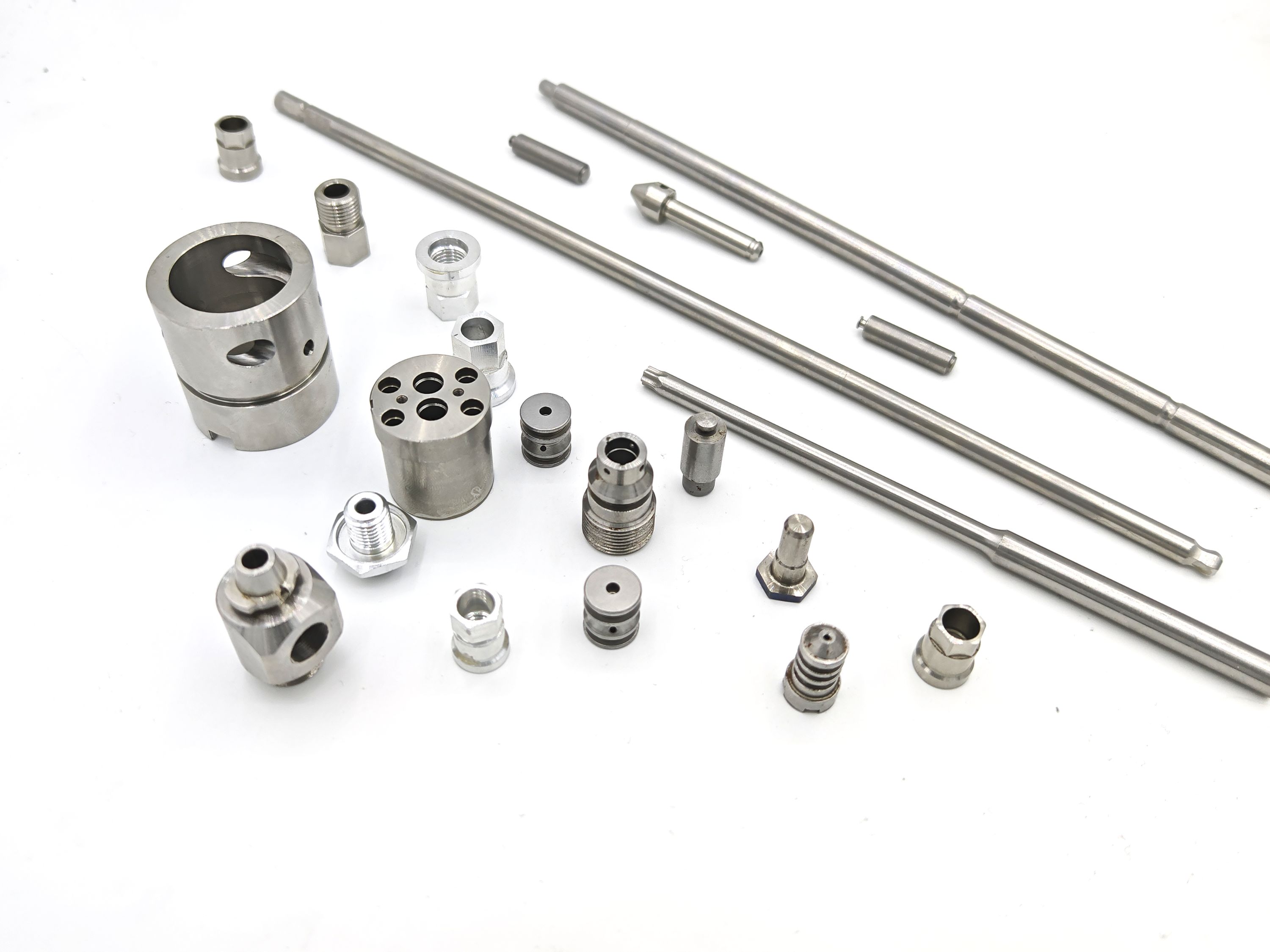
It starts innocently enough. A design demands a certain stiffness, and you reach for a high-modulus alloy—only to discover its thermal expansion mismatch with neighboring parts turns every temperature fluctuation into a misalignment nightmare. Or maybe weight savings drove you to a lightweight composite, but the fiber orientation that gave it strength also introduced anisotropic behavior you didn’t fully model. These aren’t hypothetical exercises; they’re the slow-acting traps that eat away at precision long after the initial fit check. The real headache is how material data sheets lull you into a false sense of security. Listed properties come from idealized test coupons, not the complex, stress-ridden reality of your machined component. Residual stress, microstructural variation, and even the direction of the grain can skew performance by microns—enough to fail a tolerance stack that looked bulletproof on paper.
Then there’s the assumption that a material’s behavior is linear up to yield. In precision engineering, the elastic range is rarely a straight line if you’re measuring at sub-micron levels. Minor creep, anelastic recovery, or even humidity-induced swelling in polymers can creep in under sustained load. Engineers fresh to ultra-precision often over-rely on traditional metal alloys without considering advanced ceramics or engineered polymers that offer better dimensional stability in specific environments. But jumping to exotic materials introduces its own pitfalls: machinability issues, limited supplier knowledge, and unpredictable batch-to-batch variability. Without a deep understanding of how a material behaves across the entire lifecycle—including during machining, coating, and assembly—you’re just trading one precision-killer for another.
A less talked about trap is the mismatch between the material’s intended function and the metrology used to verify it. Steel gage blocks are fantastic references, but they can micro-weld to certain coatings or suffer from corrosion if the wrong cleaning solvent is used. Meanwhile, the very act of measurement can deform a low-modulus material just enough to invalidate the reading. To avoid these pitfalls, material selection can’t be a check-box exercise at the start of a project. It demands a systems-level approach, pairing the material not just with the load and environment, but with the manufacturing and inspection processes that will touch it. Otherwise, precision gets sabotaged one seemingly innocent choice at a time.
Tooling geometries that master tight tolerances
Achieving tight tolerances in machining starts long before a tool touches the workpiece. The geometry of the cutting edge, clearance angles, and chip-breaking features all play a decisive role in how consistently a tool can repeat a cut. A subtle change in rake angle, for instance, can alter cutting forces enough to push a part out of spec, while an optimized helix on an end mill distributes those forces more evenly, reducing deflection and chatter. It’s this invisible dance between the tool’s shape and the material that ultimately determines whether a batch of parts stays within a few microns of the target.
Precision-ground relief surfaces and carefully controlled edge preparation keep the tool stable even under high loads. A sharper edge might seem ideal, but a slight hone can prevent microchipping and extend predictability over long production runs. Likewise, tools designed with tighter core diameters and specialized point geometries drill straighter holes with less wander, even in difficult alloys. When every pass has to hit the same number, these near-microscopic details in the tool’s profile become the difference between a good setup and a scrap bin full of surprises.
Coolant strategies for thermal stability
Designing an effective coolant loop begins with the proper selection of fluid and flow architecture. High‑thermal‑capacity coolants, such as water‑glycol mixtures or dielectric fluids, are often engineered with additives to suppress nucleate boiling and maintain a stable Prandtl number across a wide temperature range. Rather than relying on a single‑pass system, many designs incorporate a split‑flow manifold that feeds parallel cold plates, ensuring uniform heat extraction even when individual components generate asymmetric loads. This approach not only smooths out temperature gradients but also reduces the risk of localized dry‑outs that can trigger thermal runaway.
Active thermal stability can be further enhanced by embedding real‑time control logic into the coolant delivery network. Variable‑speed pumps and proportional valves, driven by temperature feedback from multiple sensors, allow the system to dynamically redistribute flow to hotspots as they develop. In hybrid electric powertrains, for instance, the coolant strategy might prioritize battery pack cooling during fast charging while shifting resources to the power electronics during high‑torque events. This predictive balancing, sometimes implemented through model‑based feedforward, keeps component junction temperatures within a narrow band without oversizing the entire thermal management system.
Finally, the physical layout of the cooling circuit itself can be manipulated to create passive thermal inertia. Incorporating a small reservoir of phase‑change material or a purposely oversized radiator provides a buffer that absorbs transient spikes without demanding an immediate pump response. Combined with a counter‑flow heat exchanger arrangement, this setup naturally dampens temperature fluctuations before they propagate downstream. When mechanical simplicity is a priority, such passive strategies offer a robust complement to active controls, yielding a system that maintains equilibrium even under abrupt changes in ambient conditions or duty cycle.
Automation tricks without sacrificing craftsmanship
Balancing automation with handcrafted care starts by identifying the parts of your process that are repetitive drudgery, not the soul of the work. Think about tasks like file organization, batch resizing, or code formatting—these can be delegated to scripts or macros without watering down your unique touch. The trick is to build small, tailored tools that blend into your workflow so smoothly you almost forget they’re there. When automation handles the boring bits, you free up mental energy for the creative decisions that truly define quality.
Too often, automation gets a bad rap for making things feel generic, but it’s really about how you set the boundaries. Instead of letting a template dictate your entire output, use automation to scaffold the skeleton while you flesh out the details by hand. For instance, a carpenter might use a CNC machine to cut precise joints but still finishes and assembles them personally, ensuring each piece has that unmistakable human warmth. The same logic applies to digital craft: lean on algorithms for consistency, but leave intentional gaps where your intuition can shape the final result.
The best craftspeople treat automation as an extension of their skill set, not a replacement. It’s like having a silent apprentice who handles the grunt work—you still guide the vision, set the standards, and make the subtle tweaks that elevate something from manufactured to meaningful. Start by automating one small pain point, refine it until it feels invisible, then move on to the next. Over time, you build a personal library of shortcuts that amplify your abilities rather than dilute them. The result is work that carries the rhythm of automation but still resonates with the care of a maker’s hand.
Inspection habits that catch errors before they happen
Building a routine around preemptive checks isn’t about following a rigid checklist—it’s about training your eye to spot what’s slightly off. Instead of scanning for obvious mistakes, get comfortable with the subtle cues: a misaligned margin that nobody else would notice, a data point that just barely breaks the pattern. The habit forms when you pause before every final submission and ask, 'What’s the quietest thing that could go wrong here?'
The environment plays a bigger role than we admit. Glance around your workspace before you start inspecting. Clutter, background noise, or even the wrong screen brightness can dull your attention. Some of the best proofreaders I’ve known do a two-minute reset—clearing their desk, switching to a different device, or stepping outside briefly—so they can see the work with a fresh set of nerves. It’s not a system; it’s a small, practiced reset that stops tunnel vision.
Over time, these habits become instinct. You’ll start catching errors in things you aren’t even formally reviewing—a menu, a street sign. The trick is to treat every check as a conversation with the work, not a hunt for failures. When you stop expecting perfection and start looking for drift, errors surface long before they’d ever reach someone else’s inbox.
FAQ
Swiss-type machining uses a sliding headstock and guide bushing to support the workpiece close to the cutting tool. This setup drastically reduces deflection and vibration, allowing for extremely tight tolerances on long, slender parts—often down to microns.
Medical device manufacturing, aerospace, electronics, and watchmaking are prime examples. Any industry needing tiny, intricate components—like bone screws, connector pins, or micro-gears—depends on Swiss-type machining for consistency and accuracy.
Look for shops with a proven track record in your specific industry, equipped with advanced multi-axis Swiss lathes and in-house quality control like CMM inspection. Certifications (ISO 13485, AS9100) and transparent communication about lead times are also key indicators.
They excel with metals like stainless steel, titanium, brass, and aluminum, as well as plastics such as PEEK and Delrin. The technology’s precise coolant delivery and chip control make it possible to machine even heat-sensitive or gummy materials without compromising finish.
Traditionally, yes—most work within a 1mm to 32mm diameter range. However, newer models can handle diameters up to 38mm or more. Their real strength is in parts where length-to-diameter ratios are high, not just by absolute size.
With up to 13 axes, these machines can perform milling, drilling, tapping, and turning in a single setup. This eliminates secondary operations and ensures perfect concentricity and positional accuracy, even on parts with complex cross-features or hex edges.
Innovations include high-pressure coolant through the tool, automatic bar feeders for lights-out production, and real-time tool monitoring systems. Some platforms also integrate laser cutting or angular drilling, expanding capability without increasing cycle time.
Conclusion
Achieving superior accuracy in Swiss-type machining isn't just about owning the right equipment—it's a holistic discipline that fuses deep material knowledge, precise tooling geometries, and fluid dynamics into a seamless workflow. The dominance of Swiss-style lathes in micro-part production stems from their inherent ability to guide stock through a guide bushing, minimizing deflection and chatter. Yet, even this advantage collapses without meticulous material selection; alloys with inconsistent grain structures or residual stresses can warp under the slightest thermal change, undoing nanoscale precision. Pairing carbide or diamond-coated tools with geometries specifically ground for tight-tolerance features—such as high-positive rakes and micro-edge radii—creates the cutting conditions necessary to hold bands thinner than a human hair. Meanwhile, coolant delivery systems must be tuned not merely for lubrication but to actively manage thermal stability, using high-pressure, temperature-controlled streams that dissipate heat before it distorts the part or the machine itself.
Beyond the physics of chip formation and cooling, true craftsmanship survives in the smart automation and inspection routines that elevate consistency without eroding the human touch. Robots loading bars and ejecting finished parts are commonplace, but the real trick lies in integrating adaptive feedback loops that adjust offsets in real time, preserving the artisan's understanding of tool wear patterns while letting algorithms handle the repetitive adjustments. Inspection habits prove equally transformative: in-cycle probing and laser micrometers catch micro-drift moments after it occurs, shuttering the process before a single out-of-spec part is produced. These solutions—from material pedigree tracking to closed-loop process controls—create a synergistic ecosystem where no single factor dominates, yet each plays an irreplaceable role in the relentless pursuit of superlative accuracy.
Contact Us
Contact Person: Tim
Email: [email protected]
Tel/WhatsApp: +86 15522553731
Website: https://www.winnrui-cnc.com/