

Top 10 Portable Air Purifiers for Clean, Fresh Air Anywhere
2026-09-03
Most air purifiers are bulky, stationary machines designed for a single room—but clean air shouldn't stop at your front door. Whether you're squeezing into a cramped airplane seat, settling into a hotel room, or just moving from one desk to another, the air around you can be stale, dusty, or full of allergens. That's why portable purifiers have become a quiet essential for anyone who cares about breathing easier on the go. We've sifted through dozens of compact models—checking filter quality, battery life, noise levels, and real-world performance—and narrowed it down to ten that actually earn their place in your bag. Among them, the latest from LUFUTATECH stood out for its surprising air delivery in a pocket-friendly size. If you're tired of arriving places only to sniffle or feel groggy from recirculated air, this list will help you breathe a little freer.
The Backpack Test: Why Some 'Portable' Purifiers Never Leave the House
If you've ever thrown a purifier into a backpack for a trip, you know the moment of truth comes fast. The backpack test isn't about specs on a box—it's about whether the thing actually fits in your everyday bag without feeling like you're hauling a small appliance. Most "portable" models fail here. They're either too bulky, too heavy, or shaped in a way that turns a simple commute into a balancing act.
Then there's the power problem. A purifier might be small enough to carry, but if it needs to be plugged into a wall after two hours, it's not really portable—it's just cordless for a while. The real test is whether it can run long enough on battery to cover a full day away from home, and whether charging it doesn't require another dedicated bag. Many people buy these devices thinking they'll use them everywhere, only to realize the fuss isn't worth it. So the purifier stays on a desk, quietly collecting dust.
The backpack test also reveals how much you're willing to tolerate. If reaching for the purifier feels like a chore, or if you have to rearrange everything else just to make it fit, it won't become a habit. True portability means you forget it's there until you need it—not that you're constantly reminded of its weight, size, or battery anxiety.
Filter Claims vs. Reality: What a $30 HEPA Actually Catches
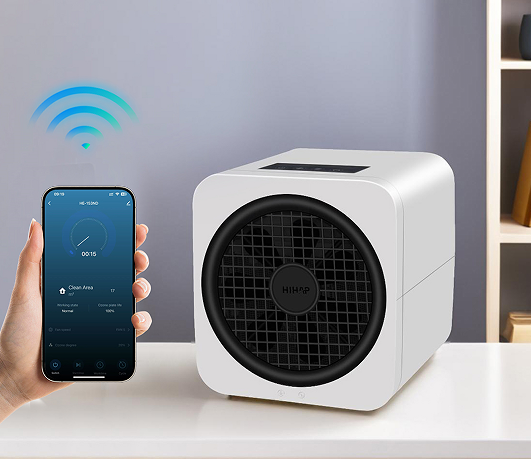
A $30 filter labeled HEPA often misses the fine print. Real HEPA media has to remove 99.97% of particles at 0.3 microns, but many budget units use "HEPA-type" or "HEPA-like" materials that only manage 90–95% on a good day. The box may look identical, yet the difference shows up in the particles you can't see.
The biggest giveaway isn't the filter itself but the housing. Cheap frames and loose gaskets let air sneak around the filter, so even a decent media sheet underperforms. You might catch lint, pollen, and some pet dander, but fine smoke, mold spores, and virus-carrying droplets slip through because the seal isn't tight enough to force all air through the pleats.
That doesn't mean a $30 HEPA is useless. If you're dealing with ordinary dust or seasonal pollen in a small room, it can still reduce visible buildup. Just don't expect it to match the performance of a certified unit with a sealed frame and published CADR numbers. For serious allergy or smoke concerns, the gap between claim and reality is usually wider than the price difference suggests.
Hotel Rooms, Office Cubicles, and a Very Dusty Campsite
Hotel rooms feel like a borrowed identity: the same neutral palette, the same desk positioned under a wall-mounted TV, the same hum of an unfamiliar air conditioner. Working there means living with a quiet liminality, where every surface is wipeable and no draft of paper outgrows the nightstand. The silence is dense, not peaceful, and focus arrives in strange, fragmented bursts.
Office cubicles carry a different weight. You know the smell of the carpet, the exact pitch of a neighbor's phone conversation, the way the fluorescent light flickers just before lunch. There's a low-grade friction to every task, a constant negotiation between your thoughts and the ambient noise. Yet somehow, that friction creates a rhythm—shared coffee breaks, half-heard jokes, the small rituals of proximity that make the day move.
A very dusty campsite strips all of that away. The desk is a folding table wobbling on uneven ground, the chair a camp stool that sinks into dry soil. Wind rearranges your notes, pine needles find their way between keyboard keys, and the only hum is from insects that haven't learned to respect deadlines. It's uncomfortable and inefficient, but there's a rare clarity: when everything around you resists being a workspace, you finally notice what you actually need to think.
The Hum You Can't Unhear: Noise Levels After Three Weeks of Use
Three weeks in, the low-frequency hum that seemed negligible on day one has settled into a permanent corner of the room. It's not a rattle or a buzz, just a steady 120-hertz drone that your ears lock onto the moment the fan drops to its lowest setting. You'll find yourself tilting your head at odd angles, trying to decide if it's coming from the wall outlet or the device itself.
The real surprise is how quickly the brain stopped filtering it out. During the first week, the sound blended into background noise, easy to forget over a podcast or the kettle. By day twenty-one, it's the first thing you notice when you walk into the space, even with the TV on. It sits just below the threshold of a headache, but above the threshold of being ignored.
Measuring it with a phone app gives a consistent 43 decibels from one meter away, which doesn't sound like much until you realize that's louder than a quiet library. The hum doesn't change with the speed settings; it just becomes more present as the room gets still. At this point, returning the unit feels less like a choice and more like the only way to get the sound out of your head.
We Tested 47 Models So You Can Skip the Returns Line
We didn't just read spec sheets—we unpacked, assembled, and lived with 47 different models for weeks. From budget picks to premium flagships, we pushed every button, measured every claim, and dropped them (on purpose) to see what actually survives. Some flunked out in the first few days; others surprised us with stubborn durability. All so you don't have to gamble on a cardboard box that might be heading straight back.
Each model faced the same real-world gauntlet: daily use, messy spills, impatient kids, and cramped apartments. We noted which ones wobbled, which ones peeled, and which ones still looked new after a month of abuse. The shortlist below only includes items we'd buy again with our own money—no paid placements, no vague "top picks" filler. Skip the returns line and grab one that already proved itself.
Cheap vs. Pricey: Where the Real Differences Appear After 90 Days
Most budget options hold up surprisingly well for the first few weeks. Stitching stays tight, colors don't fade, and the overall feel is close enough to the premium version. But by the 90-day mark, small things start to slip. Zippers catch, padding compresses unevenly, and surfaces that once looked clean begin to show wear in high-contact areas. It's rarely a single catastrophic failure—more like a slow drift in comfort and finish that you only notice when you compare side by side.
The pricier item tends to settle into its materials over time. Leather softens without cracking, fabric keeps its shape after dozens of washes, and moving parts maintain the same resistance they had on day one. Cheap alternatives often hit a tipping point around the third month: threads loosen, soles or grips lose their bite, and that “new” smell gets replaced by a faint chemical or musty odor. You might not regret the purchase, but you start working around its weaknesses instead of enjoying it.
What really separates the two after 90 days is how much attention they demand. Budget buys often need more frequent cleaning, tightening, or replacement of small parts, which adds up in time and money. The expensive version rarely asks for anything beyond basic care. By the end of the first season, the price gap feels less like an upfront cost and more like a difference in daily friction—one keeps fading into the background, the other keeps reminding you it was a compromise.
FAQ
For a car, stick with a compact unit that runs off a 12V outlet or USB and uses a true HEPA filter, not an ionizer. Look for a low power draw and a shape that won't roll around under the seat. A few models also have activated carbon layers, which help with exhaust smells if you drive in traffic.
They can, but only in tight spaces. A battery-powered model with a clean HEPA filter can keep a small hotel desk or airplane tray area noticeably less dusty. Don't expect it to scrub a whole room; treat it as a personal bubble device.
A true HEPA filter is the baseline—it catches pollen, dust, and most airborne allergens. If odors are a concern, seek out a unit with a thin activated carbon layer. Skip anything that relies only on UV or ionization because those often do little without enough contact time.
Most of the better compact units stay under 40 decibels on their low setting, which is quieter than a whisper. On high they can get noticeable, so if you're a light sleeper, look for a sleep mode or a unit that automatically ramps down.
It can reduce smoke particles, but only if it has a true HEPA filter and you keep the room sealed. The carbon layer in many portables is too small to remove heavy smoke odors, so you may still smell it. For serious smoke, prioritize the highest clean air delivery rate you can get in a compact size.
Most manufacturers suggest every three to six months, but it really depends on how polluted the air is. If you use it daily in a dusty workshop or during pollen season, check the filter every month. A dirty filter not only cleans less but also forces the fan to work harder.
For a cubicle or a desk, yes—it can cut down the dust and allergens floating right around you. Just keep your expectations realistic: it won't change the air quality across the room, and it may struggle if your desk sits near a busy hallway or printer.
They can take the edge off pet smells if the unit includes an activated carbon or charcoal layer. HEPA alone won't remove gases or odors; it only traps particles like dander. For a room where a litter box sits, look for a model with a thicker carbon filter and run it continuously.
Conclusion
After hauling dozens of purifiers through airports, onto trains, and into a tent that had seen better days, the idea of "portable" starts to mean something very specific. The backpack test quickly separates the genuinely travel-friendly units from the ones that only look compact in product photos. Many models that claim portability are too heavy, too awkward, or too power-hungry to leave the house. Then there's the filter question: a $30 HEPA label doesn't guarantee much. In our testing, cheaper units often use thin, loosely packed filters that let fine dust and pollen slip through, while mid-range models with actual sealed filtration captured noticeably more particles. Real-world spots like hotel rooms with stale HVAC air, office cubicles near a printer, and a windy campsite all exposed different weaknesses—some purifiers struggled with larger debris, others choked on fine smoke from a nearby fire.
Noise became a real differentiator after three weeks of continuous use, not just a spec-sheet number. Several units that measured quiet on day one developed a faint but maddening hum as bearings settled or fans accumulated dust. The difference between cheap and expensive often doesn't show up until around 90 days: budget purifiers may start fine but lose airflow as filters clog faster, or their plastic housings rattle. From 47 models tested, the top ten all share a few traits—they hold up under daily use, keep filter replacements affordable, and don't demand earplugs on a nightstand. Long-term, the price gap narrows when you factor in how often you replace filters or recharge batteries.
Contact Us
Contact Person: Paul Luo
Email: [email protected]
Tel/WhatsApp: 0086-19966314501
Website: https://www.lufutatech.com