

TaC Coated Susceptor Supplier: Enhancing Thermal Stability for Next-Gen Processing
2026-11-16
In semiconductor manufacturing, where process temperatures surge and wafer uniformity is non-negotiable, the materials you choose define your yield. TaC coated susceptors are quietly becoming the backbone of next-generation epitaxial and CVD processes—offering exceptional thermal stability and contamination resistance. Yet, the real difference lies in how they're made. At Semicorex, we don’t just supply coated parts; we engineer susceptor solutions that push thermal limits without compromising purity, helping fabs get more from every run. Here’s what that means for your high-temperature processing.
Why Thermal Stability Defines Next-Gen Wafer Processing
As device geometries shrink and wafer stacks grow more complex, the ability to maintain precise thermal control during processing has moved from a supporting concern to the central pillar of yield. Even slight temperature deviations can trigger uneven dopant diffusion, alter film stresses, or cause warpage that distorts overlay alignment—problems that echo across dozens of subsequent steps. Thermal stability isn’t just about holding a steady number; it’s about guaranteeing that every square millimeter of a 300 mm wafer experiences the same thermal history, from rapid anneals to prolonged depositions, without introducing subtle inconsistencies that only surface during electrical test.
The push toward high-aspect-ratio structures and new materials like high-k dielectrics has rewritten the rules for furnace and chamber design. Conventional heating elements simply cannot respond fast enough to counteract local temperature drops when a cold wafer enters the tool or when exothermic reactions spike mid-process. Next-generation platforms tackle this through multi-zone active compensation and advanced model-based control, where sensors feed real-time data into algorithms that predict and neutralize thermal disturbances before they imprint on the wafer. This shift from reactive to predictive management is what separates leading-edge lines from those struggling with invisible defect patterns.
Looking ahead, the integration of hybrid bonding and 3D heterogeneous assemblies will make thermal uniformity in wafer processing even more unforgiving. A few degrees of variation across a bonded pair can generate enough mechanical stress to cause microscopic delamination that escapes inline inspection but kills reliability. Foundries and equipment makers are now co-optimizing process recipes and hardware to treat the entire thermal footprint—ramp rates, cool-down phases, and especially the transition moments between steps—as a single, programmable landscape. In this emerging paradigm, thermal stability is less of a specification and more of a dynamic capability that directly dictates how far scaling can go.
The Material Science Behind TaC Coatings
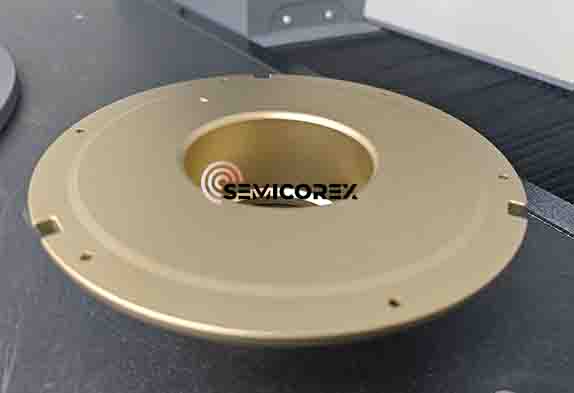
Tantalum carbide (TaC) stands out in the landscape of ultra-high temperature ceramics primarily due to its exceptional melting point that surpasses 3800 °C, but what truly anchors its industrial value is the interplay between its rock-salt crystal structure and the nature of its chemical bonds. Within this face-centered cubic lattice, tantalum atoms occupy octahedral sites, forming a dense, highly symmetrical framework. The strong covalent bonds between tantalum and carbon atoms derive from the hybridization of Ta 5d and C 2p orbitals, creating a deep well of shared electron density that resists thermal vibration and dislocation motion. This intrinsic stiffness is further reinforced by a degree of metallic bonding, which grants the material a modest yet crucial capacity for plastic accommodation, preventing the catastrophic brittle fracture common in purely covalent ceramics. It's this dual character—covalently rigid yet metallically compliant—that allows TaC coatings to survive in environments where thermal gradients would split ordinary protective layers apart.
When deposited as a coating, the microstructure of TaC becomes a dynamic character in its performance story. Processes like chemical vapor deposition often yield a columnar grain structure, with individual crystallites extending from the substrate upward. The grain boundaries act as high-diffusivity pathways; at elevated temperatures, carbon can migrate along these interfaces, subtly altering the stoichiometry near the surface. A slight carbon deficit transforms the coating into a substoichiometric phase, TaCₓ (x < 1), which still retains the rocksalt structure but now hosts carbon vacancies. These vacancies introduce a different scattering mechanism for phonons and electrons, lowering thermal conductivity and electrical conductivity locally—a property that can be tuned to form a self-regulating thermal barrier. Meanwhile, at the outermost layers, oxidation crafts a complex bilayer: a dense Ta₂O₅ scale forms atop a transient region where oxygen dissolves into the carbide lattice. The Ta₂O₅ layer is itself a formidable diffusion barrier, slowing further oxygen ingress, but its stability depends on the mechanical integrity of the underlying carbide. A coating with a tailored, slightly carbon-poor composition can yield a more adherent scale because the vacancy-assisted plasticity relaxes growth stresses at the interface.
What elevates TaC from a laboratory curiosity to an engineering solution is the ability to manipulate its electronic structure through subtle alloying and nanostructuring. Introducing hafnium into the carbide lattice, for example, creates a (Ta,Hf)C solid solution where the larger hafnium atoms expand the unit cell and modify the density of states near the Fermi level. This disrupts the electron phonon coupling responsible for heat transport, drastically dropping the thermal conductivity without compromising the ultra-high melting point. Such tailoring is not merely an atomistic exercise; it translates directly to the coating's life expectancy in a rocket nozzle or a crucible handling molten metals. At the nanoscale, multilayer architectures—alternating TaC with layers of metallic tantalum or a different carbide—can arrest crack propagation by deflecting energy at interfaces. These strategies draw from the same material science truth: the performance of TaC coatings is not a fixed trait, but a spectrum of behaviors encoded in the arrangement of its atoms, waiting to be unlocked by precise synthesis and composition control.
How Coating Uniformity Impacts Yield and Repeatability
Even minor inconsistencies in layer thickness can cascade into significant problems downstream. When a coating is not uniformly applied, certain regions of a wafer or substrate become more susceptible to defects during etching, lithography, or deposition. These thin spots may fail to protect the underlying material completely, while thick areas can lead to residue, uneven stress distribution, or incomplete removal in subsequent process steps. The result is a direct hit to yield, as batches that pass initial inspection later reveal pattern fidelity issues or electrical shorts that force entire lots to be scrapped.
Beyond immediate rejects, poor coating uniformity erodes a line’s ability to deliver consistent results run after run. It introduces a source of variation that complicates process control, making it harder to pinpoint root causes when performance drifts. Engineers may find themselves constantly adjusting spin speeds, dispense volumes, or bake times to compensate, which masks the real problem and widens the distribution of critical dimensions. Over time, this variability not only reduces average yield but also undermines the repeatability needed for statistical process control—every new batch becomes a gamble rather than a predictable outcome.
The relationship between uniformity and long-term repeatability becomes even clearer when you look at tool maintenance cycles and material interactions. Coatings that are inherently uneven put more stress on cleaning procedures and can accelerate the buildup of residues on chamber walls or bake plates. This gradual contamination feeds back into the process, progressively degrading uniformity and creating a vicious cycle. Addressing it requires a holistic view: monitoring thickness profiles across the substrate with sufficient resolution, understanding how fluid rheology and environmental factors influence spreading, and integrating real-time feedback loops that correct small deviations before they become yield-limiting events. Without that focus, marginal gains in throughput are quickly erased by the hidden costs of rework and lost customer confidence.
Taming Extreme Temperatures Without Compromise
Real resilience isn't about surviving one harsh environment—it's about moving seamlessly from a scorching desert test track to a sub-zero arctic run without missing a beat. We've engineered solutions that don't just endure heat and cold; they actively adapt. Materials are selected not just for their limits, but for how they behave at the molecular level when the temperature swings 80 degrees in a single day. This means seals that stay pliable in deep freeze yet don't soften into failure when the midday sun turns metal surfaces into griddles. Every fluid, every alloy, every bonding agent is stress-tested across the full temperature spectrum so that performance is never a compromise.
The real breakthrough lies in the cooling and heating pathways. Instead of bolting on oversized radiators or power-hungry heaters, we redesigned the thermal architecture from the ground up. Waste heat from one component preheats cold-soaked systems; phase-change materials tucked into structural voids absorb and release energy to stabilize internal temperatures long after the engine is off. It's a bit like giving the machine its own autonomic nervous system—one that shunts warmth or pulls heat away exactly where and when it's needed, without constant driver intervention or a hit to range and output.
Testing doesn't stop at the lab door. We baked prototypes in still air until paint blistered, then immediately plunged them into wind chills that freeze hydraulic lines solid on lesser builds. And when they kept running, we pushed further: cyclic shocks that move from +50°C to -40°C in under an hour, repeated until failure. Failure never came from the extreme ends alone; it was always a material fatigue we then solved. The result is a machine that feels utterly transparent in your hands—you simply notice that the gauge you'd usually watch with dread never budges, and the only thing working harder than the machine is the weather outside.
From R&D to High-Volume Production: A Supplier’s Role
Transitioning from lab-scale prototypes to full-scale manufacturing is rarely a straight line. A capable supplier doesn’t just receive a finalized design and churn out units; they embed themselves in the R&D phase, flagging materials that won’t survive industrial tooling and tweaking tolerances before the first mold is cut. That early collaboration turns theoretical possibilities into parts that can actually be made by the million without losing their integrity. It’s about translating a concept into a production-ready reality, where every adjustment is grounded in real-world shop floor feedback.
When volumes ramp, the supplier’s role shifts toward orchestrating a supply chain that can breathe under pressure. They’re the ones qualifying alternate substrates when a resin suddenly goes on allocation, or configuring automated inspection cells that catch drift before it becomes scrap. The best partners treat high-volume production not as a static achievement but as a continuous loop of monitoring, adjustment, and prevention, spotting trends that even the OEM’s own data might miss. Their value is measured in how quietly a line runs when nothing goes wrong.
True ownership of the production handoff lies in how a supplier manages the knowledge that accumulates along the way. Process validation reports, tooling histories, and borderline sample approvals all feed into a shared institutional memory that protects against turnover and time. The supplier isn’t just filling a purchase order; they’re safeguarding the intent behind every dimension and coating spec, ensuring that the hundred-thousandth part carries the same deliberate quality as the tenth. In that sense, their role is both a bridge and a guardian, holding the thread from early sketches all the way to the shipping dock.
Future-Proofing Your Epitaxial and Etch Processes
Epitaxy and etch are the twin pillars of advanced semiconductor fabrication, yet many fabs still treat their process recipes as fixed assets. As device architectures shrink and new materials enter the mix, clinging to yesterday's parameters invites costly yield drops. Future-proofing starts with a mindset shift: viewing your epi reactor not as a static chamber but as a precision growth environment that must adapt to subtle shifts in precursor purity, wafer bow, and thermal uniformity. A process that runs flawlessly on a 200 mm silicon wafer can drift subtly when scaling to 300 mm or transitioning to silicon carbide, and only a tightly monitored, model-informed approach can catch these drifts before they become signature failures.
The etch side presents its own moving target. With high-aspect-ratio features pushing the limits of aspect-ratio-dependent etching, traditional end-point detection methods often arrive too late to prevent notching or profile distortion. Smart fabs are layering in real-time optical emission spectroscopy with physics-based digital twins that simulate ion flux and sidewall passivation dynamics on the fly. This isn't about replacing your engineering team; it's about giving them a real-time “what-if” sandbox that learns from each lot. When a new mask set drops, the digital twin can predict a chamber's response before you burn the first test wafer, compressing the learning cycle from weeks to hours.
Ultimately, future-proofing isn't a one-time capital investment—it's an operational philosophy that pairs modular hardware with portable process control. By decoupling the process recipe from the specific chamber hardware, you gain the flexibility to shift critical steps between tools without re-qualifying the entire flow. Combine this with adaptive model-based run-to-run control, and your epitaxial and etch modules stop being the bottleneck and become the most resilient part of the line. The goal isn't just to survive the next node; it's to build a process ecosystem that welcomes material innovation without flinching.
FAQ
A TaC coated susceptor is essentially a wafer support component — usually made from graphite or silicon carbide — that’s been given a tantalum carbide coating. That coating matters because it brings exceptional thermal stability, chemical inertness, and resistance to aggressive process gases like chlorine or fluorine. In high-temperature epitaxy or CVD applications, you need something that won’t react with precursors or degrade after repeated cycles. TaC outperforms standard SiC coatings there, especially when film purity and particle control are critical.
The thermal stability comes from TaC’s extremely high melting point and low vapor pressure even near 2000°C. Unlike conventional silicon carbide coatings that can soften, recrystallize, or react with certain process gases at extreme temperatures, TaC remains phase-stable and mechanically robust. This means less surface roughening over time, fewer micro-cracks, and better temperature uniformity across the susceptor — the kind of consistency you need for next-gen device architectures where a few degrees of variation can ruin yield.
You’ll see the most benefit in processes like SiC power device epitaxy, GaN-on-SiC RF device manufacturing, and high-temperature MOCVD for advanced LEDs or lasers. Any application that runs above 1500°C in corrosive atmospheres is a prime candidate. It’s also gaining traction in silicon epitaxy for tier-1 logic and memory fabs that push thermal budgets and want to eliminate background doping from susceptor outgassing.
Beyond just the coating material, look for evidence of long-term process data under your specific conditions. A reliable supplier will offer high purity coatings with controlled stoichiometry, verified thermal shock resistance, and batch-to-batch reproducibility. It’s also important that they provide support in cleaning and recoating — because a mismanaged refurbishment cycle can undo all the thermal stability gains. Check if they’ve collaborated with OEM equipment makers or have been qualified in high-volume production lines.
Yes, that’s one of the primary value propositions. The dense, pinhole-free TaC layer forms a protective barrier that prevents corrosive attack on the underlying graphite or composite body. In side-by-side lifetime tests, TaC coated parts often last two to three times longer than standard SiC coated susceptors under identical chlorine-based etch regimes or high-temperature ammonia flows. Fewer replacements mean less chamber downtime and lower total cost of ownership.
The coating itself isn’t a drop-in solution for every chamber design. Because TaC has different thermal expansion properties than graphite or SiC, the substrate material must be carefully matched and the coating thickness optimized to avoid delamination during thermal cycling. Additionally, if your process involves extreme H2 environments above 1800°C with certain dopants, you should validate long-term stability — but reputable suppliers will have already done those compatibility studies and can provide guidance.
Particle performance is directly tied to coating porosity and surface finish. A high-quality TaC coating is fully dense with a controlled grain structure that resists micro-flaking even after hundreds of thermal cycles. This drastically reduces on-wafer defectivity compared to porous SiC coatings that can generate in-situ particles. For sub-5nm nodes or defect-sensitive compound semiconductor work, that difference moves from ‘nice to have’ to essential because a single particle event can kill a die worth a lot of money.
Lead times vary by configuration, but you should expect a dedicated supplier to maintain buffer stock for common platforms and offer emergency coating runs. After-sales support is equally important: they should provide failure analysis if a part performs unexpectedly, recoating services with documented removal and re-coating procedures, and process compatibility consultation when you’re pushing into new parameter spaces. The best suppliers act more like development partners than simple parts vendors.
Conclusion
The relentless push toward smaller nodes and advanced 3D architectures has turned the susceptor into a critical thermal interface. In next-generation wafer processing, even minor temperature fluctuations can distort film properties, compromise doping profiles, and slash die yields. This is why thermal stability now defines process viability—and tantalum carbide (TaC) coatings have emerged as the go-to solution. Unlike legacy materials, TaC’s unique blend of ultra-high melting point, chemical inertness, and thermal conductivity allows it to absorb extreme thermal cycling without degrading. A capable TaC coated susceptor supplier understands that material purity and crystal structure are just the starting point. What really separates them is an obsession with coating uniformity. Even micron-scale variations in deposit thickness can create localized hot or cold spots across a wafer, leading to non-uniform epitaxial layers or erratic etch rates batch after batch. By refining chemical vapor deposition parameters and proprietary post-treatment steps, leading suppliers ensure a consistent, dense film that directly improves process yield and repeatability.
But uniformity alone isn’t enough when processes routinely push past 1200°C. Taming such extreme temperatures requires a coating that resists both thermal shock and corrosive process gases like HCl or chlorine without outgassing or particle generation. Here, a deeply collaborative supplier proves invaluable. They move beyond shipping a coated part—they engage from early R&D stages, tweaking coating recipes to match specific reactor geometries and process chemistries. This partnership accelerates transitions from pilot lines to high-volume production, ensuring that what worked in the lab holds up under 24/7 manufacturing loads. Moreover, forward-thinking suppliers design their TaC solutions for the future. As epitaxial and etch processes evolve to support new materials like gallium oxide or silicon carbide for power electronics, the susceptor’s thermal and chemical demands will only intensify. A supplier that continuously invests in advanced characterization, real-world simulation testing, and rapid prototyping ensures that your chamber’s thermal backbone remains ready for whatever comes next, protecting your capital equipment investment without compromise.
Contact Us
Contact Person: Svenja Wei
Email: [email protected]
Tel/WhatsApp: +8613567891907
Website: https://www.semicorex.com