

Switchgear Company Innovations Driving Reliable Power Management
2026-08-01
As global energy demands surge, the quest for fail-safe power management intensifies. Enter Deepwill, a switchgear company whose innovations are quietly revolutionizing how industries secure their electrical networks. From smart grids to predictive maintenance, their breakthroughs promise a future where blackouts become a distant memory.
Rethinking Arc Flash Safety with Next-Gen Switchgear Design
Arc flash incidents remain one of the most severe hazards in electrical systems, capable of causing catastrophic injuries and equipment damage. Traditional approaches to mitigation, such as personal protective equipment and administrative controls, are essential but often place the burden on human compliance. Next-generation switchgear design shifts the focus toward engineering out the hazard at its source. By reimagining the physical architecture and protective features, modern switchgear can dramatically reduce incident energy levels, making safety an inherent property of the equipment rather than a last line of defense.
Innovations like arc-resistant construction, passive cooling, and advanced circuit interruption mechanisms are changing the game. Arc-resistant switchgear is engineered to contain and channel arc energy away from personnel, but the latest designs go further by limiting fault duration and energy release from the start. For instance, ultra-fast earthing switches and maintenance mode settings enable the switchgear to detect an arc and extinguish it in milliseconds, well before dangerous pressure and heat can build. This not only protects workers but also minimizes downtime and collateral damage to adjacent equipment, redefining what reliability means in critical power environments.
The integration of digital intelligence is another key leap. Embedded sensors and real-time analytics provide continuous thermal monitoring and early detection of conditions that could lead to an arc flash. Instead of relying on periodic inspections, facility teams gain actionable insight into switchgear health, allowing them to intervene before an event occurs. This predictive approach, combined with inherently safer design, closes a significant gap in arc flash mitigation. By pairing physical robustness with data-driven awareness, next-gen switchgear doesn’t just meet safety standards—it fundamentally rethinks how we manage electrical risk in an increasingly demanding industrial landscape.
How Digital Twins Are Reshaping Switchgear Maintenance
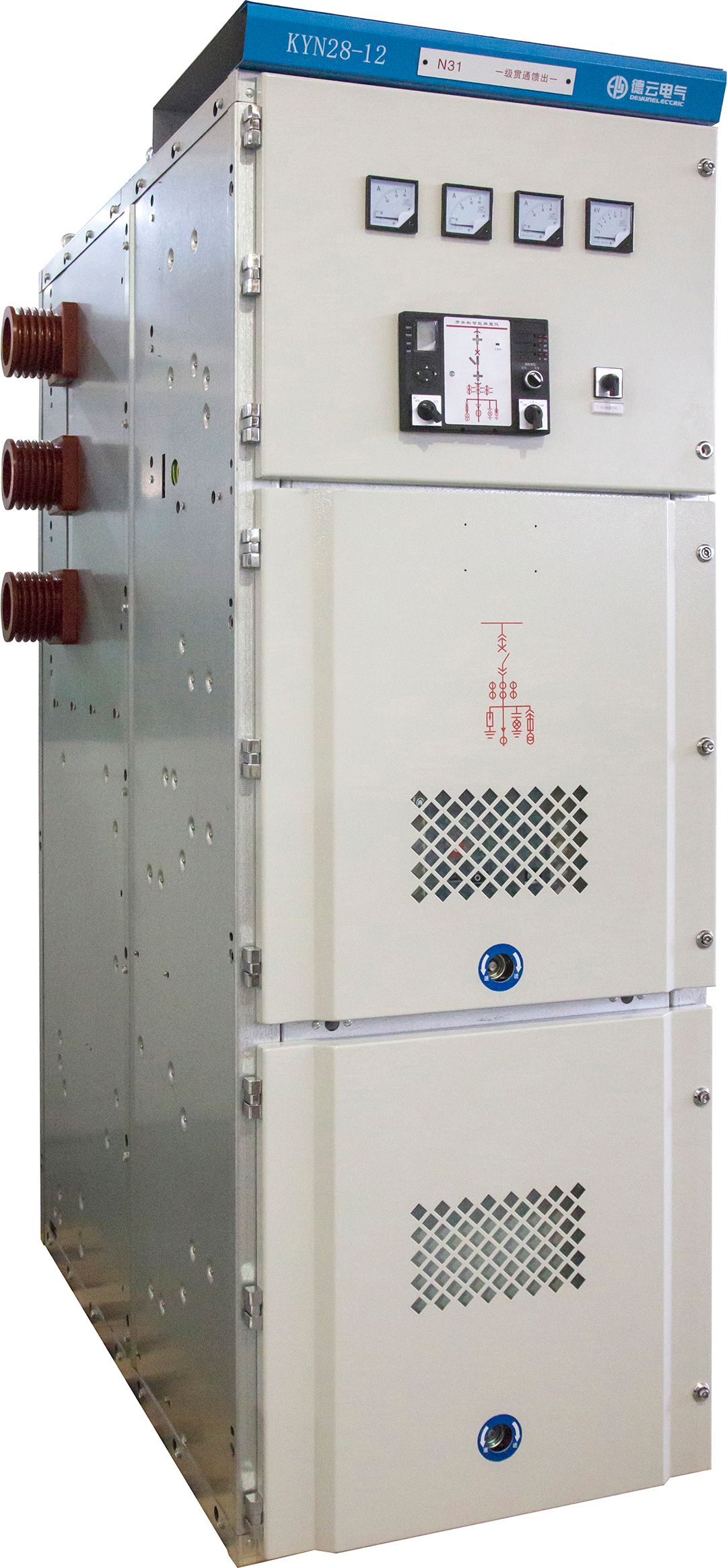
Switchgear maintenance has long relied on rigid schedules and manual inspections, often leading to unnecessary downtime or missed faults. Digital twins flip that model by creating a living virtual replica of the equipment, fed by real-time sensor data. Instead of guessing when a breaker might wear out, teams can watch its digital counterpart age under actual operating conditions, spotting trouble long before it triggers an alarm.
What makes this shift so practical is the ability to run simulations without touching the physical gear. When a plant wants to test a load increase or a new protection setting, the digital twin takes the risk, revealing how the switchgear would respond. This sandbox approach not only prevents costly trial-and-error on live systems but also gives maintenance crews a deeper gut feel for how the equipment behaves under stress.
Beyond predictions, the twin becomes a shared reference point for everyone involved. Field technicians, remote engineers, and even the manufacturer’s support team can examine the same virtual model, annotate issues, and rehearse repair steps. This kind of collaboration slashes mean time to repair and helps build a detailed operational history that gets smarter with every event, turning switchgear maintenance from a periodic chore into a continuous, data-driven conversation with the asset.
The Hidden Role of Modular Switchgear in Grid Resilience
When a storm slams into a coastal substation or a transformer fails without warning, the true test of grid resilience isn’t in the massive equipment—it’s in the switchgear quietly routing around the chaos. Modular designs thrive in these moments, allowing operators to isolate faults with a precision that older, monolithic systems can’t match. Instead of a single point of failure cascading into a regional blackout, these building-block assemblies confine the damage to a narrow segment, buying precious minutes for automated recovery or manual intervention.
What’s often overlooked is how this architecture transforms maintenance from a dreaded calendar exercise into a dynamic, load-adaptive process. With drawer-mounted breakers and plug-in bus connections, a single bay can be serviced without shutting down an entire switchboard. Field crews swap out a module in under an hour, slashing the mean time to repair and keeping critical loads—like hospitals or water treatment plants—online during peak demand. It’s a quiet revolution that turns scheduled outages into nearly invisible events.
Beyond day-to-day reliability, modular switchgear embeds future-proofing into the grid’s DNA. As renewable feeds and battery storage proliferate, protection schemes need to morph on the fly. Modular panels accept upgraded relays or communication slices without a full teardown, letting utilities adapt to new fault-current profiles or synchronization requirements years after installation. That inherent scalability is the real strength: a grid that can evolve without tearing itself apart is one that withstands not just today’s storms, but tomorrow’s unpredictable shifts in generation and load.
Beyond Switching: Smart Switchgear as Energy Data Hubs
Modern smart switchgear has moved far beyond its traditional role of merely connecting and protecting circuits. Embedded with advanced sensors, communication modules, and processing capabilities, these units now function as intelligent nodes that continuously harvest operational data. They capture everything from electrical parameters and thermal profiles to mechanical wear indicators, turning the lowly switchgear into a rich source of real-time insights.
This transformation means that every breaker and busbar becomes a data‑generating point, feeding information into analytics platforms without the need for extensive external metering. The collected streams include harmonic distortion, transient events, partial discharge signatures, and energy consumption patterns. By tapping into this native data, operators gain a granular, moment‑by‑moment understanding of system health and power flows, far surpassing what standalone meters can offer.
The true power emerges when this data is aggregated and analyzed across the entire facility. Switchgear‑as‑data‑hubs enable predictive maintenance schedules that replace fixed‑interval servicing, dynamic load balancing that prevents outages, and alignment of energy usage with renewable generation. In essence, the switchgear becomes the nerve center for an adaptive energy ecosystem—capturing, sharing, and acting on data to drive smarter, more resilient operations.
Eco-Efficient Switchgear: Navigating the SF6-Free Transition
The push to eliminate SF6, a gas with a global warming potential thousands of times greater than CO2, is reshaping the medium- and high-voltage switchgear landscape. What started as a niche environmental concern has evolved into a regulatory and market imperative, with utilities and industrial operators facing deadlines to phase out the gas. The challenge goes beyond simply swapping one insulating medium for another; it demands a fundamental rethinking of product design, testing protocols, and lifecycle management to ensure reliability isn't compromised.
Technically, the shift requires managing high dielectric stresses without SF6's unique arc-quenching properties. Solutions now center on vacuum interruption for current breaking, combined with solid or clean-air insulation for busbars and enclosures. Real-world deployments in 12 kV to 40.5 kV grids have proven that these alternatives can match traditional performance, but they often require larger footprints or novel material choices. Engineers are fine-tuning designs to achieve the same compactness and durability, using techniques like micro-gap vacuum interrupters and advanced thermoset polymers.
The transition is already gaining momentum beyond early adopters. Grid operators in Scandinavia and California are leading with full SF6-free substations, while manufacturers race to qualify products under emerging IEC standards. For asset managers, the decision now involves weighing total ownership costs, not just upfront capex—considering reduced regulatory risk, simplified end-of-life treatment, and growing client demand for sustainable infrastructure. This shift is quietly rewriting the rulebook for power distribution, turning eco-efficiency from a buzzword into a core engineering requirement.
Compact Power: Space-Saving Switchgear for Urban Energy Demands
Urban energy infrastructure is under constant pressure to do more with less. As cities densify and power demands climb, traditional switchgear—often bulky and requiring dedicated real estate—becomes a liability. The latest generation of compact switchgear flips this narrative, integrating advanced insulation, modular design, and intelligent monitoring into enclosures up to 40% smaller than conventional units. This isn’t just about saving square footage; it’s about enabling substations to be tucked into basements, repurposed retail spaces, or even underground vaults where space is at a premium.
What makes these designs stand out is their refusal to compromise on performance or safety. Solid-insulated busbar systems and vacuum circuit breakers eliminate the need for gas-insulated architectures, slashing the footprint while maintaining dielectric reliability. For densely packed commercial districts, where a single outage can cascade into chaos, self-healing grid capabilities and real-time thermal analytics keep the system resilient without human intervention. Architects and engineers are finding that these units blend seamlessly into mixed-use buildings, supporting the push toward distributed energy resources right where consumption happens.
Looking ahead, the trend is toward even greater integration with digital ecosystems. Plug-and-play connectivity allows for remote actuation and predictive maintenance, shaving operational costs while boosting uptime. In metropolitan areas where every inch counts, the switchgear itself becomes a silent partner in sustainability—reducing not just physical clutter but also energy losses through optimized current paths. This is industrial design that finally catches up with the pace of city life: tough, discreet, and fiercely intelligent.
FAQ
Advanced switchgear now incorporates arc-resistant enclosures and remote monitoring sensors that isolate faults in milliseconds, significantly reducing arc flash risks and allowing operators to manage systems from safe distances without direct contact with energized components.
Real-time condition monitoring using IoT sensors tracks temperature, humidity, and partial discharge, enabling predictive maintenance. This proactively replaces worn parts before failure, preventing cascading damage and extending overall equipment life by up to 30%.
Solid insulated switchgear using dry air or vacuum interrupters eliminates SF6—a greenhouse gas 23,500 times more potent than CO2—while maintaining compact footprints. This aligns with global decarbonization targets and reduces long-term regulatory and environmental liabilities.
Yes, modular and flexible busbar systems allow capacity upgrades or reconfigurations without major outages. Utilities can seamlessly integrate renewable sources or storage, future-proofing infrastructure as energy portfolios shift toward distributed generation.
Embedded intelligent electronic devices communicate with grid management systems to dynamically adjust protection settings based on real-time load flows. This prevents nuisance tripping, balances phases, and shunts power where needed to maintain stability during demand surges.
Corrosion-resistant materials, sealed enclosures with pressurized inert gas, and vibration-tolerant designs ensure reliability in salt-laden, high-humidity settings. Built-in dehumidifiers and self-diagnostic routines minimize manual inspections in remote locations.
Vacuum interrupters extinguish arcs inside a sealed chamber with no ionizable medium, eliminating contact erosion and the need for regular oil or gas refills. This achieves over 10,000 operations without servicing in medium-voltage applications.
With remote access becoming standard, IEC 62443-compliant controllers now embed secure boot, encrypted communication, and intrusion detection directly into switchgear firmware. This closes the air gap between IT and OT, guarding against unauthorized manipulation of power circuits.
Conclusion
Reliable power management is being reshaped by a series of quiet but consequential advances in switchgear design. Modern systems are moving well beyond traditional circuit breaking to become intelligent, adaptive assets. One critical focus is arc flash safety, where next-generation designs incorporate passive and active measures to reduce incident energy, protecting personnel without sacrificing uptime. At the same time, digital twins are transforming maintenance routines, enabling operators to simulate wear, predict failures, and schedule interventions before breakdowns occur—shifting from reactive fixes to a true condition-based approach. These virtual replicas feed on real-time data, often gathered from switchgear that now doubles as an energy data hub. Smart switchgear monitors load profiles, power quality, and thermal behavior, feeding analytics platforms that help facilities optimize consumption and avoid costly penalties. Such capabilities do more than prevent blackouts; they turn a passive distribution panel into a strategic tool for energy management.
Behind many of these improvements lies a push toward modular architectures, which simplify expansion and fault isolation, strengthening grid resilience without massive infrastructure overhauls. Utilities and large campuses can add capacity incrementally, aligning spend with actual demand. Meanwhile, the industry’s sustainability shift is evident in the move away from SF6, a potent greenhouse gas. Alternative dielectrics and sealed vacuum interrupters now achieve comparable performance with a fraction of the environmental impact. Complementing this is the trend toward compact, space-saving units built for dense urban environments where floor area comes at a premium. These smaller footprints demand creative thermal management and internal layouts, resulting in gear that often outperforms larger predecessors. Taken together, these innovations reveal a switchgear landscape that is safer, smarter, and more aligned with the demands of a decentralizing, electrifying world.
Contact Us
Contact Person: Julion
Email: [email protected]
Tel/WhatsApp: 8617351370631
Website: https://www.deyunelectric.com