

Stainless Steel Hex Socket Cap Screw Company for Reliable Industrial Fastening Solutions
2026-11-02
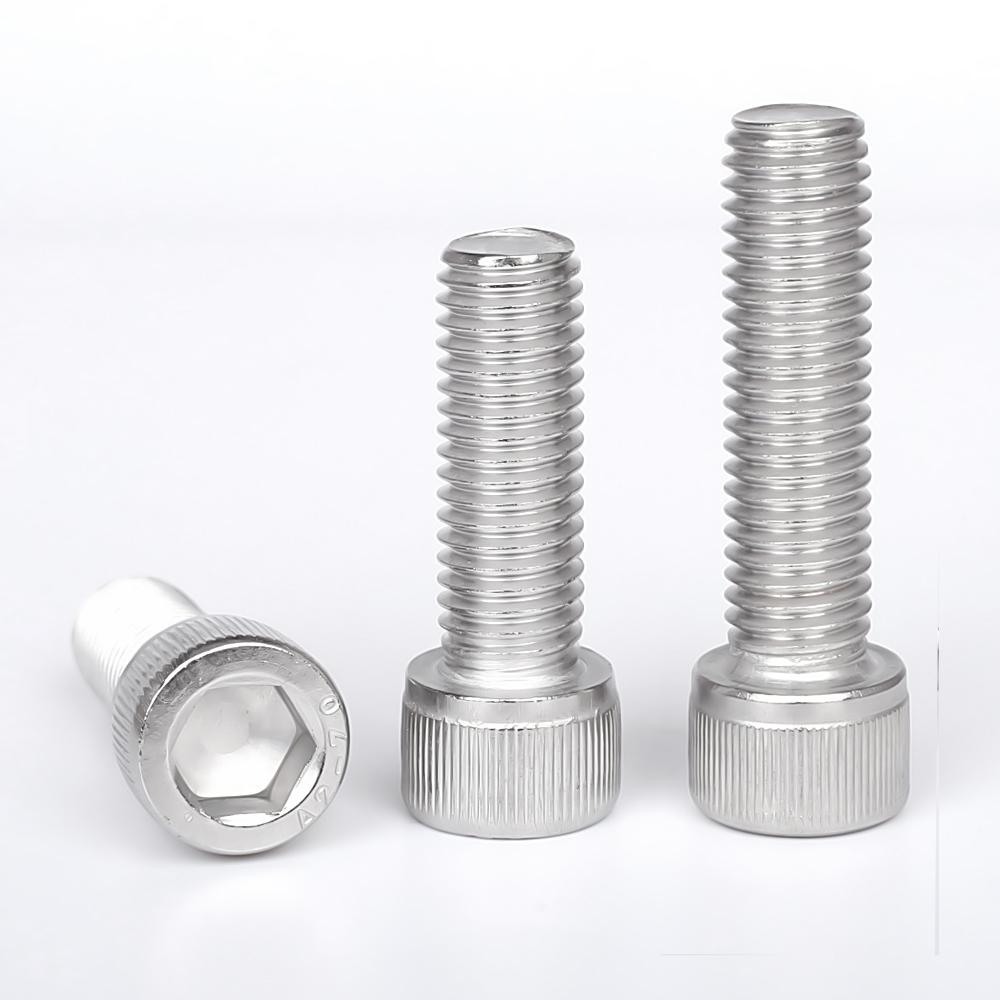
If you've ever had a fastener fail under torque, you know the sinking feeling—something as small as a hex socket cap screw can bring a whole assembly to a halt. That's why choosing the right stainless steel hex socket cap screw supplier isn't just about specs on a datasheet; it's about trusting that every thread, every socket, and every batch will hold up when it matters. At Wanluo, we've seen how the right fastening solution can make the difference between a smooth production line and an unplanned shutdown. In this post, we're pulling back the curtain on what actually makes stainless steel hex socket cap screws reliable in demanding industrial environments—and what to look for before you place your next order.
Why Our Stainless Hex Socket Cap Screws Hold Up Where Others Strip or Corrode
Most stainless fasteners fail at the points where stress concentrates: the socket corners and the thread roots. Our hex socket cap screws are cold-headed from 316 marine-grade stainless, then pass through a secondary rolling process that work-hardens the thread flanks. This means the socket doesn't round out under repeated torque, and the threads bite into mating material instead of shearing off.
Corrosion is another silent killer, especially in coastal or chemical environments. We don't just rely on raw alloy composition. Every batch gets a citric acid passivation treatment that removes free iron from the surface and promotes a uniform chromium oxide layer. As a result, these screws can sit in salt spray or washdown areas for months without showing the rust blooms that plague standard 304 fasteners.
If you've ever had a stainless screw gall and seize halfway into a tapped hole, you know the frustration. Our thread geometry includes a slightly modified pitch diameter and a smoother root radius, which reduces friction and prevents cold welding under load. Pair that with a controlled hardness range—not too soft to strip, not too hard to become brittle—and you get a fastener that actually installs and removes cleanly, cycle after cycle.
The Alloy Difference: How We Select Stainless Steel for Harsh Chemical Exposure
The real work happens long before a single flange or fitting reaches the production floor. When we talk about stainless steel for aggressive chemical service, we're not just picking a grade off a chart—we're interrogating the metallurgy. Molybdenum is the obvious hero for pitting resistance, but the ratio of chromium to nickel, the deliberate addition of nitrogen, and even trace amounts of copper or tungsten can shift performance in ways most spec sheets miss. A 316L might handle dilute sulfuric acid at room temperature, yet fall apart when chlorides creep in at 40°C. That's why our selection process starts with a failure-mode analysis, not a price list.
We then put candidate alloys through accelerated corrosion testing that mirrors the actual service environment—not just standard salt spray, but cyclic exposure with the customer's specific chemical cocktail. This matters because real-world tanks and piping rarely see a single pure acid; they see mixtures, temperature swings, and stagnant zones where concentration builds. By measuring critical pitting temperature and repassivation potential under those exact conditions, we can rule out alloys that look fine on paper but would perforate within months.
Finally, the alloy choice gets cross-checked against fabrication reality. A superaustenitic grade with 6% molybdenum offers superb resistance, but if it can't be welded without sensitization or if the required plate thickness isn't available in the needed timeframe, the theoretical best becomes a practical failure. The difference is in knowing which compromises are safe and which are not—and that only comes from having seen both successful installations and quiet, expensive failures in the field.
Torque, Fit, and Finish: What Our Machinists Check Before a Single Screw Ships
Before any screw leaves our floor, the torque spec gets verified on a calibrated digital wrench—not just once at setup, but on a sample from every bin. If the reading drifts even half a percent from the drawing, the lot is pulled and the tooling gets checked. That kind of paranoia comes from years of seeing perfectly good threads ruined by a worn drive bit.
Fit is checked against both GO and NO-GO thread rings, but the real test is how the screw drops into a mating part under its own weight. No forcing, no crossthreading, no relying on the anodizing to hide a loose class fit. We keep master fixtures from three different customer runs on the bench just to catch tolerance stack-up before it becomes a field failure.
Finish gets the thumbnail test plus a 20X loupe. Burrs, chatter marks, or a dull patch in the plating all send the part back. Our finisher has rejected lots for a scratch that only showed under angled light, because once a customer sees it, it's too late.
Bulk Supply Without Bulk Headaches: Realistic Lead Times for Industrial Buyers
Many industrial buyers still treat custom components like off-the-shelf hardware, then wonder why projects stall. A forged shaft from a mid-size supplier rarely ships in two weeks; realistic lead times hover between eight and sixteen weeks once tooling, heat treatment, and inspection are counted. Machined castings can stretch further if the foundry is booked or the alloy isn’t in stock. The gap isn’t laziness—it’s physics, metallurgy, and queueing.
The fix starts with asking for a capacity schedule, not just a quote. A supplier who gives you a date without checking current furnace loads or CNC availability is guessing. Request a breakdown: pattern or die production, raw material procurement, rough machining, finishing, quality documentation. Then add two weeks for freight, customs, and the inevitable hold at the dock. That buffer is what keeps your maintenance crew from standing idle next to an open gearbox.
When delays hit despite planning, don’t demand the impossible—split the order. Ask which portion can ship early as partials while the rest is completed. Many shops will release finished subcomponents or rough stock ahead of final inspection if you sign a waiver. Also keep a short list of alternate alloys or coatings that meet your spec with faster turnaround. A pragmatic industrial buyer trades perfection for momentum when downtime costs more than a material substitution.
When Off-the-Shelf Fasteners Fail: Our Custom Manufacturing Process Explained
When a standard bolt shears under load or a nut strips during assembly, the failure rarely stems from a single defect. Off-the-shelf fasteners are manufactured to broad specifications that may ignore your application's specific thermal cycling, vibration frequency, or corrosion exposure. A batch that works fine in one assembly can create a field failure in another simply because the material hardness was a few points too low, or the thread pitch didn't allow enough engagement.
Our custom manufacturing starts with the failed part and the conditions surrounding it. We analyze the fracture surface, measure dimensional drift, and review torque logs to identify exactly why the standard fastener gave way. From there, we select an alloy—often a precipitation-hardening stainless or a nickel-based superalloy—and design a thread profile, shank diameter, and underhead geometry that addresses the root cause. Heat treatment and surface coatings are then tailored to the operating environment rather than pulled from a generic menu.
Instead of sending you a catalog replacement, we produce a small pilot run and test it against your actual load spectrum, including cyclic fatigue and salt spray if needed. The result is a fastener that fits your assembly without shims or thread-locking adhesives, and it lasts long enough to eliminate the replacement cycle you were stuck in. When off-the-shelf parts repeatedly fail, the fix isn't a stronger version of the same design—it's a part engineered around the failure mode itself.
From Food Processing to Marine Rigging: Trusted in Environments That Punish Metals
Salt spray off a trawler deck, citric acid mist in a bottling line, caustic washdowns between shifts—these aren't just harsh conditions; they're metal's worst enemies. Standard alloys pit, rust, and weaken in a matter of months, costing operations thousands in replacements and downtime. That's why equipment built for food processing and marine rigging starts with one non-negotiable: materials that refuse to surrender to corrosion.
Take a filleting knife used on a rocking boat, then the same steel grade in a dairy plant's pipe fittings. Both face constant moisture, aggressive cleaning agents, and temperature swings. The difference between a trusted tool and a liability is often hidden in the microstructure—higher chromium and molybdenum content, passivation treatments, or engineered polymer coatings. These aren't buzzwords; they're the reason a shackle still threads smoothly after three winters at sea.
Maintenance crews in these industries don't have time to baby their gear. They need fittings, fasteners, and surfaces that shrug off punishment with minimal intervention. When a stainless clamp holds a sugar syrup line without weeping rust stains, or a winch gear keeps turning despite daily salt baths, that's not luck—that's deliberate material science earning its keep. In environments that punish metals, the only true cost saver is choosing something that doesn't need constant saving.
FAQ
The stainless steel we use has enough chromium and nickel to hold up against moisture, chemicals, and salt spray without the surface pitting you see on plated carbon steel. That means fewer replacements and less downtime in wet or washdown areas.
We ship a lot to food processing lines, pharmaceutical cleanrooms, marine deck hardware, and chemical dosing systems. Any place where rust is a safety or contamination concern tends to be a natural fit.
Yes, we run short custom batches for OEMs and repair shops. You can specify an unusual grip length, a fine pitch thread, or a reduced head height, and we will quote it without forcing you into a huge minimum order.
We source wire and bar from audited mills, test each incoming lot for chemistry, and then check key dimensions on the cold heading line and again after thread rolling. That gives you a fastener that behaves the same from first box to last.
The hex recess is formed to a controlled depth and width, and the head is work-hardened during cold forming. Combined with a clean, well-fitted driver, that greatly reduces the chance of stripping or cam-out during fast assembly.
We offer plain, passivated, and electropolished finishes. For outdoor or coastal exposure, passivated is a good baseline, but electropolished gives you the smoothest surface and best resistance to salt and chemical residue.
Yes. Common metric sizes from M3 to M24 and inch sizes from #4 to 1 inch are typically on the shelf. Larger diameters and less common lengths can be scheduled quickly since we cut and roll many of them in-house.
We can hold safety stock for your part numbers and release it against a blanket order. Most clients set a monthly or quarterly call-off, and we ship within a few working days so you are not tying up your own shelf space.
Conclusion
Most stainless hex socket cap screws fail long before the metal itself gives out—threads gall, heads round out, or crevice corrosion starts where the hex key meets the socket. We build ours around a simple rule: if the alloy, heat treatment, and final machining aren't matched to the actual chemical and mechanical load, the screw is already compromised. For harsh acid or chloride exposure, we lean on 316 or duplex grades with reduced carbon and controlled ferrite, not just a generic 18-8. Every batch gets checked for head concentricity, thread pitch diameter, and proof-load performance so torque specs on your drawings mean something in the field.
Industrial buyers don't need another catalog promise—they need a supplier that can handle 50,000 pieces without turning a twelve-week lead time into six months, or that can machine a nonstandard underhead fillet when an off-the-shelf screw keeps snapping at the same spot. We keep common diameters in ready stock and quote custom runs with realistic schedules based on current mill capacity, not wishful thinking. That reliability has put our fasteners inside food processing lines, saltwater rigging, and chemical transfer systems where a single corroded socket head can shut down an entire shift. The screws may look ordinary. The difference shows up after the first thousand cycles, the first acid wash, or the first time maintenance doesn't have to drill out a stripped hex.
Contact Us
Contact Person: Shane
Email: [email protected]
Tel/WhatsApp: 8613357785029
Website: https://www.wanluohardware.com