

SMD Chip Resistor Manufacturer Insights: Selecting Reliable Partners for Precision Electronics
2026-07-27
Selecting the right SMD chip resistor manufacturer is more than a sourcing decision—it’s a strategic move that can define the precision and longevity of your electronics. As the market brims with options, finding a partner that balances tight tolerances, stability, and supply reliability becomes critical. At the heart of this quest, Milliohm stands as a trusted name, blending engineering expertise with a deep component portfolio. This guide unpacks what separates exceptional manufacturers from the rest, arming you with insights to make a choice that truly elevates your designs.
Uncovering the True Meaning of Reliability in SMD Resistor Supply
When engineers talk about reliability in SMD resistor supply, they often focus narrowly on datasheet specs like tolerance and temperature coefficient. But true reliability goes deeper—it’s about consistent performance across thousands of assemblies, year after year, without unexpected field failures. It starts with the supplier’s process control: how tightly they manage raw material sourcing, laser trimming accuracy, and termination plating. A resistor that drifts after 500 thermal cycles or shows whisker growth in humid environments isn’t reliable, even if it initially measured perfectly. Reliability means trusting that every reel you buy will perform identically to the sample you qualified.
Another dimension is supply chain resilience. A component that’s technically flawless on paper becomes unreliable if you can’t get it during a production ramp. Real reliability includes long-term availability, honest lead times, and transparent capacity planning. Many passive component shortages have taught us that a resistor rated for 2000 hours of operational life is useless if it takes 52 weeks to arrive. The most dependable suppliers invest in redundant manufacturing lines and maintain safety stock for high-runner values, so your production schedule isn’t held hostage by a single plating line breakdown.
Finally, reliability is revealed through traceability and support. When something does go wrong—and in complex supply chains, it occasionally will—you need a supplier who can trace that reel back to the exact production batch, oven profile, and even the silver paste lot. That level of granular data allows targeted containment instead of sweeping recalls. And a supplier who collaborates on failure analysis, rather than pointing fingers, turns a reliability concern into a design improvement. In the end, reliability in SMD resistors isn’t just a component rating; it’s a partnership measured in consistent quality and responsive problem-solving.
Precision Electronics Demand More Than Standard Specifications
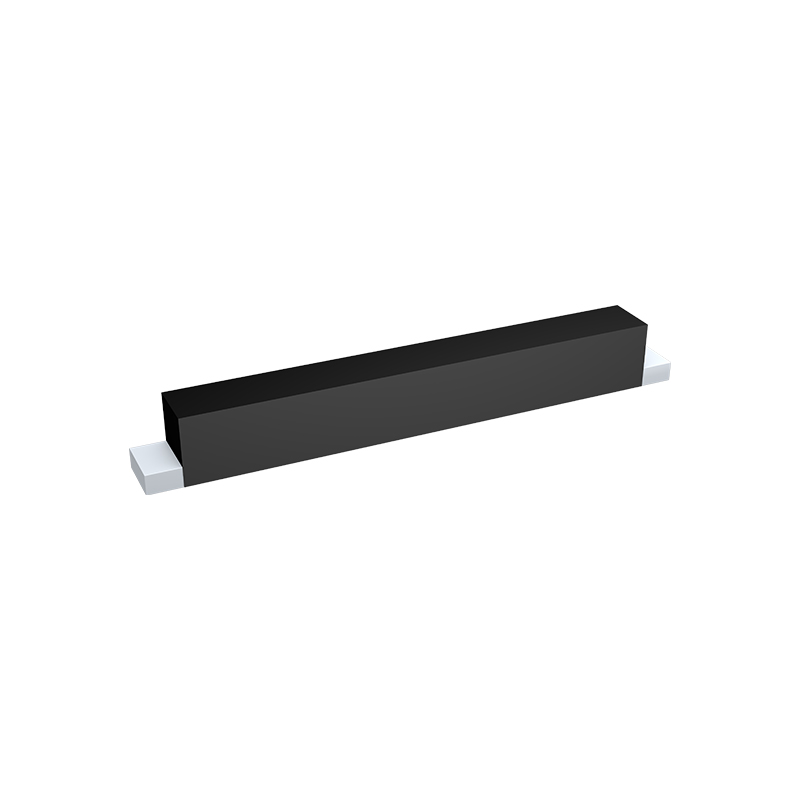
In the world of precision electronics, off-the-shelf tolerances rarely suffice. Components must consistently perform beyond datasheet promises—particularly in high-reliability sectors like aerospace, medical devices, and advanced instrumentation. Even a minor deviation can cascade into signal degradation, thermal instability, or outright failure under real-world loads. Engineers quickly learn that simply meeting IEC or MIL standards is just the starting point; actual operating conditions often push parts into stress zones where standard specs fail to predict behavior.
Take voltage references or clock oscillators, for example. A crystal specified at ±20 ppm over temperature might drift unpredictably when exposed to board-level noise or micro-vibration. Thermal hysteresis, long-term aging, and power supply rejection often reveal hidden flaws that aren’t captured in a typical product brief. That’s why rigorous derating, environmental screening, and application-specific characterization become non-negotiable. It’s not about distrusting suppliers—it’s about respecting physics.
Ultimately, designing for precision means treating every passive and active element as a potential source of error. From PCB parasitics to connector contact resistance, the margin between a good design and a great one lives in the details that standard documentation overlooks. Custom testing regimens, statistical binning, and collaborative supplier partnerships often make the difference between a prototype that works on the bench and a system that endures in the field.
How Manufacturing Processes Shape Long-Term Component Stability
The journey from raw material to finished part leaves a permanent fingerprint on a component’s internal structure, quietly dictating how it will behave years down the line. Subtle variations in grain flow, introduced by forging or casting, can create paths of weakness or fortify against fatigue. Even the choice of machining sequence affects residual stress distribution—things you cannot see but that matter immensely when cycles accumulate.
Thermal treatments, often an afterthought in design conversations, actually rewrite a metal’s memory. Quenching locks in a specific crystalline arrangement, while tempering relaxes brittle phases, striking a balance between hardness and toughness. Surface technologies like shot peening or anodizing don’t just dress the exterior; they build a protective narrative that delays crack initiation and corrosion, preserving geometric integrity under harsh conditions.
What separates durable products from early failures is rarely the material selection alone—it’s the disciplined execution of each manufacturing step. Tight process controls prevent micro-porosity and alloy segregation from becoming the nucleation sites of future fractures. Consistency in cooling rates, tool wear compensation, and environment removes the randomness that eventually translates into premature field returns.
Evaluating Partners Beyond the Datasheet: Real-World Performance Cues
When vetting technology partners, datasheets are often the starting point, but they rarely tell the full story. Benchmarks performed in pristine labs don’t reflect the unpredictable nature of live environments—traffic spikes, noisy neighbors, or the quirks of your existing infrastructure. Instead of fixating on maximum IOPS or theoretical throughput, pay attention to how a solution behaves when pushed past its comfort zone. Does latency remain consistent under load, or do response times degrade sharply? Observing performance in a staging sandbox that mirrors your production traffic can reveal weaknesses that a glossy spec sheet conveniently omits.
Beyond raw speed, resilience signals often live in the details that never make it into marketing materials: how gracefully a service recovers from node failures, the overhead introduced by data replication, or whether its caching layer introduces staleness issues during write storms. Schedule dedicated disruption testing—pull the plug on instances, flood the network, or simulate region-wide outages. A partner that genuinely cares about your uptime will welcome such scrutiny and may even share internal chaos engineering reports. Their willingness to discuss edge cases candidly, rather than redirecting to curated success stories, is a performance cue in its own right.
Navigating Trade-offs Between Cost, Quality, and Lead Time
Trade-offs between cost, quality, and lead time are the perpetual balancing act in any production or service environment. Pushing for lower costs often squeezes quality or stretches timelines, while insisting on top-tier quality can drive up expenses and delay delivery. The real skill lies in recognizing that these forces aren’t isolated—they tug at each other constantly, and treating them as separate levers only leads to fractured outcomes.
What separates effective teams from those constantly firefighting is the ability to set clear priorities upfront. When a client demands faster turnaround, it’s not just a scheduling change—it ripples into material choices, labor allocation, and testing rigor. Open, honest conversations about what is non-negotiable and where there's flexibility can reshape the entire approach. Sometimes a slight material substitution keeps the project on track without gutting the budget, other times it’s worth absorbing a modest cost overrun to protect long-term quality perception.
The best decision-makers treat this triangle not as a static constraint but as a dynamic puzzle. They map out multiple scenarios, showing stakeholders exactly what shifts when one vertex moves. This transparency builds trust and often reveals that perfection in all three dimensions is a mirage—but a well-negotiated compromise can deliver exactly what the situation demands, without the hidden costs of unrealistic expectations.
Building a Supply Chain That Adapts to Evolving Design Needs
Supply chains built for static products crumble when design iterations become constant. The key is to weave flexibility into every layer—not just logistics, but supplier relationships and internal workflows. Instead of locking down specifications, successful teams create feedback loops where supply chain managers sit in on design reviews, spotting material shortages or lead time risks before they become bottlenecks. This shift from reactive order-placing to proactive partnership keeps new versions flowing without inventory pileups or costly re-tooling delays.
Modular thinking extends beyond product architecture and into sourcing strategies. By qualifying multiple suppliers for interchangeable components, you decouple design updates from single-source fragility. A connector spec change doesn't derail production if three vendors can retool quickly. Pair this with shared component libraries across product lines, and you reduce the chaos of bespoke part numbers piling up in warehouses. The real magic happens when engineering and procurement co-own these libraries, updating them live as prototypes graduate to production.
Technology bridges the gap between design ambition and physical reality. Digital twin simulations let you test design tweaks against supplier capabilities instantly—checking tolerances, material availability, and even carbon impact before a single part is ordered. Pair this with additive manufacturing at regional hubs, and you shrink iteration cycles from weeks to hours. The result is a supply chain that doesn't just tolerate design evolution; it actively enables it, turning what used to be a constraint into competitive speed.
FAQ
You'll want to look at their quality certifications—ISO and IATF are good signs—as well as their track record with precision parts. Consistency from batch to batch is huge in our field, so ask about their process controls and how they handle tolerances down to 0.1% or tighter.
Request samples and put them through your own testing regimen. Also, talk directly to their engineering team about failure rates and how they handle non-conformance. Many reliable partners will share real performance data rather than just marketing claims.
Not necessarily. Many top-tier offshore factories have invested heavily in automation and clean rooms that rival any local shop. The key is communication—can you reach their engineers quickly when designs change? A quick video call with the technical staff can tell you more than a glossy brochure.
It's everything, especially now. Ask where raw materials are sourced and how they’ve hedged against shortages. A trustworthy supplier should openly discuss lead times, inventory buffers, and contingency plans without hesitation.
Absolutely, if you find the right fit. Some manufacturers specialize in low-volume, high-mix production and value long-term partnerships over huge orders. Explain your growth trajectory—they might offer flexible terms if they see potential.
Vague responses about environmental compliance, refusal to share test data, or a lack of in-house lab capabilities are all warning signs. If a sales rep can't quickly put you in touch with a technical contact, that suggests poor internal collaboration.
For precision resistors, it's non-negotiable. Even minor ESD damage can shift values over time. Ask to see their cleanroom protocols and whether they test every reel before vacuum sealing. Some of the best firms use tape-and-reel systems that minimize mechanical stress, too.
It's a strong signal. Companies that contribute to IEC or JEDEC committees usually have deeper technical knowledge and a stake in advancing the technology. That often translates to better foresight in component design and problem-solving when you're pushing boundaries.
Conclusion
Selecting a reliable SMD chip resistor manufacturer goes far beyond ticking boxes on a datasheet. True reliability means scrutinizing how manufacturing processes—from material purity to laser trimming consistency—directly influence long-term drift and failure rates. For precision electronics, standard specifications often fall short; partners must demonstrate a deep grasp of niche requirements like ultra-low TCR, high-frequency behavior, or sulfur-resistant terminations. Real-world performance cues, such as lot-to-lot repeatability and failure analysis transparency, reveal whether a supplier can consistently deliver components that maintain tolerance under thermal cycling, humidity, and bias load—conditions datasheets rarely simulate.
The right partner also balances cost, quality, and lead time without compromising on one for the other. This demands a supply chain agile enough to support evolving designs, from sudden BOM changes to miniaturization trends. Look for manufacturers who invest in vertical integration, robust change notification systems, and engineering support, not just transactional relationships. By evaluating suppliers on their process controls, design flexibility, and commitment to understanding your end application, you build a foundation where component stability feeds into product longevity—ultimately making precision a predictable outcome rather than a gamble.
Contact Us
Contact Person: Yuying Gao
Email: [email protected]
Tel/WhatsApp: +86 18926013721
Website: https://en.milliohm.net/