

Recloser Supplier Insights: Choosing Reliable Protection for Modern Power Grids
2026-11-16
Every modern grid operator knows the quiet pressure of choosing components that won’t fail when the weather turns hostile. A recloser isn’t just a switch—it’s a frontline decision that shapes outage minutes and crew safety for a decade. While specs sheets blur together, the real difference hides in arc interruption behavior, communication latency, and how a device ages under salt spray and afternoon storms. This is where Deepwill enters the conversation—not with flashy claims, but with protection logic that learned from fifteen years of field fault data. Let’s unpack what actually separates a dependable recloser from a datasheet promise.
Why Recloser Performance Defines Grid Resilience
A grid’s ability to stay resilient during storms, falling tree limbs, or transient faults comes down to one piece of equipment that often goes unnoticed: the recloser. Most line disturbances are temporary—an errant branch brushing a conductor, a lightning strike that clears itself in milliseconds. Without a fast, intelligent reclosing mechanism, these momentary events would escalate into prolonged outages, triggering manual restoration and needless truck rolls. The recloser bridges that gap; it senses the fault, cuts power before damage cascades, then attempts a series of timed re-energizations. When it performs well, customers barely register a flicker. When it’s sluggish or misconfigured, a minor blip becomes an extended blackout, and that’s the difference between a grid that shrugs off chaos and one that crumbles under it.
True resilience isn’t just surviving extreme weather—it’s how the grid absorbs everyday hits and adapts on the fly. Modern reclosers now blend real-time voltage sensing, peer-to-peer communication, and automated sectionalizing, effectively decentralizing decision-making at the edge of the network. This shift matters more as rooftop solar and battery storage spread, because fault current patterns become bidirectional and unpredictable. A high-performance recloser can distinguish between a transformer inrush and a tree contact, avoiding unnecessary lockouts that might island critical loads. It acts less like a brute-force switch and more like a neural reflex for the feeder. When that reflex is sharp, the utility turns what could have been a cascading failure into a non-event—keeping lights on, equipment safe, and trust intact without fanfare or intervention.
Key Engineering Benchmarks That Separate Exceptional Suppliers
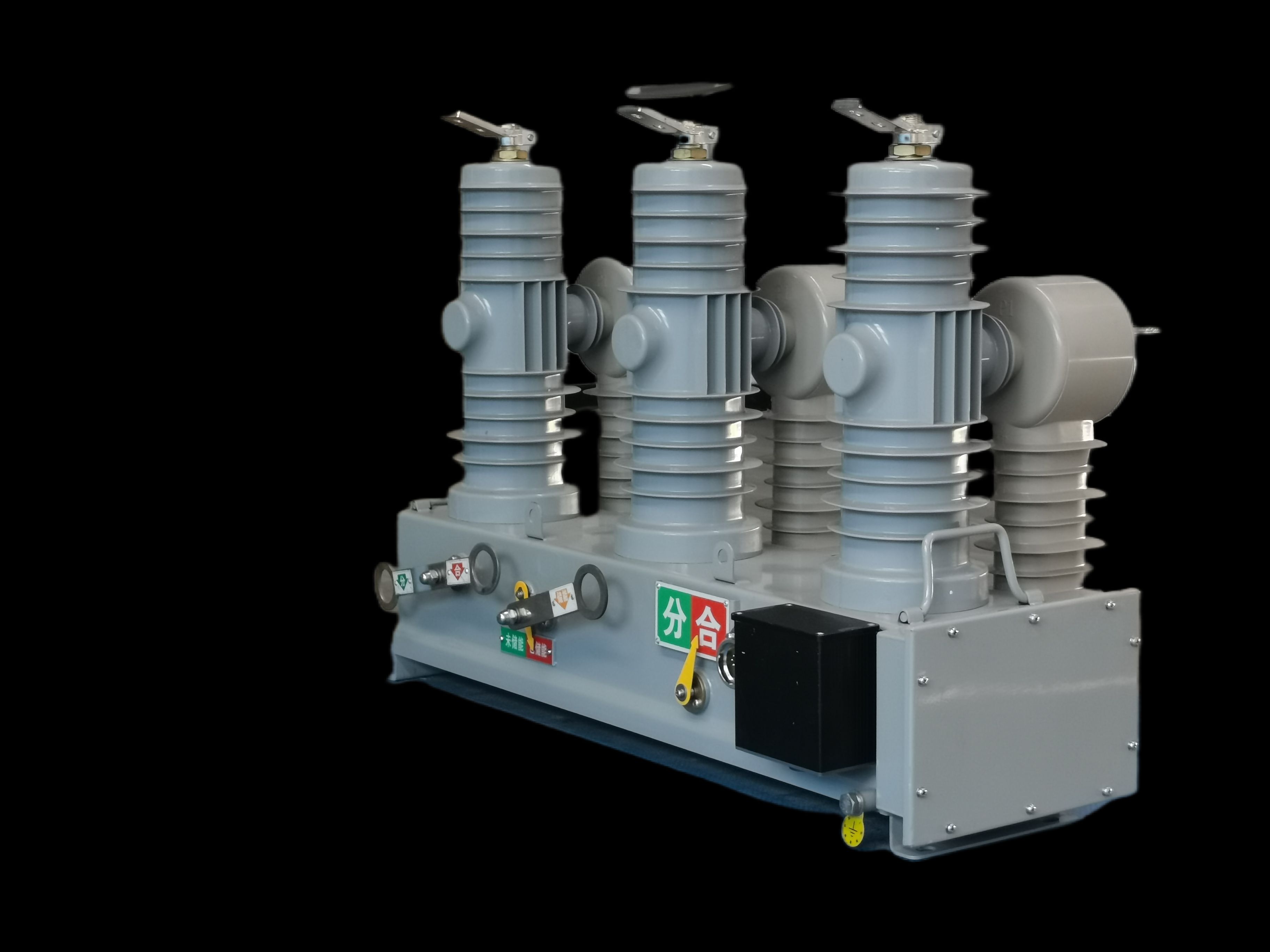
When assessing a supplier's true engineering depth, capability metrics alone rarely tell the full story. Exceptional partners don't just claim proficiency; they demonstrate it through the way they handle unexpected challenges. Instead of relying on glossy brochures, look at failure analysis protocols—do they run root cause investigations with real granularity, or do they paper over cracks with quick fixes? The benchmark isn't whether they can follow a specification, but how they behave when a spec falls short. Do they quietly recommend a better material, a more manufacturable geometry, or a smarter tolerance stack before you even spot the issue? That proactive, quietly confident engineering voice—often absent in transactional shops—marks the difference between a vendor and a genuine extension of your team.
Another often-overlooked litmus test lives in a supplier's approach to process capability and legacy knowledge. Mature engineering cultures don't restart at zero with every new project; they carry forward hard-won insights from past productions, documented not just in static reports but in living design guidelines, updated simulation boundary conditions, and tribally shared know-how that new hires absorb. Ask to walk through a non-glamorous example—a persistent defect they chased for months. The supplier worth keeping can recount the false leads, the data that finally pointed to the unexpected variable, and how they permanently changed their DFM checklist because of it. That narrative depth exposes far more than a CpK number ever could. It shows a supplier who treats engineering as a continuous discipline, not a one-off exercise.
Finally, gauge their relationship with the unknown. Truly capable suppliers don't pretend to have all the answers upfront; they map uncertainty transparently. During early feasibility reviews, an exceptional partner will point to the specific areas where simulation assumptions need physical validation, or where a novel process carries hidden interaction risks. Their strength isn't in pretending those risks don't exist—it's in designing targeted rapid learning cycles that shrink uncertainty before committing hard tooling. This mindset shift from “we can do it” to “here’s how we’ll figure it out together” separates vendors who just fill orders from engineering partners who actively protect your product’s industrialisation timeline.
Beyond the Datasheet: Field-Proven Reliability Factors
A component’s performance on the test bench rarely tells the full story. Datasheets capture controlled environments and accelerated aging curves, but they miss the messy, unscripted realities that shape long-term dependability. Engineers who’ve spent years diagnosing field returns know to look past nominal specs—paying attention instead to transient behaviors, environmental synergies, and failure modes that never made it into the official documentation. It’s this layer of experiential insight that often separates a robust design from one that just passes qualification.
One underappreciated factor is the influence of assembly processes on actual reliability. A perfectly specified capacitor can degrade rapidly if the soldering profile subtly alters its internal structure, or if conformal coating chemistry creates leakage paths under humidity. Facilities with deep failure analysis archives consistently find that manufacturing variability—from batch to batch or line to line—introduces failures no simulator predicted. The datasheet cannot warn you about a specific factory’s water quality affecting plating adhesion, yet such quirks dominate long-term outcomes.
Field data also exposes the fatigue habits of materials in ways that lab tests compress. Vibration profiles in real installations couple with thermal swings to create micro-fretting in connectors that only manifests after thousands of hours. Experienced teams build their own derating curves over time, factoring in observed wear-in periods and seasonal failure clusters. These field-proven lessons don’t negate the datasheet—they complete it, turning a static document into a living reference tempered by decades of deployed hardware. The real measure of reliability lives in the gap between promised numbers and sustained operation under conditions no lab could fully replicate.
Integrating Smart Reclosers Without Overcomplicating Your Network
Adding smart reclosers to a distribution network often brings immediate benefits like faster outage restoration and better fault data, but it can also spark a headache if the integration process doesn’t account for the existing communication fabric. The key is to avoid treating the recloser as a standalone gadget and instead weave it into the supervisory control and data acquisition system with a light touch. This means leveraging protocols already running on the network, such as DNP3, and configuring point maps that mirror the same addressing scheme used by other line devices. When engineers resist the urge to build parallel infrastructure, the rollout feels less like a major upgrade and more like a natural extension of the system they already trust.
One practical way to keep complexity low is to let the recloser’s local intelligence handle the heavy lifting. Modern devices can autonomously run sectionalizing sequences and voltage checks, communicating only summary events back to the control center instead of streaming every measurement. This reduces bandwidth demands and allows the operations team to interact with a clean, abstracted view of what’s happening on the feeder. Rather than overwhelming dispatchers with raw data, the integration layer translates recloser actions into familiar alarms and status updates, making the new hardware feel immediately manageable.
Long-term value doesn’t come from piling on features but from disciplined change management. A lot of integration headaches start when field crews and control room operators receive conflicting training or unclear commissioning checklists. Building a shared language between protection engineers, SCADA technicians, and line workers early in the project cuts down on those late-night support calls. Documenting the logic settings in an accessible format, running consecutive simulation scenarios, and having a rollback plan for the first week of operation might sound like extra effort, but it actually removes the fear that the system will become unmanageable once the contractor leaves. That practical groundwork keeps the network smarter without making it harder to run.
The Hidden Costs of Underspecifying Your Protection Scheme
A loosely defined protection plan often looks cheaper on paper, but the savings vanish the moment something goes wrong. When specifications lack precise trip settings, coordination studies, or device selection criteria, field technicians are left guessing. That guesswork leads to miscoordination—breakers tripping in the wrong sequence, or safety devices failing to operate until it's too late. The result isn't just downtime; it's equipment damage that could have been avoided, and repair bills that dwarf what a thorough engineering review would have cost.
Beyond immediate failures, there's a slow bleed from underspecification that rarely makes it into project budgets. Operators compensate by running equipment in manual override or bypassing poorly set relays just to keep production moving. This masks nuisance trips but turns the protection system into window dressing. One study of industrial facilities found that sites with minimal relay setting documentation spent roughly three times longer troubleshooting per event compared to those with clearly defined, validated settings. That lost time stacks up, eroding efficiency month after month while nobody tracks it as a “protection scheme cost.”
There's also a compliance and liability tangle that surfaces years later. When arc flash labels are based on vague assumptions instead of precise modeling, or when coordination gaps go undocumented, any incident invites scrutiny that a well-specified scheme would have easily deflected. Insurance auditors, OSHA investigators, or even internal review boards will eventually ask: was the protection system designed to a recognizable standard, or was it just pieced together from vendor defaults? Without a clear specification trail, proving due diligence becomes extremely difficult—and the financial and reputational consequences are never factored into that initial low-bid estimate.
What Forward-Thinking Utilities Demand from Recloser Partners
Gone are the days when a recloser was just a beefed-up circuit breaker with a few basic communication ports slapped on. The utilities shaping tomorrow’s grid expect their equipment partners to think in terms of ecosystems, not standalone hardware. They want a recloser that arrives with native intelligence—capable of real-time waveform streaming, adaptive protection schemes that self-tune to changing fault conditions, and seamless interoperability with the broader distribution management system. It’s no longer enough to simply clear a fault; the device has to explain what happened before, during, and after the event, feeding engineers precise data without making them log into yet another siloed platform.
Forward-thinking teams also demand a partner who owns the entire lifecycle conversation, not just the sale. They push for embedded cybersecurity that starts at the chip level and upgrades transparently, avoiding the nightmare of field retrofits. They expect proactive health monitoring that predicts contact wear and battery life months in advance, so maintenance becomes a scheduled blip rather than a midnight emergency call. Most telling, they want collaborative roadmap discussions—where the utility’s specific resilience goals, wildfire mitigation mandates, or DER saturation challenges directly shape what the next firmware release or hardware revision can do. The relationship shifts from vendor to genuine co-development ally.
Perhaps the hardest-to-articulate but most critical demand is cultural: they want partners who move at the speed of software, even when building hardware that must last 30 years. That means decoupled architecture where control logic can be updated without touching protection functions, a DevOps mindset for iterative testing on real-world feeder data, and field-service teams that treat every installation as a data-gathering mission, not just a swap. In short, they’re selecting recloser partners who don’t just react to standards—they actively help define the next ones.
FAQ
Real-world field performance data and the supplier's track record for responding to failures often get less attention than technical datasheets. Utilities should dig into how a supplier handles firmware updates, emergency part shipments, and whether they have local engineering support that understands regional grid codes — these can make or break long-term system reliability.
With rooftop solar, battery storage, and microgrids feeding power in both directions, reclosers must handle bidirectional fault currents and more complex protection coordination. You need devices with flexible protection settings that can adapt on the fly, not just fixed trip curves. Suppliers offering built-in load and generation profiling give a real advantage here.
A hacked recloser can take down an entire feeder, so utilities now demand defense-in-depth. It's not enough to have a password; they expect role-based access control, encrypted communication, and adherence to standards like IEC 62351. Suppliers who can't demonstrate regular penetration testing and a clear vulnerability disclosure process are losing bids quickly.
Beyond checking if it speaks DNP3 or IEC 61850, you need to validate configuration tool compatibility with your existing SCADA and ADMS systems. Run a mini-pilot: export settings from your engineering software, push them to the recloser, simulate faults, and verify sequence-of-events logging — miscommunications here cause more headaches than any hardware defect.
Ask for accelerated life test reports — humidity, temperature cycling, mechanical endurance — not just design calculations. Inquire about component sourcing: vacuum interrupters from proven manufacturers, continuous current rating margins. Talk to other buyers about how the supplier's reclosers perform after five years of salt fog or heavy icing, not just day-one results.
Look for suppliers that offer on-demand remote diagnostics, not just call-center troubleshooting. The ability to pull event records and trip data remotely avoids truck rolls. Also, check if they stock critical spare parts regionally and have service-level agreements for software updates that include protection logic revisions when grid codes change.
It's no longer about buying a switch. The decision hinges on whether the supplier provides ready-to-deploy FLISR schemes, volt/VAR optimization integration, and data analytics that turn recloser data into actionable fault location insights — without requiring expensive third-party add-ons. Suppliers that ship a 'dumb' recloser and call it smart are being left behind.
IEEE C37.60 and IEC 62271-111 are must-haves, but utilities are increasingly valuing real-time condition monitoring that validates performance in situ — things like online vacuum interrupter integrity checks and internal humidity sensors. A supplier that combines robust type-test data with self-diagnostic capabilities provides stronger assurance than paperwork alone.
Conclusion
The true measure of a recloser isn’t just its interruption rating on paper, but how it holds up when a storm snaps lines and thousands of customers are in the dark. Grid resilience is built on those split-second decisions, and suppliers who treat this as a commodity often miss the engineering rigor that separates lasting performance from early failures. Exceptional providers demonstrate not only compliance with standards, but a design philosophy that accounts for real-world fault currents, environmental extremes, and the cumulative mechanical stress that datasheets rarely capture. Digging deeper, the field-proven reliability factors—like protection relay coordination, arc-flash mitigation, and documented maintenance histories—matter more than glossy brochures, because what fails quietly in a substation eventually cascades into expensive outages.
Smart recloser integration shouldn’t demand a network overhaul; utilities need solutions that layer onto existing SCADA and distribution management systems without forcing complex custom engineering. The hidden costs of underspecifying a protection scheme surface later: inadequate fault clearance leads to damaged transformers, conductor burndown, and crew overtime that erodes any upfront savings. Forward-thinking utilities now look for partners who offer modular communication architectures, transparent failure analysis, and a willingness to co-develop protection settings that evolve with load growth and DER penetration. In the end, choosing a recloser supplier is less about the hardware itself and more about the long-term engineering relationship that keeps the lights on when the grid is pushed to its limits.
Contact Us
Contact Person: Julion
Email: [email protected]
Tel/WhatsApp: 8617351370631
Website: https://www.deyunelectric.com