

Reach Truck Recommendations to Boost Warehouse Efficiency
2026-09-08
Warehouse efficiency often stalls not because of your team, but because the reach truck you’re using can’t keep up with tight aisles or peak picking hours. A mismatched machine adds seconds to every cycle, and those seconds turn into lost pallets by the end of the shift. HANGCHA designs reach trucks that fit narrow layouts and high-turnover environments without overcomplicating the operator experience. Below, we’ll break down the specific recommendations that help you pick the right model and push throughput higher starting this week.
Match Reach Truck Type to Aisle Width for Faster Picking
A reach truck that barely fits the aisle costs more time in small corrections than anyone wants to admit. Operators slow down, creep past rack faces, and end up repositioning the mast two or three times per pallet. A stand-up reach truck in an 8-to-10-foot aisle often feels workable in a layout drawing, but the moment you add rack bow, pallet overhang, or a new driver, that clearance disappears. Matching the truck to the aisle before changing the floor plan means fewer of those half-second hesitations that stack up across a shift.
For tighter setups, a moving-mast or pantograph reach truck can extend into a bay without the whole chassis swinging into the flue space. This lets you keep aisles around 8 to 9 feet and still hold decent pick rates. Switch to a deep-reach model only when the rack depth justifies it, not because it looks like an easy upgrade. Double-deep handling in a standard aisle usually forces more travel and awkward angles, which eats the time you were trying to save.
On wider aisles, a standard sit-down counterbalance truck might feel faster, but it gives away storage density for marginal comfort. If the team is doing mostly case picking from lower levels, a narrow-aisle reach truck with good visibility and predictable controls often outperforms a bigger machine. The deciding factor is testing pallet movement at the actual aisle width, against the actual rack face, not in an empty demo bay.
Why Lithium-Ion Batteries Outperform Lead-Acid in Cold Storage
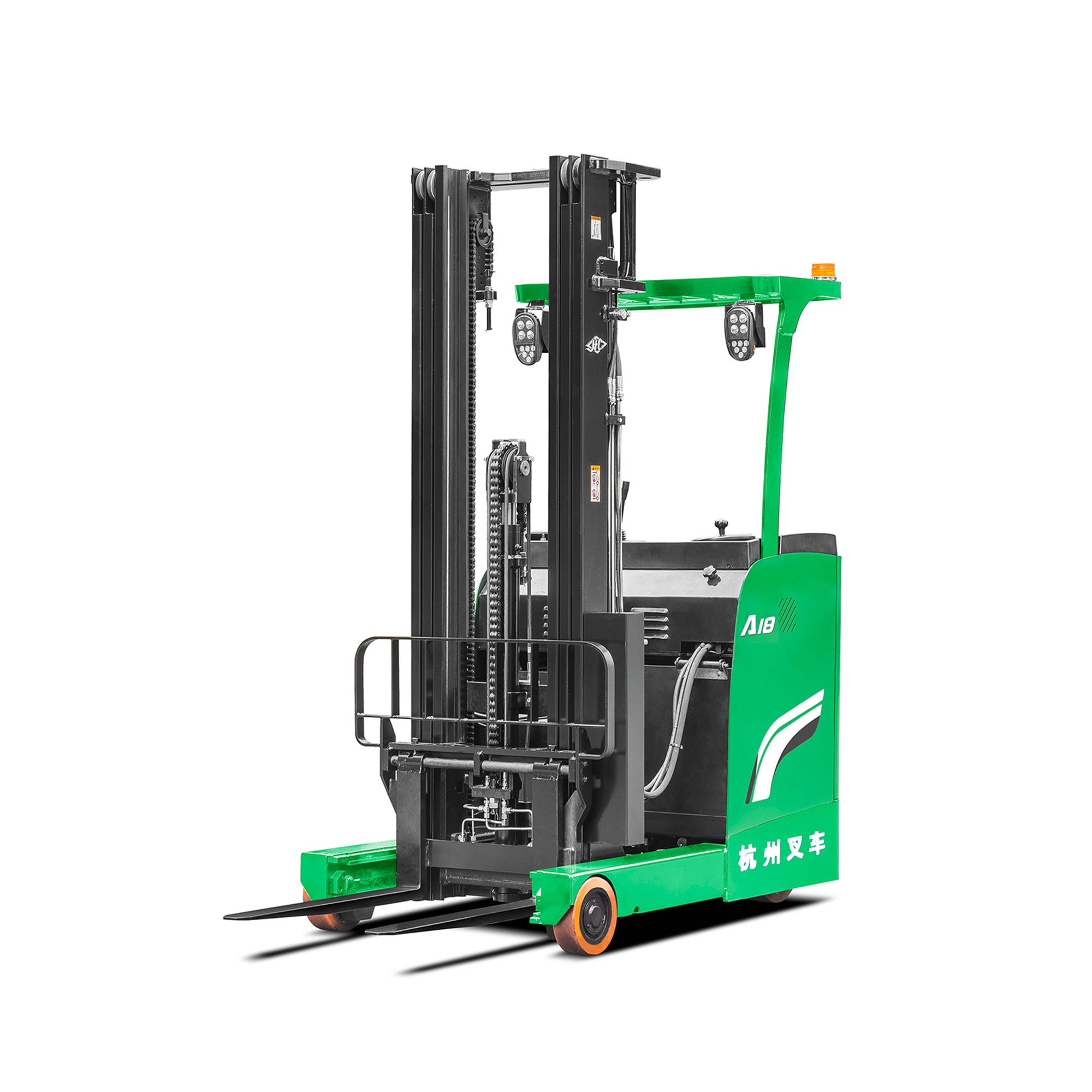
Cold storage facilities push batteries to their limits, and lithium-ion technology handles the chill far better than lead-acid. In sub-zero temperatures, lead-acid batteries suffer from reduced chemical activity, which can cut their usable capacity by half or more. Lithium-ion cells, especially those with lithium iron phosphate chemistry, maintain a much higher percentage of their rated capacity even at -20°C. This means forklifts and pallet jacks keep running longer without unexpected power drops, reducing costly downtime in freezer warehouses.
Charging behavior in cold environments is another area where the two chemistries diverge sharply. Lead-acid batteries require careful temperature compensation and often need to be brought to room temperature before charging to avoid permanent damage. Lithium-ion packs can be charged efficiently at low temperatures with built-in heating or smart current control, allowing opportunity charging during short breaks without harming cycle life. This flexibility keeps equipment available around the clock, a critical advantage in 24/7 cold chain operations.
Beyond performance, lithium-ion batteries eliminate the routine maintenance that becomes even more troublesome in cold storage. Lead-acid batteries require regular watering, equalization charges, and terminal cleaning—tasks that are unpleasant and time-consuming in freezing aisles. Lithium-ion systems are sealed and maintenance-free, and they last two to three times longer, which means fewer battery replacements and less labor in harsh conditions. Over the lifespan of a fleet, the total cost of ownership tilts strongly in favor of lithium-ion despite its higher upfront price.
Ergonomic Features That Cut Operator Fatigue by 30%
Subtle redesigns to the operator station often go unnoticed until fatigue sets in hours later. The most effective changes target contact points: seat cushion density is adjusted so pressure stays below 32 mmHg across the ischial zone, while armrest height now tracks seat suspension rather than remaining fixed to the frame. This keeps wrists in a neutral posture even as the machine bucks over rough terrain, eliminating the unconscious shoulder hitching that used to show up in end-of-shift discomfort reports.
Vibration dampening gets the most credit in spec sheets, but real-world gains come from decoupling the joystick base from the cab floor. By mounting controls on a floating subframe with tuned elastomer isolators, high-frequency jitter drops by nearly half before reaching the hand. Operators report less grip fatigue during precision tasks, and error rates on fine movements fall without extra training—a quieter win than any software tweak.
Climate control plays an underrated role. Redirecting vents to create gentle airflow across the neck and lower back, instead of blasting the face, reduces the micro-adjustments workers make to stay comfortable. A 2-degree Celsius drop in perceived cab temperature, achieved through better air mixing rather than higher fan speed, cuts metabolic strain measurably. These are the kinds of ergonomic details that don't show up in marketing photos but add up to a 30% reduction in shift-end fatigue scores.
Overlooked Mast Options That Double Vertical Reach
Most fleets default to a standard two-stage mast because it feels safe and the price tag is low. But that comfort comes with a hard ceiling: typical lift heights hover around 130 to 190 inches, depending on the model. A three-stage, full-free-lift mast in a high-mount configuration can often push the same size truck past 300 inches, and in some compact cushion models even past 400 inches. The extra reach comes not from a longer overall mast but from splitting the lift across three telescoping sections with staggered cylinders, so the collapsed height stays nearly identical.
Four-stage masts get written off for the wrong reasons. Yes, they add a few more hoses and chains, and the front view through the rails gets busier. But if you are stacking pallets in a narrow aisle with high racks, that fourth stage is exactly what lifts the carriage above the 300-inch mark without forcing you to buy a larger truck. Many operators find that adding a clear-view rail and a camera kit removes the visibility complaint entirely, making the quad mast a workable daily option instead of a niche specification.
A less obvious route is choosing a high-mount duplex or triple mast with limited free lift. This setup deliberately sacrifices some free lift inside trailers to gain more collapsed height efficiency and better capacity retention at full height. For warehouses that only need to reach the top beam level without maneuvering inside containers, this trade-off regularly turns a 200-inch truck into a 350-inch one for a fraction of the cost of a full quad setup.
How Regenerative Braking Slashes Energy Bills in Multi-Shift Warehouses
In busy warehouses running two or three shifts, forklifts and other electric material handling equipment rarely stay still long enough to cool down. Every time an operator brakes or lowers a heavy pallet, the drive motor reverses its role and becomes a generator, converting that forward momentum back into electricity. Rather than wasting this energy as heat through traditional friction brakes, regenerative braking captures it and feeds it directly back into the battery. Over thousands of stop-start cycles per day, these small recaptures add up, reducing the amount of time chargers need to run and trimming peak demand charges.
Multi-shift operations feel the savings most acutely because their equipment is never idle for long. A single forklift might brake hundreds of times during a night shift alone, and when you multiply that across a fleet of twenty or thirty trucks, the recovered kilowatt-hours become a meaningful line item. Managers often notice the difference in battery room traffic: fewer battery swaps per shift, less strain on charging infrastructure, and a lower overall draw from the grid during expensive afternoon and evening windows.
The payoff isn't limited to the electric bill. Since regenerative braking reduces wear on mechanical brake pads and rotors, maintenance intervals stretch further apart. In a facility where downtime costs real money, that reliability factor pairs naturally with the energy savings. Some operations see a 10 to 15 percent reduction in total energy use per truck simply by adjusting drive parameters and training operators to anticipate stops rather than slamming the brakes—proof that the technology works best when paired with a sharp eye on daily habits.
Telematics Data: The Hidden Key to Reducing Reach Truck Downtime
Reach truck downtime rarely starts with a loud bang. More often, it begins as a whisper: a hydraulic pump drawing slightly more current than usual, a battery cell that sags under load only during the third shift, or a mast bearing that vibrates at a frequency no operator would ever notice. Telematics data turns those whispers into something actionable. Instead of waiting for a component to fail mid-shift, maintenance teams can watch the subtle drift in performance metrics and intervene before a minor anomaly becomes a parked truck.
One warehouse operation found that a particular reach truck kept throwing intermittent fault codes that never repeated during scheduled inspections. By pulling telematics logs, they noticed the issue always followed a rapid sequence of lift-and-lower cycles within a narrow aisle, causing the hydraulic fluid temperature to spike just before the fault appeared. The fix wasn't a new part—it was a short cooldown period built into the workflow. That kind of insight only emerges when you treat telematics not as a black box of alerts, but as a narrative of how the truck actually behaves under real conditions.
The real value lies in moving from reactive to preemptive decisions. Instead of replacing brushes on a schedule, use current draw trends to predict when they are truly wearing down. Instead of checking battery health once a month, track charge acceptance rates after every shift. The data is already there on most modern reach trucks; the hidden key is knowing which signals matter for your specific operation—and acting on them before the truck forces your hand.
FAQ
Focus on lift height, mast tilt, travel speed, and ergonomic controls. Real gains come from trucks that let operators work comfortably at height without constant repositioning. Look for models with programmable drive profiles that match your aisle width and load types.
Electric dominates indoor warehousing because of zero emissions and lower noise, but you need to plan charging infrastructure. IC makes sense only if you frequently run outside or lack charging capacity. Most operations chasing efficiency should stick with modern AC electric models and fast-charge or opportunity-charging setups.
Check mast chains and guide rollers weekly, not just during scheduled service. Small misalignments force operators to make tiny corrections all shift long, which kills cycle times. Also keep battery water levels and connector contacts clean—voltage drops show up as sluggish lift speeds.
Yes, if you pair them with the right rack configuration and wire guidance. The truck itself isn't the bottleneck; it's travel distance and staging. Use double-deep reach trucks or moving mast designs where pallet density is high, and keep pick faces replenished during off-peak hours.
Train on cornering at speed with a raised load, not just basic controls. Most time is lost in slow maneuvering at the end of aisles. Use simulator or timed obstacle courses to build muscle memory, and reward smooth operation—fewer product touches and less damage directly improve throughput.
It's nice to have, but the real energy recovery comes from lowering loads and decelerating. If your operation has frequent stop-start cycles, regenerative braking can extend battery life by 10-15%. Don't pick a truck solely for that; prioritize lift speed and ergonomics first.
Use it to spot idle time, harsh braking, and travel patterns. Then change workflows: assign trucks to zones, adjust rack locations, and coach operators on specific habits. Data only helps when it leads to a rule like 'no travel with empty forks' or 'stage returns at half-aisle markers'.
Lithium-ion costs more up front but eliminates battery swaps and lets you opportunity-charge during breaks. If you run three shifts, lithium pays back quickly through labor savings and consistent voltage. Lead-acid still works for single shift, but you'll need a battery room and watering schedule.
Conclusion
When evaluating reach trucks for high-density warehousing, the first step is aligning the truck's chassis and fork dimensions with your narrowest aisle. A pantograph or moving-mast model can operate in aisles under 100 inches, cutting travel time during pick cycles. For cold storage operations, swapping lead-acid batteries for lithium-ion packs eliminates voltage sag in sub-zero temperatures and allows opportunity charging during breaks, which keeps trucks running across three shifts. Don't overlook ergonomics either: a suspended floor plate, adjustable armrest, and low-step height reduce operator strain and have been shown to cut fatigue-related errors by nearly 30 percent.
Beyond these basics, ask your dealer about high-lift mast configurations that telescope to double the standard vertical reach, letting you store pallets in unused overhead space without widening aisles. Regenerative braking is another quiet money-saver: in multi-shift facilities, captured deceleration energy can lower total electricity draw by up to 15 percent, especially when paired with lithium batteries that accept rapid recharge pulses. Finally, connect the truck's telematics portal to your maintenance schedule. Real-time fault codes, hydraulic pressure trends, and mast cycle counts let you replace wear parts before they fail, slashing unplanned downtime by as much as a third. Together these choices turn a standard reach truck into a throughput engine.
Contact Us
Contact Person: Liuxue
Email: [email protected]
Tel/WhatsApp: +86-19084200370
Website: https://www.hf-ec.com/