

Pharmaceutical Facility Service Excellence for Reliable Operations
2026-09-19
What separates a pharmaceutical facility that runs smoothly from one that lurches from one unplanned shutdown to the next? It rarely comes down to equipment age or budget alone. More often, the difference lies in how facility services are designed, coordinated, and executed. At GENO Pharmatech, service excellence is built around a simple premise: reliable operations don't happen by chance—they are engineered through proactive care, rigorous compliance alignment, and rapid, informed response. In this post, we'll unpack the key elements that turn everyday facility management into a dependable foundation for pharmaceutical production.
Why Facility Reliability Determines Pharmaceutical Output
Pharmaceutical manufacturing operates on razor-thin margins for error. A single hour of unplanned downtime in a critical utility—say, a malfunctioning cleanroom HVAC or a faulty water-for-injection loop—can invalidate entire batches that were weeks in the making. Unlike consumer goods, drugs cannot be reworked or patched after the fact. The facility itself becomes a silent partner in every dose; if the environment drifts outside specification, the product is lost before it ever reaches a vial. That is why output is not simply a function of line speed or labor hours, but of how predictably the building can sustain temperature, humidity, pressure differentials, and sterility over long production runs.
Reliability also shapes the economics of scale in ways that spreadsheets rarely capture. A plant that suffers frequent micro-stoppages—sensor faults, leaky valves, inconsistent power conditioning—forces operators to run smaller, more conservative campaigns. Buffer stocks grow, changeover times lengthen, and quality teams spend more time investigating deviations than releasing product. Over a fiscal year, those accumulated interruptions quietly cap throughput far below the theoretical nameplate capacity. In contrast, a facility with robust redundancy and predictive maintenance can push closer to continuous operation, turning the same square footage and headcount into measurably higher yields.
Finally, facility reliability bleeds directly into regulatory standing. Inspectors from agencies like the FDA do not merely audit paperwork; they look at how a building behaves over time. Repeated environmental excursions, even minor ones, signal a lack of control that invites stricter oversight, longer approval timelines, and more frequent re-inspections. Each regulatory delay freezes output that would otherwise move to patients. Thus, the most sophisticated formulation and the most talented chemists cannot compensate for a plant that cannot hold its own conditions. In pharmaceuticals, the building is not just a container—it is an active determinant of how much medicine actually leaves the dock.
Engineering Systems That Keep Cleanrooms Compliant
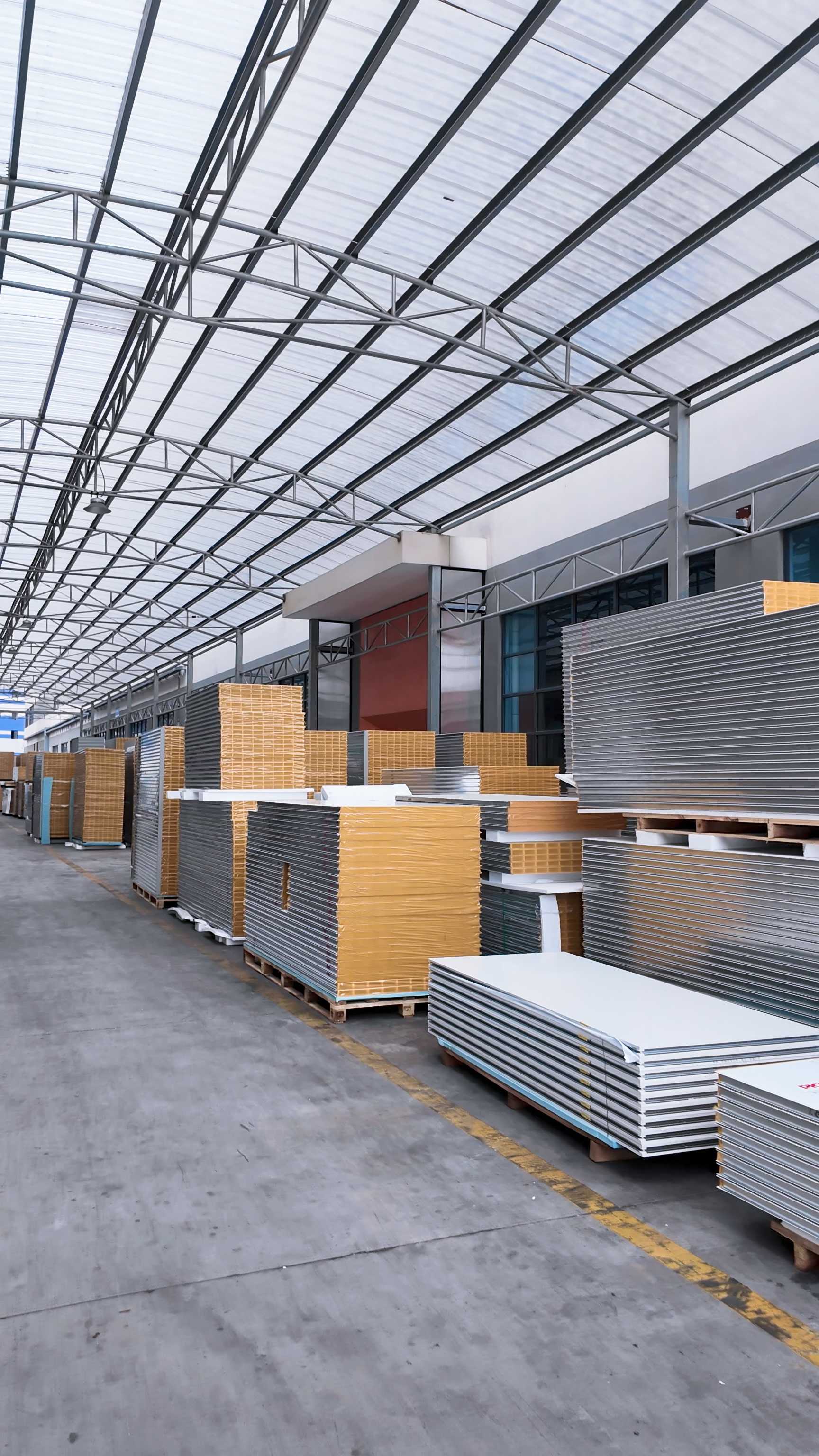
Cleanroom compliance usually starts with air handling units that maintain stable pressure differentials, temperature, and humidity. Instead of treating HVAC as a background utility, high-performing facilities design ductwork and terminal HEPA/ULPA filters as an integrated cascade: supply air enters through ceiling diffusers, returns through low-wall grilles, and gets reconditioned without short-circuiting. That produces a predictable airflow pattern that pushes particles away from critical zones rather than merely diluting them.
Monitoring and control loops matter just as much. Differential pressure sensors, particle counters, and dew-point transmitters feed building management systems that adjust fan speeds and damper positions in real time. When a pass-through or interlocked door cycles, the system briefly compensates to prevent backflow. Redundant fans, chilled-water valves, and UPS-backed controllers let the room ride through equipment maintenance or minor power dips without dropping out of spec.
Materials and detailing often separate compliant rooms from borderline ones. Coving at floor-wall junctions, flush-mounted light fixtures, sealed penetrations, and chemical-resistant gaskets reduce particle traps and simplify wipe-down. High-purity piping for process gases and DI water avoids dead legs where microbes can colonize. Combined with quarterly airflow visualization and filter integrity testing, these engineering choices keep a cleanroom inside ISO or GMP limits without constant manual intervention.
Predictive Maintenance Without Disrupting Production
Factories often face a hard choice: shut down a line for scheduled maintenance or risk an unexpected failure. Predictive maintenance promises to solve this, but many traditional approaches still demand sensor retrofits, wiring changes, or even machine pauses during installation. That's where the real breakthrough lies—building predictive models from data already flowing through existing PLCs and SCADA systems. By tapping into current, voltage, vibration, and temperature signals without adding new hardware, teams can spot anomalies early while the line keeps running at full speed.
The key is to treat maintenance not as a separate event but as a background intelligence layer. Algorithms learn each machine's normal behavior over weeks, then flag subtle shifts—a slight increase in bearing friction, a change in hydraulic pressure decay, or irregular motor current patterns. Because no physical changes are made to the equipment, there's no downtime for installation, calibration, or testing. Operators simply see a growing risk score on their dashboard and can plan a short intervention during already-scheduled changeovers.
What makes this approach truly production-friendly is its invisibility. The same data historians and historians already collect for quality control are reused for health monitoring. No extra sensors mean no new failure points, no bracket fabrication, no safety approvals. When a prediction reaches threshold, maintenance teams can swap a part in minutes instead of hours—or defer it confidently if the model shows stable degradation. Over time, this quietly shifts the culture from reactive firefighting to proactive rhythm, all without ever stopping the conveyor.
Calibration and Validation as Silent Quality Guardians
In the daily hum of a laboratory, it is easy to overlook the quiet routines that keep results trustworthy. Calibration and validation rarely make headlines, yet they operate behind every reliable measurement. A pipette that drifts by a fraction of a microliter or an analyzer that shifts with room temperature can silently distort data long before anyone notices. Calibration acts as a routine check against known references, pulling instruments back to an agreed truth. Validation, on the other hand, asks a deeper question: does the entire method, from sample preparation to final readout, actually measure what we think it does? Together they form an unseen safety net, catching drift and bias before they leak into conclusions.
Without these silent guardians, even the most sophisticated instruments become guesswork. A balance that hasn't been verified against certified weights might report a mass with false confidence. A chromatographic method that was never challenged with spiked samples could hide poor recovery behind a smooth baseline. The real value of calibration and validation shows up in the long run: when a patient's diagnosis depends on a biomarker assay, or a batch of medicine hinges on a potency test, the difference between a validated method and an uncalibrated one can be the difference between trust and regret. These practices do not shout; they simply stand watch, ensuring that each number carries the weight it claims.
What makes calibration and validation uniquely powerful is their refusal to assume. They treat every instrument as fallible and every protocol as a hypothesis. A calibration curve is not a decoration on a wall but a living record of how a detector responds across a range, updated when solvents age or columns wear. Validation is not a one-time ceremony but a repeated promise, renewed whenever a reagent lot changes or a new technician joins the bench. By embedding these checks into the rhythm of work, laboratories build a culture where uncertainty is acknowledged and controlled rather than hidden. The result is not perfection—no measurement is perfect—but something more valuable: a clear-eyed understanding of how close to the truth each result actually stands.
Energy Efficiency in GMP Environments
HVAC systems typically account for the largest share of energy use in GMP facilities, often running at 60–70% of total electrical load. Cleanrooms demand precise control of temperature, humidity, and particulate levels, which historically leads to fixed, high air change rates regardless of real conditions. A more effective strategy is to link air change rates to live risk assessments—reducing them during idle shifts or low-activity periods while keeping pressure differentials and particle counts within validated limits.
Exhaust air heat recovery is another major opportunity. Run-around coils, plate exchangers, or heat pumps can capture thermal energy from production and laboratory exhaust streams and use it to pre-condition incoming fresh air. In colder climates this lowers heating demand substantially; in hot, humid regions it cuts cooling and dehumidification loads. When incorporated at the design stage, these systems often pay back in under three years.
Chilled water and steam distribution also deserve close attention. Variable-speed drives on pumps and fans, free cooling through cooling towers when ambient conditions allow, and raising chilled water setpoints by just 1–2°C can reduce compressor energy by 3–5% without affecting product quality. Ongoing monitoring with trend analysis helps spot slow drift in airflow, filter loading, or sensor calibration, preventing efficiency gains from quietly disappearing over time.
Building Resilience into Utility Infrastructure
Utility systems were never meant to be fragile, yet decades of deferred upgrades and patchwork fixes have left many networks one storm away from cascading failures. Building resilience starts with honest asset mapping: knowing which substations, pump stations, and pipe segments are most exposed to flooding, heat stress, or seismic activity. It is less about adding redundant capacity everywhere and more about targeting critical nodes where a single failure disrupts thousands of customers.
A practical shift involves hardening those nodes through elevated platforms, flood barriers, and corrosion-resistant materials, while also embedding smart sensors that report real-time strain. However, resilience is not purely a hardware problem. Crew training, mutual aid agreements with neighboring utilities, and staged restoration drills often matter more than extra transformers sitting in a warehouse. The most resilient utilities treat every weather event as a chance to refine their playbooks, not just restore service.
Funding remains the quiet bottleneck. Traditional rate cases reward capital projects, not avoided outages, so resilience investments can look unattractive on paper. Forward-looking regulators now allow pre-approval for storm-hardening measures and performance-based incentives that link returns to fewer customer minutes lost. When utilities frame resilience as a continuous operational practice rather than a one-time capital splurge, they gain the flexibility to adapt as climate patterns shift.
FAQ
It means building a maintenance and operations model where critical utilities, HVAC, and process equipment are monitored, calibrated, and serviced before small deviations become batch failures. The focus is on predictable uptime, audit-ready documentation, and clear escalation paths when something drifts outside control limits.
Treat airflow, pressure cascades, and filter integrity as a single performance chain rather than isolated components. Regular particle counts, pressure differential logging, and proactive fan and damper checks help spot drift early. The goal is to keep the room in a steady state so production never pauses for environmental excursions.
Many sites treat calibration as a calendar task instead of a risk-based priority. Instruments that directly affect product quality or safety deserve tighter control and more frequent verification. A smarter approach links calibration intervals to historical drift and consequence of failure, so resources go where they actually prevent problems.
Good documentation acts as a diagnostic record. When every maintenance action, alarm, and change is captured clearly, the team can spot repeating issues and justify upgrades. It also shortens investigation time because the evidence trail is already there, which means less time explaining and more time improving.
Shift from reactive spending to condition-based and predictive maintenance where it matters most. For example, vibration analysis on chilled water pumps or thermal imaging on electrical panels catches degradation early. This prevents expensive emergency repairs and extends asset life without inflating the maintenance budget.
A reliable facility uses the schedule as a floor, not a ceiling. Teams look at small anomalies like slight temperature swings, unusual noise, or minor leaks and investigate before they escalate. They also review equipment performance trends monthly, so decisions are data-driven instead of waiting for the next scheduled service.
They need to ensure that monitoring systems, alarms, and maintenance logs are tamper-evident and time-stamped. Everyone who touches a system should understand why raw data matters and avoid workarounds like overriding alarms without documentation. Regular internal audits of utility data help catch gaps before an inspector does.
Use robust change control and a clear matrix of which equipment parameters affect which product. When a service task is planned, assess the impact on room classification, airflow, and cleaning status early. This way, the facility can switch campaigns smoothly while staying within validated ranges and avoiding unnecessary requalification.
Conclusion
In pharmaceutical manufacturing, facility reliability rarely gets the attention it deserves, yet every batch released depends on it. When utility systems drift outside controlled parameters, output stalls—not because the product failed, but because the environment around it could not hold. Cleanrooms stay compliant only when HVAC, pressure cascades, and filtration behave as a single engineered unit, and that demands more than routine checks. Predictive maintenance has become the practical middle ground between scheduled downtime and unexpected failure: vibration trends, thermal images, and differential pressure logs reveal early warnings without opening a line or pausing production. Equally, calibration and validation work quietly in the background, ensuring that sensors report true values and that sterilizers, autoclaves, and isolators actually perform as qualified. Without this discipline, quality decisions rest on instruments that may have drifted past tolerance, and that risk is never acceptable.
Service excellence also means bringing energy efficiency into GMP spaces without compromising cleanliness or safety. Smart airflow reduction during idle hours, heat recovery from exhaust, and variable-speed drives on chilled water loops cut operating cost while keeping critical parameters stable. At the same time, resilient utility infrastructure—redundant boilers, dual-fed electrical switchgear, storage for purified water—protects the plant from single-point failures that could stop manufacturing for days. The real difference comes from integrating these systems into one coherent service strategy, where maintenance teams, metrology, and energy specialists share the same operational picture. That is how a facility moves from simply running to reliably performing, and how pharmaceutical output becomes less a matter of chance and more a matter of design.
Contact Us
Contact Person: Amy Yang
Email: [email protected]
Tel/WhatsApp: 008619330882686
Website: https://www.genopharmatech.com/