

Petrochemical Industry Events Trade Show: Unveiling the Future of Energy and Innovation
2026-05-13
The petrochemical sector stands on the brink of a transformative era, and nothing captures this momentum quite like the ICIF trade show. Unveiling the future of energy and innovation, this premier event brings together visionaries and technologies that reshape how we power the world. From breakthroughs in sustainable processes to game-changing materials, the show floor is where curiosity meets opportunity. Get ready to explore what’s next—and why it matters now.
Beyond Fossil Fuels: Charting a Greener Path for Petrochemicals
The petrochemical industry, long reliant on crude oil and natural gas as feedstocks, stands at a pivotal crossroads. Emissions from this sector account for a significant share of global greenhouse gases, not just from fuel combustion but from the very chemistry of converting hydrocarbons into plastics, fertilizers, and solvents. Breaking this dependence demands a fundamental rethinking of how we source carbon—shifting from buried ancient biomass to carbon captured from the air, recycled from waste streams, or derived from plants grown sustainably. This transition is not merely an environmental imperative; it reshapes supply chains, sparks innovation in catalysis, and challenges established economic models that have defined the industry for a century.
Emerging technologies are already demonstrating that a greener path is viable. Direct air capture paired with green hydrogen can synthesize methanol—a key building block—without drilling a single well. Bio-based routes convert agricultural residues or municipal waste into ethylene and propylene, the backbone of modern plastics, using microorganisms or thermochemical processes. Meanwhile, electrification of steam crackers, which traditionally burn fossil fuels to reach temperatures exceeding 800°C, can slash emissions when powered by renewables. These approaches do more than just lower carbon footprints; they often yield chemicals with a purer profile, reducing the need for downstream separations and opening up new material properties that fossil-derived feedstocks struggle to match.
Yet the real lever for change lies not only in technology but in market structures and policy frameworks that reward circularity. Mechanical and chemical recycling must evolve from niche operations to mainstream pillars, creating closed loops where plastics are repeatedly broken down and rebuilt without quality loss. Governments can accelerate this by mandating recycled content, revising subsidies that favour virgin materials, and funding the infrastructure that connects waste sorters to chemical converters. As consumer brands pledge to cut their Scope 3 emissions, demand for low-carbon chemicals will surge, pushing producers to adopt cleaner feedstocks or risk losing market access. The journey beyond fossil fuels is as much about redesigning the material economy as it is about engineering new molecules—a challenge that calls for collaboration across industries, research labs, and regulatory bodies in unprecedented ways.
Digital Entwined with Molecular: The Quiet Overhaul of Chemical Operations
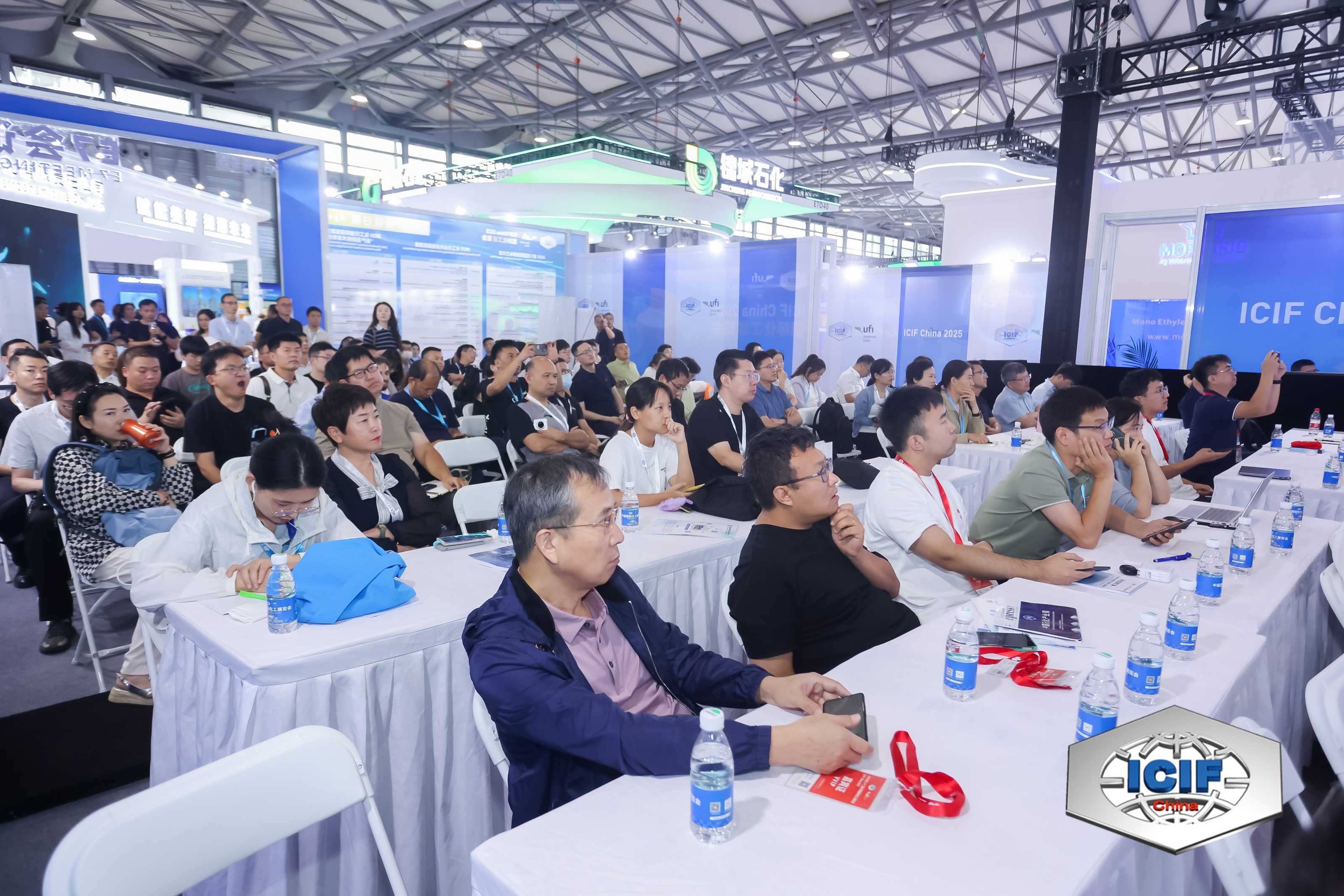
Chemical plants have long been portrayed as mazes of pipes and valves, controlled by operators who rely as much on intuition as on instruments. That picture is changing—quietly. Sensors no larger than a thumbnail now feed real-time data on temperature, pressure, and catalyst health into algorithms that adjust processes before a human notices a drift. The result isn't just fewer alarms; it's a gradual rewriting of how molecules are coaxed into products, with less waste and more predictability baked into every step.
Behind this shift is a merger of materials science and machine learning that rarely makes headlines. Engineers train models on decades of plant telemetry, teaching them to spot patterns that even seasoned technicians miss. A distillation column might subtly optimize its own reflux ratio overnight, while a reactor tweaks its heat input to avoid a byproduct spike. These adjustments happen without fanfare, embedded in the digital layer that’s now entwined with physical hardware. It’s not about replacing chemists; it’s about giving them a sharper lens.
The quiet overhaul extends to supply chains and maintenance schedules, where probabilistic forecasts cut inventory without risking shortages. Plants that once ran on rigid schedules now listen to their own equipment, scheduling upkeep only when vibration spectra or oil analysis hint at wear. For an industry that measures progress in tonnes per day, the real story lies in the gradual disappearance of unexpected shutdowns and the steady climb of yield curves—changes so incremental they almost feel natural, until you realize how much of the plant’s intelligence now lives in code.
Waste as the New Feedstock: Circularity in Full Swing
Industrial symbiosis is no longer a futuristic concept but a tangible reality reshaping how we think about leftovers. Across sectors, what was once discarded is being rerouted into production lines as a primary input. A food processing plant's organic waste becomes the raw material for bioplastics, while a textile factory's fabric offcuts find new life in insulation materials. This shift isn't just about recycling—it's a fundamental redesign where waste streams are engineered to fit seamlessly into other manufacturing processes, slashing virgin resource demand and unlocking value from materials that would otherwise rot in landfills.
Startups and multinationals alike are racing to commercialize technologies that transform carbon-rich waste into high-value chemicals, fuels, and materials. Gasification and pyrolysis systems are breaking down complex refuse into syngas and bio-oil, feedstocks that can replace fossil equivalents in everything from jet fuel to packaging. Meanwhile, biological routes using enzymes and microbes are converting mixed plastics and agricultural residues into biodegradable polymers, closing loops that were once considered impossible. The key breakthrough lies in treating waste not as a homogenous problem but as a stream of discrete, valuable molecules ready to be reconnected.
The economic incentives are aligning with environmental imperatives as material costs fluctuate and regulatory pressure mounts. Extended producer responsibility schemes are pushing brands to design products with end-of-life recovery built in, while digital platforms enable real-time matching of waste producers with potential users. From construction rubble turned into new concrete aggregates to captured CO2 feeding algae for animal feed, the examples pile up. The real revolution is cultural: a growing recognition that there is no such thing as waste, only resources in the wrong place or form. This mindset, coupled with scalable technology, is finally putting circularity into overdrive.
Catalysts Beyond Chemistry: Partnering Across Sectors for Real Change
True progress rarely stems from a single discipline. While catalysts in a lab accelerate reactions, the most potent catalysts today are collaborations that bridge industry, government, and civil society. These alliances spark innovation by blending diverse expertise, resources, and perspectives. When a materials company co-develops recyclable packaging with waste management firms and local communities, chemistry becomes just one piece of a larger puzzle.
Cross-sector partnerships dismantle the silos that often stall meaningful change. A pharmaceutical firm working alongside tech startups and global health nonprofits can turn a breakthrough molecule into an accessible treatment far faster than going it alone. Such coalitions transform isolated solutions into scalable systems, aligning profit with purpose. The real catalyst isn't a compound—it's the shared commitment to solving problems that no single entity can tackle.
The impact of these partnerships extends beyond products. They reshape supply chains, influence policy, and shift cultural norms. Consider how renewable energy took root: energy providers, policymakers, and advocacy groups collaborated to make solar power mainstream. That shift required more than new materials; it demanded a network of trust and aligned incentives. By seeing catalysts as connections rather than chemicals, we unlock a future where innovation drives tangible, enduring change.
Safety Reimagined: Autonomous Systems and Smarter Risk Mitigation
Autonomous systems are no longer confined to speculative fiction—they are reshaping industries from transportation to healthcare, yet their promise hinges on reimagining safety. Traditional risk frameworks, built on linear cause-and-effect models, struggle to address the complex, adaptive behaviors of self-learning machines. The real challenge lies not in preventing every failure, but in designing resilience that evolves in lockstep with the system itself. This means shifting from static rules to dynamic risk assessment that interprets context, anticipates edge cases, and gracefully degrades when the unexpected occurs.
Smarter risk mitigation flips the script from trying to eliminate uncertainty to managing it intelligently. In practice, that requires layered strategies: real-time anomaly detection that learns from operational data, transparent decision-making chains that allow human oversight without introducing latency, and simulation environments that stress-test systems against rare but catastrophic scenarios. Rather than a one-size-fits-all safety standard, these systems benefit from a spectrum of responses—from subtle adjustments to controlled shutdown—all calibrated by continuous feedback loops that measure risk in real time.
Ultimately, rethinking safety for autonomous systems is as much a cultural shift as a technical one. It demands that designers, regulators, and users embrace a mindset where safety is not a checkpoint to pass, but an ongoing conversation between humans and machines. By embedding ethical reasoning, operational transparency, and adaptive learning into the core of autonomy, we move beyond brittle protection toward a fluid, trust-building model of risk mitigation that can keep pace with innovation.
Materials with a Purpose: Spotlight on Bio-Based and High-Performance Polymers
As industries shift toward sustainable solutions, bio-based polymers have emerged as a cornerstone of modern materials science. Derived from renewable resources like corn starch, vegetable oils, and lignin, these polymers reduce reliance on fossil fuels while offering unique properties such as biodegradability and lower carbon footprints. Their purpose extends beyond mere functionality—they represent a deliberate choice to design materials that align with environmental stewardship without compromising performance.
In parallel, high-performance polymers are engineered to thrive in extreme conditions where conventional plastics fail. These materials, including polyimides, PEEK, and fluoropolymers, exhibit outstanding thermal stability, chemical resistance, and mechanical strength. Whether in aerospace components or medical implants, their purpose is precision: to deliver reliability and longevity in critical applications. The convergence of bio-based feedstocks with high-performance engineering is now opening doors to polymers that are both sustainable and exceptionally capable, redefining what’s possible in material design.
FAQ
It zeroes in on the intersection of traditional petrochemicals and the emerging energy landscape. Expect deep dives into sustainable refining processes, breakthrough catalyst technologies, and the role of digital twins in optimizing plant operations. The event positions itself as the bridge between today's hydrocarbon economy and tomorrow's low-carbon future.
Industry veterans and newcomers alike. Senior engineers will find advanced technical sessions on carbon capture integration, while business development leads can connect with innovators driving circular economy models. Policy makers and investors also attend to gauge the sector's direction. It's genuinely cross-functional.
It goes beyond slide decks. The show floor features live demos of modular refinery units and AI-powered predictive maintenance systems. There's a dedicated 'Innovation Lab' where startups showcase lab-scale prototypes. You can also get certified in new safety protocols through immersive VR training modules.
Sustainability isn't a side topic—it's woven into every strand. Sessions cover everything from bio-based feedstock integration to hydrogen-ready furnace designs. The organizers also practice what they preach: the venue runs on a microgrid blending solar and gas with real-time emission monitoring. There's even a zero-waste pledge for all exhibitions.
It consciously avoids the typical 'conference fatigue.' Instead of passive keynotes, most sessions are structured as problem-solving workshops. The matchmaking platform uses an algorithm that learns from your interactions, not just your registration form. Plus, the 'Future Leaders' track pairs young professionals with C-suite mentors in speed-mentoring rounds.
SMEs are a priority. There's a whole segment called 'Scale-Up Street' where SMEs can pitch directly to procurement heads from major operators. The trade show also offers subsidized exhibition pods and free consultation slots with IP lawyers and export strategists—resources often out of reach for smaller players.
Absolutely. A dedicated half-day forum examines feedstock diversification strategies in light of recent supply shocks. Expect candid assessments of regional policy shifts, maritime logistics bottlenecks, and the reshoring of specialty chemical production. It's not just technical; it's strategic.
Digitalization is treated as an enabler, not a buzzword. You'll see case studies of autonomous refineries using edge computing, blockchain-verified emissions tracking, and digital passports for polymer circularity. The 'Data-Driven Plant' exhibit lets you sit in a control room simulator that runs real-time plant data from multiple sites.
Conclusion
The petrochemical industry is at a turning point, and this trade show made it clear that the path forward runs on both ambition and pragmatism. Exhibits and discussions pushed beyond the familiar narrative of fossil fuel dependency, spotlighting technologies that convert captured carbon and bio-based feedstocks into the building blocks of everyday products. Digitalisation emerged not as a buzzword but as a quiet revolution—sensors and AI now hum beneath the surface of chemical plants, tweaking reactions in real time, cutting waste, and predicting maintenance needs before failures occur. Alongside this, circularity was more than a concept: companies demonstrated how plastic waste and industrial byproducts are being reprocessed into high-purity raw materials, effectively turning what was once discarded into valuable new feedstocks.
But tools and technology alone won't reshape the industry. The real catalyst, as many sessions argued, lies in cross-sector partnerships—chemical firms collaborating with tech startups, waste management companies, and even consumer goods brands to redesign supply chains from the ground up. Safety, too, is being reimagined through autonomous inspection robots and predictive risk models that move beyond compliance checklists toward genuine hazard anticipation. Finally, the materials showcase drove home the shift from performance-at-any-cost to performance-with-purpose: bio-based polymers that match or exceed traditional plastics, and high-performance materials engineered for recyclability without compromise. Together, these strands paint a picture of an industry not just tweaking its legacy processes but fundamentally rethinking its role in a low-carbon, circular economy.
Contact Us
Contact Person: Shaozhen Zhou
Email: [email protected]
Tel/WhatsApp: 0086-18612117599
Website: https://en.icif.cn/