

Original Manufacturer Warehouse Chrome Wire Shelving Unit Selection Tips
2026-11-19
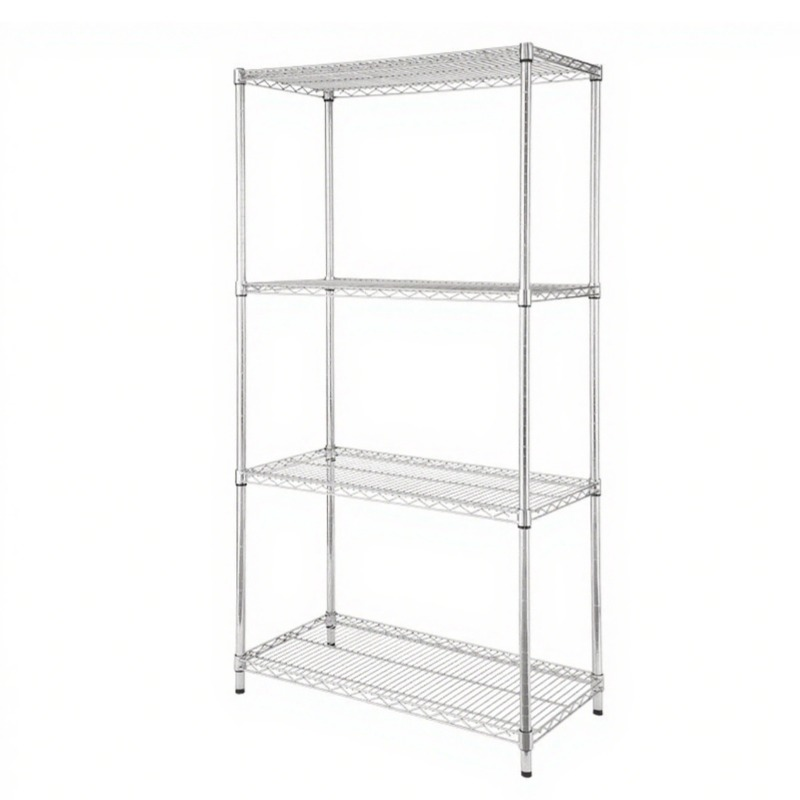
Who says all chrome wire shelving units are the same? They’re not—especially when you compare original manufacturer stock side by side. If you’re outfitting a warehouse, the right choice depends on details most buyers overlook until a shelf sags or a finish flakes. This guide covers the selection tips worth acting on before you order, and why ZEOU is worth a closer look for factory-direct units built around real storage demands.
What separates original manufacturer chrome wire shelving from retail lookalikes
Original manufacturer units tend to show their pedigree in the raw material before the chrome even goes on. The wire is slightly thicker, the steel has a consistent temper, and the welds are smoothed or ground so the joints do not catch a cloth or slice a hand. Retail lookalikes often hide thinner wire under a bright finish, and the difference becomes obvious when a loaded shelf starts to bow long before its rated capacity.
The chrome plating itself is another giveaway. Factory shelving is usually plated after the metal is cleaned and prepped, so the coating bonds into corners and around welds rather than sitting on top like paint. Knockoffs may look glossy on day one, but they develop rust freckles near the joints, on cut ends, or anywhere the plating is thin, especially in humid storage rooms or garages.
Fit and hardware are where the gap widens. Original posts have evenly spaced, precision-stamped slots that accept clips with a firm snap, and the assembled unit feels rigid without needing to be forced. Lookalike shelving can have irregular slot spacing, sharp metal edges, flimsy split sleeves, or plastic feet that crack during assembly. When you wheel the unit across the floor or bump it with a storage bin, that difference in fit shows up as wobble, squeaks, or a shelf corner that suddenly drops.
The gauge and finish checks that matter before the first warehouse load
Before the first warehouse run, gauge verification is more than a quick thickness spot-check. We measure at several points across the sheet width, usually three to five locations from edge to center, because cold-rolled stock can drift slightly near the edges. A digital micrometer or a calibrated ultrasonic gauge does the job, but the important part is recording the actual numbers against the mill test report instead of assuming the tag is right. Anything outside the ordered tolerance, even by a few thousandths, gets pulled before it reaches the rack.
Finish checks are where handling damage tends to surface. Under bright, angled light, look for coil breaks, slitter burrs, banding scratches, or uneven oil coverage that can lead to staining. Run a clean gloved hand across the surface in a few places to catch fine ridges or embedded debris. Pay close attention to the edges as well; a rolled or nicked edge can jam downstream feeding equipment. If a sample sheet shows a visible shift in surface texture from one side to the other, that load should not leave without a conversation.
Once gauge and finish pass, the last move is matching the physical material to the paperwork. Check the heat number, dimensions, and surface designation against the pick ticket, and mark any variance on the label instead of hiding it. Holding a questionable skid at the dock is faster than unloading rejected material at the customer's facility.
How shelf spacing and post design change daily picking routines
When aisles get squeezed just a few inches tighter than a picker’s natural stride, the change shows up before the first break. Workers stop walking straight through, start shuffling sideways, and lose line of sight to labels on lower bins because a post is sitting exactly where their eyes need to land. That small shift turns a simple grab into a stop, lean, and re-check motion repeated hundreds of times a day.
Post design matters in a quieter way. Thin uprights tucked into frame corners keep tags visible and leave hands a clear path, while wide or oddly placed posts create blind spots that force pickers to slow down or rely on memory. In narrow aisles, rounded or recessed posts let carts pass without that slight hesitation at every turn, which is often where minutes disappear without anyone noticing.
Spacing also changes how orders are grouped. Wider gaps encourage two-way movement and quicker restocking without blocking a picker mid-route, but too much width adds steps. The sweet spot usually sits close to the reach of an average arm plus half a step, so high-frequency items can be pulled without shifting body weight and slower items stay just far enough away to keep main lanes clear.
Coating flaws to catch before humidity and cold storage expose them
Tiny pinholes and micro-cracks rarely announce themselves under normal room conditions. They sit quietly beneath a glossy finish, waiting for moisture or a sharp temperature drop to pull them into view. Rather than discovering these defects after product has already entered a humid environment or cold storage, it pays to inspect coatings under a bright, angled light and with a low-power magnification loop. Run a fingertip over seams, edges, and around fasteners where film thickness tends to dip. Any slight roughness, bubbling, or uneven sheen in those zones deserves a closer look before the coating faces condensation or sub-zero cycles.
Another common flaw is poor adhesion at the interface between substrate and coating. In cold storage, metals contract and plastics become brittle; a coating that is merely sitting on the surface instead of biting into it will start lifting within days. A simple crosshatch tape test can reveal this weakness early. Make a small grid with a utility knife, press tape firmly over the cuts, and pull it away in one quick motion. If any squares come off with the tape, the coating is not ready for thermal cycling. Pay special attention to corners, weld points, and areas that were masked or touched up by hand, because these are the first places humidity creep will exploit.
Thickness variation is the third hidden hazard. A coating that looks uniform from a distance can be dangerously thin on vertical faces or inside recesses, while pooling at the bottom edge. Once cold air hits, the thicker sections shrink at a different rate than the thin ones, causing stress lines that eventually open into cracks. Use a dry film thickness gauge to map the surface, not just a single reading in the center. Check inside holes, along drip edges, and near drain paths where water tends to linger. Catching these deviations before the product leaves the shop means fixing a few thin spots rather than reworking an entire batch after humidity and temperature have already done their damage.
Load capacity claims versus what the welds and collars actually support
The figure on the tag is usually the easy part. It gets tested on straight tube, clean ends, and a load that pushes straight down. Real use is messier: a post picks up a little side sway, a bearer sits slightly off-center, and now the collar is not just carrying weight but trying to resist a peel. The weld next to that collar sees a stress it was never asked to handle in the test.
Welds are not all equal, even on the same pallet. One unit has full fusion and a clean profile; the next has a bit of undercut or a cold start right where the collar meets the tube. That is enough to drop the failure load well below the advertised figure. Collars add to the gamble because they hold by friction and a small contact patch. If the tube is on the low side of tolerance, painted heavily, or a little corroded, the collar can slip first. And a slipping collar is not a warning sign; it is the failure happening.
So when someone points at the rated capacity, check what is actually holding the load. Look at the weld profile, the collar engagement, and how much thread is left to keep it tight. If the load path leans, if the tube has been bounced around a few jobs, or if the collar has to be forced to bite, treat the printed number as optimistic. The real capacity is set by whatever part gives up first.
Why some chrome wire units handle constant reconfiguration without loosening
The difference usually comes down to how the connection is engineered. Instead of relying on a plain friction fit between the post and the shelf collar, some designs use a split-sleeve insert with a tapered lip. When the shelf is pushed down, the sleeve compresses evenly around the post and creates a mechanical wedge that holds tighter under load. Reconfiguring the unit simply means lifting the shelf to release the wedge, so repeated adjustments do not shave material off the collar or strip a thread.
Another factor is the surface finish and the way the chrome plating is applied. On units that stay stable through frequent changes, the plating tends to be thin enough to preserve the original diameter of the wire and post, but hard enough to prevent gouging. That matters because once the plating gets scratched through to the base steel, small burrs form and the fit becomes inconsistent. Higher-quality units also tend to use posts with a slight hourglass profile at the locking points, which gives the sleeve a clear seat and prevents gradual drift.
There is also a practical habit that makes a noticeable difference: the way pressure is distributed during setup. Hitting the shelf with a rubber mallet at one corner can cant the sleeve and create a loose spot later. A firm, even press downward, often just with the palm on opposite corners, lets the wedge engage fully. Chrome wire units that combine that kind of tolerant locking geometry with harder plating can be rearranged many times without the familiar wobble returning.
FAQ
The open wire design keeps dust from settling on shelves and lets air move around stored goods. That matters in a warehouse where inventory can sit for weeks. Chrome also gives a smooth, easy-to-wipe surface, so spills and grime don't become a permanent mess.
It resists rust and light corrosion well in dry, climate-controlled spaces. If your warehouse has high humidity, frequent washdowns, or exposure to cleaning chemicals, look for units with a thicker chrome layer or ask the manufacturer about a sealant option. Dents and scratches are rare with normal handling, but dragging heavy metal bins across shelves will eventually wear any finish.
Wheels make sense when you need to rearrange picking zones or move loaded shelves for cleaning. Just check the total weight rating with the casters included, because the casters often become the limiting factor. Stationary units feel more solid for tall configurations and eliminate any chance of accidental rolling on uneven floors.
Don't match capacity to your current average load. Add a margin of twenty to thirty percent, especially if workers tend to drop boxes or stack extra items during busy periods. Also confirm whether the listed capacity is per shelf or for the whole unit, since that distinction changes the math completely.
No. Wire gauge, number of support bars, reinforcement channels, and how the posts lock together all affect stability. A shelf that looks identical in a photo may sag under heavy totes if the wire is thinner or the supports are spaced further apart. Ask for a sample or detailed spec sheet if you're comparing options.
You can often get custom sizes, adjusted shelf spacing, and bulk pricing without a middleman markup. It also simplifies warranty claims and replacement parts, since you're talking to the people who actually built the unit rather than a reseller guessing at specifications.
Measure ceiling height, door openings, and aisle width. Leave enough clearance for forklifts, pallet jacks, or carts to turn without clipping the shelving. If you're planning multiple units side by side, account for the slight footprint overhang of the shelf clips and corner connectors, not just the shelf itself.
Shelf dividers keep mixed stock from sliding into each other, label channels speed up picking, and back or side stops prevent items from pushing off the rear. For heavier setups, extra wire decking supports and post protectors help the unit survive daily bumps from carts and equipment.
Conclusion
A chrome wire unit straight from the original manufacturer rarely announces itself with louder branding or a heavier price tag. The difference shows up in the details that copycat shelves skip. Before any carton lands on a rack, checking the wire gauge and the finish tells you more than the spec sheet will. Original units tend to use a heavier core and a chrome layer that does not flake at the first scratch. Look closely at the welds and the plastic sleeves or collar locks. In a humid or cold storage room, poor plating turns into rust spots within weeks, especially along cut ends and under shelf clips. If the surface feels rough or the coating looks thin near the joints, treat that as an early warning rather than a minor cosmetic flaw.
Daily picking changes quickly once shelf spacing and post design are matched to the way workers actually move. Slotted posts that allow height adjustments without unloading the whole bay save time, but only when the collars grip firmly and do not oval out under side pressure. Load ratings deserve a hard look because some numbers reflect a perfectly distributed test load, not the uneven stress of boxes shoved toward one edge. The welds and collar teeth carry that real load. Units built for frequent reconfiguration usually have thicker corner reinforcements and sleeves that stay tight after repeated loosening and retightening. That is the practical difference between shelving that stays square and shelving that starts wobbling after the third layout change.
Contact Us
Contact Person: Alin
Email: [email protected]
Tel/WhatsApp: +86 15015291051
Website: https://zeoumetal.com/