

Optimizing OEM Ring Main Units for Enhanced Power Distribution Efficiency
2025-12-26
In the rapidly evolving landscape of power distribution, the efficiency of OEM Ring Main Units (RMUs) plays a pivotal role in ensuring reliable and sustainable energy delivery. As industries and communities increasingly demand smarter, more resilient electrical networks, optimizing these critical components has become a key focus for engineers and decision-makers alike. At Lugao, we recognize that enhanced RMU performance isn't just about technical specifications—it's about empowering grids to meet today's challenges while paving the way for future innovations. This blog delves into the strategies and insights behind optimizing OEM RMUs, exploring how smarter designs and advanced technologies can transform power distribution efficiency. Whether you're an industry veteran or new to the field, join us as we uncover the pathways to more robust and intelligent energy systems.
Innovative Design Principles for Modern Ring Main Units
With the increasing demand for reliable and efficient power distribution, modern ring main units (RMUs) are evolving beyond traditional designs to incorporate groundbreaking principles that enhance performance and adaptability. One key innovation lies in the integration of smart sensors and IoT connectivity, enabling real-time monitoring of electrical parameters like voltage, current, and temperature. This allows for predictive maintenance, reducing downtime and preventing failures before they occur. Additionally, modular designs are becoming standard, facilitating easy customization and expansion to meet diverse grid requirements without extensive retrofitting.
Another pivotal aspect is the emphasis on sustainability and safety in RMU development. The use of eco-friendly materials, such as vacuum interrupters and solid insulation, minimizes environmental impact and improves fire resistance compared to older SF6-based systems. Advanced arc-flash protection mechanisms and robust enclosures further enhance operator safety, adhering to stringent international standards. These design choices not only boost operational reliability but also align with global trends toward greener energy infrastructure, making RMUs more resilient in harsh environments.
Lastly, user-centric design principles are reshaping how RMUs are deployed and maintained. Intuitive interfaces and remote control capabilities empower operators to manage units efficiently from centralized locations, streamlining workflows. Compact footprints and lightweight constructions reduce installation costs and space requirements, catering to urban settings where space is limited. By blending technological advancements with practical usability, modern RMUs are setting new benchmarks in power distribution, offering scalable solutions that anticipate future grid challenges and foster smart city initiatives.
Advanced Materials and Components in RMU Construction
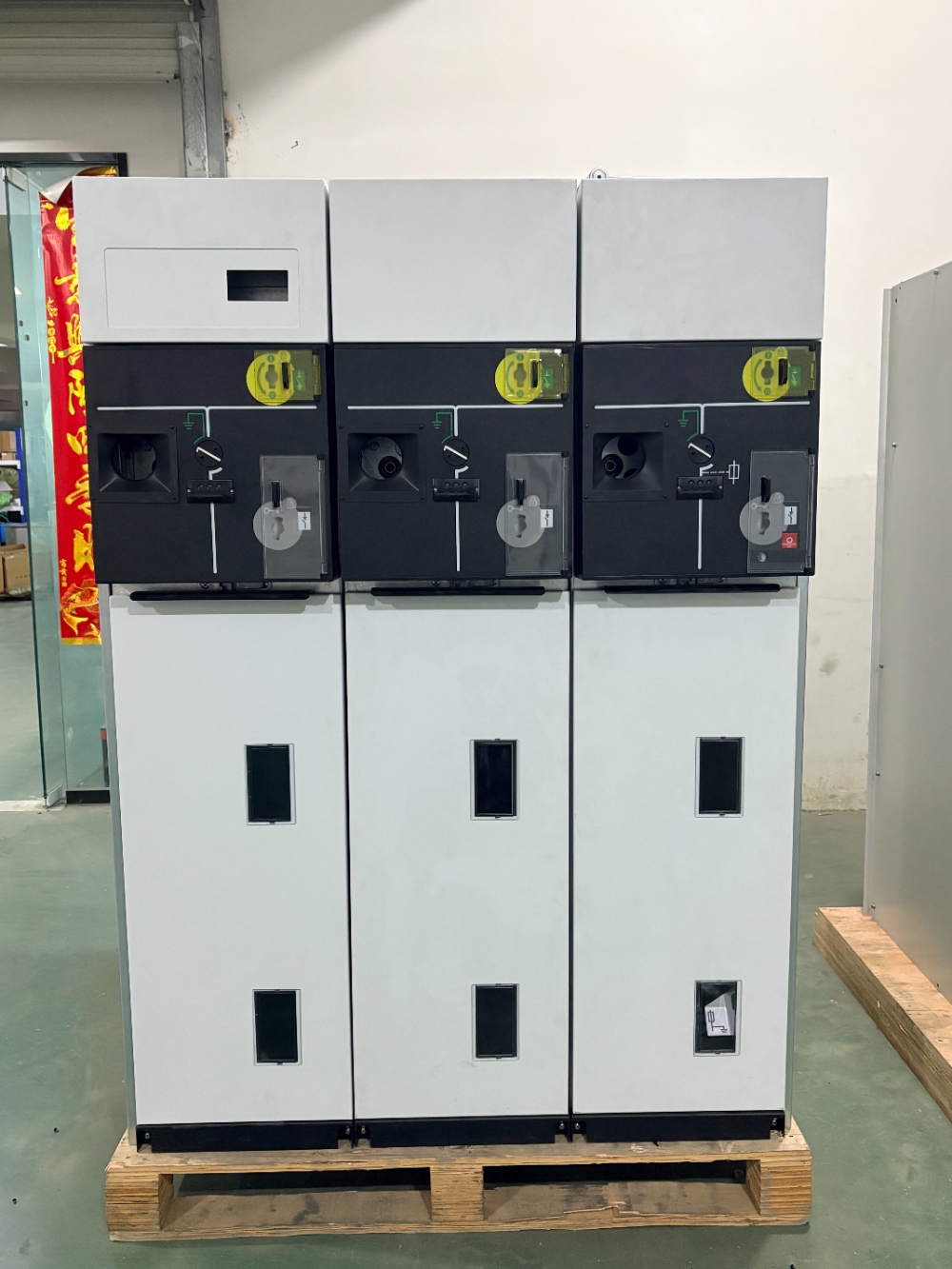
The construction of Ring Main Units (RMUs) has evolved dramatically with the introduction of advanced materials and components, pushing reliability and efficiency to new heights. Innovations like high-strength composite enclosures not only offer superior resistance to corrosion and environmental stresses but also significantly reduce weight compared to traditional metal casings. This shift allows for easier installation and maintenance, while maintaining robust performance under extreme conditions.
Another key advancement lies in the integration of smart sensors and solid-state switching technologies. These components enable real-time monitoring of electrical parameters, detecting issues such as temperature fluctuations or insulation degradation before they escalate into failures. By leveraging data analytics, utilities can transition from reactive to predictive maintenance, minimizing downtime and enhancing overall grid stability—a far cry from older mechanical systems.
Additionally, the use of eco-friendly insulating gases like clean air or fluoronitriles is gaining traction, addressing environmental concerns associated with older SF6 gas. These alternatives maintain high dielectric strength while supporting sustainability goals, making RMUs more adaptable to modern regulatory landscapes. Coupled with modular designs, these materials and components allow for scalable, customizable solutions that fit diverse operational needs without compromising on safety or performance.
Smart Monitoring Systems for Real-Time Grid Performance
Imagine having a panoramic view of your entire energy grid at your fingertips, with every fluctuation, every spike, and every potential issue highlighted in real-time. That is the power of smart monitoring systems for grid performance. These systems leverage advanced sensors and IoT devices to collect continuous data from various points across the network, from generating stations to end-user connections. By processing this information immediately, operators can detect anomalies like voltage drops or equipment failures almost as they happen, allowing for swift responses that prevent small problems from escalating into widespread outages or safety hazards.
What sets these systems apart is their ability to not just monitor but also analyze and predict. Using machine learning algorithms and big data analytics, smart monitoring tools can identify patterns and trends that human operators might miss. For instance, they can forecast potential overloads based on historical usage during similar weather conditions or events, enabling proactive adjustments. This predictive capability transforms grid management from a reactive task to a strategic one, optimizing energy distribution, reducing waste, and enhancing overall reliability without the need for constant manual oversight.
In practical terms, adopting these systems means real-world benefits for both utilities and consumers. Utilities can achieve higher efficiency with lower operational costs, as targeted interventions minimize downtime and maintenance expenses. For consumers, it translates to more stable power supplies and potentially lower bills, thanks to optimized load balancing. As grids become more complex with renewable integrations, smart monitoring becomes indispensable, offering a seamless way to manage diverse energy sources and ensure a resilient, future-proof infrastructure that adapts on the fly.
Energy Loss Reduction through Enhanced Cooling Techniques
As industries globally strive for greater efficiency, the focus on cooling systems has intensified, particularly in high-energy-demand applications like data centers and manufacturing. Enhanced cooling techniques are not merely about temperature control; they represent a strategic shift toward minimizing energy waste. By leveraging advanced materials and innovative designs, these methods reduce the reliance on conventional, energy-intensive cooling, directly impacting operational costs and environmental footprints.
One standout approach involves liquid cooling solutions, which have gained traction for their superior heat dissipation compared to traditional air-based systems. These systems circulate coolants in direct contact with heat sources, enabling more efficient energy transfer and significantly lowering power consumption. This translates to reduced energy loss, as less electricity is needed to maintain optimal temperatures, making it a game-changer for sectors where cooling accounts for a substantial portion of energy use.
Beyond immediate energy savings, enhanced cooling techniques often integrate smart controls and predictive maintenance. By optimizing cooling cycles based on real-time data, these systems prevent over-cooling and adapt to fluctuating loads, further slashing unnecessary energy expenditure. This holistic approach not only cuts losses but also extends equipment lifespan, showcasing how targeted cooling innovations can drive sustainable progress across diverse industries.
Customization Strategies for Diverse Power Network Applications
As power networks evolve to handle increasingly varied demands—from smart grids in urban centers to off-grid renewable systems in remote areas—customization strategies have become crucial for optimizing performance and resilience. Tailoring solutions based on application-specific requirements, such as voltage levels, load characteristics, and environmental conditions, allows utilities and developers to enhance efficiency and reduce costs. For instance, in industrial settings, strategies may focus on integrating advanced control systems to manage heavy machinery loads, while residential applications might prioritize smart meter deployment for real-time energy monitoring.
A key approach involves leveraging modular components and scalable architectures, which enable seamless adaptation to different network scales and technologies. By designing systems with interoperability in mind, stakeholders can easily combine traditional and emerging power sources, like solar or wind, creating hybrid networks that respond dynamically to fluctuating energy needs. This flexibility not only supports sustainability goals but also minimizes downtime during upgrades, ensuring continuous service across diverse applications.
Moreover, customization extends beyond hardware to include software and data analytics, where predictive algorithms and AI-driven insights can forecast demand patterns and pinpoint potential failures in real-time. By embedding these technologies into network management, operators can proactively adjust parameters for specific applications, such as optimizing battery storage in microgrids or balancing loads in community solar projects. Ultimately, these strategies foster innovation and reliability, empowering a more adaptable and future-proof power infrastructure worldwide.
Sustainability and Environmental Impact in RMU Operations
At the heart of effective Ring Main Unit (RMU) operations lies a growing commitment to sustainability, transforming what was once a purely functional infrastructure component into a driver of environmental stewardship. Unlike standard discussions that merely scratch the surface, this approach delves into how RMU designs now integrate low-loss materials and enhanced insulation to drastically cut energy leakage. By minimizing electrical losses during distribution, these units not only boost operational efficiency but also reduce the carbon footprint associated with power transmission—a tangible step toward greener grids.
Moving beyond energy savings, the environmental impact of RMUs extends to their lifecycle management, where innovations in recyclability and waste reduction are setting new benchmarks. Forward-thinking manufacturers are prioritizing the use of eco-friendly materials, such as biodegradable insulating gases or sulfur hexafluoride (SF6)-free alternatives, to mitigate harmful emissions. This shift not only aligns with global regulations but also fosters a circular economy, ensuring that end-of-life RMUs are disassembled and repurposed rather than ending up in landfills.
Furthermore, the integration of smart monitoring systems in RMU operations adds a layer of proactive environmental care, enabling real-time detection of inefficiencies or faults that could lead to resource wastage. By leveraging IoT sensors and data analytics, utilities can anticipate maintenance needs, prevent outages, and optimize load distribution—all contributing to a more resilient and sustainable energy network. This holistic view underscores how RMUs are evolving from passive hardware to active participants in the pursuit of a cleaner, more responsible energy future.
FAQ
Optimizing OEM Ring Main Units focuses on factors like compact design, advanced materials for insulation, and integrating smart monitoring systems to reduce energy losses and improve reliability.
Efficient design minimizes heat generation and electrical resistance, allowing for smoother current flow and lower maintenance needs, which boosts overall network performance.
Automation enables remote control and real-time data analysis, helping to detect faults quickly, optimize load balancing, and reduce downtime for more efficient operations.
Innovations include IoT sensors for predictive maintenance, eco-friendly insulation materials, and modular components that allow for easy upgrades and customization.
By reducing energy losses and enabling better resource management, they help lower carbon emissions and support green energy initiatives, making power grids more sustainable.
Engineers often deal with compatibility issues with legacy systems, high initial costs, and the need for specialized training to implement new technologies effectively.
Customers experience improved power reliability, lower operational costs due to reduced energy waste, and enhanced safety features that protect against outages and hazards.
Conclusion
The optimization of OEM Ring Main Units (RMUs) for enhanced power distribution efficiency centers on integrating innovative design principles with advanced materials and components. Modern RMUs are engineered with compact, modular architectures that not only reduce physical footprint but also improve operational reliability and scalability. The use of high-performance materials, such as sulfur hexafluoride-free insulation and corrosion-resistant alloys, enhances durability and safety, minimizing long-term maintenance needs. Smart monitoring systems are integral to this optimization, enabling real-time grid performance tracking through sensors and IoT connectivity, which helps in predictive maintenance and fault detection. This holistic approach ensures that RMUs can handle increasing power demands efficiently, while also adapting to diverse network applications through customizable configurations tailored to specific operational environments.
Further efficiency gains are achieved by focusing on energy loss reduction through enhanced cooling techniques, such as liquid cooling or optimized airflow designs, which dissipate heat more effectively and improve overall unit performance. Sustainability and environmental impact are prioritized by incorporating eco-friendly materials and energy-efficient components, reducing carbon footprints and aligning with green energy initiatives. Customization strategies allow for flexible deployment across varied power networks, from urban grids to remote installations, ensuring reliability and resilience. By blending technological advancements with practical application needs, optimized OEM RMUs deliver not only higher distribution efficiency but also contribute to a more sustainable and adaptive power infrastructure, meeting both current and future energy challenges seamlessly.
Contact Us
Contact Person: Doreen
Email: [email protected]
Tel/WhatsApp: 8618057712366
Website: https://www.liugaopower.com/