

OEM Ice Maker Machines Buying Guide for Smart Business Owners
2026-11-16
Most buying guides treat OEM ice makers like a spec sheet. Smart business owners know the real question is which partner can protect margins, reduce service calls, and keep ice production aligned with demand. That is where YOMAN changes the conversation.
What Factory Spec Sheets Don't Tell You About Ice Output
Most spec sheets quote a daily ice production figure that assumes a chilly room, cold incoming water, and a machine that runs almost without interruption. Walk into a real bar or restaurant kitchen in July, and that number starts to fall apart. Ambient heat sneaks through the condenser, the water line warms up, and every time the bin door opens, the unit loses cold air that it has to earn back before the next harvest.
The bigger gap is between production and what actually ends up in a glass. Spec sheets rarely account for melt in the bin, spillage during transport, or the habit of staff grabbing scoops of ice for chilling bottles and prep stations. A machine rated for 500 pounds a day might only give you 350 usable pounds once those quiet losses add up.
Recovery speed matters more than the headline number in many kitchens. A unit that can make a full batch quickly after a rush will serve a dinner service better than one with a higher daily rating but a slow harvest cycle and a small storage bin. If you size equipment only by the factory chart, you end up buying ice for the perfect day, not the day you actually work.
The Compressor Decision That Determines Your Long-Term Repair Bill
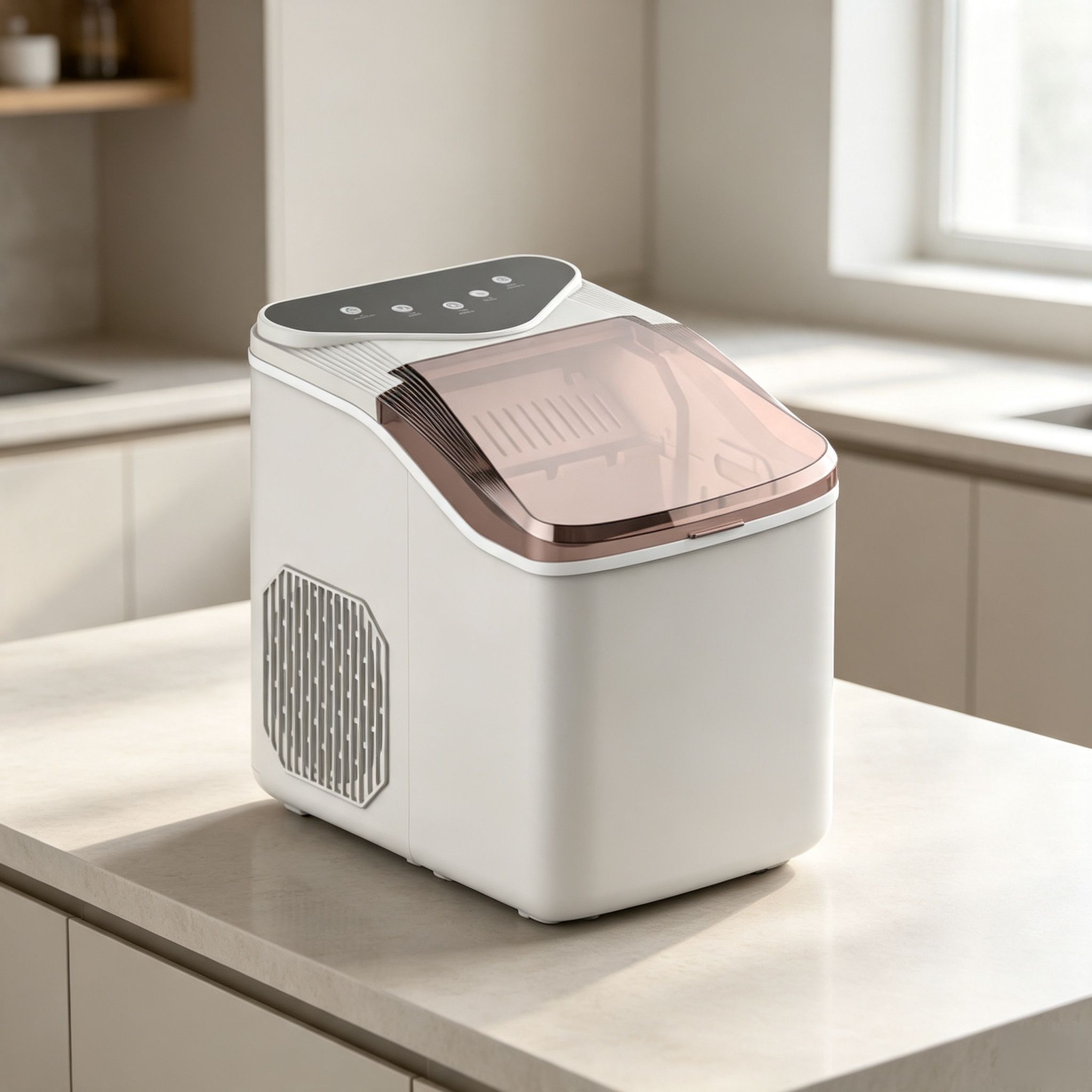
Most homeowners never see the compressor until it fails, but the choice between a single-stage, two-stage, or variable-speed unit quietly shapes every repair invoice that follows. A single-stage compressor runs at full blast and shuts off, which wears down valves and capacitors through constant cycling. The savings at installation often disappear once replacement parts and labor enter the picture.
The repair bill is less about the brand on the cabinet and more about how hard the compressor is asked to work. Oversized units short-cycle, pulling extra amps and stressing the windings, while undersized units run endlessly and cook the oil. Either mistake turns a fifteen-year component into a five-year headache, and the technician's invoice will reflect it.
A smart decision also accounts for service access and parts availability. Some compressors sit in tight corners that turn a two-hour job into a full afternoon, and an obscure model can leave you waiting weeks for a replacement. Choosing a common, serviceable compressor can be the difference between a predictable expense and a budget-breaking surprise.
How to Vet an OEM Factory When You Can't Walk the Floor
When you can't walk the floor yourself, make a factory contact run a live video walkthrough from their phone rather than sending a pre-recorded clip. Start at the loading dock, move through raw material storage, then to the lines that are actually running. Ask for close-ups of workstations, QC stamps, and labels on incoming components. If they pick the route and the moment, you will usually see the cleanest corner of the building. Instead, name a few areas while the call is live and have them point the camera there without pausing.
Documents and samples should come from ordinary production, not a presentation folder. Ask for the last three days of line inspection records, one recent incoming material lot check, and the shipping report for the most recent finished order. Select a date or job number yourself and request the paperwork for that specific job. For samples, don't accept a hand-finished golden sample. Have them mark a carton from the current run during a video call, seal it on camera, and ship that exact carton to you. A mismatch between the documented defect rate and the condition of the goods you receive is a bigger clue than any certificate.
Pay attention to the people as much as the equipment. Contact an independent local inspector or sourcing agent for a short-notice visit, and note how the factory responds when they don't control the timing. During calls, ask narrow questions: which flux they use on a specific board, how often they calibrate torque guns, where rejected parts go after final inspection. Vague answers, long pauses while someone off-camera coaches them, or a camera that keeps drifting away from problem areas often reveal more than a polished company profile.
Which Certifications Your Customers Will Actually Ask About
Most buyers won't dig through a wall of badges. They ask about the certifications that speak to their immediate concerns: safety, compatibility, and reliability. If you're selling to a procurement team in Europe, they'll likely want to see CE marking before anything else. If your product plugs into industrial power systems, UL listing becomes the quiet default expectation. The trick is to lead with the two or three marks that your specific audience already recognizes, not the dozen you happen to hold.
It also helps to think in terms of questions a customer can actually phrase. A plant manager might ask, "Is this rated for wet locations?" That translates to an IP rating, not a general quality badge. A retailer importing electronics may ask, "Will this pass customs without delays?" That points to RoHS or REACH compliance. When you map your certificates to these spoken worries, the conversation shifts from abstract credentials to practical assurance.
One underused move is to show the certificate only when it matters. On a datasheet, a compact line like "UL 508A listed, file E123456" does more than a footer full of logos. On a quote, attach the specific certificate instead of a generic compliance statement. Customers rarely ask for certifications in general; they ask for the one that keeps their project moving.
The Trial Order Test That Reveals a Supplier's True Quality
A supplier can sound brilliant on a call and still fumble the moment a real order lands. Placing a small trial order is the quickest way to see whether their promises survive contact with logistics, documentation, and actual production. Watch for the quiet things: how fast they confirm specifications, whether they ask sensible questions about packaging or labeling, and whether the invoice matches what was agreed. These early signals tell you far more than a polished catalog ever will.
The value of a trial order is not in the goods themselves but in the friction it exposes. A reliable supplier treats a modest order with the same attention as a container load. Delays can happen, but strong suppliers flag them before you have to chase. If they go silent for days, then suddenly ship without confirming a change in material or finish, that pattern will repeat at scale. The trial order is a low-cost way to observe their communication habits under pressure.
What often separates a dependable partner from an average one is how they handle the small mistakes that appear in almost every first run. A supplier worth keeping will acknowledge the issue, propose a concrete fix, and absorb the cost of reworking a sample if the fault is theirs. If they argue over every detail or blame your specifications without evidence, walk away. A trial order should feel like a test of cooperation, not just a transaction.
Spare Parts and Warranty Terms to Settle Before Signing
Spare parts promises only matter when they survive contact with a real breakdown. Ask where the parts are stocked, not just whether they are listed as available. A supplier may list a part in the catalog but still need three weeks to ship it from a regional hub across a border, with freight and customs charges landing on your desk. Get the agreed lead times for critical wear items in writing, and clarify whether replacements will be new, refurbished, or remanufactured, because that distinction changes both price and expected service life.
The warranty section deserves the same scrutiny as the price table. Check when coverage actually starts: on delivery, on installation, or only after formal acceptance testing. If the warranty covers parts but not labor, a failed bearing can still become an expensive repair. Look carefully at exclusions for seals, filters, belts, and other components the manufacturer may classify as ordinary wear. Also confirm whether using your own maintenance crew or a third-party technician voids the warranty, since some contracts quietly require authorized service providers for every intervention.
Finally, settle the less obvious terms before signing. If the equipment may be moved to another site or the business may be sold, ask whether the warranty follows the asset or stays with the original buyer. Check the claim process: who approves the replacement, how quickly a technician is dispatched, and whether you are expected to return the failed part before receiving a new one. Locking down these details now can prevent a minor parts dispute from turning into a long equipment stoppage later.
FAQ
Look beyond the quoted price. Ask about their minimum order quantity, lead time after design approval, whether they handle the full assembly or outsource components, and how they manage quality control across batches. Request samples from a recent production run, not a pre-production prototype, and confirm who provides after-sales support in your market.
Think about the end user. Cube ice suits bars, restaurants, and convenience stores because it melts slowly. Nugget ice is popular in healthcare, offices, and fast food for soft chewability. Flake ice works for seafood displays, labs, and cold therapy. Your choice should match the buyer's daily workflow, not just the machine's spec sheet.
Start with the control panel layout, exterior finish, and logo placement because those are visible at first glance. Then look at functional options like water filter compatibility, self-cleaning cycles, and adjustable ice thickness. Avoid over-customizing small internal components early on. It can delay production without adding much resale value.
Yes. Replacement filters, water line adapters, packaging reinforcement for long-distance shipping, and warranty return freight can add up quickly. Some suppliers quote a low unit price but charge separately for the custom faceplate, user manual translation, or color-matched panels. Ask for a complete landed cost breakdown before comparing offers.
It depends on the destination country. For North America, look for ETL or UL certification and NSF compliance for food-contact safety. In Europe and parts of the Middle East, CE marking is often required. Request the actual certificate numbers and verify them on the issuing body's website instead of relying on a supplier's word.
Ask about their production line capacity and how many units they ship per month for similar machines. Inquire whether they use an automated refrigeration leak test and a run-test procedure for every unit, not just random samples. A factory visit or third-party inspection before the first large order can reveal whether their process is stable under pressure.
Negotiate the approval sample turnaround, a clear defect rate threshold, replacement part stock for warranty service, and the ownership of any custom molds or tooling. Also agree on a time frame for resolving major quality issues. Put these terms in the purchase agreement so both sides know what happens after the first shipment arrives.
Conclusion
Smart buyers treat a factory spec sheet as the beginning of the conversation, not the final word. Ice output numbers are often collected under ideal lab conditions—cool air, cold incoming water, and a spotless condenser—so real-world performance can drop hard in a hot kitchen or a cramped back room. The compressor is where your long-term repair bill gets decided. A no-name sealed unit can hold the initial price down, but when it fails you are often looking at a full replacement rather than a simple service call. A known compressor brand with accessible parts may cost more now and save real money later. If you cannot walk the factory floor, ask for a live video tour of the assembly line and testing area instead of relying on polished footage. Press them to name the compressor, control board, and thermostat suppliers they use, and see how quickly they answer.
Certifications only matter when they match the region where your customers actually do business. In North America, buyers may ask about NSF or UL; in Europe, CE and food-contact marks often carry more weight. Generic claims about international standards are not enough—request certificate numbers and check them directly with the issuing body. A trial order should be run as a mini audit, not a formality. Set the machine to operate near the ambient temperature your customers face, then watch for slow ice release, water dripping into the bin, or cycle times that stretch beyond the advertised rate. Before signing, settle spare parts pricing, lead times for critical items like control boards and water pumps, and whether the warranty covers labor or only parts. If a supplier gets vague on those points now, that vagueness will likely turn into an expensive repair problem after the invoice is paid.
Contact Us
Contact Person: Mr. Sun
Email: [email protected]
Tel/WhatsApp: 8618867635088
Website: https://www.nbyoman.com/