

OEM Filling Machine Factory: Your Guide to Custom Packaging Equipment
2026-08-23
Every production line has a quiet bottleneck—often it's the filling machine that can't keep up with your packaging specs. If you're tired of forcing standard equipment into custom workflows, it's time to work with an OEM filling machine factory that actually listens. INTOP Machinery specializes in building custom packaging equipment around your product's viscosity, container shape, and throughput target, not the other way around. In this guide, we'll walk through what to expect when partnering with a true OEM manufacturer—from design flexibility and material compatibility to after-sales support that doesn't vanish after installation.
Designing a Filling Line Around Your Product's Personality
Every jar, bottle, or pouch carries an unspoken promise. A thick honey-like syrup demands patience, while a fizzy energy shot craves speed. Before picking a single machine, ask what your product would say if it could speak. Is it fragile, temperamental, or surprisingly forgiving? The answer shapes everything from nozzle geometry to conveyor rhythm, turning a generic line into a tailored conversation between liquid and machinery.
Valve choices reveal character more than any spec sheet. A shear-sensitive sauce with delicate particulates won't tolerate aggressive pumping, yet a chunky salsa needs enough clearance to avoid crushing its identity. Temperature, viscosity drift, and even foaming tendencies act like personality traits. Ignore them, and you'll spend every shift fighting clogs, splashes, or inconsistent fills. Respect them, and the line almost runs itself, matching fill accuracy to each product's temperamental quirks.
Operators often inherit equipment designed for an average product that never existed. Instead, observe how your formulation behaves at 6 a.m. versus after lunch, how it reacts to humidity or a slight batch variance. Then let those observations drive nozzle type, fill speed, and even tank agitation. A filling line built around your product's personality doesn't just hit target weights; it preserves texture, aroma, and that intangible quality customers notice without naming.
What Actually Happens on a Factory Floor Before Your Machine Ships
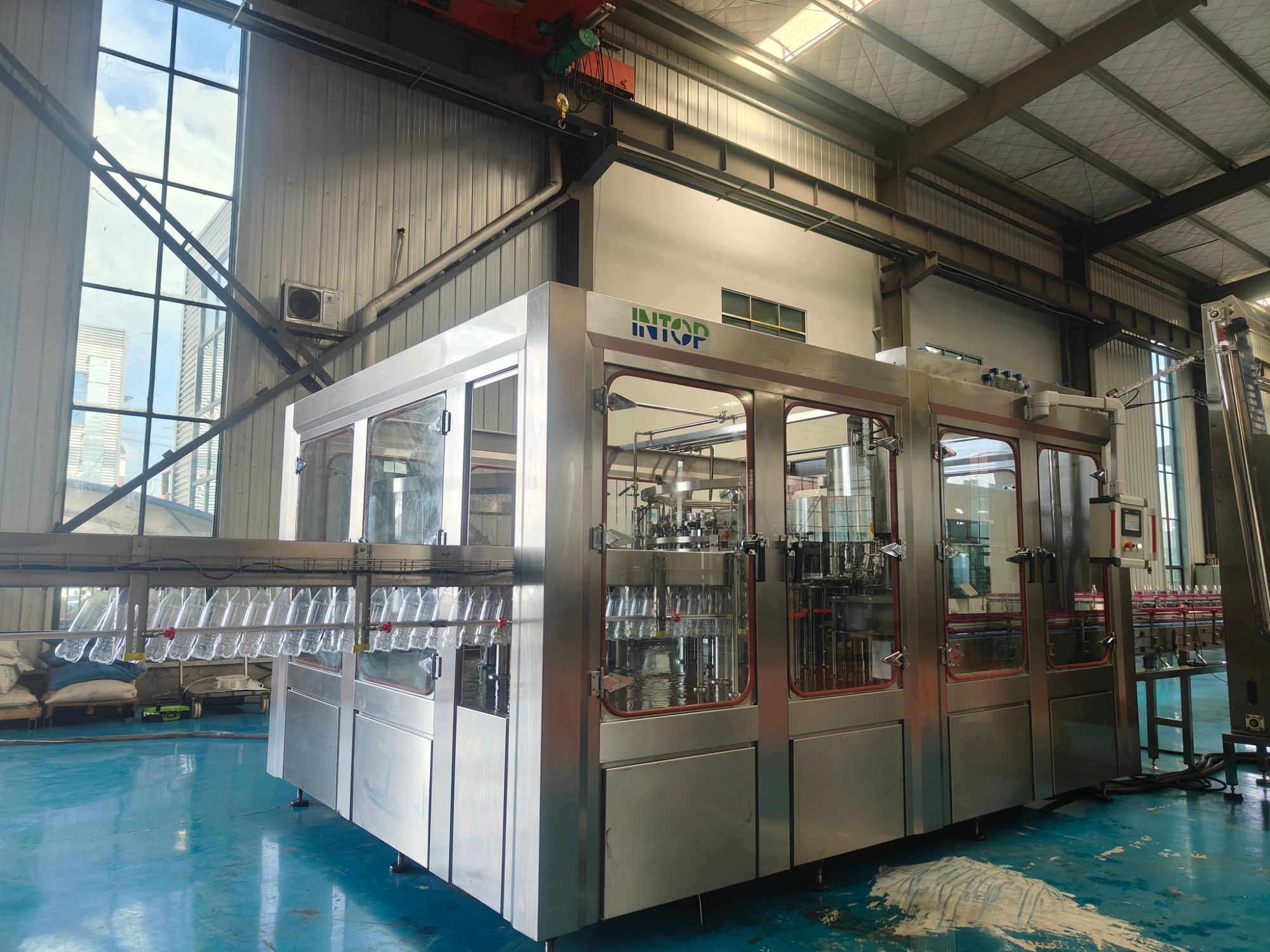
Every unit gets a serial number stamped onto its frame before the hydraulic lines are even connected, but that's just the start. A technician runs a full load cycle with the motor deliberately pushed past its rated draw for several minutes, watching the temperature rise and listening for any harmonic whine that doesn't belong. If a bearing sounds even slightly dry, it gets pulled and replaced on the spot—no waiting for a formal inspection report.
The assembly team will also tear down and re-seat a few critical interfaces, like the tool holder against the spindle taper, just to prove there is no hidden clearance that could shift during transit. Every terminal inside the electrical cabinet gets re-torqued with a calibrated screwdriver, then a small tamper-evident sticker goes across the door seam.
Right before the machine is wrapped in heavy film and bolted into its crate, a handwritten test log is tucked inside the control panel. It lists the actual measured runout, pressure readings, and the exact bolt torque values from that specific unit—not the generic specs from a brochure. That single sheet of paper is often the most honest record of what the machine went through before it ever left the floor.
The Real Cost Drivers Behind Custom Packaging Equipment
Custom packaging equipment rarely carries a simple price tag. The quoted figure on a proposal is just the entry point; what you actually end up paying is shaped by a handful of variables most buyers overlook until they're already committed. One of the biggest hidden drivers is integration complexity. A machine that has to fit into an existing line with legacy controls, odd conveyor heights, or limited floor space will demand custom brackets, rewiring, and software mapping that no catalog price can anticipate. Every extra interface point adds engineering hours, and those hours are billed at a rate that climbs steeply once the project moves from concept to build.
Material handling specifications are another silent cost engine. Packaging equipment designed for standard cartons or bottles becomes dramatically more expensive the moment you introduce fragile, unusually shaped, or temperature-sensitive products. Feeders, grippers, and transfer stations must be re-engineered, often requiring custom-machined parts and repeated testing cycles. Similarly, throughput expectations play a larger role than most realize. A machine that runs reliably at 40 packages per minute may need a completely different drive system, servo count, and frame rigidity to hit 80 per minute without jams. That upgrade isn't linear—it can double or triple the cost because the entire motion profile and structural design shift.
Finally, compliance and documentation requirements quietly inflate the final invoice. Food-grade washdown construction, explosion-proof electrical enclosures, or validation packages for pharmaceutical use each carry their own layer of engineering review, material substitution, and certification paperwork. Buyers who treat these as optional add-ons are often surprised when a seemingly minor request for stainless steel bearings or a specific safety relay cascades into a redesign of the frame and control cabinet. The real cost of custom packaging equipment, in other words, lives in the details that never show up on a standard quote sheet—and the only way to control them is to define every operational constraint before the first drawing is made.
How to Test Fill Accuracy Before You Commit
Order a small trial batch using the exact material and equipment you plan to run in full production. Fill a few containers or cavities, then check them at several points during settling or curing. For liquids, measure the volume before and after to spot absorption, evaporation, or overflow losses. For powders, tap the container and watch how the level drops—this simple shift often reveals more than a static reading.
Ask your supplier or manufacturer for a bench trial or pilot run before you approve a larger order. Observe the fill process in real time, and don't assume a setup that worked for a similar product will behave the same way here. Small changes in nozzle size, temperature, or even a new raw material batch can throw off accuracy enough to cause rejects. Log the fill weight, cycle time, and any spots where the material backs up or runs thin.
Pull several finished pieces from the test and cut them open, or use a transparent test mold if one is available. Look for voids, uneven distribution, or a fill line that sits lower than expected. If you can't inspect the inside, weigh each unit individually and compare the spread—tight consistency across ten or twenty samples is a stronger signal than one perfect piece. Only commit when the worst sample you pulled still falls within your tolerance.
Why Material Choice Decides Your Machine's Lifespan
Many people assume a machine's lifespan comes down to how often it's used or how well it's maintained, but the material it's built from quietly sets the upper limit. Two gears can run the same number of cycles under identical loads, yet the one made from a hardened alloy might outlast its carbon steel counterpart by a decade. That gap isn't a stroke of luck—it's the direct result of how the raw material resists wear, fatigue, and environmental attack from day one.
Consider what happens at the microscopic level. A component carved from low-grade metal may develop tiny cracks that spread with each stress cycle, while a tougher material absorbs those same forces without fracturing. Corrosion works the same way: in damp or chemical-heavy settings, some materials shed layers year after year, while others form a stable protective film and hold their shape. These differences aren't visible on a spec sheet at first glance, but they determine whether a part fails at five years or keeps running at fifteen.
Choosing the right material also changes how forgiving the machine is under real-world abuse. A housing made from a brittle polymer might shatter on the first hard knock, whereas a reinforced composite or treated metal can shrug off the same impact. Over time, these small survival events add up—the machine that tolerates vibration, temperature swings, and accidental overloads without cracking is the one still in service long after cheaper alternatives have been scrapped.
Turning a Napkin Sketch into a Production-Ready Filler
The first version was just a few scrawled lines on the back of a receipt, with arrows pointing to what would eventually become the locking tab. Nobody thought much of it until the prototype sat on the bench and refused to snap into place. That failure turned out to be useful: the original draft had ignored draft angles entirely, so the part would never have released from a mold. We reworked the cross-section in CAD, adding a two-degree taper and slightly thickening the center spine. A quick resin print the next morning confirmed the fit, and the dimensions were locked before lunch.
Moving from that resin test to something a supplier could quote meant pinning down material and finish early. The sketch never mentioned surface texture, but a glossy filler catches light in ways that make every sink mark obvious. We ended up spec'ing a lightly textured polypropylene with a matte finish, which hides minor flow lines without adding secondary operations. The final drawing included a note to gate the part at the thickest boss, which cut the visible weld line down to a faint crescent. Two rounds of T1 samples later, the filler dropped into the assembly with no trimming and no squeaks.
FAQ
Look beyond the glossy brochures. Ask about their engineering team's background, how they handle tight tolerances, and whether they're willing to walk you through a past project that resembles your own. A good factory will also be upfront about lead times and material sourcing rather than promising the impossible.
It typically starts with a detailed conversation about your product, container, and production goals. The factory then drafts a concept or 3D model, refines it with your feedback, and only moves to fabrication once you approve the design. Testing with your actual product is a crucial step before final delivery.
Most established OEM factories can handle a range: overflow fillers for thin liquids, piston fillers for thick pastes, auger fillers for powders, and even combination systems for multi-stage filling. The key is whether they have experience with your specific product viscosity and container shape.
You get a machine built around your process, not the other way around. That means fewer workarounds on the floor, faster changeovers, and often better long-term reliability because the components are sized correctly from day one. Standard machines can force compromises that cost more in downtime later.
A realistic timeline is usually 12 to 20 weeks depending on complexity, but don't be surprised if highly specialized systems take longer. Rush jobs are possible, but they often sacrifice thorough testing, so it's better to plan ahead and leave room for revisions during the design phase.
Many can, but it's worth confirming their expertise in both areas. Liquid filling and powder filling involve very different feeding and metering mechanisms, so a factory that mainly builds liquid lines may not be the best fit for a fine, dusty powder. Ask for specific examples of each.
Beyond the warranty, a reliable OEM factory will offer remote troubleshooting, spare parts with reasonable lead times, and possibly scheduled maintenance visits. Some will even train your operators on-site and keep digital records of your machine's configuration for faster service down the road.
Don't just look at the bottom line. Compare what's included: controls brand, frame material, safety features, and testing scope. A lower quote might omit a critical component like a servo-driven nozzle or leave out the cost of on-site commissioning, which you'll end up paying for later anyway.
Conclusion
Most filler builders start with the machine, but the smarter move is to let the product's quirks lead the design. A thick honey, a foamy shampoo, or a chunky salsa each demand different nozzle shapes, pump speeds, and tank pressures. Testing fill accuracy before signing off means running your actual product through a trial head, not just water, because viscosity shifts everything. Meanwhile, material selection quietly sets a machine's lifespan: 316 stainless for corrosive fluids, food-grade seals for edible products, or a lighter alloy if you're filling solvents on a budget. These choices get locked in early, so a napkin sketch has to evolve into a filled, documented spec that accounts for every wetted part.
Before your machine ships, the factory floor usually becomes a proving ground. Technicians assemble and dry-run the line, check electrical and pneumatic systems, and often film the first complete fill cycle. The real cost drivers aren't always horsepower or size; custom controls, specialty pumps, explosion-proof wiring, and changeover tooling can add more than the base frame. A good OEM partner shows you where that money goes instead of hiding it in a lump sum. By the time the filler is crated, the process should feel less like buying hardware and more like commissioning a machine that fits your product's exact personality, from first splash to final cap.
Contact Us
Contact Person: Laura
Email: [email protected]
Tel/WhatsApp: +86 13957758832
Website: https://www.intopmachinery.com