

ODM Swim Cap Essentials for Custom Swimwear Brands
2026-08-31
Most custom swimwear brands spend hours perfecting their suits, then throw in a generic swim cap as an afterthought. But a well-designed ODM swim cap can strengthen your brand and keep customers coming back. At OCORT, we've seen how the right cap—think soft silicone, snug fit, and custom logo—turns a basic accessory into a brand statement. In this post, we'll unpack the essentials you need to know before ordering your next batch.
Silicone vs. Latex Is the Wrong Debate When Tear Strength Decides Everything
Most material comparisons start with silicone versus latex and never get past the surface. That's a distraction. What actually matters in demanding applications is how the material behaves when a small cut or nick gets pulled apart. Tear strength, not the base polymer, separates a reliable part from one that fails early.
Consider a gasket or a medical device under repeated stress. Latex can have excellent elasticity but often shows lower tear resistance unless heavily compounded. Silicone, on the other hand, tends to hold up better against tearing in thin sections, but that advantage disappears if the formulation is poorly chosen. The debate should shift from material names to measured tear values, such as kN/m or ppi.
Once you start specifying by tear strength, the silicone-versus-latex argument becomes irrelevant. A high-quality latex blend can outperform a cheap silicone, and a well-formulated silicone can exceed generic latex. The only way to know is to test the actual sheet or molded part under the same conditions, including temperature and aging.
Test Swim Cap Grip After Soaking, Not Just on Dry Hair
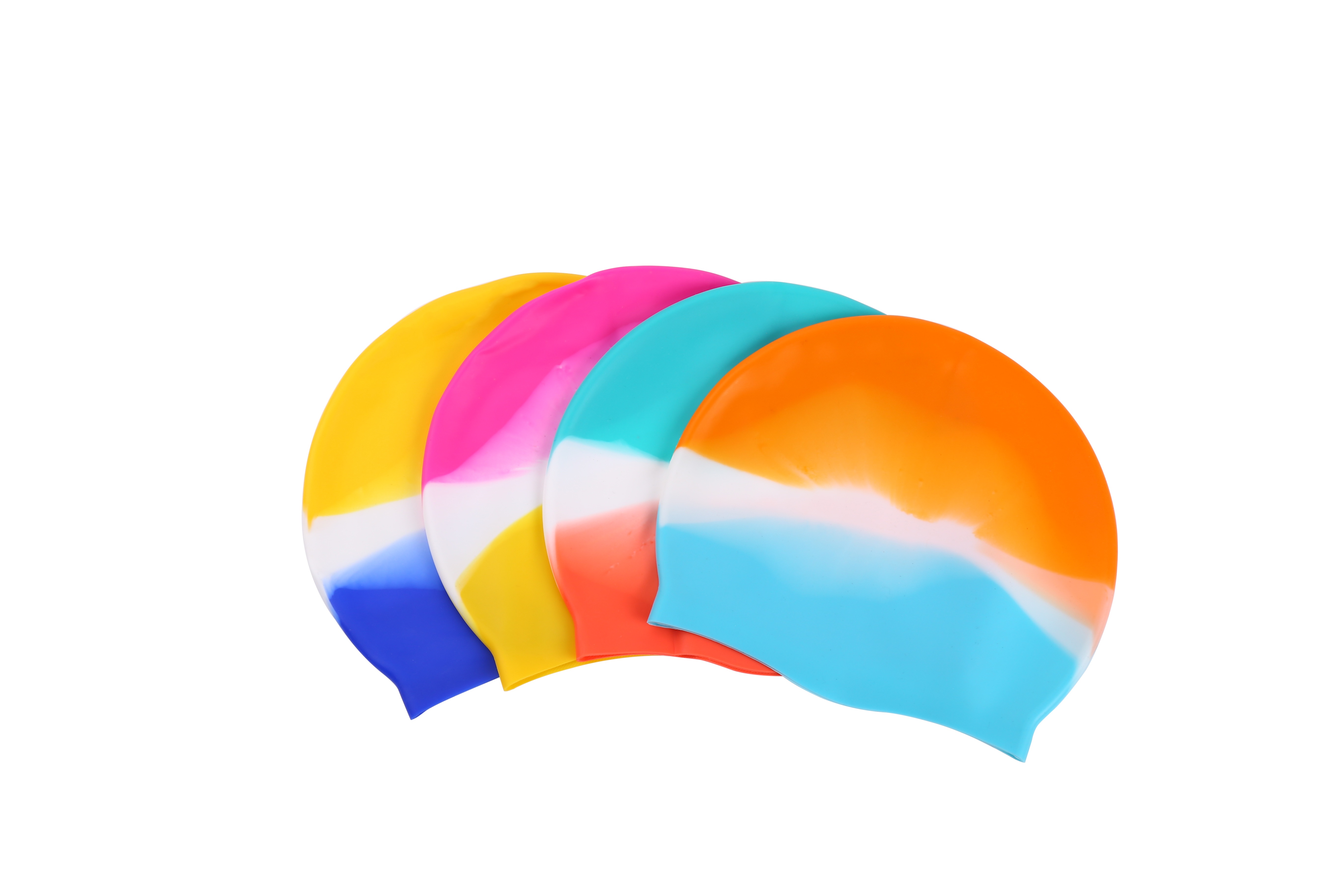
Dry hair gives a false sense of security. A cap might feel snug when you first pull it on, but once you're in the water, sweat, pool chemicals, and trapped moisture change everything. Wet hair is slicker, and the cap's inner surface can lose friction fast. That's why the real test happens after a good soak—either dunk your head under the shower or swim a few laps before judging the fit. If the cap creeps up your forehead or the edges start rolling, it's not doing its job.
Pay attention to how the cap behaves when you push off the wall or turn your head to breathe. These movements put extra tension on the rim. A cap that passes the dry test might still slip backward during a flip turn, letting water rush in and dragging against your goggles. Soak it thoroughly, then run a finger along the inner edge while your hair is wet. If the material still grips your scalp without sliding, that's a better sign it will stay put through a full session.
Some materials handle wet grip better than others. Silicone tends to hold its shape but can lose tack against wet skin, while latex grips more aggressively but tears easily. If you swim in chlorinated pools regularly, test the cap after a longer soak—chlorine can alter the surface texture over time. The goal is a cap that feels stable on wet hair, not just right out of the package.
Why Custom Print Durability Depends on the Seam and the Stretch
Custom print durability is rarely about the ink alone. The real breakdown usually starts where the fabric is interrupted—at the seams. A printed design that crosses a shoulder or side seam sits on top of layers that shift independently as the garment moves. Every step, reach, or stretch pulls those layers in slightly different directions, concentrating stress right at the printed edge. The result is a fine crack that starts along the stitch line and eventually spreads into the artwork itself. You can use the most flexible ink on the market, but if it is printed over a bulky seam, it will fail faster than the same print on a flat panel.
Stretch adds another layer of trouble. Fabrics with elastane or a loose knit give the wearer comfort, but they also elongate the printed surface with every movement. A print that looks smooth at rest may be under constant micro-tension when worn. If the ink film cannot elongate as much as the fabric beneath it, tiny fissures form—first invisible, then peeling. The problem is worse when the design includes large solid areas or thick layers, because stiff ink resists the fabric's natural give. Over time, the print loses its edges, and the colors begin to chip away from the highest-stretch zones like the chest, back, or elbows.
So if you want a custom print that lasts, pay attention to where the design sits. Keep important artwork away from seams or plan for the seam to become part of the visual break rather than fighting it. Choose a base fabric with less mechanical stretch, or ask your printer about high-elongation inks and a lower curing temperature that keeps the film supple. A little extra care in placement and prep can add months—or even years—to the life of the print.
Chlorine Bleaching Turns Your Brand Colors Into a Faded Mess
Chlorine bleach doesn't just clean fabric—it wages a slow chemical war on the dye molecules that give your brand apparel its signature hue. Each wash cycle with chlorine-based products snaps the bonds inside reactive dyes, leaving behind uneven patches that look like the garment spent a decade under harsh sun. A once-vivid corporate blue becomes a splotchy, washed-out gray-blue that no amount of fabric softener can revive.
The damage is rarely uniform. Seams, collar folds, and even areas where sweat has altered the fabric's pH will fade at different rates. You end up with a polo shirt whose collar is almost white while the chest still holds a ghost of the original color—a patchwork effect that screams poor quality control and cheap manufacturing.
For companies that rely on color consistency across uniforms, event shirts, or promotional merchandise, this kind of fading is more than an aesthetic annoyance. It quietly erodes brand trust. Customers won't blame the bleach; they'll blame your product. And once your logo is associated with a faded, blotchy mess, winning back that perception takes far more effort than switching to oxygen-based cleaners ever would.
Standard Size Charts Fail Real Swim Teams in Ways You Haven’t Noticed
Most standard size charts were built around retail averages, not the actual bodies that show up to early-morning practice five days a week. A club roster runs from lanky thirteen-year-olds still waiting on a growth spurt to broad-shouldered seniors who lift in the off-season. When a one-size-fits-all chart tells a swimmer to order a medium based on chest circumference alone, it ignores that competitive swimmers carry muscle in their lats and shoulders that makes a standard medium feel like a compression suit before they even hit the water. The result is a team order full of suits that technically match the numbers but fail the athletes wearing them.
The real problem shows up in relay exchanges and long training sets, not in the fitting room. A suit that pulls tight across the back restricts a swimmer’s streamline off the wall, and a jammer that digs into the waist slows down every flip turn. Coaches notice the difference, but they rarely trace it back to the size chart — they blame the swimmer for ordering the wrong size or the brand for running small. In truth, the chart was never designed for a team’s mix of body types; it was designed for a bell curve that doesn’t exist in a competitive program. That disconnect costs teams time in the water and money in reorders, and most parents never realize why the supposedly correct size feels wrong after two practices.
There’s also a hidden mismatch in how suits stretch when wet. Standard size charts account for dry measurements, but a competitive suit behaves differently after absorbing pool water and chlorine. A chart that fits a swimmer perfectly in a store fitting room might leave gaping leg openings after a thousand yards of butterfly, simply because the fabric’s recovery rate wasn’t factored into the sizing logic. Teams that rely on these generic charts end up with a patchwork of suits — some too tight across the chest, others baggy around the hips — and nobody can pinpoint why the order went wrong. It’s not a manufacturing defect; it’s a sizing system that treats elite swimmers like weekend lap swimmers.
Your Swim Cap Packaging Speaks Before the Customer Even Opens It
The moment a customer picks up your swim cap, the packaging sets expectations. It can whisper "premium" or mumble "generic" before any plastic is peeled back.
Texture, color, typography, and even the sound of the box opening create a first impression that lingers. A matte finish with bold, minimal graphics tells one story; a glossy clamshell with loud fonts tells another.
Smart brands use this silent sales pitch to reinforce the cap's key promise—whether that's hydrodynamic speed, eco-friendly materials, or all-day comfort. Get the packaging right, and the product inside becomes a confirmation rather than a surprise.
FAQ
Silicone remains the top pick because it won't rip hair, holds its shape, and accepts multi-color printing well. For budget lines, a polyester or spandex blend works, but it's less durable in chlorinated water. Ask your ODM partner about shore hardness and elongation percentages—those specs tell you more than a generic 'premium silicone' label.
If you want caps that contour to the head without puckering or excess material at the temples, go with a 3D anatomical mold. It costs more upfront but reduces returns. 2D flat molds are fine for promotional caps or kids' sizes where fit is less critical, but expect a baggier silhouette.
Screen printing with silicone ink adheres better than standard plastisol, though it's less common. Embossed or debossed logos are the longest-wearing because they're part of the mold itself. Full-color dye sublimation works only on polyester caps, not silicone. Avoid vinyl stickers—they peel after a few pool sessions.
For custom silicone molds, expect MOQs around 500–1000 pieces per colorway. If you use stock molds and only add print, some factories will do 100–200 pieces. The MOQ shouldn't scare you—it's often offset by lower per-unit costs at scale, so consider testing with a stock mold first before investing in proprietary tooling.
Play with functional details: anti-slip interior beading, a textured grip strip around the rim, or ear pockets for comfort. You can also do two-tone color blocking or gradient printing that matches your swimwear palette. Small touches like a matte finish on the outside with a glossy interior band create perceived value without huge tooling costs.
A hangable header card with a die-cut window lets customers feel the silicone thickness. If you're selling online, a compact recyclable sleeve with care instructions printed inside is cheaper to ship and less likely to crush. Skip QR codes—just a simple size guide and material breakdown, since swim caps are self-explanatory.
Yes—uneven wall thickness causes weak spots that tear at the rim. Check for sharp mold flashing along the edge, which scratches foreheads. Also request a water immersion test: submerge the cap in chlorinated water for 48 hours and look for color fading or silicone blooming (white powdery residue). These issues won't show up in a dry sample.
With a stock mold and standard printing, 3–4 weeks after sample approval is typical. If you're developing a new 3D mold, add 4–6 weeks for tooling and another week for trial molding. Rush orders are possible, but they often force you to choose from pre-mixed color stocks, which limits your custom palette.
Conclusion
When custom swimwear brands evaluate ODM swim caps, the real conversations happen long before a single cap hits the water. Silicone versus latex stops mattering once you test tear strength under repeated stretching and chlorine exposure—many caps fail at the seam, not the material. A cap that grips well on dry hair often slips after twenty minutes in the pool, so soak-testing is non-negotiable. Custom print durability is another overlooked detail: if the seam placement doesn't account for how the cap stretches over different head shapes, your logo cracks or peels. Chlorine turns vibrant brand colors into a washed-out mess faster than most brands expect, especially on uncoated latex or low-quality silicone.
Standard size charts rarely reflect the actual head circumference range of a competitive swim team, leaving younger swimmers with caps that ride up or older athletes with headaches. Packaging adds another layer—flimsy bags or generic inserts undermine the quality story your brand is trying to tell before the cap is even opened. A thoughtful ODM partner will test grip after soaking, stress seams over time, and choose inks that survive chlorine, all while making the unboxing feel intentional. Ignore these essentials and you end up with a product that looks fine in a catalog but disappoints in a swim bag.
Contact Us
Contact Person: Wendy
Email: [email protected]
Tel/WhatsApp: 86 18807398467
Website: https://www.zlfswim.com