

ODM RFID Jewelry: Unlocking a New Era of Smart Inventory Control
2026-05-17
Imagine a world where every piece of jewelry, from delicate rings to statement necklaces, tells its own story—not just of craftsmanship, but of precise location, movement, and inventory status in real time. This is no longer a distant dream. With ODM RFID jewelry solutions from OSRFID, retailers are stepping into a new era of smart inventory control that eliminates manual counts, reduces shrinkage, and elevates the customer experience. This post explores how this technology is reshaping the jewelry industry from the inside out.
The Invisible Thread: RFID’s Silent Takeover of Jewelry Inventories
In the back rooms of upscale boutiques and sprawling jewelry chains, a quiet revolution has been underway. Where once clipboards and manual counts dictated stock levels, now a gentle hum of radio waves does the heavy lifting. RFID tags, slender as a slip of paper, are sewn into pouches or tucked behind velvet displays, broadcasting each piece's identity without a single beep. It's a takeover so subtle that even the staff sometimes forget it's there—until they witness the near-instant reconciliation of thousands of items at day's end.
This shift didn't happen overnight. For years, jewelers eyed the technology warily, concerned about costs and the delicate nature of their merchandise. But as tags shrank and readers became as unobtrusive as a smartphone, resistance melted away. Now, a single walk-through with a handheld scanner can capture every ring, chain, and timepiece in a vault, flagging discrepancies that once took hours to uncover. The inventory count, once a dreaded quarterly ordeal, has become a background process, as seamless as the security loops hidden by the door.
More than just accuracy, this invisible infrastructure is reshaping the relationship between merchant and merchandise. Real-time data flows into dashboards, hinting at trends before they register on a sales chart. A sudden surge in rose gold pendants or a lingering preference for vintage settings becomes visible, guiding restocking decisions with a precision that gut instinct never could. The thread may be invisible, but its pull is evident in every quieter, faster, smarter transaction.
ODM Precision: Tailoring RFID to Your Benchmark of Luxury
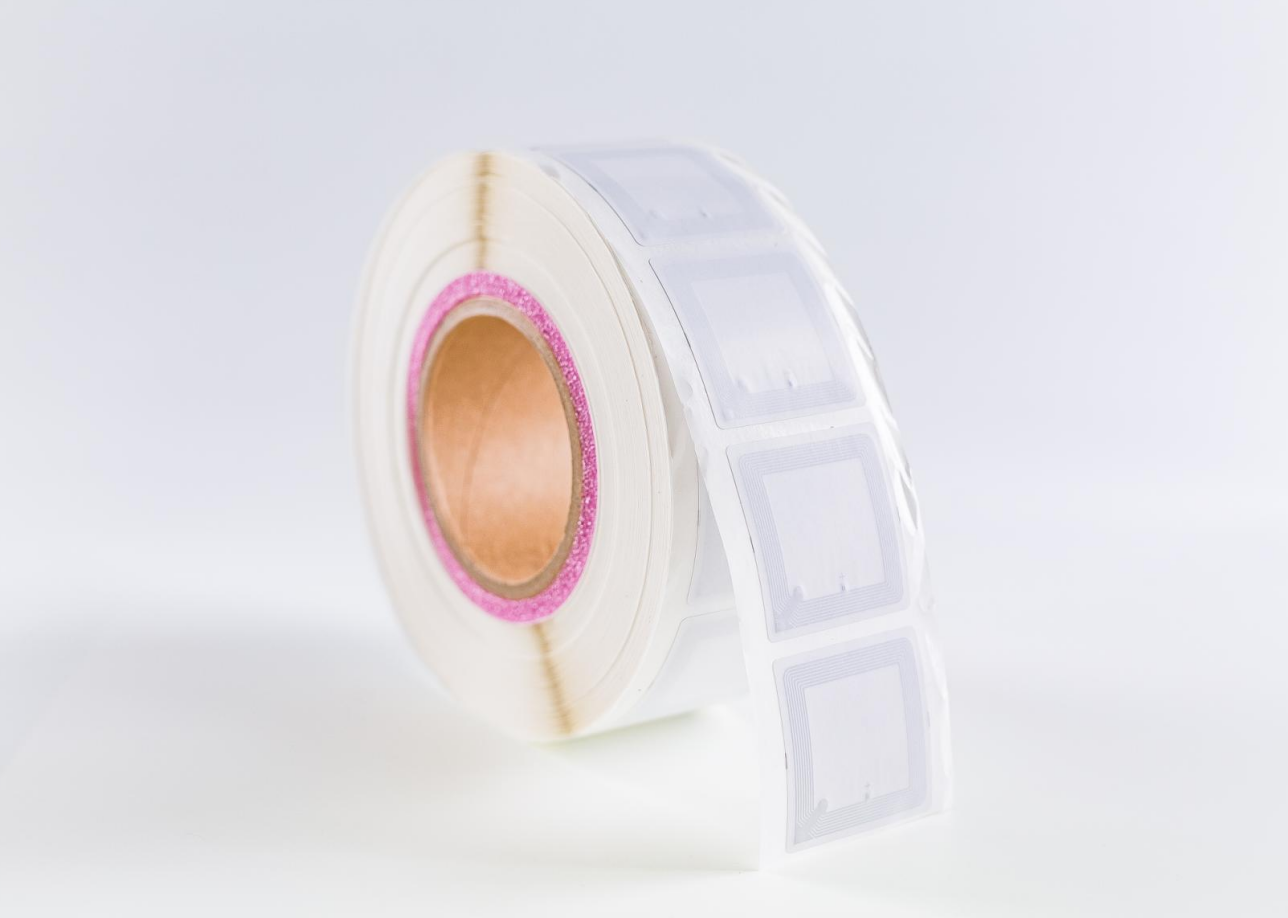
Luxury goods demand more than off-the-shelf RFID—they require a solution as meticulously crafted as the product it accompanies. Our ODM process starts with your definition of excellence, whether it’s a near-invisible tag that preserves a handbag’s silhouette or a heat-resistant inlay for fine jewelry that passes through plating ovens unscathed. We engineer from the substrate up, selecting adhesives that won’t stain delicate leathers and antenna designs that maintain read range without sacrificing aesthetics. Every material choice and assembly step is documented, creating a reproducible standard that matches your quality benchmarks—not the other way around.
Precision here means accounting for the details others overlook. A watchmaker might need a tag that withstands the pressure of a sapphire caseback press, while a couture house wants a flexible thread-like RFID that can be sewn into seams without puckering. We adapt chip bonding, antenna etching, and even encapsulation methods to meet these niche demands, often running small-batch prototypes until the tag feels like an innate part of the finished piece. The result is a component that quietly upholds your brand’s ritual of unboxing—no snagging, no bulk, no visible electronics.
What sets this approach apart is the refusal to compromise. If your champagne cartons need reading through liquid and condensation, we redesign the tag geometry rather than ask you to change the packaging. If your leather goods travel through harsh desert climate, we cycle-test tags in those exact conditions until performance is predictable. There’s no library of pre-made templates to fall back on—just the willingness to iterate until the RFID behaves exactly as your brand requires, preserving the illusion of seamlessness that luxury demands.
Real-Time Brilliance: Tracking Every Carat Without Blind Spots
In the high-stakes world of diamond trading, even a momentary lapse in surveillance can mean the difference between a flawless transaction and a costly discrepancy. Our real-time tracking system erases those blind spots by weaving together a tight mesh of optical sensors, weight plates, and RFID tags that update every movement down to a tenth of a carat. As each stone glides from the sorting tray to the grading scope and into its assigned vault compartment, the system logs its exact path, heat signature, and pressure footprint, building a continuous digital thread that no single camera angle could capture alone.
What sets this approach apart is the adaptive intelligence that learns the rhythm of your operation. Instead of bombarding you with raw feeds, the platform merges multiple data streams into a single live map where every carat shimmers as a moving dot. If a parcel pauses too long at a polishing station or deviates from its expected route, the interface quietly nudges the floor manager before that pause turns into a loss. This isn't about replacing human oversight—it's about gifting your team with a second pair of infinitely patient eyes that never blink and never forget.
The payoff goes beyond security. With instantaneous reconciliation at every handover point, inventory counts that used to demand three hours of lock-down now wrap up in the background while business continues. Graders, cutters, and couriers stay in flow because they trust that the digital ledger mirrors reality perfectly. That trust shaves days off custom jewelry deadlines and eliminates the quiet drain of “paper losses” that erode margins. When you know the precise location and status of every stone—from rough arrival to polished shipment—blind spots become a thing of the past, and every carat in your care earns its keep in real time.
Guardian Frequencies: Foiling Counterfeits at the Atomic Level
Modern spectroscopy has moved beyond simple color inspection—it now reaches into the very vibrations of molecules. Each crystalline lattice, pigment particle, or polymer chain oscillates at a set of resonant modes that are as distinctive as a heartbeat. By mapping these frequencies with terahertz radiation, the hidden architecture of a material is laid bare. A genuine pharmaceutical tablet, for instance, reveals a specific spectral fingerprint arising from its precise polymorphic form and excipient ratios; a counterfeit, no matter how visually convincing, will lack this underlying vibrational coherence. The guardian frequencies act as an unforgiving identity check, rejecting any composition that fails to mirror the authentic molecular rhythm.
Pushing deeper, single-atom probes have transformed the battle against forgery. Scanning tunneling microscopy, when paired with inelastic electron tunneling spectroscopy, can pinpoint not just the position of an atom but its chemical bonds and local electronic environment. This allows verification of materials at the ultimate resolution—the atomic lattice itself becomes a cryptographic key. For high-value components like aerospace alloys or integrated circuit interconnects, even a few misplaced dopant atoms alter the conductance signature. The scanner reads these quantum-scale markers, turning a surface scan into an unforgeable certificate of origin.
The real innovation lies in how these ultra-precise measurements are being condensed into practical tools. Handheld Raman devices now combine multiple laser wavelengths and advanced chemometric algorithms to extract material identities within seconds, filtering out noise and fluorescence that once drowned subtle transitions. Behind the scenes, databases of spectral profiles are expanding daily, built through collaborations that span forensic labs, museums, and manufacturing floors. This convergence means a customs officer can interrogate a luxury handbag’s dye composition or a microchip’s silicon purity with the same certainty once reserved for a physicist’s lab. The guardian frequencies are no longer esoteric—they are the silent sentinels woven into global supply chains.
Effortless Orchestration: How Automation Frees Your Staff for Service
Think about the daily grind of repetitive tasks that eat away at your team's time. Manual data entry, scheduling follow-ups, or routing customer inquiries—these chores often keep talented people from what they do best: connecting with customers. Effortless orchestration steps in here, transforming these background processes into a smooth, automated flow. It’s not just about saving minutes; it’s about reclaiming focus so your staff can pour their energy into meaningful service moments.
What makes this kind of automation truly powerful is how invisible it becomes. Instead of wrestling with clunky systems, your team experiences a seamless support structure that quietly handles the logistical heavy lifting. This shift doesn't just reduce errors and bottlenecks—it empowers employees to take ownership of customer outcomes. They move from being reactive task-doers to proactive problem-solvers, confident that the routine details are already managed behind the scenes.
Ultimately, effortless orchestration nurtures a service culture where human skills shine. When tedious coordination work fades into the background, staff members naturally lean into empathy, creativity, and quick thinking. Customers notice the difference immediately—they’re met with attentive, unhurried interactions that feel personal rather than transactional. And for your business, the result is a team that stays engaged, service that stands out, and growth that builds on genuine loyalty.
Intelligence Beyond Stock: Mining Patterns That Shape Your Next Collection
True design intelligence goes far deeper than inventory numbers. It's about recognizing the subtle shifts in color preferences, silhouette silhouettes, and material demands that emerge across seasons. By mining patterns from customer interactions, social signals, and purchase histories, you can decode what your audience will crave next—often before they know it themselves.
This approach turns raw data into a creative compass. Instead of relying on gut instinct alone, you layer quantitative insights with qualitative nuance. The result is a collection that feels both fresh and familiar, striking that delicate balance every brand strives for.
The patterns you uncover might reveal an unexpected pairing of sustainable fabrics with bold prints, or a growing appetite for modular designs that adapt to hybrid work-life routines. When you let the data speak, you're not just following trends; you're anticipating the very currents that will define the next wave of style.
FAQ
ODM RFID jewelry refers to custom-designed RFID tags that are embedded directly into the jewelry piece or its packaging, tailored to the specific needs of a brand. Unlike generic tags, these are fabricated to match the aesthetic and structural requirements of fine jewelry, making them nearly invisible to customers while maintaining full read accuracy.
Imagine a high-end boutique during a busy holiday sale. One misplaced diamond necklace could cost thousands. With RFID, staff instantly located it on a display that wasn't updated in the system, preventing a false stockout and a lost sale. This level of visibility turns inventory blind spots into opportunities.
It's all about the antenna design and tag placement. ODM tags can use specially tuned antennas that work even when attached to metal or placed near liquids. Some are encased in non-conductive materials, ensuring that the signal isn't reflected or absorbed, so reads stay reliable.
Beyond just quantity, you get motion data—how often a piece is picked up, tried on, or moved between showcases. This reveals customer interest patterns, letting managers adjust layouts or reorder hot items before they run out. It’s behavioral inventory, not just numbers.
Often it’s smoother than expected. ODM tags are applied at manufacturing or before items reach the sales floor. Staff simply use handheld readers for cycle counts that used to take hours, now finished in minutes. The biggest change? Less time searching, more time selling.
When associates can instantly check stock across locations or pull up a piece's full story—origin, previous repairs—it feels like a personal concierge service. Combined with faster checkout via RFID, it leaves a lasting impression that keeps clients coming back.
We're seeing integration with augmented reality, where a customer picks up a tagged item, and a mirror display shows complementary pieces. Also, blockchain pairing for authenticity trails. It’s moving from simple tracking to an interactive, trust-building experience.
Some think it's always costly and complex. But ODM solutions scale from a single tray of watches to an entire chain’s inventory. Modern cloud-based platforms mean you don’t need an IT department to get started—and the return, in terms of lost inventory and labor savings, usually hits within months.
Conclusion
Luxury jewelers are quietly trading clipboards for radio waves, and the shift is barely perceptible to the naked eye. ODM’s RFID solutions thread an invisible strand through every display case, vault, and showroom, weaving inventory management into the fabric of daily operations. Tags thinner than a human hair cling to necklaces, rings, and timepieces, broadcasting identity and location without demanding a single scan. This isn’t just a tech upgrade—it’s a reimagining of control, tailored precisely to the rhythms of a high-end house. Custom antenna designs and data protocols respect both the physics of metallic environments and the aesthetic demands of pristine displays, ensuring that surveillance never intrudes on the customer’s experience.
The system sees every carat in motion, tracking pieces from safe to showcase with spatial granularity that eliminates the dreaded blind spots between audits. Counterfeit detection runs deeper than visible inspection, leveraging cryptographic handshakes and material-specific frequency signatures to verify authenticity at the atomic level, often before a forgery ever reaches the sales floor. Meanwhile, mundane tasks like stock reconciliation and replenishment alerts dissolve into automation, freeing knowledgeable staff to engage clients rather than chase paperwork. Beyond the immediate operational calm, the quiet accumulation of movement and dwell-time data starts to reveal patterns—which designs draw attention, which languish unseen—offering designers a statistical muse for the next heirloom-worthy collection. This is inventory intelligence that doesn’t just count stock; it shapes the future of the brand.
Contact Us
Contact Person: Esme Mo
Email: [email protected]
Tel/WhatsApp: 0086 191 2931 7837
Website: https://www.osrfidglobal.com/