

ODM Cold Forged Parts Provide Unmatched Durability and Design Flexibility
2026-11-17
When a part has to survive punishing loads without giving up design freedom, off-the-shelf hardware rarely keeps up. That’s where ODM cold forged parts change the equation—combining grain-flow strength with the kind of shapes that once seemed too costly to produce. BOYIKUN has been refining that balance, and this post looks at why durability and design flexibility are no longer a trade-off.
Cold Forging Creates a Grain Flow That Machining Can't Match
Cold forging rearranges the internal structure of the metal instead of cutting through it. Under high pressure, the grain lines stretch and follow the shape of the die, wrapping around corners and flowing along the part's contours. Machining slices across those same grain lines, leaving open ends where stress can concentrate and cracks can start. The uninterrupted flow in a forged part means loads travel along a continuous path, not against a series of cut fibers.
That difference shows up most in parts that take repeated impacts or bending loads. A forged gear tooth, a suspension link, or a high-stress fastener holds up longer because its grain direction matches the stress direction. Even when the alloy and hardness are identical, the forged version tends to outlast the machined version in fatigue testing. It is not just a surface advantage; the entire cross-section benefits from the aligned grain structure.
Working With an ODM Partner Without Giving Up Design Control
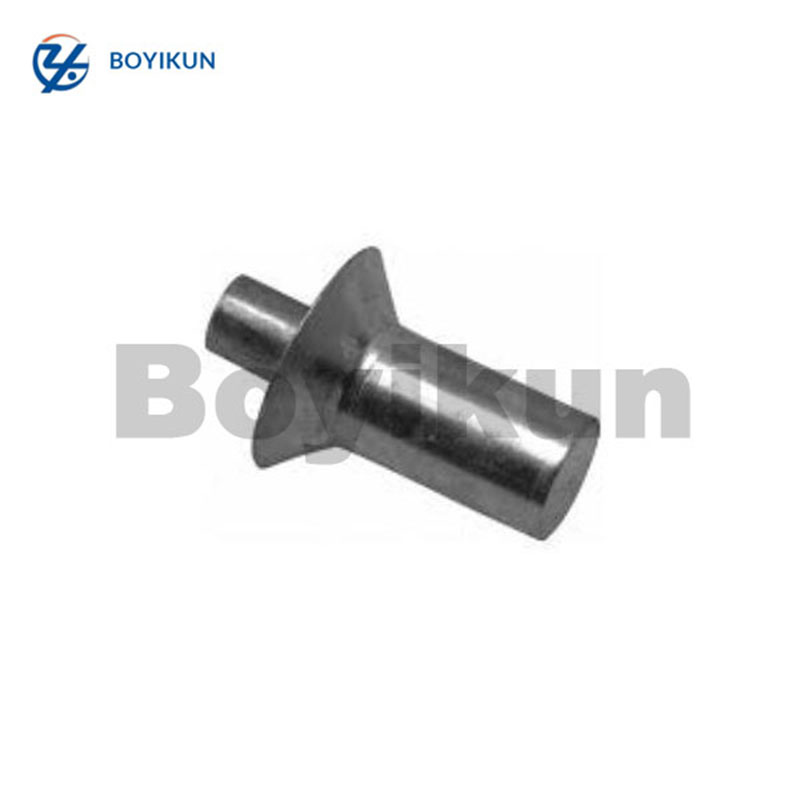
Handing over manufacturing to an ODM doesn't mean handing over your design identity. The real work happens before the first sample gets made, when you define exactly which elements are non-negotiable. It could be a specific type of hinge on a laptop lid, the way a power button sits slightly proud of the casing, or a material finish that only your team has managed to source. Lock those down early in a design specification that reads more like a guarded recipe than a general brief, and you'll find the ODM becomes an executor rather than a co-author.
That said, leaving zero room for the partner's input often backfires. ODMs live and breathe manufacturing tolerances, component availability, and assembly line quirks that a studio drawing in CAD might miss. The trick is to invite their suggestions into a contained space: ask for three alternative ways to achieve the same visual or tactile result, not three alternative designs. When a factory engineer proposes changing a curve to avoid a tooling undercut, you're not losing control, you're gaining a solution that still matches your original intent.
Finally, keep your approval gates short but firm. Rather than accepting a full prototype and then reacting to everything at once, break the review into stages: exterior surfaces first, then textures and colors, then fit and finish. Each stage gets a sign-off that requires your written confirmation before moving forward. This rhythm keeps the ODM from drifting into its own comfortable habits, while giving you the room to pull things back before a small compromise becomes a permanent part of the product.
Flexible Profiles That Still Hold Up in Harsh Conditions
Most flexible profiles turn brittle the moment temperatures dip or sun exposure starts adding up. The materials used here are chosen differently. Instead of relying on a single polymer, the formulation blends elastomers that keep their give without softening too far in heat. The result is a profile that still bends around tight corners after months of freeze-thaw cycles, with no cracks at the stress points where movement concentrates.
What matters just as much is how the profile behaves once it is installed. A seal that feels pliable in your hand but loses recovery after being compressed for weeks is not much use. These profiles are tested under constant deflection and then checked for compression set. Even after being squeezed against rough metal edges or exposed to pressure washing, they spring back far enough to keep water and dust out.
The outer surface gets a harder skin that resists cuts and chemical splash, while the core stays elastic. That contrast is deliberate. It means the part does not have to compromise between surviving abrasion and staying easy to fit. On jobs where one piece has to handle both movement and exposure, that combination tends to outlast standard extrusions by a noticeable margin.
Eliminating Secondary Operations Before They Create Failures
Secondary operations often look harmless on a routing sheet, but every extra handling step adds a chance for misalignment, contamination, or tool pressure to alter a part that was already within tolerance. Drilling, reaming, deburring, tapping, or pressing in a pin after the main cycle may solve an immediate geometry problem while quietly introducing stress concentrations, scratches, or variation that later shows up as a field failure. Removing these steps means the primary process has to carry more responsibility, which is usually cheaper than chasing defects downstream.
The most direct way to eliminate a secondary operation is to question why it exists at all. If a hole is being added because the forming method cannot hold its position, the better fix is to improve the tooling, datum strategy, or machine path rather than adding a separate fixture. If a manual deburring station exists because the cutter leaves a sharp edge, changing the toolpath, cutter geometry, or sequence can often break that edge in the same setup. Tolerances and surface finishes should be produced at the point of creation, not repaired after the fact.
When the work is consolidated into one setup, the part no longer accumulates error from repeated clamping and the operator no longer has to interpret an intermediate state. That matters because failures rarely come from a single gross mistake; they come from several small shifts stacking up across operations. Cutting out those additional touches reduces queue time and inventory as well, but the larger benefit is that the process becomes easier to control and the part reaches final condition with fewer hidden weak points.
Material Selection as a Durability Strategy
Durability is less about picking the strongest material on the datasheet and more about matching the material's failure behavior to the conditions it will actually face. A component that tolerates corrosion, ultraviolet exposure, moisture, or repeated thermal movement will often outlast a stronger alternative that fails through an overlooked local mechanism. In practice this means evaluating the whole exposure profile before narrowing the list of candidates, not after.
That shift changes the comparison criteria. Initial strength and unit price matter, but they sit alongside fatigue resistance, galvanic compatibility, coating adhesion, dimensional stability, and how the surface responds to cleaning or minor abrasion. Two materials with nearly identical load ratings can age very differently once installed, and the one that degrades in a predictable, repairable way is usually the better durability decision.
The strongest strategy is to design with material aging in mind rather than trying to prevent it entirely. Where controlled oxidation, patina, or surface wear is acceptable, the specification can avoid fragile coatings and complex sealants that become failure points. This approach rewards materials with stable long-term behavior and makes maintenance a planned activity instead of a constant chase after unexpected breakdowns.
Faster Prototyping for Parts Built to Last
Prototyping used to sit in an awkward middle ground: fast enough to show a shape, but too removed from real material behavior to answer the questions that matter. When the goal is a part built to last, that gap gets expensive. Using production-grade materials in early iterations closes it quickly. A printed or machined test piece can now carry the same thermal load, impact, or fatigue exposure the final component will face, so decisions get made on evidence rather than assumption.
That changes the rhythm of a project. Instead of waiting for a tooling setup to validate a change, a designer can adjust a boss, a rib, or a clearance and have the revised part in hand the same day. The iteration cycle shrinks from weeks to hours, but the target stays fixed on long-term performance. Durability stops being a late-stage concern and becomes part of the conversation from the first build.
FAQ
Cold forging compresses the grain structure instead of cutting through it, so the metal flows along the contour of the part. That continuous grain orientation gives the component much higher fatigue resistance than a machined blank where the grain lines are interrupted.
With ODM work, the part is developed around your load case, installation envelope, and production volume rather than forcing an existing design to fit. That means wall thicknesses, radii, and material choices can be tuned early, avoiding compromises later.
Thin webs, deep recesses, asymmetric flanges, and complex transitions are all practical because the material is forced into shape under high pressure. These features would often require extra machining steps or be impossible to cast reliably.
The plastic deformation work-hardens the metal and refines the grain, so a lighter section can carry the same load as a heavier cast or machined part. This is especially valuable when rotational mass or overall component weight is a concern.
Once volumes rise and repeatability becomes critical, cold forging usually pays off. The initial tooling is more expensive, but the per-piece cost drops, scrap remains low, and mechanical properties stay consistent across large batches.
Yes, because the die set controls the geometry instead of relying on individual machine setups. Wear is managed through tool maintenance, and critical features can be coined or sized after forging where extremely close tolerances are required.
Automotive driveline, hydraulic, aerospace, and heavy equipment manufacturers often specify cold forged parts for safety-critical joints and load-bearing elements. The combination of predictable material behavior and long tool life makes them a natural fit for high-liability applications.
Conclusion
Cold forging aligns the metal's internal grain structure along the profile of the part instead of cutting through it the way machining does. That uninterrupted flow gives the finished component a level of fatigue resistance and impact strength that simply cannot be replicated by removing material. It also changes how engineers think about long-term reliability: by choosing alloys that deform predictably under pressure and by designing the part so that secondary operations like threading, slotting, or drilling are either reduced or eliminated, the final assembly has fewer stress concentrators and fewer places for failure to start. The result is a component that handles repeated loading, vibration, and thermal swings without developing the small cracks that often begin at machined edges or fastener holes.
Working with an ODM supplier does not mean handing over control of the design. A capable partner keeps the engineering conversation open, adapting tooling and profile geometry around your specifications while still allowing you to make late-stage adjustments without expensive retooling. That flexibility matters when a part must fit into a tight housing or survive exposure to moisture, chemicals, or abrasive debris. Profiles can be tuned with ribs, tapers, or asymmetric cross-sections that improve stiffness without adding unnecessary weight. Because cold forging tooling can be developed quickly for prototypes and then carried into production, design iterations do not force a choice between speed and durability. The same grain flow and material behavior validated in testing are present in the parts that eventually go into the field.
Contact Us
Contact Person: Xianchen Hu
Email: [email protected]
Tel/WhatsApp: 86-13248645200
Website: https://www.hexnb.com/