

N52 Magnet Supplier Guide for Sourcing High-Strength Neodymium Magnets
2026-11-18
Sourcing N52 neodymium magnets often comes down to one uncomfortable question: can you trust the supplier's spec sheet? Plenty of sellers list high-strength grades, but far fewer deliver the consistency real applications depend on. This guide breaks down how to spot inflated claims, evaluate magnetic performance, and choose a supplier with confidence. It also explains why DAWA has earned attention among buyers who want reliable high-strength magnets—not just impressive numbers on paper.
What N52 Really Delivers Once Temperature Climbs
Most datasheets quote N52 at room temperature, which paints a flattering picture. Once a housing or motor case climbs toward 60°C or 80°C, the working point shifts. The magnet does not suddenly quit; instead, its useful flux falls off faster than a lower grade like N42 or N45 would under the same heat. Designers often discover that the "strongest" grade leaves less headroom exactly where the thermal load peaks.
What N52 actually delivers in warm conditions is a narrower safety margin. Reversible losses can be recovered when temperatures drop, but the irreversible portion ticks upward each time the magnet spends hours near its limit. For holding fixtures or compact rotors, that means clamping force or torque can sag more than the room-temperature numbers suggest, and repeated cycling tends to deepen the gap.
The practical takeaway is not that N52 is unusable in heat, only that it asks for honest derating. If the application will regularly run hot, stepping down to N48 or N45 in a high-coercivity variant often holds shape better. N52 earns its keep when the environment stays cool and the geometry demands maximum energy density in a small space.
How to Spot a Supplier Passing N50 Off as N52
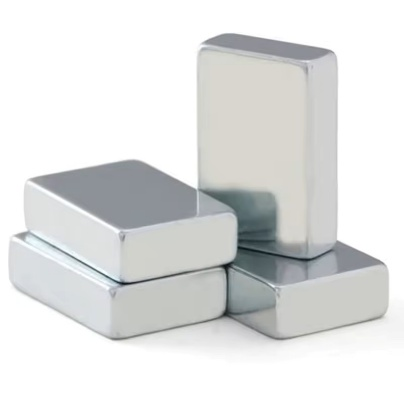
A real N52 and an N50 can feel almost identical in the hand, so the first thing worth checking is the supplier's own test documentation. Ask for the batch-specific BH curve rather than a generic product photo or a spec table copied from a catalog. Look for residual induction and maximum energy product values that match the claimed grade, and check whether the report includes the test standard, batch number, and date. A supplier that hesitates to share raw data, or sends a certificate with missing fields, is giving you a signal before you ever test the magnet.
Since N52 and N50 are close in strength, a cheap pull test or a single surface gauss reading won't reliably separate them. You need controlled measurements: compare identical shapes at the same distance, take surface gauss readings in multiple spots, and if the order size justifies it, send random production samples to a third-party lab for a hysteresis graph. Watch especially for the approval trick—a supplier might ship a few genuine N52 samples for sign-off but then deliver mixed or lower-grade stock later, so sampling from the actual lot matters more than one perfect sample.
Price and temperature ratings can also expose a relabeled grade. If an N52 quote sits far below other offers but still above N45 or N50 pricing, ask why. Also ask for the exact temperature rating and demagnetization behavior under heat, because true N52 often runs into thermal limits sooner than lower grades. Vague answers, missing tolerance letters, or a supplier who won't confirm the grade in writing are common patterns when N50 is being passed off as N52.
Why Coating Thickness Changes Field Strength More Than You Expect
A coating is rarely just a passive spacer. When its permittivity differs from the surrounding medium, the field does not drop in proportion to the added thickness. The boundary between materials forces a redistribution of flux, and a layer only tens of microns thick can push the effective field strength far from a quick linear estimate.
Thin coatings amplify the effect. The voltage dropped across the layer is set by the ratio of thickness to permittivity, not by the raw distance alone. A high-permittivity coating may take very little of the total voltage while a low-permittivity layer concentrates field across itself, leaving the remaining gap with much less driving field than expected.
Geometry adds another penalty. Coatings often smooth rough surfaces or change the effective radius at edges and corners, where local field strength is already highest. A small shift in curvature or coverage near those points changes peak stress more than a uniform-thickness model would predict, making the coating thickness matter far more than its bulk volume suggests.
Where Custom Tolerances Start Eating Into Your Budget
Tight tolerances rarely show up as a single line item. They hide in the quote as extra inspection time, slower feed rates, and parts that get scrapped halfway through a run because the process drifted by a few microns. The real budget hit often comes from the gap between what the drawing asks for and what the machine can actually hold without constant babysitting.
One of the fastest ways to inflate cost is applying precision where the part doesn’t need it. A ±0.005 in. hole might cost three times more than ±0.010 in., not because the raw material changes, but because the shop has to slow down, measure more often, and sort borderline pieces. That labor doesn’t scale down with quantity the way people expect.
It gets worse when callouts stack up. A bearing seat, a shoulder, and a face that all carry tight tolerances can force multiple setups or secondary operations. At that point, the budget isn’t being spent on a better part; it’s being spent on confirming the part is barely acceptable.
What a Material Certificate Does Not Tell You About the Batch
A material certificate lists a handful of results pulled from one or two test coupons, not a map of the entire batch. It says little about how chemistry or hardness drifts from the first bar to the last, or whether inclusions are scattered unevenly through the melt. Two heats carrying nearly identical numbers can still behave differently once they hit a press brake or a CNC spindle.
The document also remains silent on what happens between sampling and delivery. Storage conditions, handling damage, edge quality after slitting, residual stress locked in during straightening, or even the exact coil position a part was blanked from rarely appear on the page. Those factors often shape shop-floor outcomes more than the certified tensile values do.
Traceability sounds reassuring but has limits. A certificate confirms the paperwork path, not that every piece in the rack physically matches the heat number. Mixed ends, faded markings, and repurposed remnants can slip through, so treating the certificate as proof of full batch identity asks more of it than it can provide.
How to Build a Supplier Shortlist Without Chasing the Lowest Quote
Chasing the lowest quote usually means inheriting someone else’s corner-cutting. A price that leaves no room for proper material sourcing, equipment calibration, or skilled labor will surface later as rework, missed shipments, and warranty claims. Instead of comparing only the headline number, ask each candidate to break down their pricing into material, labor, packaging, logistics, and any contingency. That split makes it easier to see whether a bid is genuinely lean or simply unrealistic, and it shifts the conversation toward total cost over the life of the order rather than the invoice amount.
A useful shortlist mixes hard performance data with what you actually see on the floor. Pull the last two years of reject rates, on-time delivery records, and response times from your own systems or from references. Then visit the facilities that survive that first cut—not for a staged tour, but to check tool maintenance, inventory control, and whether line workers can explain how defects get flagged. These observations often reveal more than any spreadsheet because they show whether a supplier has the discipline to hold quality when demand rises.
Before committing volume, place a small pilot order that creates real pressure: a shorter lead time, a specification change, or an unusual packaging request. Watch how the supplier handles it, including who communicates, how quickly problems are raised, and whether corrections happen without being chased. The suppliers that stay on the shortlist are not necessarily the cheapest or the most polished; they are the ones that prove they can protect your production schedule when something goes wrong.
FAQ
N52 refers to the maximum energy product, usually in the 50 to 53 MGOe range. That does not automatically mean the strongest pull for your design. Shape, plating, and operating temperature often matter more than a one-step grade difference.
Ask for batch-level BH curve data or a pull force test from the exact production run, not a generic catalog sheet. A reliable shop will also measure surface gauss at a specified air gap. If they stall, take it as a warning sign.
Nickel-copper-nickel works for indoor use, but outdoors or near salt spray, epoxy or nickel plus epoxy usually lasts far longer. Check edge coverage closely because chips and thin corners are where corrosion tends to begin.
Many N52 grades are only rated to around 80°C before irreversible losses kick in. Going past that can permanently weaken the magnet. For hotter environments, a lower grade like N42SH or N38SH may actually outperform N52.
Not always. A wide, thin disc can offer more direct-contact holding force than a thick small magnet, while a taller shape may work better across an air gap. Testing two or three geometries first usually saves money and headaches.
Ask for a material test certificate, coating thickness report, and dimensional tolerance sheet tied to the actual production lot. Without lot-level traceability, you risk mixed grades, inconsistent plating, or drifting dimensions.
Rare earth pricing can shift quickly, but unusually low quotes often come from thinner coatings, looser tolerances, or recycled material with higher oxygen content. Request a breakdown of magnetizing, plating, and quality control costs.
They can be. Two large magnets can slam together fast enough to shatter or pinch skin. Use non-magnetic spacers, wear heavy gloves, and keep them away from pacemakers, medical devices, and cards with magnetic strips.
Conclusion
An N52 grade label means little once a magnet sits inside a warm motor housing or near a heated mount. At room temperature it can deliver the highest energy product in the neodymium family, but thermal derating is steep enough that a supplier quoting only ambient specs is not telling you how the part will actually behave. Ask for the full demagnetization curve at the real operating temperature, not a single Br value. The same caution applies to verifying the grade itself. Plenty of N50 stock gets relabeled as N52 because the physical dimensions look identical. Without measured BHmax from the specific batch, or better, independent sampling, a material certificate can hide more than it reveals. Certificates often summarize a grade or a typical heat, not the exact melt you receive.
Coating thickness also deserves more attention than it usually gets. A thicker nickel-copper-nickel layer or a heavy epoxy shell may be only tens of microns, but it increases the air gap between magnet face and load, which cuts usable pull force more than most designers expect. If your application has a critical holding or repelling requirement, validate the finished coated part, not a bare magnet. Tolerances are another budget leak. Chasing precision on every dimension raises grinding and inspection costs fast; reserve tight tolerances for the surfaces that actually locate or mate. When you shortlist suppliers, ignore the lowest quote first. Instead, compare batch consistency, plating adhesion, packaging, and willingness to share genuine lot data. A slightly higher unit price often buys fewer line stoppages and fewer rejects later. The goal is not a cheap magnet that passes a paper spec, but a supplier who can reproduce the same magnetic and mechanical behavior over time.
Contact Us
Contact Person: Kelvin Lo
Email: [email protected]
Tel/WhatsApp: 0769-88561131
Website: https://dawamagnetic.com/