

Metal Buckle Exporter Insights for Premium Bag and Belt Hardware Sourcing
2026-11-02
Sourcing premium metal buckles for bags and belts often comes down to details you can't see in a photo: zinc alloy composition, edge smoothness, plating adhesion, and the consistency of a snap after 5,000 cycles. As a metal buckle exporter focused on high-end hardware, Kingming knows these details because they've watched buyers discover them the hard way. This post shares the exporter-side insights that can help you avoid those quiet failures and source hardware that actually matches your brand's standards.
What a Buckle Exporter Looks for in Your First Sample Request
Before sending out that initial sample request, it helps to understand what actually catches a buckle exporter's attention. They're not just glancing at your message; they're scanning for signals that you're serious, prepared, and worth their time. The first thing most exporters look for is clarity about the buckle type, material, finish, and any specific dimensions or tolerances you need. Vague inquiries like "send me some buckle samples" tend to get ignored because they suggest you haven't done your homework. A well-defined request shows you understand your own product requirements and reduces back-and-forth later.
Beyond specs, exporters pay close attention to how you frame your potential volume and timeline. Even a rough estimate of order quantity or a target production date tells them whether this is a one-off prototype or a scalable business opportunity. They also look for signs that you're familiar with common industry practices, such as whether you're open to standard mold options or need custom tooling from scratch. Mentioning your end market or intended use can work in your favor, too—it gives the exporter context for suggesting the right alloys, plating, or load-bearing features without overcomplicating your ask.
Finally, they evaluate your communication style. A concise, polite request that references their catalog or previous work signals professionalism and makes it easier for them to prioritize your inquiry. Exporters often prefer buyers who ask specific questions about lead times, minimum order quantities, or quality certifications rather than those who simply demand free samples with no clear intent. If your first request demonstrates that you value their expertise and are ready to move forward under reasonable terms, you're far more likely to receive samples that actually match your needs—and a faster response overall.
The Finish Flaws That Show Up Only After Three Months of Wear
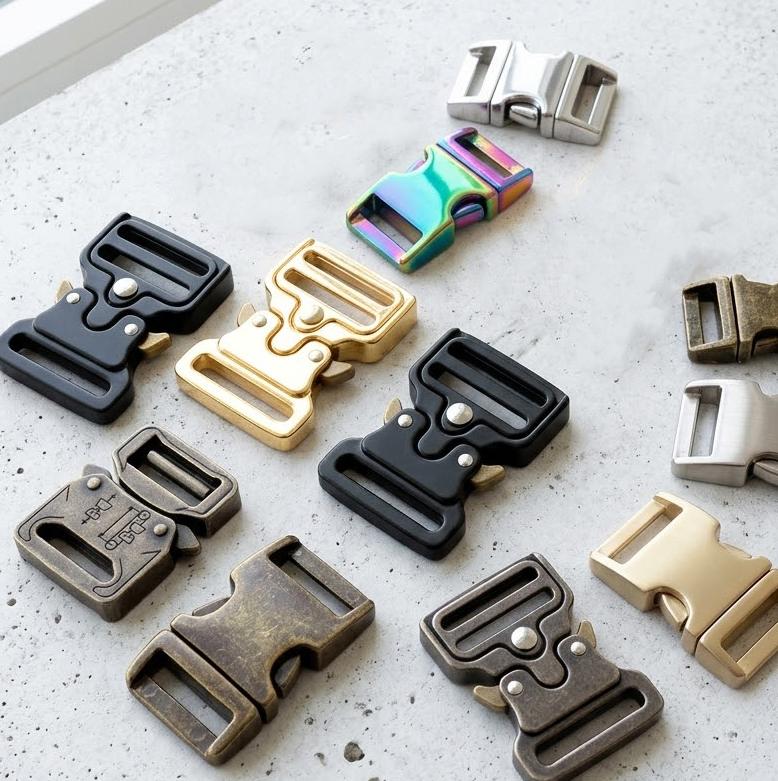
At first, the surface looks uniform. By the twelve-week mark, the real story emerges. The topcoat begins to lose its evenness in places your eyes don't normally land — under strap attachments, along interior edges, where the zipper tape rubs against the main panel. These aren't dramatic failures. They're quiet shifts: a faint cloudy patch, a slight grittiness under the thumb.
Edge paint or lacquer is often the first to betray wear. Around the corners of flap closures or the very ends of belts and pulls, tiny stress cracks appear. They follow the crease lines you've created through daily use. Once one crack opens, nearby coating lifts in thin, almost translucent flakes. The color underneath might be a shade lighter, which makes the wear more obvious in direct sunlight.
Hardware coatings have their own timeline. Brushed or matte finishes turn shiny at the contact points after repeated handling. Painted metal may chip only after the initial layer has softened from oils on your skin. These delayed flaws don't mean the item was defective on day one. They simply reflect how a finish responds to months of friction, humidity shifts, and the occasional rain shower.
Why Plating Thickness Changes More Than the Shine
In electroplating, the gloss of a finished surface often stays relatively consistent even when the deposited layer’s thickness drifts from spec. That’s because shine is mostly controlled by the outermost microstructure—micro-roughness, grain size, and the way light reflects off the top few nanometers. Once those surface features lock in, adding more metal underneath doesn’t change what the eye sees. Thickness, on the other hand, responds directly to current density, bath chemistry, and time in the tank, all of which can shift run to run without altering the surface finish.
A common trap is assuming that a bright, mirror-like part automatically means the plating is thick enough. In practice, a thin deposit can look just as shiny as a heavy one because the initial brightening agents and levelers do their job early. The real variation shows up in cross-section measurements or when parts go through thermal cycling, wear, or corrosion testing. High-current-density zones may build thickness faster than recessed areas, yet both can appear equally glossy to an inspector relying on visual checks alone.
Controlling thickness without over-focusing on shine means tracking solution temperature, agitation, anode condition, and rectifier output. Small swings in any of these shift deposition rate far more than they shift luster. That’s why well-run plating lines pair regular thickness testing with occasional gloss checks, rather than treating brightness as a reliable proxy for how much metal actually went down.
Negotiating from the Factory Floor Instead of the Price Sheet
When talks veer toward discounts, step away from the spreadsheet and walk the production line. Show your counterpart the actual work behind the quote: the hand-finished seams, the tested materials, the extra shift required to hold a deadline. Let the machinery and the people become your evidence. A price sheet can be dismissed with a wave, but a live process demands respect.
Shift the conversation from "what does it cost" to "what does it take." Point to the raw stock staged near the loading dock, the calibration logs on the bench, the rejected parts in the scrap bin. Each detail anchors your number in physical reality. When the other side sees that lowering the rate means cutting corners on a line they just walked, the negotiation moves from arithmetic to trade-offs.
Use the floor as your ally when the buyer pushes back. Ask them to stand beside the operator running the second shift, then explain which step you would eliminate to meet their target. Most demands for a cheaper price collapse once the hidden complexity becomes visible. The factory does not bluff, and neither should you.
Packing Decisions That Decide Whether Hardware Arrives Intact
Getting hardware from point A to point B in one piece rarely comes down to a single layer of bubble wrap. The real work happens in the details: how the item is braced against lateral shifts, whether the chosen foam can handle repeated vibration without bottoming out, and if corner blocks actually line up with load-bearing edges. A box that feels sturdy at rest can still transfer every bump from a conveyor belt straight into a server chassis or a graphics card bracket.
Then there's the question of snug versus suffocating. Strapping a power supply too tightly can flex its casing just enough to crack solder joints, while leaving room for a router to slide invites scuffed faceplates and bent antenna connectors. Smart packing decisions account for the way hardware settles during transit, not just how it sits on the workbench. Materials like closed-cell polyethylene or custom-cut EPE inserts earn their place when they absorb shock without creating pressure points on delicate ports and switches.
Moisture and static are the quiet killers. A sealed bag without desiccant can trap humidity inside a sealed enclosure, while unprotected circuit boards sliding against standard foam become electrostatic time bombs. The difference between a satisfied customer and an RMA often traces back to whether someone thought through these interactions before the tape gun ever came out.
A Pre-Production Checklist Borrowed from Failed Orders
Every failed order leaves behind a trail of small, avoidable mistakes. Instead of treating those losses as one-off bad luck, a smart team turns them into a reusable pre-production checklist. Start by writing down the exact moment each order went sideways—was it a missing material spec, a vague color reference, or a packaging assumption that never got confirmed? Those concrete failures are worth more than any generic “quality first” slogan.
The checklist should be simple enough to scan in under two minutes, but specific enough to catch real gaps. For example: “Confirm final print file version with client before cutting,” or “Verify zipper length against physical sample, not just the CAD drawing.” Each line should come directly from a past failure, with a brief note on what went wrong and how it was fixed. That way the checklist doesn't feel like busywork—it feels like memory.
Make it a living document. After every new production round, add one or two lines from anything that nearly broke. Remove items that have become automatic through training or tooling changes. The goal isn't a perfect list—it's a list that keeps shrinking your repeat mistakes, so your team spends less time firefighting and more time on the parts of a project that actually require judgment.
FAQ
Look beyond catalogs. A dependable exporter will walk you through their raw material sourcing, show real production samples rather than just polished photos, and be upfront about lead times and minimum order quantities. Ask about their experience with your specific finish—brushed, matte, or antiqued—and whether they have in-house quality control or rely on third-party inspection. The best partners also flag potential design issues before you commit to tooling.
Consistency comes from controlling variables. Reputable exporters use calibrated plating baths, track chemical concentrations daily, and run small pilot batches before scaling up. They also keep master samples at each production stage so operators can compare rather than guess. For high-end hardware, even minor variations in tone or texture are unacceptable, so the exporter should have a defined tolerance range and reject batches that fall outside it.
Solid brass and zinc alloy are the workhorses, but the plating makes the difference. For premium goods, look for thick electroplating—often 3 to 5 microns of nickel under a top layer of gold, palladium, or ruthenium. Avoid flash plating, which wears thin quickly. Some exporters now offer physical vapor deposition coatings that resist scratches and tarnishing far better than traditional wet plating, though they come at a higher cost.
The biggest mistake is approving a design without understanding how it will be cast or stamped. Sharp internal corners, overly thin walls, or impractical logo placement can drive up rejection rates. A good exporter will suggest small tweaks—like adding a draft angle or adjusting letter depth—before tooling begins. Also, confirm the plating adhesion on your specific alloy; some combinations look great on paper but peel in real use.
Request third-party test reports from labs like SGS or TÜV for salt spray, abrasion, and nickel release. Don't settle for a generic certificate—ask for the report number and verify it. For metal content, ask for X-ray fluorescence scans of the exact batch you'll receive. A trustworthy exporter will also let you visit the factory unannounced or at least provide live video of the production line rather than staged photos.
Tooling is where time is won or lost. Experienced exporters use CNC prototyping to create a functional sample within days, then move to production molds only after you approve the fit and feel. They also design molds with replaceable inserts for logos or sizes, which speeds up future variations. Skipping a proper prototype to save two weeks often leads to a month of rework later.
The difference is usually hidden in the alloy composition and plating thickness. A cheap quote may use recycled brass with impurities, a thinner nickel underlayer, or flash gold that fades in months. Some also cut costs by skipping stress-relief heat treatment, which leads to cracking. When comparing prices, ask for a breakdown of material weight, plating microns, and testing included—if they can't provide it, the low price is likely a risk.
Many are moving to certified recycled brass and zinc, and some have switched to low-impact plating processes that reduce water and chemical waste. They're also designing buckles with easier disassembly for end-of-life recycling. For buyers, the key is asking for chain-of-custody documentation rather than a vague 'eco-friendly' label. The best exporters can trace the scrap source and show measurable reductions in energy use per unit.
Conclusion
A metal buckle exporter reads your first sample request as a signal of whether the project will run smoothly. Instead of vague terms like “antique brass” or “premium feel,” include the exact alloy, surface treatment, and any reference hardware you are matching. Specify the bag or belt weight it will carry, the strap thickness, and whether the buckle will sit against leather or fabric. These details shape the choice of base metal and plating strategy before tooling begins. The finish flaws that matter most rarely appear in the first inspection. After about three months of daily wear, low-quality plating shows micro-scratches at the prong hole, dull patches where the strap rubs, and tiny corrosion spots near the welding seam. Plating thickness drives this timeline more than initial shine. A bright but thin layer of gold or nickel can look perfect in the showroom yet wear through in a season. For premium hardware, ask for at least 3 to 5 microns on high-contact surfaces and request a salt spray test result rather than relying on a photo.
Negotiating from the factory floor changes the conversation entirely. Walk through the plating line, check how workers handle parts between polishing and assembly, and observe whether rejects are isolated before packing. You will find real cost drivers such as hand-polishing time, rework rates, and fixture maintenance, not just the raw material price on a sheet. Packing decisions then determine whether all that effort survives transit. Individual polybags, foam dividers, or interleaved tissue prevent buckle faces from scratching each other. For heavy cast buckles, add carton reinforcement and avoid loose bulk loading. Finally, a pre-production checklist borrowed from failed orders saves more than any negotiation. Verify that edges are deburred, logo depth is consistent, prong tips are rounded, plating adhesion passes a tape test, and the final QC sample matches the approved master. These small confirmations stop the defects that only show up after a customer has worn the product for months.
Contact Us
Contact Person: Jamie Zeng
Email: [email protected]
Tel/WhatsApp: +86 13728219269
Website: https://www.kmhardware.com