HDPE Geomembrane Liner Manufacturer: Your Trusted Source for Quality Liners
2026-08-08
When it comes to safeguarding your project with reliable containment, choosing the right HDPE geomembrane liner is a decision that can define long-term success. As a premier HDPE geomembrane liner manufacturer, JInseed Geosynthetics Solution stands out by blending advanced engineering with unmatched material quality. Every liner we produce is crafted to withstand harsh conditions, prevent leaks, and deliver performance you can truly count on. Whether you're managing a landfill, pond, or mining operation, discover how our liners eliminate guesswork and set a new standard for durability that your project deserves.
Why HDPE Geomembranes Are the Backbone of Modern Containment
High-density polyethylene (HDPE) geomembranes have quietly reshaped how we manage liquids and waste, becoming the unseen shield beneath landfills, mining operations, and water reservoirs. Their rise isn’t about a single breakthrough but a relentless combination of chemical inertness, flexibility, and durability that other materials simply can’t match. Whether isolating toxic leachate from groundwater or preventing seepage in irrigation canals, HDPE liners handle adverse conditions without degrading, swelling, or cracking under pressure.
What truly sets HDPE apart is its ability to be factory-fabricated into massive, seamless panels and then thermally welded on site, creating an almost monolithic barrier. This minimizes the number of joints—typically the weakest point in any containment system—and allows installers to tailor the liner to complex terrain. The material’s high resistance to punctures, UV exposure, and a wide pH range means it stays functional for decades, even in harsh environments where clays or concrete would erode or crack.
Beyond performance, HDPE geomembranes offer a practical edge: they are lightweight yet tough, making transport and deployment more efficient than traditional compacted clay liners. Their smooth or textured surfaces can be engineered to manage slippage or interface friction with overlying soils, transforming a simple polymer sheet into a sophisticated component of modern environmental engineering. In an age where containment failure is measured not just in cleanup costs but in ecological harm, HDPE stands as the reliable backbone of infrastructure designed to outlast our own expectations.
Crafting Liners That Defy the Toughest Conditions
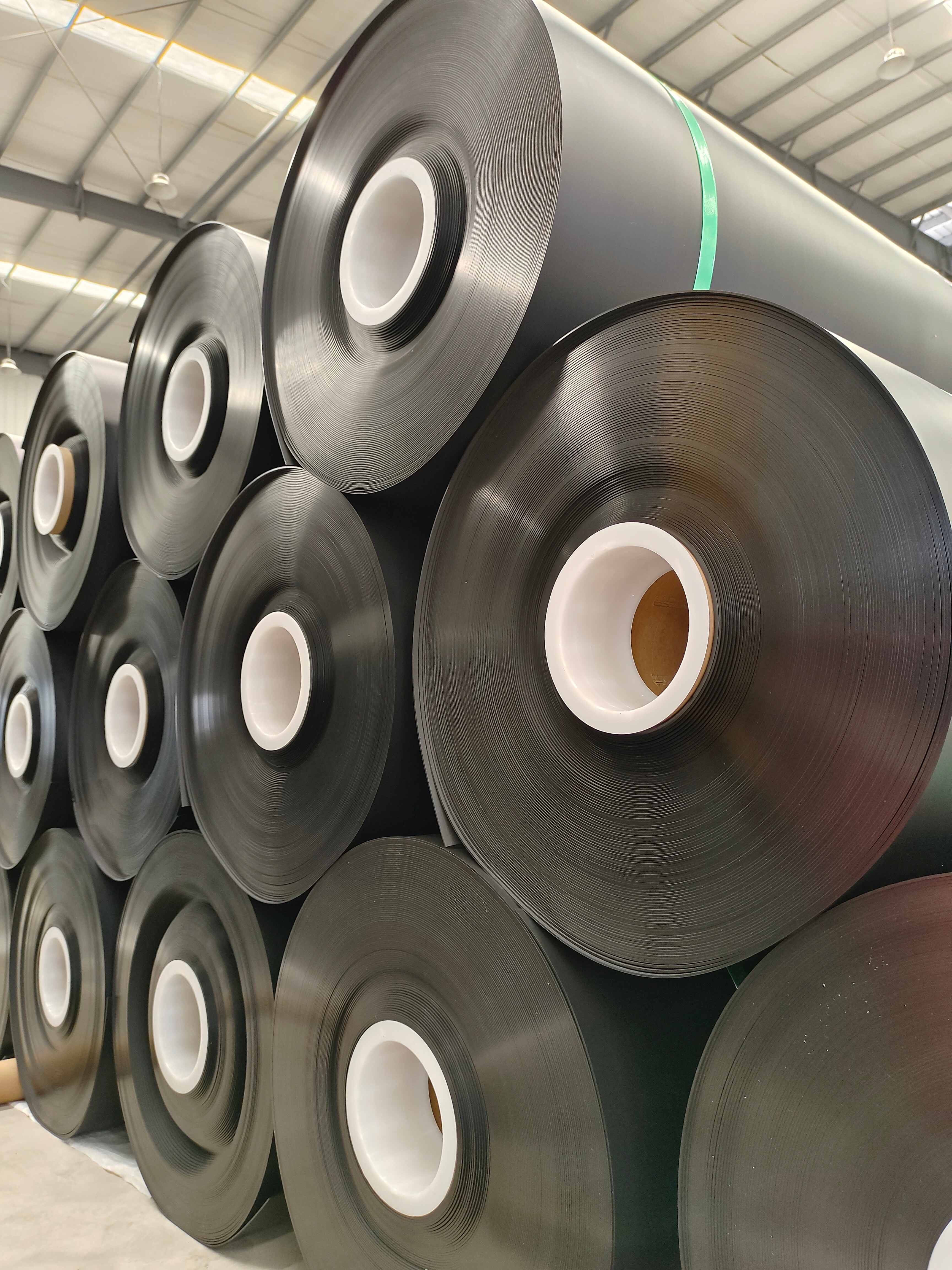
Every liner we produce begins with a simple but stubborn idea: the worst environments shouldn’t dictate failure. Rather than relying on off-the-shelf materials, our engineers spend months stress-testing proprietary elastomer compounds against salt spray, abrasive slurries, and thermal swings that would crack standard linings within weeks. The result is a formulation that doesn’t just resist wear—it actively sheds corrosive sediment before it can bond, keeping walls intact under pressures that push beyond design limits.
Installation is where most liners show their weaknesses, so we treat it as part of the performance puzzle. Our crews train on-life mockups that replicate the exact pit geometry and chemical cocktail they’ll face, applying the material in continuous, heat-fused passes that eliminate cold joints. The chemistry adjusts in real time to humidity and substrate temperature, delivering a monolithic barrier that clings like a second skin. No fillers, no shortcuts—just a bond that grows tighter as the surrounding concrete breathes.
Field data backs up what the lab can’t fully capture. We’ve tracked liners in copper-leaching tanks where pH drops below 1, in agitated brine ponds that chew through steel, and in geothermal wells cycling between freezing and near-boiling each day. After a decade of exposure, thickness measurements show less than 5% erosion. These aren’t controlled demos; they’re real, punishing installations, each one a chance to refine the formula and prove that longevity doesn’t come from hoping conditions improve—it comes from engineering that expects them to get worse.
From Factory Floor to Field: Our No-Shortcuts Production Process
Every component that leaves our facility carries the weight of real-world use. We don't rush phases or skip steps just to meet a shipping date. Instead, each unit moves through a deliberately slow, methodical assembly line where nothing is left to chance. From the first bolt to the final firmware check, our team treats every stage as critical, knowing that a machine's true test happens far from our dock doors.
What sets our process apart isn't some secret machinery—it's the insistence on human oversight at points others have long since automated away. Skilled eyes inspect solder joints, verify torque specs, and run diagnostics that a robot might pass but a seasoned technician would question. We've held onto these manual checkpoints not out of nostalgia, but because we've caught potential field failures there before they ever left the factory floor.
Once a system clears our internal gauntlet, it isn't simply boxed up and forgotten. We stage final run-throughs in conditions mimicking actual job sites—dust, vibration, temperature swings—then personally oversee the handoff to logistics partners who understand these aren't just pallets of product. This end-to-end grip on quality, without clever workarounds or invisible corners cut, is why our equipment performs without excuses when it matters most.
Tailored Liner Solutions for Unconventional Projects
Every unconventional project brings its own set of demands—odd geometries, aggressive chemicals, or extreme temperatures. Standard liners rarely fit the bill. That’s where we step in, shaping solutions that adapt to the peculiarities of your site rather than forcing a square peg into a round hole. Our process begins by listening, not prescribing. We map out the variables that matter most: operational stresses, installation constraints, and long-term exposure conditions. This isn’t about selling a product; it’s about engineering a barrier that lives and breathes with your infrastructure.
Customization runs deeper than simply adjusting thickness or picking a material off a chart. We tweak resin formulations to enhance chemical resistance against niche corrosives or to maintain flexibility when most polymers turn brittle. For projects in confined spaces or with awkward access, we design liners that can be applied in sections, welded on-site, or even cured under challenging ambient conditions. These aren’t one-size-fits-all fixes—they’re deliberate configurations born from decades of field data and a willingness to experiment when the usual answers fall short.
The real test comes when liner, substrate, and environment intersect. We’ve lined spiraling ductwork that twists through chemical plants, sumps that never fully drain, and tanks holding non-standard slurries that erode generic coatings within months. Each project sharpened our instinct for what works, pushing us to abandon assumptions and craft solutions from scratch. When your project falls outside the conventional playbook, a tailored liner isn’t just an advantage—it’s the only path to reliable, lasting protection.
Real-World Performance: Case Studies That Speak Volumes
Numbers on a spec sheet can paint a rosy picture, but it's the chaos of daily operations that reveals the true character of any system. One logistics firm, after switching to a high-performance routing engine, saw their late-delivery complaints drop by nearly half within the first quarter—not because the theoretical throughput increased, but because the engine handled those 4:45 PM route changes without cascading delays. The real win wasn't in the benchmarks; it was in the silence of a phone that used to ring off the hook with driver confusion.
Then there's the e-commerce platform that migrated their entire recommendation stack to a newer, lower-latency architecture. The anticipated uplift in conversion rates failed to materialize initially, until they noticed something buried in the session logs: users were genuinely engaging with more product categories. The performance gain didn't just speed up page loads; it gave the algorithms enough breathing room to actually learn from real-time behavior. That subtle shift—moving from a system that merely serves to one that understands—turned a marginal improvement into a sustained 12% lift in average order value. These are the stories that get scribbled in the margins of dry performance reports, where the numbers finally make sense in human terms.
Partnering with You Beyond the Initial Purchase
Our commitment doesn’t end once you’ve made your choice. We see the purchase as the start of an ongoing collaboration, where your goals and challenges become ours. From customized onboarding to proactive account reviews, we stay by your side to ensure the solution evolves with your needs.
You gain more than just technical support—you get a dedicated team that understands your business deeply. Whether it’s refining workflows, scaling up operations, or navigating unexpected hurdles, we provide hands-on guidance that feels like an extension of your own staff. It’s this personal investment that transforms a transactional relationship into a true partnership.
Long after the ink has dried, we continue to share insights, resources, and innovations that help you stay ahead. Because when you succeed, we succeed—and that’s why we never stop earning your trust.
FAQ
HDPE liners offer exceptional chemical resistance, ultraviolet stability, and long-term durability. Their flexibility and high tensile strength make them ideal for harsh environmental conditions, ensuring minimal leakage and maintenance over decades of service.
Look for a manufacturer with proven experience in your specific application, certifications like ISO 9001, and the ability to provide custom solutions. Transparency about raw material quality, testing protocols, and on-site support are also strong indicators of a trustworthy partner.
Reliable HDPE liners typically meet GRI-GM specifications and adhere to ASTM testing methods for properties like density, melt flow index, and carbon black dispersion. Certifications from independent bodies confirm the liner’s consistency and performance under stress.
Yes, many manufacturers offer tailored thicknesses, widths, and surface textures—such as smooth or textured finishes—to improve slope stability or friction. Custom fabrication and pre-seaming for large panels can also reduce installation time and costs.
Each batch undergoes rigorous physical and mechanical testing, including tensile strength, elongation, tear resistance, and puncture testing. Welded seams are tested using air lance, vacuum box, or spark testing methods to guarantee watertight integrity on site.
They are widely used in landfill caps and bases, mining heap leach pads, wastewater treatment ponds, aquaculture, and canal lining. Their impermeability and chemical resistance also suit secondary containment for oil and chemical storage facilities.
Conclusion
A dependable HDPE geomembrane liner doesn't just happen—it's the result of thoughtful engineering and a manufacturer that treats every project like its own. These liners have quietly become the foundation of reliable containment across landfills, mining, aquaculture, and water treatment, not because they're trendy, but because they consistently handle what others can't: chemical exposure, UV assault, and relentless stress without giving in. What sets a trusted source apart is the stubborn refusal to take shortcuts. From selecting raw resin with the right molecular weight to extruding sheets that maintain uniform thickness down to the millimeter, every decision made on the factory floor directly impacts how that liner will perform five, ten, or twenty years down the line. It's this behind-the-scenes rigor that lets operators sleep at night, knowing their containment system won't become tomorrow's headache.
Of course, quality manufacturing is only half the equation. Real trust is built when a manufacturer can step into unconventional projects—think steep slopes, unusual chemical mixes, or tight installation windows—and tailor a solution that fits without overcomplicating things. It means having people who can walk a site, understand the real challenges, and then adjust their approach to match what the field demands, not just what the brochure promises. Case histories tell the story better than any datasheet: liners that have held firm through tropical storms, resisted aggressive leachates, and required almost no maintenance despite being buried under heavy waste loads. But beyond the sale, a reliable partner remains engaged for technical support, installation advice, and even guidance on long-term monitoring. That kind of relationship turns a liner purchase into a lasting piece of infrastructure, and that's what it truly means to be a trusted source.
Contact Us
Contact Person: Jerry Qiu
Email: [email protected]
Tel/WhatsApp: +65 84265294
Website: https://www.jinseed-geo.com