
Food Grade Fumed Silica Factory: Inside the High-Purity Production Process
2026-05-25
In food manufacturing, purity isn’t just a requirement—it’s the foundation of trust. But how does a microscopic powder become safe enough to eat? At Zhonglian’s specialized factory, fumed silica undergoes a tightly controlled transformation, turning raw silicon into an ultra-pure anti-caking agent used in everyday products like spices, powdered drinks, and nutritional supplements. Step inside to discover the high-stakes process that leaves zero room for contamination—and why not all silica is created equal.
From Raw Sand to Reactive Silica: The Starting Point
It’s easy to overlook the journey a simple grain of sand takes before becoming a building block for high-stakes chemistry. Most of it begins as quartz-rich deposits, where nature has already done the heavy lifting—grinding rocks into fine silica over millions of years. But raw sand alone isn’t ready for the lab; impurities like iron and aluminum often hide within the crystals, and leaving them in place can sabotage reactions downstream.
The transformation hinges on a deliberate step: converting that inert quartz into a form that isn’t shy about bonding. Typically, this means reacting the sand with sodium carbonate at high temperatures, producing a glassy sodium silicate that dissolves in water. From there, carefully controlled acidification nudges the silica back out of solution—not as dull grains, but as a porous, chemically hungry network. What emerges is reactive silica, a substance with a surface so active it can scavenge moisture, anchor catalysts, or reinforce polymers in ways ordinary sand never could.
This pivot from raw material to reactive intermediary is what opens doors across industries. The starting point matters because the quality of that initial sand—its particle size, purity, and even the way it’s heated—sets the stage for everything that follows. Skip attention here, and you’re left with a final product that performs like it still belongs on a beach.
Inside the High-Temperature Dance: How Fumed Silica Forms
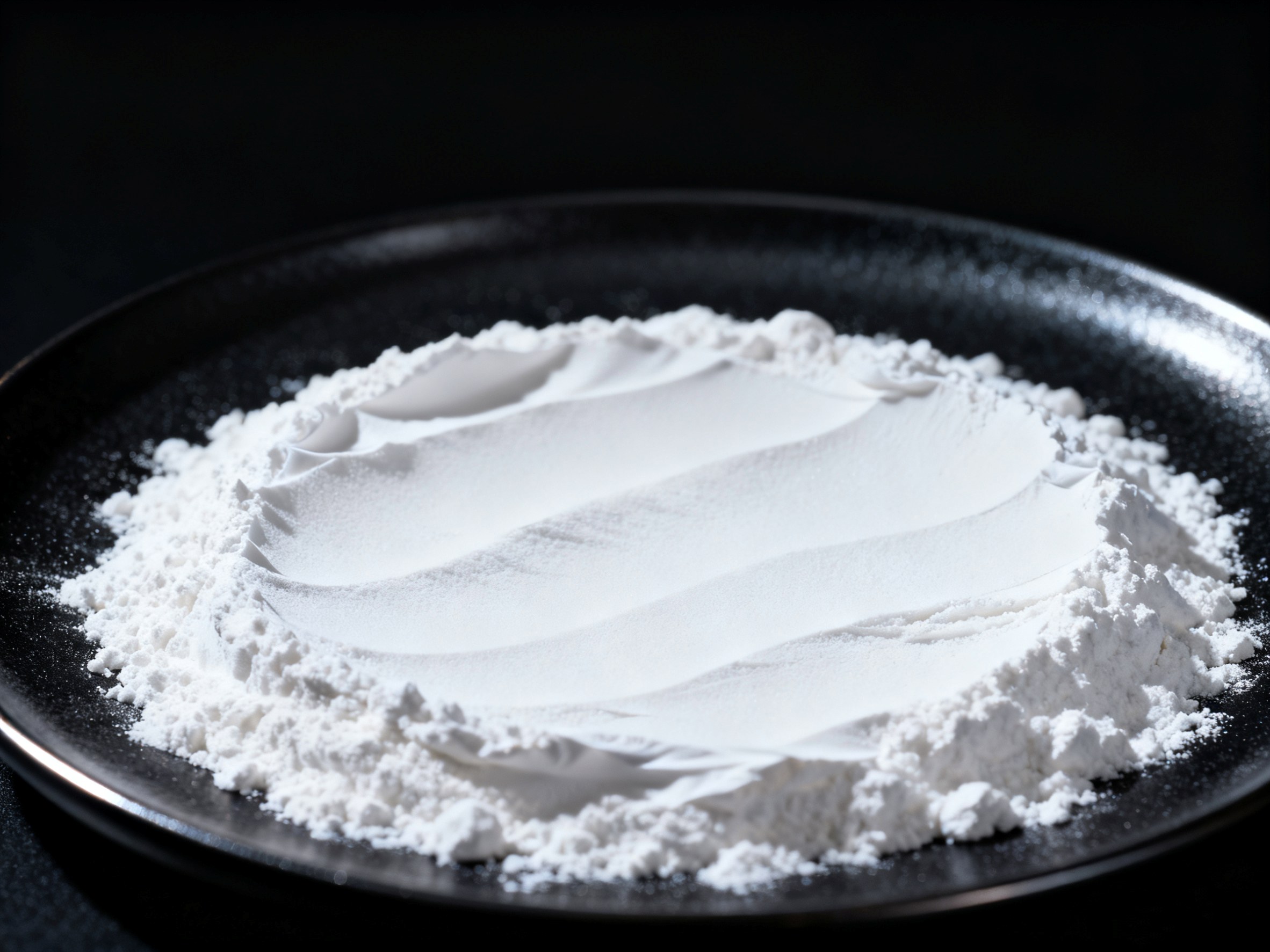
Picture a furnace blazing at over a thousand degrees, where silicon tetrachloride gas meets hydrogen and oxygen in a carefully controlled inferno. This isn't just combustion—it's a choreographed collision of molecules, sparking the birth of tiny silica particles. The flame’s turbulence becomes a partner, swirling and stretching the newborn droplets into chains, each one a delicate thread in an invisible fabric. It's a frantic, almost violent dance, yet from it emerges a powder so fine it feels like nothing in your hand.
As the flame cools in the milliseconds that follow, these particle chains lock into a three-dimensional network, branching and tangling into what engineers call a fractal-like structure. The moment is fleeting but critical: if the quenching comes too soon, the particles stay separated; too late, and they sinter into dense clumps. The art lies in freezing that exact moment of connection, preserving a gossamer web that gives fumed silica its uncanny ability to thicken liquids and reinforce rubbers.
What leaves the reactor isn't a simple dust, but a skeleton of smoke—particles that have never known a bulk existence. Their surfaces bristle with silanol groups, eager to bond with whatever they touch next. It's this high-temperature dance that writes the personality of fumed silica, transforming harsh industrial chemistry into a material that feels almost alive in its reactivity.
Microscopic Guardians: The Filtration and Purification Step
Water moves through a labyrinth where silent sentinels operate at a scale we rarely consider. A membrane thinner than a human hair is riddled with pores so precise they exclude almost everything but the water molecules themselves. It's not brute-force straining — electric charges, van der Waals forces, and the subtle geometry of each pore collectively decide what passes and what gets trapped. Viruses, bacteria, and even dissolved salts are turned away at this molecular checkpoint.
Beyond physical sieving, the real magic happens in the crevices of activated carbon and the slime of biofilms. Carbon's vast inner surface — a single gram can unfold to over a thousand square meters — grips organic pollutants through a lock-and-key adsorption that feels almost greedy. Meanwhile, a consortium of harmless microbes living on the downstream side starts breaking down what little organic matter slips by, converting toxins into carbon dioxide and water. It's a living, breathing cleanup crew that never clocks out.
The outcome is a liquid stripped of its invisible threats, emerging with a taste and clarity that recalls deep alpine springs. Every cubic centimeter that exits the filter has been scrutinized by physical, chemical, and biological barriers working in concert. No single stage alone could achieve this, but together they form a fail-safe chain — a micro-engineered ecosystem where precision and resilience meet, hidden from view but absolutely fundamental to the water we trust.
Why Every Particle Counts: Quality Checks at the Nano Level
When materials shrink to the nanoscale, their properties shift in ways that are both powerful and unpredictable. A single out-of-spec particle can alter conductivity, reactivity, or optical behavior, turning a promising innovation into a liability. In sectors like drug delivery, even slight size deviations might affect how a therapeutic agent navigates the body. That’s why quality checks here aren’t just about consistency—they’re about preserving the very function that makes nanomaterials valuable.
Standard inspection techniques often fail to capture what matters at this scale. Conventional microscopy may miss subtle surface irregularities, and bulk analysis can mask outliers that later cause batch failures. Techniques like dynamic light scattering or electron microscopy provide snapshots, but tying those measurements to performance requires a deep understanding of each particle’s role. Without this rigor, downstream processes inherit hidden flaws that are nearly impossible to correct.
The real challenge is that nanoparticles don’t operate in isolation. They form dispersions, agglomerates, and interfaces where individual characteristics dictate collective behavior. A quality check that overlooks transient states or environmental interactions gives a false sense of security. By treating every single particle as a critical component, manufacturers can catch instabilities early, ensuring that the final product behaves not just acceptably, but exactly as intended under real-world conditions.
The Cleanroom Mindset: Waging War on Contaminants
Adopting a cleanroom mindset means viewing every particle, every microbe, and every stray fiber as a potential adversary waiting to sabotage your work. It's not just about donning a gown and following a checklist—it's about internalizing a state of constant vigilance. This mentality shifts your perception, turning the seemingly pristine into a battlefield where invisible threats lurk on surfaces, in the air, and even on your own skin. The war on contaminants is won not through brute force but through meticulous, unrelenting awareness.
Fighting this war demands a blend of discipline and paranoia. Every action, from how you move within the controlled space to the way you sanitize tools, becomes a calculated maneuver. Protocols are not bureaucratic hurdles; they are your tactical guidelines. The enemy is adaptable, so your habits must be even more so. Success lies in cultivating a personal intolerance for shortcuts—a mindset where a slightly out-of-place glove or a hurried wipe-down feels as unacceptable as a visible spill.
Ultimately, the cleanroom mindset thrives when it becomes a shared culture. It's a collective pact to protect the integrity of the environment, where every team member acts as both a guardian and a critic. Peer accountability reinforces the fight, transforming mundane routines into rituals of defense. Over time, this outlook moves beyond professional obligation and becomes second nature, ensuring that the war on contaminants is waged not just with cleaning solutions and HEPA filters, but with unwavering intention.
Preserving Perfection: Handling and Packaging Without Compromise
Every item is treated as an individual piece of art, handled with a level of care that borders on reverence. From the initial inspection under purpose-built lighting to the final tuck of tissue paper, no gesture is rushed. Our specialists train their hands to detect the faintest imperfection, and their movements become a choreography of precision—ensuring that what leaves our facility already exceeds expectation before the box is even sealed.
Packaging is not just a shield; it's the opening act of the unboxing narrative. We select materials that feel like a whispered promise—the soft resistance of a ribbon, the firm embrace of a custom insert. It's a tactile dialogue that speaks of permanence, designed to make the moment of reveal resonate as deeply as the object itself. In this space, compromise is never an option, only a commitment to preserving the essence of what we hold in trust.
FAQ
It comes down to purity and safety. Food grade fumed silica undergoes stricter contaminant controls, especially for heavy metals and organic residues, and is manufactured under conditions that meet food additive regulations like those from the FDA or EFSA.
The process starts with high-purity silicon tetrachloride or silanes, which are vaporized and fed into a flame reactor. Inside, a hydrogen-oxygen flame triggers hydrolysis at extremely high temperatures, forming tiny silica particles that are quickly quenched and collected.
From sealed piping systems to HEPA-filtered air in packaging areas, every point of contact is scrutinized. Equipment is often electropolished stainless steel, and workers wear full protective gear. Routine swab tests and air monitoring ensure no cross-contamination sneaks in.
Flame hydrolysis yields a fumed silica with exceptionally high surface area and purity. The rapid reaction and cooling prevent crystalline silica formation, which is critical because amorphous silica is safe for food use while crystalline forms can be hazardous.
Entry involves air showers and multiple gowning stages. Surfaces are cleaned with validated sanitizers, and positive air pressure keeps unfiltered air out. Strict protocols limit what materials can enter, and regular microbial sampling verifies the environment stays pristine.
Every batch undergoes ICP-MS analysis for trace metals, GC-MS for organic volatiles, and laser diffraction for particle size distribution. Additional checks include pH, loss on drying, and microbiological assays to confirm it meets food-grade specs.
Surface area is tuned by adjusting the flame temperature and the ratio of reactants. A hotter flame creates finer particles with higher surface area, while cooling rates and residence time in the reactor further define the particle morphology—all monitored in real time to keep it within tight specifications.
Conclusion
The journey of food-grade fumed silica begins with ordinary sand, but transformation into a high-purity ingredient demands extraordinary precision. Raw quartz or similar silica sources are first reduced to elemental silicon, then converted into volatile silicon tetrachloride. This reactive intermediate is the true starting point—a gas that can be oxidized in a fiercely hot flame where temperatures soar beyond 1000°C. Inside this high-temperature dance, the silicon tetrachloride decomposes and instantly recombines with oxygen, condensing into microscopic droplets of amorphous silica that solidify as they cool. The resulting primary particles, each just a few nanometers across, do not stay isolated; they collide and fuse into branched, chain-like aggregates. These aggregates form the structural backbone of fumed silica, giving it the unique ability to thicken liquids, prevent caking, and reinforce materials—all essential qualities for food applications where texture, flow, and stability matter.
Yet, the raw powder straight from the burner is far from clean enough for consumption. Microscopic guardians in the form of advanced filtration systems and electrostatic precipitators strip away residual acids and contaminants that cling to the particles. The silica then passes through a cascade of purity checks, where instruments scan for trace metals, organic residues, and even stray oversized particles—at the nano level, every particle truly counts. This obsession with purity extends into the cleanroom environment, where workers wage war on dust, fibers, and microbial invaders. Gowning protocols, HEPA-filtered air, and sanitized surfaces turn production into a sterile art. Finally, preserving perfection means handling the feather-light powder without introducing moisture or static charge that could spoil its free-flowing nature. Special packaging under inert gas seals the silica in an untouched state, ensuring it reaches food manufacturers exactly as intended: an invisible, tasteless, and rigorously clean additive that never compromises on safety.
Contact Us
Contact Person: Levin Wang
Email: [email protected]
Tel/WhatsApp: 8618668999988
Website: https://www.silicaplant.com/