

Flood Gate Manufacturer Insights: Crafting Reliable Water Defense Systems
2026-07-25
When floodwaters rise, the difference between safety and catastrophe often hinges on one critical component: the flood gate. But not all flood gates are engineered equally. Behind every dependable water defense system is a manufacturer that understands the relentless forces of nature—and how to resist them. At THT, that understanding is woven into every design. In this post, we pull back the curtain on what separates truly reliable flood gates from the rest, exploring the precision engineering, material choices, and rigorous testing that go into protecting communities and industries. Whether you’re safeguarding a city or a critical facility, the insights ahead might just reshape how you think about flood defense.
The Engineering Behind Unyielding Flood Barriers
Modern flood barriers owe their resilience to a blend of material science and hydraulic ingenuity. Unlike traditional sandbags, these systems often employ high-strength aluminum alloys or composite polymers that resist corrosion while maintaining flexibility under immense pressure. The real breakthrough, however, lies in their modular design—interlocking panels that distribute hydrostatic loads evenly, preventing weak points where water could breach. This approach turns a static wall into a dynamic defense, subtly shifting with the current without compromising stability.
At the core of unyielding barriers is an understanding of fluid dynamics that goes beyond simply blocking water. Engineers incorporate self-activating mechanisms or passive sealing systems that use the floodwater itself to create a tighter seal as levels rise. In some designs, a base plate anchored deep into the ground leverages the weight of the oncoming water to press the barrier downward, increasing friction and preventing underflow. It’s a principle that borrows from nature—much like a tree’s roots gripping soil tighter in a storm.
What sets these structures apart is their ability to blend into the environment until needed. Retractable barriers hide beneath roads or promenades, only emerging when sensors detect rising threats. Advanced models integrate real-time monitoring, adjusting elevation automatically. It’s this fusion of concealed strength and smart technology that makes them not just barriers, but silent guardians against forces that once seemed unstoppable.
Material Selection: Balancing Strength and Corrosion Resistance
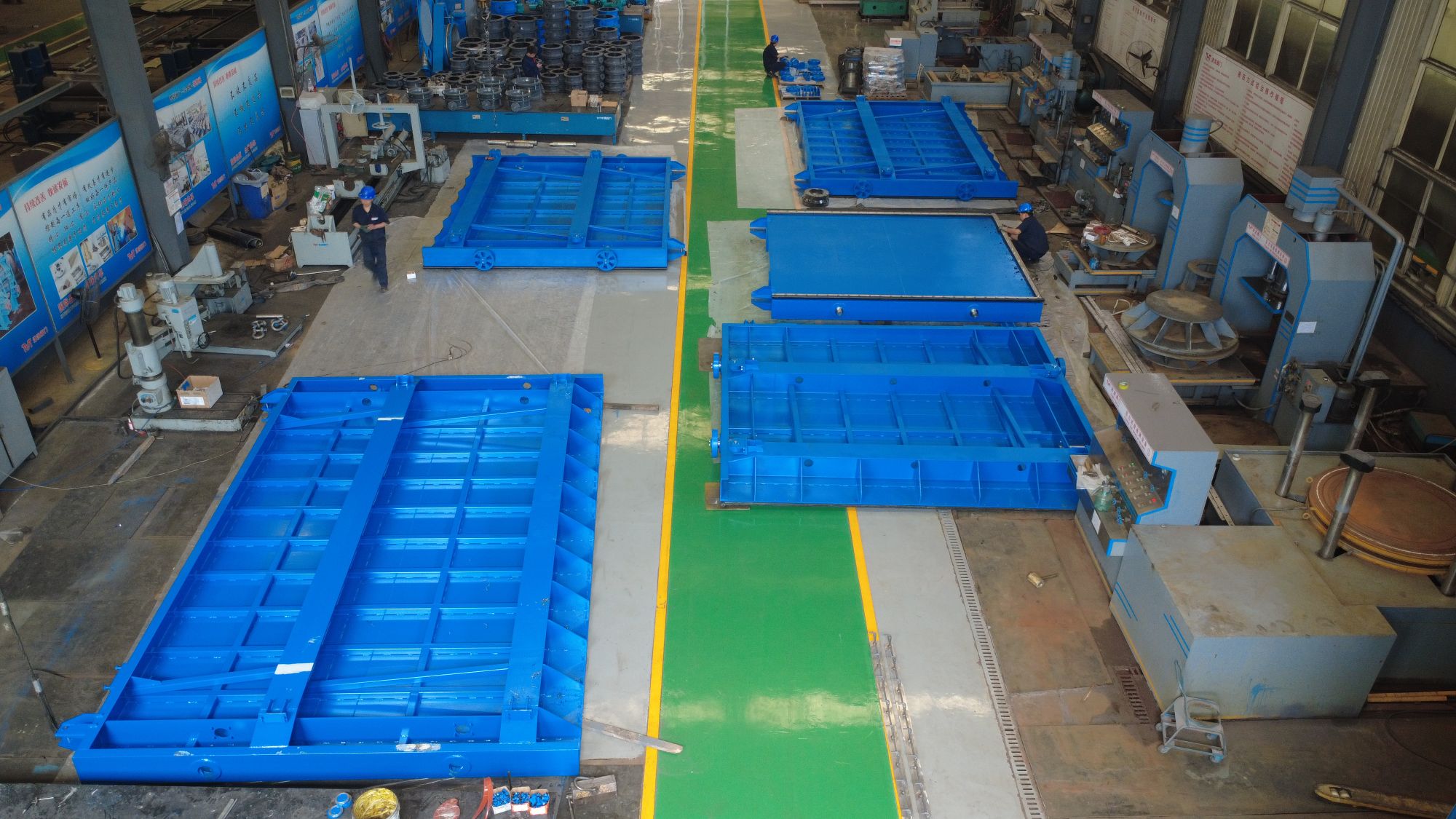
Choosing the right material for any engineering project is rarely a matter of picking the strongest option available. Strength is crucial, but it means little if the component corrodes within months under service conditions. The real challenge lies in finding that delicate equilibrium where mechanical integrity meets environmental resilience. For instance, high-strength carbon steels are remarkable in dry, controlled settings, yet their susceptibility to rust makes them a poor choice for marine or chemical exposure. In such cases, the addition of alloying elements like chromium can transform the metal’s surface behavior without drastically altering its strength profile. Designers must weigh not only the material’s yield and tensile strengths but also its corrosion rate, galvanic compatibility, and the possibility of stress corrosion cracking—a phenomenon where the combination of tensile stress and a corrosive environment can lead to sudden, catastrophic failure.
In practice, this balancing act often steers engineers toward stainless steels, duplex alloys, or even titanium, depending on the budget and performance requirements. Duplex stainless steels, for example, offer a compelling compromise: their mixed microstructure provides strength nearly double that of standard austenitic grades, while their high chromium and molybdenum content ensures robust pitting resistance. However, no material is a silver bullet; the selection process must account for fabrication constraints, such as weldability and formability. A material that performs perfectly in a lab corrosion test might become brittle or prone to cracking during welding if not handled properly. Moreover, localized corrosion—like crevice or pitting corrosion—can undermine an otherwise strong component just as effectively as uniform attack. Therefore, the selection phase often involves rigorous testing under simulated service conditions to validate that the chosen balance will hold over the project’s intended service life.
Ultimately, the decision is a strategic one that blends science with practical experience. It is about understanding that corrosion resistance is not an absolute property but a system-dependent characteristic. A material that excels in one environment may falter in another, even if both environments seem equally harsh. This is why field data, historical performance, and realistic exposure trials carry so much weight. By looking beyond basic specification sheets and delving into the nuanced interplay between mechanical loads and corrosion mechanisms, engineers can avoid the twin traps of over-engineering and premature failure. The goal is a solution that endures without being excessively heavy, expensive, or difficult to maintain—a true equilibrium that stands the test of time and the elements.
From Prototype to Production: Rigorous Testing Protocols
Transitioning a design from prototype to full-scale production demands a testing framework that goes beyond simple functionality checks. It's about putting the product through a gauntlet of real-world conditions—temperature extremes, vibration, humidity, and prolonged usage cycles—to uncover weaknesses that only emerge when manufacturing tolerances and material variations come into play. Many teams underestimate the gap between a hand-assembled prototype that works beautifully in the lab and a production unit that needs to perform flawlessly for years in unpredictable environments.
An effective testing protocol layers multiple validation stages, starting with accelerated life testing to identify potential failure modes early. This isn't just about ticking boxes; it's about understanding how each component behaves when pushed beyond its rated limits. For mechanical parts, that might mean cycling them tens of thousands of times while monitoring for deformation or fatigue. For electronics, it involves stressing circuits with voltage spikes and thermal shocks that mirror real-world power fluctuations. Each test must produce actionable data, not just a pass/fail result, so engineers can pinpoint exactly where and why a design falls short.
The final stage is production-level validation, where samples are pulled directly from the assembly line and subjected to the same rigorous conditions. This closes the loop, ensuring that the factory’s processes haven't introduced new variables that degrade reliability. Often, subtle differences in soldering, plastic molding, or coating thickness can significantly alter performance. A robust protocol will catch these discrepancies and drive refinements in both design and manufacturing, ensuring that every unit that ships is truly production-ready—not just a scaled-up prototype.
Custom Solutions for Unique Environments
No two operating environments are exactly alike, and off-the-shelf answers rarely fit when conditions turn extreme. We thrive on the challenge of tailoring solutions that account for the subtle interplay of terrain, climate, and operational tempo—whether that means adapting filtration systems for high-altitude dust, reinforcing structural components against saltwater corrosion, or re-engineering thermal management for arctic cold.
Our approach starts with listening, not prescribing. We embed with field teams to grasp the real-world constraints that spec sheets overlook: the vibration profile of heavy machinery, the erratic power supply in remote outposts, the maintenance limitations of isolated sites. From there, our engineers draw on a deep material and design library to craft solutions that feel purpose-built, not retrofitted. Every modification is stressed against the unpredictable rhythms of your environment, ensuring reliability isn’t just promised—it’s proven.
Because genuine customization isn’t about adding complexity—it’s about stripping away assumptions until only what works remains. The result is equipment that integrates seamlessly, performs quietly, and ages gracefully under the specific demands you face. When the environment writes the rules, we provide the vocabulary to work within them.
Lessons from the Field: Real-World Performance
When moving from synthetic benchmarks to actual production environments, the performance story often shifts in unexpected ways. Lab tests rarely account for the messy realities of live traffic — think sudden spikes, noisy neighbors on shared infrastructure, or the subtle degradation that creeps in over weeks of uptime. One key takeaway from field experience is that latency spikes often trace back to surprisingly mundane causes: a misconfigured connection pool, an unindexed query, or a caching layer that gradually fills with stale data. These aren't the glamorous scaling challenges engineers prepare for, but they consistently dominate the on-call incident boards.
Another hard-learned lesson is the danger of optimizing for the wrong thing without direct observation. A service might be tuned to serve cached responses blazingly fast, yet real users still experience sluggish interactions because the bottleneck sits elsewhere — perhaps in a third-party script or a client-side rendering chain nobody measured. The field teaches humility: always profile before optimizing, and use real user monitoring (RUM) to capture what synthetic checks miss. Teams that embrace this quickly discover that perceived performance trumps raw speed, and that tiny delays in the user's critical path matter more than making non-blocking calls 20% faster.
Finally, the most resilient systems we've seen aren't the ones with flawless initial designs, but those that evolve based on continuous feedback. Real-world performance is a moving target: a smooth launch can sour under new load patterns, and yesterday's cache strategy becomes tomorrow's memory leak. Embedding lightweight observability early — even simple metrics on error rates, p95 tail latency, and resource saturation — creates the safety net needed to iterate without drama. The lesson is clear: ship with humility, instrument everything, and treat performance as an ongoing conversation with production reality.
Future-Proofing Defenses: Innovations on the Horizon
Security architectures are shifting from rigid perimeters to adaptive, intelligence-driven ecosystems that anticipate threats before they materialize. New cryptographic techniques, such as fully homomorphic encryption, are inching toward practical application, enabling computations on encrypted data without exposure. Meanwhile, decentralized identity frameworks are dismantling the central honeypots that have long been prime targets, distributing trust across user-held credentials and blockchain-anchored attestations.
The weaponization of artificial intelligence by adversaries has forced a parallel evolution in defensive AI, where models not only detect anomalies but autonomously orchestrate tailored responses at machine speed. Adversarial training regimes and formal verification of neural network behavior are moving from research labs into operational security stacks, reducing the attack surface of the defenders’ own tools. These systems learn from each incident, continuously recalibrating to an ever-shifting threat landscape without human intervention.
Longer-term, quantum-resistant algorithms are being deployed now to counter store-now-decrypt-later attacks, ensuring that today’s encrypted data remains confidential well into the quantum era. At the hardware level, confidential computing enclaves are maturing, protecting data in use even on compromised hosts. Together, these advances are weaving a fabric of defense that grows smarter over time, turning the asymmetry of cyber conflict on its head by making security a dynamic, self-repairing property of the infrastructure itself.
FAQ
Modern flood gate manufacturing has shifted toward modular designs that allow for rapid deployment and customization. Materials like corrosion-resistant aluminum alloys and high-density polyethylene are now common, offering a balance of strength and weight. Automation in fabrication, such as robotic welding and CNC machining, ensures precise tolerances while reducing production time. Additionally, smart sensor integration is becoming standard, enabling real-time monitoring of water pressure and seal integrity.
Reliability is built through rigorous stress testing—gates are subjected to simulated flood scenarios with hydraulic presses and wave generators to verify endurance. Manufacturers also focus on redundant sealing systems, such as dual compression gaskets, to prevent leakage even if one layer fails. Corrosion protection is critical, so components often undergo hot-dip galvanizing or epoxy coatings. Field validation in diverse environments, from coastal storm surges to river floods, provides practical feedback for continuous improvement.
Stainless steel grades like 316L are preferred for their durability in brackish water, while marine-grade aluminum offers lightweight strength without rust. For barriers exposed to debris impact, high-strength steel with a polyurethane lining absorbs energy and resists punctures. Hybrid materials combining fiberglass and resin are gaining traction for their chemical resistance and low maintenance needs. The choice ultimately depends on factors like water salinity, temperature fluctuations, and expected mechanical loads.
Yes, many manufacturers now offer retrofitting solutions that work within an existing footprint. Adjustable mounting brackets and telescopic panels allow gates to fit uneven surfaces or confined spaces. Inflatable flood gates, for example, can be installed in narrow alleyways or around irregular openings and only expand when needed. Pre-engineered anchor systems minimize the need for deep foundation work, reducing installation time and costs.
Automation turns a passive barrier into an active defense mechanism. Sensor-driven gates can deploy automatically when water levels reach a threshold, eliminating human delay. Remote monitoring via IoT platforms allows facility managers to check gate status, receive alerts, and even actuate closures from a central control room. Some systems integrate weather forecast data to preemptively activate, which is especially useful for flash flood zones.
Cost optimization often starts with value-engineered designs that use precisely the amount of material needed—no more, no less. By standardizing components across product lines, manufacturers leverage economies of scale. They also invest in long-life coatings and seals to extend maintenance intervals, reducing lifetime ownership costs. Partnerships with local suppliers for fabrication and assembly can further cut logistics expenses without compromising quality.
A common misconception is that thicker, heavier gates are always more durable. In reality, design geometry and material quality matter more; a well-engineered lightweight gate can outperform a bulky one in fatigue resistance. Another myth is that regular maintenance isn't needed if a gate looks intact. Internal components like bearings and seals can degrade unnoticed, so scheduled inspections are essential regardless of outward appearance.
We're seeing a convergence of green engineering and flood defense—gates that incorporate permeable sections to allow fish passage or maintain wetland hydrology. Energy-autarkic systems with solar panels and battery storage are becoming viable for off-grid locations. Advanced simulation software, using AI to model complex water flows, now enables bespoke gate shapes that redirect water more efficiently. There's also a push for fail-safe designs that default to a closed position during power loss, ensuring protection when it’s most needed.
Conclusion
In the realm of flood defense, manufacturing a reliable gate system demands a meticulous fusion of engineering precision and robust materials. The structural integrity of these barriers hinges on advanced hydraulic modeling and stress distribution analyses, ensuring they withstand surging waters without falter. At the material level, selections like marine-grade stainless steel or corrosion-resistant aluminum alloys are critical, balancing tensile strength with long-term resilience in saline or chemically aggressive environments. This synergy between thoughtful design and material science forms the bedrock of every effective flood gate, transforming them from static barriers into dynamic shields that adapt to the relentless forces of nature.
The journey from initial concept to deployment is paved with rigorous protocols: prototypes endure relentless pressure tests, cyclic loading simulations, and fatigue assessments long before reaching the production floor. Crucially, off-the-shelf solutions rarely suffice—climate-specific customizations, from arctic-grade seals to debris-deflecting geometries, address unique site challenges. Real-world feedback further refines these designs; field data from installations in flood-prone regions reveal subtle performance gaps that lab environments never mimic. Looking ahead, the industry is pivoting toward smart, sensor-embedded barriers and eco-responsive systems capable of real-time adaptation, ensuring flood defenses remain not just robust today but vigilant guardians for the unpredictable landscapes of tomorrow.
Contact Us
Contact Person: Su Zhang
Email: [email protected]
Tel/WhatsApp: +86-25219206
Website: https://www.tht-valve.com/