

Exporting Energy Storage Cabinets A Practical Guide for Global Markets
2026-11-16
When an energy storage cabinet leaves your factory, the real test begins long before it reaches the port. Buyers in Europe, North America, and Southeast Asia don’t just compare specs—they compare compliance, logistics, and after-sales confidence. UNC has seen how a single overlooked certification or a poorly packed battery module can turn a profitable order into a stranded asset. This guide cuts through the noise and walks you through the export essentials that actually determine whether your cabinets clear customs, survive transit, and perform on arrival. If you’re planning your first cross-border shipment or scaling into new markets, the following pages will help you avoid the mistakes that quietly eat margins.
Designing the Crate for a Cross-Ocean Drop Test
A crate meant to survive a cross-ocean drop test has to absorb impact without transferring the worst of it to the payload. That usually means pairing a stiff outer frame with internal crush zones rather than simply adding more plywood. The base gets extra cross-bracing, while the corners are built up with layered blocking so a hard landing on one edge does not split the panels apart. Fastener choice matters just as much as the lumber: ring-shank nails and structural screws hold better under shear than common drywall screws, and glue alone tends to fail when wet plywood flexes.
Ocean transit introduces problems a warehouse drop test never sees. The crate may sit in high humidity for weeks, then get lifted by crane in rain, so every joint and exposed edge needs a barrier against moisture. Designers often specify marine-grade plywood, sealed edges, and gasketed lids, not only to keep water out but to keep the crate from becoming waterlogged and heavy. Buoyancy also comes into play during a possible overboard scenario; a crate that can float briefly without flipping upside down gives salvage crews a far better chance of recovering the contents intact.
The final geometry is usually proven through a series of staged drops: flat on the base, on a corner, and on the weakest side. Weights are placed to match the real payload mass and center of gravity, and accelerometers inside the dummy load record how much force reaches the cargo. If a particular drop angle produces a spike, the fix is rarely to reinforce everywhere. It is more effective to shift the internal blocking, add a partial internal frame, or alter the lid fastening so the crate deflects in a controlled way instead of cracking along a seam.
Why Some Countries Want More Than a UL Mark
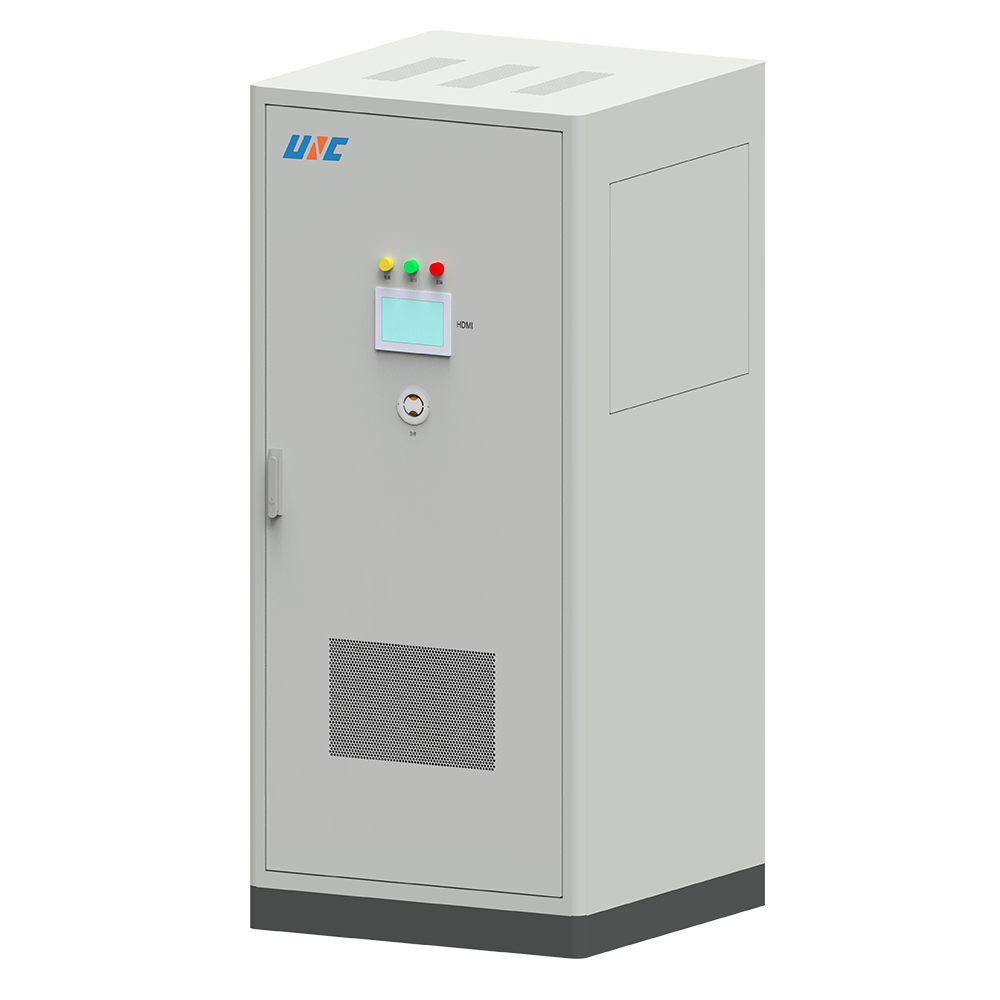
UL certification carries weight across much of North America, but in a number of markets it is treated as a starting point rather than a final clearance. Regulators often want evidence that equipment matches local voltage, frequency, plug configurations, and wiring practices, none of which a general safety mark fully addresses. Import authorities may also look for test reports issued or witnessed by bodies they already recognize.
Some governments view product safety as a sovereign matter. They maintain their own certification schemes, require local language markings, and insist on periodic factory audits by nominated agencies. The goal is not simple duplication; it is about matching products to local conditions and giving customs and consumer protection agencies a clear enforcement path.
Even where UL results are accepted as partial evidence, additional checks often cover electromagnetic compatibility, energy efficiency, radio approvals, and restricted substances. A product carrying the North American mark can still face document reviews, sample testing, or label changes at the border. Companies that treat the mark as one layer of evidence, not a universal entry pass, tend to clear these processes faster.
Frequency, Phase, and Other Borderline Differences
The gap between frequency and phase is rarely as clean as textbook diagrams suggest. A narrow cut at 2 kHz, for instance, drags phase above and below the center point in ways that can soften a vocal even when the magnitude change looks minor. Those shifts become audible mostly on transients and dense mixes, where the ear relies on timing cues as much as tonal balance.
Phase interactions at crossover points, polarity mismatches in multi-mic recordings, and small delays between drivers all sit in a similar gray area. None of them shout for attention on their own, but together they can make a sound feel constrained or oddly disconnected. Checking these borderline differences often explains why two devices with nearly identical frequency plots still separate themselves in a listening session.
Shipping Cabinets at the Right State of Charge
Getting the state of charge right before cabinets leave the yard is less about chasing a single perfect number and more about avoiding the two conditions that create trouble downstream. A cabinet shipped at full charge carries maximum stored energy, so any rough handling or unexpected short becomes harder to manage. A cabinet shipped nearly empty can slip into deep discharge if a route gets delayed or the weather turns cold, leaving the cells weak before the unit is even off the truck.
Most crews aim for a mid-range window—often between 30 and 50 percent—because it leaves enough power for onboard monitors while keeping the chemistry in a relaxed state. The exact band shifts with cell type, transport distance, and local rules. What matters just as much is consistency across the shipment; one unit sitting well outside the agreed range can create extra work for the receiving team and delay commissioning.
Before sealing the cabinet doors and signing the paperwork, it is worth checking the reported charge against the packing list and flagging any unit that falls outside the accepted range. This catches cells that were accidentally topped off or left running through a test cycle too long. It also gives the receiving crew a clear baseline, so arrival inspections can start from the expected condition instead of a guess.
The Service Partner You Need Before the First Fault
Most facilities only get to know their service provider after something breaks. By then the damage is already done: a halted production line, an expedited parts shipment, and a maintenance crew working against the clock. A more practical approach is to bring that partner in long before the first alarm sounds, while the equipment is still running normally. That early window is when baseline readings, installation quirks, and wear patterns are easiest to document.
A service partner who is already familiar with your machines can spot small changes that would otherwise go unnoticed. Slight rises in vibration, a gradual increase in operating temperature, or a change in motor current are rarely obvious on a daily walkthrough, but they are meaningful to someone who has been tracking the equipment since commissioning. Instead of reacting to a failure, the conversation shifts to planning a short, scheduled intervention.
That kind of relationship changes the cost of maintenance as well. Scheduled work can be bundled with other tasks, parts can be ordered without rush fees, and downtime can be placed where it least disrupts operations. It also removes the guesswork from budgeting because repairs become predictable line items rather than emergency expenses. The result is not just fewer faults; it is a calmer, more controllable way to run the plant.
Surviving Customs, Heat, and the First Power-Up
Landing in a country where the air itself feels like a wet blanket is a shock no guidebook really prepares you for. The customs line moves at a pace that tests every ounce of patience, and the officer's questions feel less like a formality and more like a personality audit. Once through, the heat hits hard, the kind of heat that makes your shirt stick to your back before you even leave the terminal. You learn quickly that hydration is not a suggestion and that walking slowly is a survival skill, not laziness.
The first power-up doesn't come from a socket or a screen. It comes from finding a tiny corner of shade, peeling a piece of fruit bought from a roadside stall, and realizing the noise around you is not chaos but rhythm. That moment when you stop fighting the environment and start reading its patterns is the real boost. It is not glamorous, but it is the kind of grounding that turns a rough arrival into a private victory.
FAQ
Plan around the destination, not a single global badge. In North America, UL 9540 for the integrated system is often the gatekeeper, and some utilities still ask for IEEE 1547 compliance on the inverter side. The EU leans on CE marking with EN/IEC 62619 for battery safety and EMC testing, while Australia can require CEC listing and specific grid support settings. Lithium cells themselves usually need UN38.3 test summaries regardless of region. Getting the cell, module, and cabinet-level documentation aligned early prevents a cabinet from being stuck in customs over a missing test report.
Keep the state of charge in a mid-range, commonly 30 to 50 percent, so cells have margin for temperature swings during transit. Use a rigid export crate or reinforced pallet with desiccant, shock and tilt indicators, and clearly visible Class 9 lithium battery labels. IMDG rules apply, so the packing, documents, and carrier declaration need to match. If the route passes through extremely hot ports, insulated liners or reefer options may be worth the extra cost for larger lithium systems.
It depends on the product. Southeast Asia, the Middle East, and parts of Africa often have strong demand for solar-plus-storage and diesel offset, with less entrenched local manufacturing, but buyers may be price sensitive and need simpler service models. Northern Europe and California offer higher margins and stable demand, yet they expect local support, advanced grid features, and longer warranty coverage. A practical first move is often a mid-sized market with a reliable distribution partner and clear import rules rather than chasing the largest headline market.
Local grounding practice, ambient derating in hot or high-altitude locations, and grid differences such as 50 Hz versus 60 Hz or different voltage tolerances. Remote monitoring can fail if the cabinet ships with a SIM that does not work in the destination country, so local connectivity options should be checked. Labels, warnings, and the commissioning manual usually need to be in the local language, and trained personnel need to understand the shutdown sequence before the system is energized.
Fully assembled units are easier to commission and protect against poor local assembly, but they take more container space and can trigger different tariff classifications. Knockdown or partially assembled shipments lower freight cost and sometimes reduce import duty, but they only work if the local partner has real electrical and mechanical assembly experience. For a new export market, many companies start with fully assembled pilot units, then move to knockdown once local service capability is proven.
Factor in more than the replacement part. Include the cost of remote diagnosis tools, spare parts held in a regional warehouse or at the distributor, training for local technicians, and a realistic response time tied to sea freight delays. If a replacement battery module takes eight weeks to arrive by sea, either hold buffer stock in the destination country or set a service-level agreement that reflects that reality. A dedicated warranty reserve of a few percent of export revenue is more useful than a generic margin guess.
The basics are a commercial invoice, packing list, bill of lading, and certificate of origin, but the battery-specific documents matter most: safety data sheets, UN38.3 test summaries, and dangerous goods declarations. Many buyers also want the factory acceptance test report, commissioning checklist, warranty terms, and an installation manual before the container arrives. If the destination has local certification, keep the certificate number tied to the exact model and serial number range.
Engage the local EPC, distributor, or utility early rather than treating grid approval as an afterthought. Confirm inverter settings for anti-islanding, voltage and frequency ride-through, and export limiting match the local grid code. Some markets require pre-approved inverter or battery listings, so a cabinet that is electrically sound but not on the utility's approved list may still be impossible to connect. A short technical note with settings and certificates can speed up the utility review.
Conclusion
Shipping energy storage cabinets across borders is rarely a matter of simply strapping a battery to a pallet. The crate itself has to be built as if it will be dropped from a cargo net onto a dock, because in practice it might be. Export teams quickly learn that a UL mark opens some doors but not all; several markets want additional local certifications, and ignoring those can stall a shipment at the port. Frequency and phase mismatches are just as troublesome, since a cabinet configured for one grid can behave unpredictably on another even when the voltage looks similar. Getting the state of charge right before departure matters more than it seems, both for transport safety and for avoiding a deeply discharged unit that refuses to start after weeks at sea.
Equally important is having a local service partner lined up before the first fault occurs, because a remote diagnosis cannot always handle customs holds or on-site commissioning under extreme heat. The first power-up after clearing customs is a vulnerable moment: terminals may have been knocked loose, insulation may have softened, and settings may no longer match the local grid. A practical export plan therefore treats packaging, certification, electrical configuration, charge level, and service readiness as one continuous process rather than separate checkboxes. The goal is not just to survive the journey, but to make sure the cabinet can be installed, energized, and supported without unnecessary downtime.
Contact Us
Contact Person: Manager Leng
Email: [email protected]
Tel/WhatsApp: 8613764878967
Website: https://www.unc-energy.com