
China’s Large Capacity Centrifugal Compressors: Driving Industrial Efficiency and Innovation
2026-08-03
China’s push for industrial modernization has put centrifugal compressors in the spotlight, and large capacity models are at the heart of this transformation. These machines are redefining efficiency and innovation, powering everything from massive air separation units to critical process gas applications. As industries demand more with less, the role of advanced compression technology becomes undeniable. At the forefront of this evolution, Seize Air delivers robust, high-performance solutions that don't just meet expectations—they set new benchmarks. What makes these compressors so pivotal, and how are they shaping the future of industrial operations? Let’s explore the engineering breakthroughs and real-world impact behind China’s rising dominance in this field.
Engineering Breakthroughs in Compressor Technology
Advancements in compressor design have shifted the focus from incremental efficiency gains to radical rethinking of core mechanisms. Recent breakthroughs include the use of active magnetic bearings that eliminate mechanical contact, drastically reducing friction and enabling oil-free operation. This technology, originally confined to niche applications, is now being scaled for industrial refrigeration and hydrogen fuel compression, where purity and reliability are paramount. By levitating the rotor in a magnetic field, these systems achieve rotational speeds exceeding 100,000 rpm, packing more compression power into smaller, lighter frames.
Material science has opened new frontiers, with ceramic matrix composites and nanostructured coatings allowing compressors to withstand extreme pressures and temperatures previously deemed impractical. For instance, silicon carbide impellers can endure corrosive gases at over 800°C, making them ideal for carbon capture and supercritical CO₂ cycles. Meanwhile, adaptive geometry mechanisms—such as variable-inlet guide vanes and automated clearance control—dynamically adjust to load changes, maintaining peak efficiency across a wide operating range without manual intervention. These innovations collectively push the boundaries of what compressors can achieve in energy density and operational flexibility.
Digital integration is redefining compressor reliability through real-time analytics and self-learning algorithms. Embedded sensors now monitor vibration, thermal gradients, and acoustic signatures to predict failures weeks in advance, shifting maintenance from reactive to prescriptive. One notable development is the use of digital twins, virtual replicas that simulate performance under different scenarios, enabling operators to optimize settings for minimal energy consumption without physical testing. This fusion of hardware evolution and software intelligence is creating compressors that are not only more durable but also seamlessly integrated into the broader industrial internet of things, paving the way for autonomous, demand-responsive systems.
Transforming Energy Efficiency Across Industries
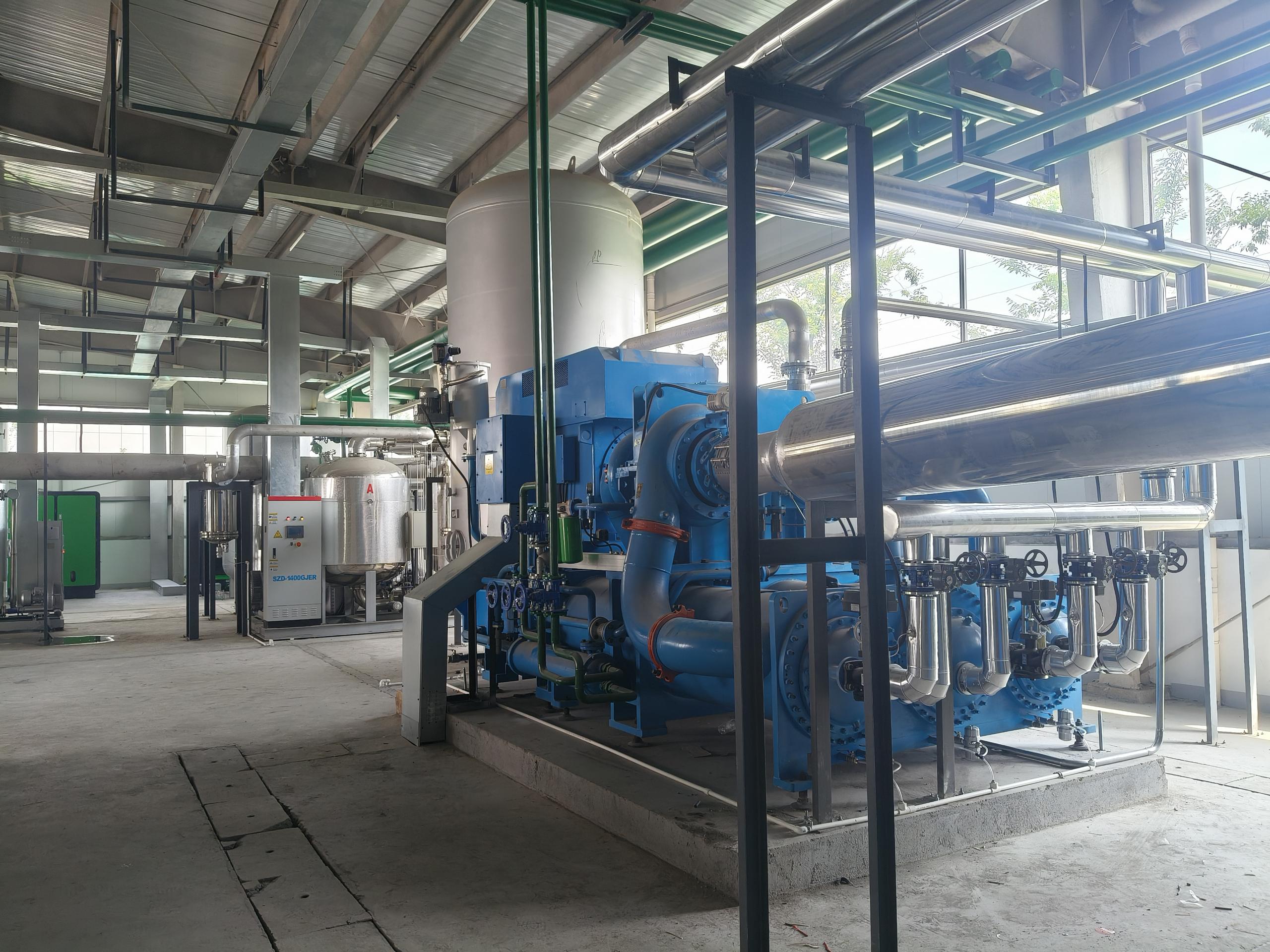
Industries worldwide are rethinking how they consume power, moving beyond incremental tweaks to embrace systemic change. The shift isn’t merely about swapping outdated equipment; it’s a fundamental redesign of processes, from real-time data analytics that pinpoint waste to adaptive systems that self-regulate during peak demand. This deeper integration of smart technology enables factories and plants to slash consumption without compromising output, turning energy from a fixed cost into a flexible asset.
What sets pioneering companies apart is their ability to weave efficiency into the fabric of their operations. For instance, chemical refineries now deploy advanced heat recovery loops that capture and repurpose thermal energy across multiple stages, while data centers experiment with liquid cooling tied to renewable microgrids. Such cross-sector innovations illustrate that efficiency gains rarely live in isolation—they ripple through supply chains, reshaping procurement, logistics, and even product design in unexpected ways.
The most compelling breakthroughs often occur at unexpected intersections. Agriculture, for example, leverages IoT sensors to optimize irrigation pumps based on soil moisture and weather forecasts, cutting electricity use by double digits. Similarly, textile mills harmonize humidity controls with real-time production schedules, eliminating the traditional trade-off between comfort and conservation. These stories underscore a quiet truth: the next leap in industrial energy efficiency may not come from a single invention but from stitching together existing solutions into a cohesive, responsive whole.
The Role of Centrifugal Compressors in China’s Manufacturing Boom
It’s hard to overstate how much centrifugal compressors have shaped the pace of China’s industrial growth. In sectors like steel, petrochemicals, and power generation, these machines quietly enable processes that would be impossible at scale without reliable high-volume air and gas handling. Unlike reciprocating compressors that struggle with continuous operation demands, centrifugal designs thrive in the non-stop environments typical of Chinese factories, where production lines often run 24 hours a day.
One overlooked driver is the synergy between compressor technology and evolving material sciences. Chinese manufacturers have pushed for compressor components that withstand higher temperatures and aggressive chemical environments, allowing smaller units to deliver more output while using less space. This wasn’t just about importing foreign designs—local engineering teams refined impeller geometries and seal systems to match the specific dusty or corrosive conditions common in inland industrial zones, giving domestic producers a tailored edge.
Looking ahead, what’s interesting is how these compressors are becoming smarter. Integration with IoT sensors means real-time vibration and pressure data can predict wear before failures stall a whole facility. In an economy where downtime can ripple through supply chains overnight, that kind of predictive maintenance isn’t a luxury—it’s becoming the baseline. Chinese firms that once raced to install capacity are now using these systems to squeeze out efficiency gains, proving the technology’s role has shifted from enabler to optimizer in the manufacturing landscape.
Innovating for High-Capacity Demands
The surge in data-intensive applications—from real-time AI inference to immersive media streaming—has pushed conventional infrastructure to its limits. We approach this shift not as a capacity problem to be solved with brute force, but as a design opportunity. By rethinking how resources are orchestrated, we’ve unlocked pathways that handle sudden spikes without sacrificing speed or reliability.
Our innovation lies in reimagining the balance between hardware acceleration and intelligent software layers. Instead of simply scaling up, we built adaptive architectures that learn traffic patterns in real time, pre-empting bottlenecks before they appear. This means services stay responsive even when demand doubles in seconds, maintaining crisp performance that feels effortless to the end user.
The result is an environment where capacity grows intuitively alongside ambition. Whether it’s powering next-generation interactive experiences or supporting massive distributed workforces, the system shapes itself around usage rather than forcing rigid limits. This fluid approach has repeatedly turned what were once hard constraints into flexible boundaries, enabling teams to push further without having to constantly redesign their underlying infrastructure.
Real-World Applications: From Petrochemicals to Power Generation
Few industries touch our daily lives as directly as petrochemicals and power generation, yet their inner workings remain largely invisible. In refining, ethylene crackers rely on precise thermal management to turn crude oil fractions into the building blocks of plastics, while catalytic reformers use controlled heat and pressure to create high-octane fuel components. These processes aren't just textbook theory—they operate under punishing conditions 24/7, where even a slight deviation can halt production or compromise safety. From the massive steam turbines in a combined-cycle power plant to the corrosion-resistant alloys in a deep-sea gas pipeline, the real-world application of engineering principles keeps the lights on and the materials flowing.
Power generation leans on the same brutal honesty of applied physics: a gas turbine's blades must withstand temperatures above their melting point, cooled only by a thin film of air, while boiler feedwater chemistry is tweaked with the precision of a lab experiment to prevent scaling that could cost millions in downtime. The move toward hydrogen co-firing and supercritical CO₂ cycles isn't just an environmental checkbox—it's a gritty, hardware-level struggle to maintain reliability while pushing efficiency boundaries. Meanwhile, small-scale liquefied natural gas (LNG) plants bring fuel to remote areas, often built on floating platforms or in modular skids, proving that innovation is as much about logistics as it is about combustion dynamics.
What ties these sectors together isn't just the scale, but the uncompromising demand for uptime and durability. A petrochemical reactor wall thinning by a few millimeters from sulfidation or a turbine rotor crack missed during inspection can cascade into outages that affect entire supply chains. That's why field technicians and engineers spend as much time on predictive maintenance algorithms and metallurgical forensics as they do on process optimization. In the end, it's this blend of high-stakes chemistry, metallurgy, and fluid dynamics that transforms raw hydrocarbons into the fabric of modern civilization—and every day more efficiently than the last.
The Future of Industrial Compression: Smarter and Greener Solutions
Modern industrial compression is moving beyond simple mechanics, integrating advanced sensors and data analytics to create systems that think for themselves. These intelligent compressors adjust output in real time based on demand, flag wear before failures happen, and even schedule their own upkeep. The result is a significant drop in downtime and energy waste, as every cycle is optimized for the exact task at hand.
Sustainability is no longer an afterthought—it's embedded in the hardware itself. Oil-free designs eliminate contamination risks and cut disposal costs, while heat recovery modules repurpose thermal output for facility heating or preheating other processes. Newer models run on eco-conscious refrigerants and achieve efficiency ratings that were unthinkable a decade ago, directly shrinking the carbon footprint of production lines.
The real shift, though, is how these compressors fit into the broader plant ecosystem. By connecting to centralized control platforms, they communicate with other equipment to balance loads and avoid peaks in energy consumption. This kind of harmony not only extends equipment life but also makes it easier for facilities to hit sustainability targets without sacrificing performance—quietly rewriting the economics of compressed air.
FAQ
Large capacity centrifugal compressors are dynamic machines that use high-speed rotating impellers to accelerate and compress gases, handling massive flow rates essential for large-scale industrial operations. They are vital because they form the backbone of processes in sectors like petrochemicals, natural gas processing, air separation, and power generation, where reliability and sheer output directly impact productivity and cost-efficiency.
Through decades of focused investment in research, engineering talent, and domestic manufacturing capabilities, China has moved from reliance on imported units to producing world-class compressors. Companies like Shenyang Blower Works (SBW) and Hangzhou Hangyang have led this shift, leveraging advanced computational fluid dynamics, precision casting, and rigorous testing to meet both domestic megaprojects and increasingly, international demand.
Innovations include three-dimensional impeller designs optimized for lower energy loss, active magnetic bearings that eliminate friction, dry gas seals to reduce leakage, and integrated digital control systems that adjust operation in real-time based on process conditions. Material science advances, such as high-strength alloys and composite coatings, also allow higher rotational speeds and pressures without sacrificing durability.
Absolutely. In the coal-to-chemicals sector, large centrifugal compressors are used for synthesis gas compression, often handling up to hundreds of thousands of normal cubic meters per hour. They must run continuously for years at pressures exceeding 200 bar in corrosive environments. Chinese-made units now achieve availabilities above 99.7% in such service, drastically reducing downtime and maintenance costs.
Efficient compression directly reduces energy consumption, which lowers carbon emissions in energy-intensive industries. Moreover, these compressors are essential for emerging green technologies: hydrogen refueling stations, carbon capture, utilization and storage (CCUS) systems, and compressing CO2 for enhanced oil recovery. By mastering this technology, China accelerates deployment of low-carbon infrastructure.
Yes, scaling up introduces immense forces, requiring precise rotor dynamics to avoid harmful vibrations. Cooling becomes critical as gas temperatures soar, demanding innovative internal cooling passages. Manufacturing sheer size—some impellers exceed two meters in diameter—tests the limits of foundries and machining centers. Chinese engineers have tackled these by developing modular designs and vertical split casings that simplify assembly and maintenance on site.
In many cases, parity has been achieved. Independent field data from large refinery projects show equivalent or better mean time between repairs for Chinese compressors, partly due to conservative design margins optimized for local operating philosophies. The difference often comes down to service networks and lifecycle support, areas where Chinese firms are rapidly improving to match global leaders.
Conclusion
China's large capacity centrifugal compressors stand at the forefront of industrial innovation, redefining what's possible in high-capacity fluid handling. Recent engineering breakthroughs—such as optimized 3D impeller geometries, advanced sealing systems, and high-strength lightweight alloys—have dramatically boosted both pressure ratios and operational stability. These machines are no longer mere utility devices; they have evolved into precision-engineered assets that slash energy consumption across petrochemical, refining, and air separation processes. As Chinese manufacturers push toward global leadership, these compressors anchor the country's manufacturing boom, enabling massive-scale projects that demand relentless reliability and record-breaking throughput. The ability to handle volumes exceeding millions of cubic meters per hour without compromising efficiency has become a trademark of domestic engineering prowess, fostering a new era where energy savings and industrial output go hand in hand.
Beyond the drawing board, these compressors deliver tangible impact in the field—powering large ethylene plants, liquefied natural gas facilities, and megawatt-scale power generation systems. Their expanding role in integrated gasification combined cycle plants and carbon capture initiatives underscores a pivot toward smarter and greener industrial ecosystems. Cutting-edge digital twins and AI-driven predictive maintenance are now being woven into compressor management, cutting downtime and adapting operations to real-time demand. This convergence of high-capacity capability with intelligent controls not only elevates China's heavy industries but also charts a path toward sustainable growth. As the nation accelerates its transition to a low-carbon economy, large centrifugal compressors will remain pivotal—quietly propelling everything from fertilizer synthesis to hydrogen compression, embodying a fusion of large-scale ambition and technical finesse that few technologies can match.
Contact Us
Contact Person: Mia
Email: [email protected]
Tel/WhatsApp: +86 19821985894
Website: https://www.seize-air.com