

China Oil-Free Air Blower Innovation Powers Clean Industry
2026-07-11
The shift toward sustainable manufacturing is accelerating, and at the heart of this transformation lies a silent revolution in compressed air technology. China’s latest oil-free air blower innovations are redefining efficiency and purity standards, enabling industries from food processing to electronics to meet stricter environmental goals. Leading this charge is Seize Air, a pioneer whose cutting-edge solutions are not just keeping pace with global demands but shaping the future of clean industry. Discover how these advancements are turning pressure into progress.
Revolutionizing Clean Air Delivery in Industrial Settings
In today's industrial landscape, air quality management has shifted from a compliance checkbox to a strategic operational pillar. Traditional ventilation systems often fall short in dynamic environments where particulate levels, chemical concentrations, and airflow demands fluctuate unpredictably. By leveraging adaptive airflow technologies and real-time contaminant sensing, facilities can now deliver precisely calibrated clean air where and when it's needed most—reducing energy waste while protecting both workers and sensitive processes.
The real breakthrough lies in modular, scalable purification units that integrate seamlessly with existing infrastructure without requiring extensive downtime or floorplan overhauls. These systems employ multi-stage filtration paired with intelligent control algorithms that learn from production cycles, anticipating peak pollution events before they occur. As a result, maintenance teams can shift from reactive filter replacements to proactive, data-driven service schedules, slashing operational costs and minimizing unplanned interruptions.
Beyond the hardware, the cultural impact is equally transformative. When employees witness a facility's commitment to hyper-clean environments, it fosters trust and elevates safety culture far beyond mandatory PPE usage. This human-centric approach, combined with transparent air quality dashboards that provide real-time visibility, turns abstract purification efforts into a shared operational value—ultimately redefining what it means to deliver clean air in heavy industry.
Inside China's Leap to Oil-Free Blower Technology
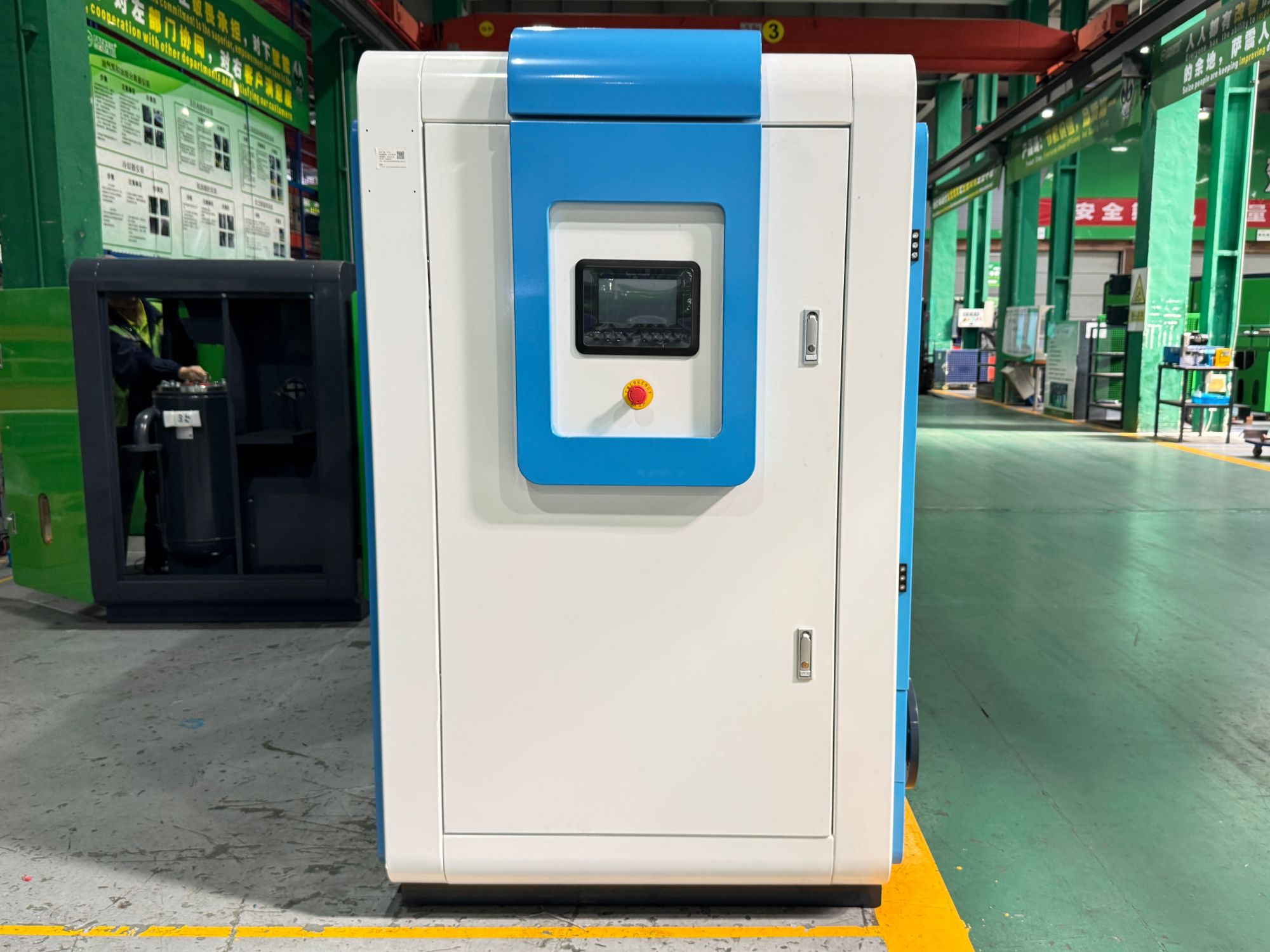
For years, oil-lubricated blowers dominated industrial applications, leaving users resigned to frequent maintenance, oil changes, and the risk of system contamination. China’s decisive shift away from this legacy began not with a single invention, but with a relentless push across materials science, high-speed motor design, and smart controls. Domestic manufacturers looked beyond incremental fixes, rethinking the core of blower operation: eliminating physical contact between rotating parts. This meant replacing oil-dependent bearings with magnetic or air-film solutions, a move that once seemed reserved for laboratory prototypes but is now a factory-floor reality across the country.
At the heart of this transformation lies the marriage of permanent magnet motors and active magnetic bearings. Rotors levitate in a magnetic field, spinning at speeds exceeding 30,000 rpm without a single drop of lubricant. This achieves more than just oil-free air—it opens up precise, real-time adjustment of impeller speed and clearance, adapting instantly to fluctuating demand. The energy savings alone can reach 30 percent compared to traditional designs, but the quieter, almost vibration-free operation caught engineers by surprise. One facility manager described walking past a running machine without realizing it was on, something unheard of with the bulky, roaring units of the past.
What makes the Chinese approach distinctive is the way entire industrial clusters have aligned to support this leap. Rather than relying on imported core components, local supply chains now produce ultra-precise motor stators, advanced composite impellers, and homegrown control algorithms. This vertical integration has slashed costs and allowed rapid iteration, moving the technology from high-end wastewater plants into textile mills, cement works, and even aquaculture. As the installed base grows, the data loop closes—each unit feeds performance insights back to design teams, refining reliability. It’s a cycle that is quietly dismantling the old assumption that clean, efficient blowers must carry a premium price tag.
How Oil-Free Blowers Slash Maintenance and Energy Costs
Traditional blowers often rely on oil for lubrication and cooling, introducing a recurring cycle of fluid changes, filter replacements, and disposal fees. By eliminating oil entirely, maintenance schedules shrink dramatically. Without oil degradation or contamination to monitor, routine tasks shift from frequent component swaps to simple inspections, freeing up teams for higher-value work and cutting the hidden labor hours that bloat operational budgets.
Energy waste in older blowers frequently hides in friction and mechanical drag. Oil-free designs replace contact seals and oil-bathed bearings with advanced air or magnetic levitation systems, dramatically reducing parasitic losses. This allows the motor to transfer more power directly into air flow, often trimming power consumption by a noticeable margin without sacrificing output. The result is a quieter, cooler-running machine that draws fewer kilowatt hours year after year.
The combined effect goes beyond line-item savings. Less upkeep means fewer interruptions to production, and the steady energy reduction compounds into a lower total cost of ownership that many operators only fully appreciate after year three. Equipment that stays cleaner internally also keeps downstream air quality higher, which protects other machinery and final product integrity—an often-overlooked financial edge of going oil-free.
From Factories to Water Treatment: The Expanding Role of Oil-Free Air
The shift toward oil-free air compressors wasn't just a technical upgrade for manufacturing—it was a quiet revolution in how industries think about contamination. On factory floors, eliminating oil from compressed air meant fewer rejects in sensitive processes like pharmaceutical packaging or electronics assembly. But more importantly, it signaled a broader recognition that air quality directly shapes product integrity. This mindset didn't stay confined to production lines; it gradually seeped into sectors where purity had always been a background concern, not a frontline requirement.
Water treatment plants, for instance, once relied on standard lubricated compressors for aeration and valve actuation, accepting the occasional oil carryover as a manageable nuisance. That tolerance vanished as regulatory pressures tightened and membrane technologies grew less forgiving. Introducing oil-free air into these settings didn't just reduce maintenance intervals—it altered the entire risk profile of the treatment process. Aeration basins, where microorganisms break down waste, are now fed air that won't introduce hydrocarbon traces into the biomass, preserving the delicate ecological balance that keeps treatment effective.
What's striking is how this expansion mirrors a deeper operational philosophy: designing out risk rather than managing it after the fact. From factories to water treatment, the same logic applies. The compressor becomes less of a standalone machine and more of a guarantor of process certainty. As more industries recognize that compressed air can be a direct ingredient in their output—whether it's a tablet, a circuit board, or clean water—the footprint of oil-free technology will only widen, reshaping expectations long before a single bubble reaches its destination.
Quiet Efficiency: The Sound of Sustainable Industrial Progress
In modern manufacturing plants, the hum of machinery is being replaced by a near-silent whisper—a sign not of diminished output but of smarter, more sustainable processes. Quieter equipment often means less friction, fewer vibrations, and better energy conversion, directly linking acoustic comfort to operational efficiency. It’s a shift that challenges the old notion that industrial progress must be loud to be powerful.
Sustainability and silence are becoming unlikely allies. Electric motors, advanced insulation, and precision engineering reduce noise at the source while cutting waste and extending equipment life. When a production line runs quieter, it’s typically running leaner—using only the energy it needs and sparing workers the constant barrage of sound that can lead to fatigue and errors. The result is a workplace that’s both greener and more human.
Beyond the factory floor, these advancements ripple outward. Quieter industrial sites mean happier neighbors and simpler permitting in mixed-use zones. They signal a kind of progress that doesn’t just chase output but considers long-term impact, blending seamlessly into environments rather than disrupting them. It’s a quiet transformation—the kind you feel more than you hear.
Beyond Lubrication: Meeting the Strictest Clean Air Standards
Modern machinery demands more than just reduced friction. Lubricants now act as active components in emission control, formulated to slash volatile organic compounds and particulate matter at the source. This shift redefines their role from simple maintenance fluids to critical tools for achieving air quality compliance.
Advanced additives and synthetic bases trap contaminants, neutralize acidic byproducts, and maintain stability under extreme heat. These properties help engines burn cleaner over longer intervals, directly lowering the output of nitrogen oxides and unburned hydrocarbons—key factors in passing today’s strictest environmental regulations.
Industrial facilities and transportation fleets are leveraging such lubricants not just to extend equipment life, but to meet legally binding clean air targets. The result is a quieter, invisible collaboration between chemistry and compliance, where every drop of oil contributes to a measurable reduction in airborne pollutants.
FAQ
Oil-free blowers eliminate lubrication oil entirely from the compression process, delivering 100% clean air. This design avoids contamination risks and reduces maintenance needs, making them ideal for sensitive industries like food, pharmaceutical, and electronics manufacturing.
Chinese manufacturers have advanced high-speed motor technology and precision air bearing designs, allowing blowers to run without oil while achieving higher energy efficiency. This directly cuts carbon emissions and supports factories in meeting stricter environmental regulations.
Water treatment plants use them for aeration with zero oil spill risk. In pneumatic conveying, they preserve product purity for chemicals and powders. Textile and pulp industries also rely on them to avoid oil stains on finished goods.
Tests show oil-free high-speed centrifugal blowers can be 20-30% more efficient than traditional rotary lobe types, especially under partial loads. The elimination of oil circulation systems further reduces auxiliary power consumption.
Absolutely. Modern oil-free blowers use magnetic or air bearings that levitate the shaft, minimizing friction and wear. Many units achieve over 50,000 hours of maintenance-free operation, outperforming oil-lubricated counterparts.
By integrating intelligent controls and IoT monitoring, these blowers optimize air output based on real-time demand, slashing energy bills. Longer bearing life and no oil changes also cut service costs significantly over the equipment's lifespan.
In wastewater treatment, oil-free blowers prevent even trace oil from entering the biological treatment tanks. This protects bacterial colonies essential for breaking down pollutants and avoids discharging oily water into rivers.
It directly supports UN SDG 9 (industry innovation) and SDG 12 (responsible production) by enabling cleaner manufacturing processes. Reduced energy use and zero oil waste help companies lower their environmental footprint and achieve ESG targets.
Conclusion
China's advancement in oil-free air blower technology is reshaping industrial operations, delivering cleaner and more reliable compressed air across sectors. By eliminating lubricants entirely, these systems prevent oil contamination, ensuring compliance with the strictest clean air standards in industries like food processing, pharmaceuticals, and electronics. The innovation goes beyond air purity—it fundamentally changes maintenance routines and energy consumption patterns. Without oil changes, filter replacements, and lubricant disposal, facilities report dramatic reductions in upkeep costs and downtime. Energy efficiency gains are equally transformative, as advanced rotor designs and precision engineering cut power usage significantly, contributing to lower operational expenses and a smaller carbon footprint.
Beyond cost savings, these oil-free blowers are expanding their role from traditional factory settings to critical applications in water and wastewater treatment, where reliable aeration is vital. Their quiet operation addresses workplace noise concerns, aligning with sustainability goals and improving working conditions. China's leap in this technology reflects a broader commitment to green manufacturing—innovations that not only meet rigorous global air quality requirements but also drive long-term industrial efficiency. The result is a new generation of equipment that combines economical performance with environmental responsibility, powering a cleaner and more sustainable industrial future.
Contact Us
Contact Person: Mia
Email: [email protected]
Tel/WhatsApp: +86 19821985894
Website: https://www.seize-air.com