

China Iron Casting: Precision and Durability for Global Industries
2026-11-16
From towering skyscrapers to precision-engineered automotive components, the silent backbone of modern infrastructure often begins in a Chinese foundry. Yet not all iron castings are equal—what separates the ordinary from the extraordinary is a blend of metallurgical science and uncompromising quality control. At Supreme Machinery, this isn’t just a claim; it’s a formula refined through decades of delivering components that withstand extreme pressure, corrosive environments, and the relentless grind of heavy industry. As global supply chains demand both resilience and micron-level accuracy, a quiet revolution is reshaping how the world sources grey and ductile iron. What makes China’s casting sector a strategic partner rather than a mere supplier? The answer lies deeper than cost advantages—it’s rooted in a tradition of continuous innovation that now meets the most stringent international standards.
The Engineering Behind Superior Cast Iron Components
Molten iron’s journey from furnace to finished part is guided by a precise marriage of chemistry and thermal control. Small adjustments to carbon, silicon, and manganese levels shift the matrix from brittle white iron to the graphite-rich grey iron known for its vibration damping and machinability. Nucleation agents are stirred in just before pouring, seeding the melt with microscopic templates that encourage carbon to precipitate as compact, rounded flakes rather than sharp, stress-raising plates. Pouring temperature, cooling rate, and mold material are locked step by step to avoid chilling the rim too quickly—something that can lock in hard carbides where ductility is needed most. It’s this choreographed cooling path, often tracked with thermal cameras and simulation software, that lets foundries deliver components with predictable strength and a quiet, controlled microstructure.
Beneath the surface, the real advantage often comes from how a casting handles residual stress. Unlike wrought or welded alternatives, a well-designed iron casting can be shaped so that internal forces redistribute post-machining, actually pulling critical surfaces into tighter alignment rather than warping them out of tolerance. Pattern makers build subtle draft angles and non-linear rib profiles that direct solidification strain into low-stress zones, while risers act as reservoirs to feed the shrinkage that happens as the metal contracts. Engineers erode these concepts further by specifying graduated wall thicknesses—necks that thin gradually rather than in abrupt steps, blending high-modulus sections into lighter flanges without creating notches. These are details you won’t find in a standard alloy data sheet, but they determine whether a pump housing runs true across its lifetime or a machine bed stays flat after decades of load cycling.
Finally, the quiet revolution in foundry practice comes through inoculation tuning and real-time thermal feedback. Instead of relying on a fixed recipe, metallurgists now treat each heat as a living system—fading inoculation effects are countered by late-stream additions, while solidification modeling reveals how different sections of the same mold can pace their cooling independently. Pouring lips are tilted, slag filters positioned, and ceramic coatings formulated to shift the timing of phase changes by mere seconds. The result is a component where the graphite morphology doesn’t just meet the standard—it’s held to a narrow, traceable window that ensures consistent damping, thermal conductivity, and fatigue resistance from the first casting to the ten-thousandth.
Meeting Tolerances That Rival Machined Parts
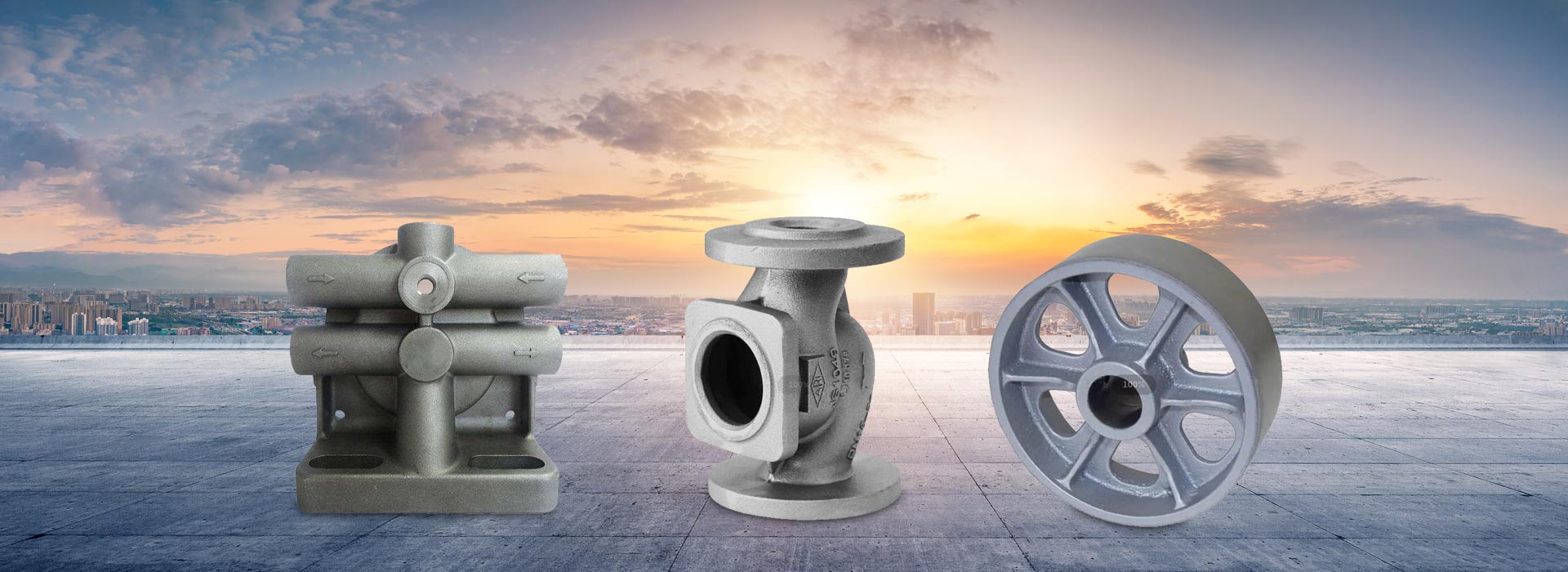
Achieving dimensional precision that stands shoulder to shoulder with subtractive manufacturing is no small feat. Modern casting and molding processes now routinely lock in wall thickness variations of ±0.1 mm across large surfaces, while sintered metal components hold true position tolerances that were once the exclusive domain of CNC milling. The key lies in real-time thermal compensation and tooling engineered to absorb minute shifts during solidification, virtually eliminating the drift that plagued earlier methods.
Surface finish tells an equally compelling story. Where a machined part might leave faint scallop marks, advanced powder bed fusion and high-pressure die casting now deliver as-fired or as-cast surfaces under Ra 3.2 µm without secondary operations. This stems from precisely managed inert atmospheres and laminar flow fronts that freeze the metal before oxide inclusions can form, creating a dense skin that matches ground finishes.
What truly bridges the gap, however, is the repeatability from first shot to ten-thousandth. Closed-loop process control adjusts injection velocity and hold pressure hundreds of times per second, compensating for ambient temperature swings and material lot variations. The result is a capability index comfortably above 1.67 for critical features—a level of consistency that lets engineers design with the same confidence they would apply to fully machined assemblies.
How Material Science Extends Service Life in Harsh Conditions
When components face extreme temperatures, corrosive chemicals, or unrelenting mechanical stress, their survival often hinges on subtle tweaks at the atomic level. Modern alloys and composites are not simply mixed and poured; they are engineered with grain boundaries that resist dislocation movement, preventing microscopic cracks from growing into catastrophic failures. By carefully controlling phase distributions and introducing stable precipitates, materials scientists create microstructures that lock in toughness even after thousands of thermal cycles, turning what was once a rapid degradation pathway into a predictable, manageable lifespan.
From Automotive to Infrastructure: Diverse Industry Applications
Advanced sensor technology no longer lives in a single lane. What began as precision-driven innovations for autonomous vehicles—LiDAR, high-speed cameras, inertial measurement units—has quietly crossed into the scaffolding of modern cities. The very tools that help a car interpret a crowded intersection are now being used to monitor structural fatigue in bridges, track pedestrian flow in transit hubs, and detect minute ground shifts before a landslide occurs. It’s a fluid migration of capability, where ruggedized automotive-grade hardware finds new purpose under a highway overpass or inside a tunnel ventilation shaft.
This crossover thrives on shared demands: relentless durability, real-time data processing, and the ability to operate in harsh, unpredictable environments. A perception system designed to ignore sun glare and road spray at 70 miles per hour doesn’t flinch when asked to measure the tilt of a wind turbine blade in a salt-laced gale. Infrastructure projects now borrow not just the components, but the entire architecture of sensor fusion and edge computing that matured on the test tracks. The result is quieter risk management—corrosion spotted before it weakens a column, or a railway bed’s micro-deformation caught months before it becomes a safety hazard.
Yet the most interesting dimension is how these repurposed technologies change the rhythm of maintenance and planning. Instead of periodic, manual inspections that can miss early warning signs, civil engineers now have continuous, high-resolution insight—the same kind that lets a driver-assist system anticipate a swerving motorist. It’s not about automotive technology conquering new markets; it’s about the original problem-solving mindset finding new soil. From electric vehicle battery management principles adapted for grid storage to thermal imaging rigs recast as wildfire early-detection sentinels, the boundary between vehicle and infrastructure simply fades when you focus on what the underlying intelligence can actually do.
Why Global Supply Chains Depend on Consistent Quality Outputs
In a supply chain that crosses continents, a single weak link can ripple outward with surprising speed. When a shipment of components arrives with even minor defects, assembly lines slow, delivery commitments slip, and the cost of rework piles up at every transfer point. Consistent quality outputs are not just a safety net—they are the lattice that holds the whole flow together, enabling planners to trust lead times and buyers to keep shelves stocked without piling up expensive buffer inventory.
That predictability becomes the real currency in global operations. A factory in one hemisphere and a distribution center in another can stay perfectly synchronized only when they share a common language: repeatable specifications and reliability. Without this, every node in the network starts to protect itself, inflating orders, adding inspections, and slowing the pipeline. Over time, the supply chain loses its lean edge and turns into a brittle chain of isolated hedges rather than a unified system.
What makes consistent quality particularly crucial today is the sheer speed of modern fulfillment cycles. E-commerce and just-in-time manufacturing have shrunk the tolerance for error to nearly zero. A brand that once had weeks to correct a supplier hiccup now has hours before customer trust erodes. In this landscape, delivering the same dependable output batch after batch isn't a lofty ideal; it's the operational heartbeat that keeps global trade alive and responsive.
Sustainable Foundry Practices Reshaping the Future of Casting
The shift toward emission-free melting technology is rewriting the rules of metalcasting. Induction furnaces powered by renewable energy are displacing cupola and electric arc units in progressive foundries, not simply to trim carbon footprints but because tighter control over melt chemistry unlocks higher-quality, near-net-shape castings that reduce downstream machining waste. When combined with real-time energy monitoring loops, these systems cut power peaks by up to 20%, making sustainability an operational advantage rather than a compliance burden.
Molding and core-making are undergoing a quiet revolution through organic, water-soluble binders and closed-loop sand reclamation systems. Traditional phenolic urethane and furan binders release volatile organic compounds during pouring and shakeout, but bio-based alternatives derived from cellulose and sugars now deliver equivalent hot strength while allowing 99% of sand to be regenerated on-site. This eliminates hazardous air emissions and slashes virgin sand consumption, transforming what was once a linear waste stream into a circular material flow that also lowers per-part logistics costs.
Perhaps the most underappreciated lever lies in digital simulation driving patternless production. By fusing topology optimization algorithms with binder-jet 3D printing of molds and cores, foundries are producing components that use 30–40% less metal without sacrificing structural integrity. Lightweighting through generative design not only shrinks material demand but cascades into energy savings across the entire lifecycle of the cast part—from reduced fuel consumption in transport to extended durability in service. These converging techniques suggest that the foundry of the future will compete not on price per kilo, but on resource intelligence.
FAQ
Very durable. Many foundries now use alloyed gray iron with added chrome or nickel to improve impact resistance. They also simulate stress points through software before pouring, which cuts down on failure points in the final part.
For high-spec ductile iron components, yes. Experienced shops combine lost foam casting with CNC finishing and laser measurement systems. They often achieve those tight tolerances for transmission housings and hydraulic blocks.
It's common. Suppliers along the east coast have dedicated export staff and work with logistics partners to keep sea freight on schedule. Many also stock mold inventory so repeat orders can ship in 30 days.
A lot has changed. Modern foundries are adopting electric arc furnaces, closed-loop sand reclamation, and dust filtration that meets ISO 14001. Ask for their environmental compliance certificates—they're quite detailed now.
Very flexible. They routinely produce grades like QT400-18 or QT500-7 and adjust chemistry for your needs. Just share the exact mechanical properties, and they'll match them with a custom mix plus test coupons.
Not necessarily. Many mid-sized foundries welcome small batch work, especially for new partnerships. They might use shared pouring lines to keep costs down, then scale up when you're ready.
Depends on the process. Green sand castings typically reach Ra 12.5 µm, but resin sand or investment casting can get down to Ra 6.3 or better. If you need paint or plating, many have in-house shops for that too.
Conclusion
China's iron casting sector has evolved into a cornerstone of precision manufacturing, where centuries-old metallurgical insight meets modern engineering rigor. The process begins with deliberate control over graphite morphology and matrix structure, enabling components that routinely hold tolerances once reserved for machined parts. By refining inoculation techniques and solidification modeling, foundries eliminate microporosity and achieve dimensional stability across large production runs. This precision is not a marketing claim but a measurable outcome verified by coordinate measuring machines and metallurgical labs embedded directly on factory floors, ensuring that every gear, pump housing, or engine block emerges with repeatable accuracy ready for immediate assembly in demanding global supply chains.
Durability in aggressive environments owes as much to materials science as to process control. Alloying with elements like chromium, copper, and molybdenum, combined with tightly managed cooling rates, yields castings that withstand thermal cycling, abrasive wear, and corrosive media without premature failure. The same rigor extends to diverse applications: ductile iron steering knuckles absorb impact energy in automotive safety systems, while massive cast iron pump casings resist decades of slurry erosion in mining infrastructure. Underpinning this versatility is a quiet shift toward sustainable foundry practices—electric arc furnaces powered by renewable sources, closed-loop sand reclamation, and waste heat recovery that slash the carbon footprint of each ton produced. These operational choices reflect not just compliance but a recalibrated strategy where consistent quality and environmental stewardship become mutually reinforcing, positioning Chinese foundries as indispensable partners for industries that cannot afford variability in their most critical components.
Contact Us
Contact Person: Paul
Email: [email protected]
Tel/WhatsApp: 8615067447509
Website: https://www.spironcasting.com