
China High Strength Steel Plate Manufacturers Drive Innovation in Modern Infrastructure
2026-05-17
Modern infrastructure demands materials that push boundaries—and China's high strength steel plate manufacturers are rising to the challenge. From soaring skyscrapers to resilient bridges, innovation is reshaping what's possible. At the forefront, Sanhe Steel exemplifies this shift, delivering plates that combine exceptional durability with surprising versatility. But what truly sets these manufacturers apart in a competitive global market? Let’s explore the engineering breakthroughs and strategic advantages driving this quiet revolution.
Pioneering Advances in High-Strength Steel Plate Production
The shift toward thermomechanically rolled steels has redefined what’s possible in plate manufacturing. By precisely controlling rolling temperatures and deformation rates, mills can achieve exceptional strength levels without heavy alloying—leading to improved weldability and lower carbon footprints. These grades now routinely reach yield strengths above 500 MPa while retaining the ductility needed for demanding structural applications.
Quenching and tempering technology has undergone a quiet revolution of its own. Advanced water-jet cooling systems and induction-based reheating allow for remarkably uniform microstructures, virtually eliminating residual stresses. The result is a generation of abrasion-resistant plates that deliver up to three times the service life in mining and earth-moving equipment, all while being easier to form and weld than their predecessors.
Beyond the steel itself, the integration of real-time grain size analysis during rolling has turned what was once an art into a predictive science. In-line sensors and data models now optimize phase transformations on the fly, producing plates with properties tailored to specific end uses—from Arctic-grade offshore structures to lightweight mobile crane booms. This digital transformation of the rolling mill is quietly pushing the boundaries of what high-strength steels can achieve.
Redefining Durability in Modern Construction Projects
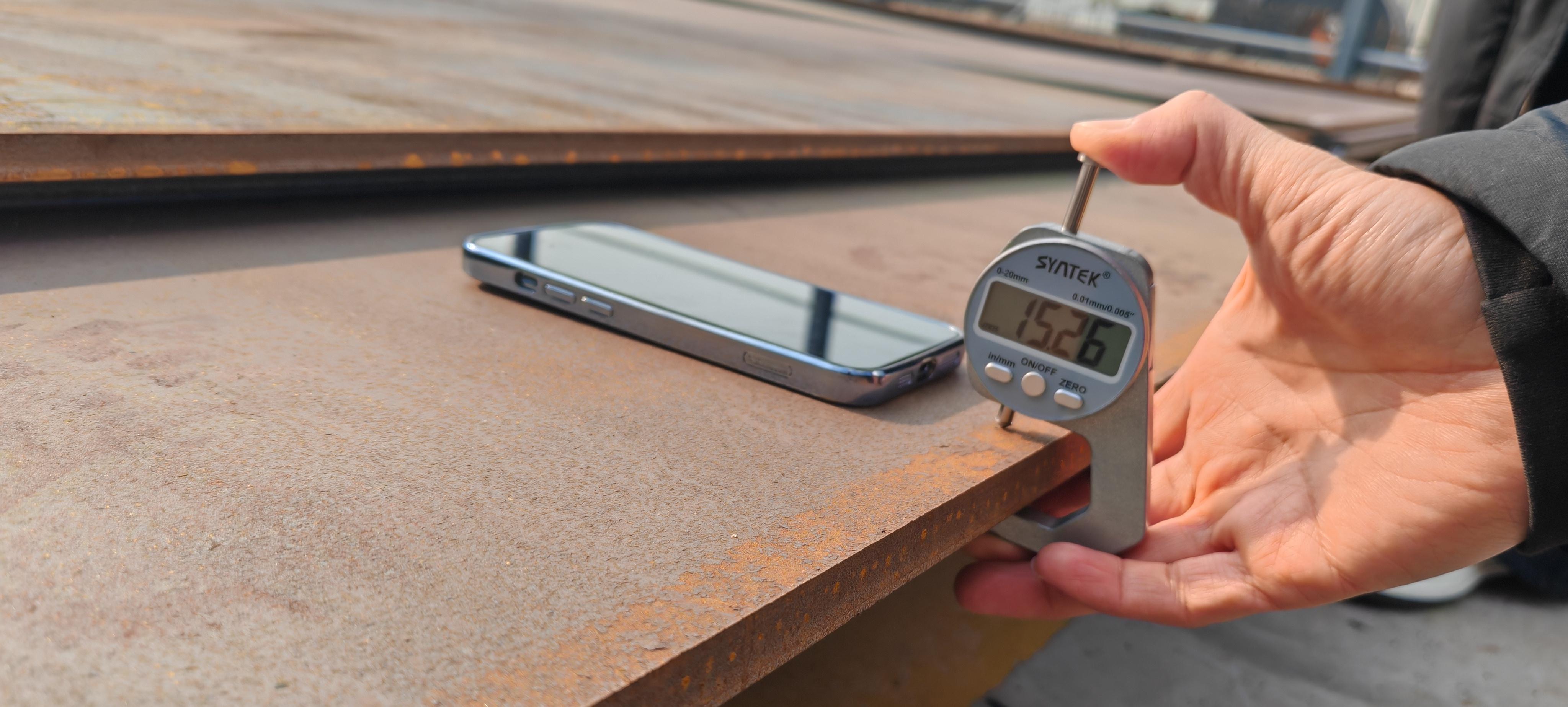
Durability in today’s construction goes beyond simply picking robust materials. It means weaving resilience into the very fabric of a structure—accounting for shifting climate patterns, long-term wear, and the subtle ways buildings interact with their environment. This demands a design philosophy where every joint, coating, and substrate is chosen not just for its immediate strength, but for its ability to age gracefully without constant intervention.
Contractors and engineers are turning to adaptive strategies that challenge conventional assumptions about what makes a building last. Instead of relying on a single, static barrier against moisture or thermal stress, they layer solutions that respond dynamically to conditions. For instance, smart concrete blends start self-healing micro-cracks before they escalate, while exterior cladding systems are engineered to flex instead of fracture under temperature swings. The focus shifts from resisting time to collaborating with it.
This redefinition also filters down to the way projects are executed. On-site quality control now embraces real-time monitoring of curing processes and material fatigue, catching vulnerabilities that used to stay hidden until they became costly failures. By treating durability as a continuous, measurable trait rather than a checkbox, teams can deliver structures that maintain their integrity decades after the handshake, with maintenance cycles that feel almost invisible.
Meeting the Demands of Megastructures with Cutting-Edge Alloys
Designing the next generation of super-tall towers and expansive bridges requires materials that defy conventional limits—alloys that can bear immense loads, endure corrosive environments, and flex without fracturing. These are not your standard steel grades; they are meticulously engineered at the atomic level, blending elements like nickel, titanium, and chromium in precise ratios to create microstructures that remain stable under extreme stress. From high‑entropy alloys that resist degradation in coastal megaprojects to shape‑memory metals that literally heal fatigue cracks, material science is rewriting the rules of what colossal structures can achieve.
On construction sites where every kilogram counts, these advanced alloys offer a dual advantage: superior strength and reduced weight. A lighter framework doesn’t just slash foundation costs—it opens the door to bolder architectural forms. Imagine a suspension bridge whose cables incorporate carbon‑refined steels with triple the yield strength of legacy materials, or a skyscraper core that weathers decades of wind sway thanks to a fatigue‑resistant martensitic blend. The real breakthrough is how these metals behave under duress; rather than snapping suddenly, they display a graceful, predictable deformation, buying precious time for inspection and repair.
The secret lies in customizing alloy chemistries for specific stress patterns. Deep‑water tunnel linings demand creep‑resistant formulas that won’t slowly distort under decades of hydrostatic pressure. Earthquake‑prone zones call for alloys with extra ductility that absorb seismic energy through controlled plastic flow. By simulating decades of wear in a matter of weeks, metallurgists are now able to iterate recipes rapidly, leaving behind trial‑and‑error methods. The result is a new class of materials that don’t just meet the demands of megastructures—they anticipate them, ensuring that our most ambitious landmarks remain safe and awe‑inspiring long into the future.
Sustainability and Efficiency: The New Manufacturing Frontier
For decades, manufacturing chased speed and volume at almost any cost. That single-minded focus often meant huge energy bills, mountains of waste, and processes that strained both resources and communities. Today, the conversation has shifted dramatically. Leading plants are proving that you don't have to choose between being green and being productive—in fact, the two goals are becoming inseparable.
Walk onto a modern factory floor and you'll see efficiency and sustainability woven into the same systems. Smart sensors trim power use in real time, while predictive algorithms cut down on scrap before it happens. One auto parts maker recently redesigned a stamping line to capture waste heat and redirect it for nearby drying ovens, shrinking both their carbon footprint and their monthly utility spend by double digits. It's not about grand gestures; it's about finding the hidden slack that hurts the planet and the bottom line simultaneously.
The real frontier isn't just technology—it's mindset. Teams are asking different questions: Can this material be reclaimed? Does our packaging need to be virgin plastic? How can we extend asset life instead of constantly replacing gear? When sustainability stops being a compliance checkbox and becomes part of daily problem-solving, the gap between “doing good” and “doing well” simply disappears. That's where manufacturing is headed, and it's moving faster than most outsiders realize.
Customized Solutions for Complex Architectural Designs
Every building tells a story, but not every story fits into a standard template. When faced with irregular site conditions, ambitious geometries, or challenging material integrations, off-the-shelf approaches simply fall short. Our role is to listen closely to your vision and translate it into tailored structural and functional systems that honor the intent while solving the inherent puzzles of complex design.
We thrive on the messy, beautiful constraints that make a project unique—whether that means weaving a new structure into a historic fabric, developing a bespoke facade that shifts with the sun, or engineering spaces that defy conventional typologies. The result isn’t just a building; it’s a precise, one-of-a-kind response to a set of circumstances no one else has faced.
Collaboration is the engine of this process. Architects, engineers, and craftsmen work in tight iteration, testing ideas and pushing boundaries until the solution feels inevitable. We don’t impose styles or habits; we grow the design from the specifics of your site, program, and aspirations, ensuring every detail belongs.
Forging a Resilient Future with Next-Gen Steel Technologies
Modern steel isn't just stronger—it's smarter. By embedding micro-alloys and advanced quenching processes, next-gen steels achieve unprecedented strength-to-weight ratios without sacrificing ductility. This allows engineers to design structures that flex under stress rather than fracture, a crucial trait for everything from seismic-resistant skyscrapers to lightweight electric vehicle frames.
The real resilience story unfolds at the molecular level. Novel coating technologies, such as self-healing zinc layers and ceramic-infused barriers, actively combat corrosion in marine and industrial environments. These aren’t passive shields; they react to scratches and chemical exposure by forming protective oxides on demand, dramatically extending service life in offshore wind turbines and coastal infrastructure.
Beyond performance, the production methods themselves are being reimagined. Hydrogen-based direct reduction and electric arc furnaces powered by renewables are slashing carbon footprints to mere fractions of traditional blast furnaces. The result is a material that not only withstands the tests of time and nature but also aligns with the circular economy, turning scrap into high-grade structural components without downgrading quality.
FAQ
They combine advanced metallurgical technology with aggressive R&D investment, enabling them to produce steel grades that meet complex engineering demands—like ultra-high yield strengths and superior weldability—while keeping costs competitive. This blend of innovation and scalability has made them indispensable partners in megaprojects from bridges to skyscrapers.
By pushing the boundaries of material science, they’re creating steels that are lighter yet stronger, which allows architects and engineers to design more daring structures. They’re also pioneering smart manufacturing processes, like AI-driven quality control and low-carbon production methods, which ripple through the entire construction value chain.
Transportation networks (high-speed rail, long-span bridges), energy systems (offshore wind platforms, LNG tanks), and urban high-rises are the biggest winners. In each case, the steel’s high strength-to-weight ratio enables slimmer, more resilient structures that withstand extreme loads and harsh environments.
One standout is the development of Q690E grade steel plates tailored for the Shenzhen-Zhongshan Bridge. Their exceptional toughness at low temperatures allowed engineers to reduce the amount of steel needed by 15%, simplifying fabrication and slashing overall project costs without compromising safety.
Leading mills are adopting electric arc furnaces powered by renewable energy and investing in hydrogen-based direct reduction iron. They’re also introducing closed-loop water systems and capturing waste heat for district heating. These moves are cutting carbon footprints by up to 30% compared to traditional blast furnace routes.
Raw material price volatility and the need for constant upskilling in a tight labor market are persistent hurdles. Additionally, meeting diverging international standards while protecting proprietary technology demands a delicate balance between collaboration and competition on the global stage.
It’s driving demand for steels with tighter thickness tolerances and better flatness, since prefabricated modules must fit together perfectly on site. Manufacturers respond with advanced rolling techniques and laser inspection systems, ensuring plates meet micro-level precision required for safe, rapid assembly.
Expect greater integration of digital twins throughout the steel lifecycle, from smelting to structural health monitoring. Also, expect breakthroughs in weathering steel that needs no paint and in composite plates that combine steel with carbon fiber, opening doors to maintenance-free infrastructure that lasts a century.
Conclusion
China's high-strength steel plate manufacturers are fundamentally reshaping modern infrastructure through relentless innovation and engineering precision. By pushing the boundaries of metallurgical science, these producers are achieving unprecedented strength-to-weight ratios and superior weldability, enabling architects and engineers to rethink structural possibilities. The production advances encompass everything from refined quenching and tempering processes to breakthroughs in alloy design, resulting in materials that withstand extreme loads and harsh environmental conditions. This evolution is directly translating into construction projects where durability is redefined—bridges that span greater distances without intermediate supports, skyscrapers that rise higher yet remain seismically resilient, and industrial facilities built to last decades longer than their predecessors. The synergy between laboratory breakthroughs and on-site performance is allowing builders to meet the exacting demands of megastructures, from record-breaking stadiums to deep-sea platforms, where material failure is not an option.
Beyond sheer performance, the sector is embracing a new manufacturing frontier centered on sustainability and efficiency. Leading mills are integrating electric arc furnaces, closed-loop water systems, and hydrogen-based reduction methods to dramatically cut carbon footprints while boosting energy efficiency. This green transition is complemented by highly customized solutions that cater to intricate architectural visions—steel plates tailored in thickness, coating, and curvature for free-form facades or load-bearing cores that double as aesthetic elements. Such flexibility does not compromise the push for resilience; instead, it fosters a comprehensive approach where next-generation technologies like AI-driven quality control and advanced predictive modeling ensure every plate delivers consistent, certified performance. By weaving together innovation, environmental responsibility, and client-specific engineering, China's high-strength steel plate industry is not just supplying a product but actively forging a resilient future, one where infrastructure is both smarter and more sustainable, built to endure the tests of time and nature with quiet confidence.
Contact Us
Contact Person: Zoey
Email: [email protected]
Tel/WhatsApp: +86 15865577002
Website: https://www.sanhesteels.com