
China Dredging Equipment Supplier Offering High-Performance Solutions for Global Projects
2026-08-27
When global dredging projects demand equipment that keeps pace with tight deadlines and tricky conditions, the choice of supplier becomes a make-or-break decision. YaKai Dredger has earned a reputation across international job sites for turning complex requirements into high-performance, reliable solutions. In this post, we’ll explore what sets their approach apart and why more project managers are looking to China for their next dredging asset.
Dredging Gear Built to Take a Beating
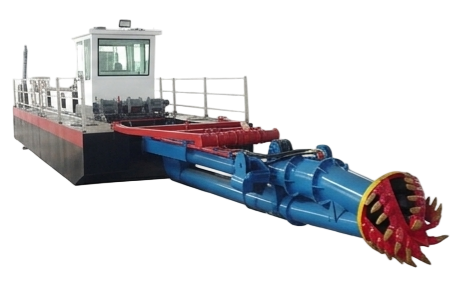
The first thing you notice on a dredge that spends its days chewing through riverbed rock is the thickness of the steel. Bucket lips, suction heads, and pump casings aren't made from standard plate—they're cut from abrasion-resistant alloys that shrug off gouges that would tear through milder metal. Overlapping weld seams get ground smooth so there's no weak ridge for a stray boulder to catch. It's the kind of overbuilding you don't see on spec sheets, but it's what keeps a crew from pausing every few hours to patch holes.
Impact doesn't come in clean, predictable cycles. One minute the cutterhead is slicing through silt, the next it's slamming into a buried concrete block or a tangle of old cables. That's why the gear train uses shock-absorbing couplings between the motor and the shaft, and why bearing housings are bolted through double-thick flanges. Even the bolts themselves are a step up—grade 12.9 hardware with Nord-Lock washers, because a single loosened fastener during a hard hit can cascade into a cracked housing. No fancy electronics, just brute mechanical isolation that lets the machinery bounce instead of break.
Field reports from harbor maintenance crews in the Great Lakes read less like testimonials and more like endurance logs. One operator noted their rebuilt pump ran 1,100 hours before the first wear indicator showed, despite pulling up granite cobbles the size of bowling balls on every pass. The real test isn't a lab simulation—it's watching a 40-year-old dredge still cut a straight channel while newer, lighter rigs sit at the dock waiting for parts. That kind of track record comes from designing every component as if the next scoop could be solid rock, because on a bad day, it will be.
Where Global Waterways Meet Their Match
From the winding Mekong to the vast Great Lakes, global waterways are under siege. Industrial discharge, agricultural runoff, and plastic debris act like silent invaders, eroding the health of every stretch of water. Meanwhile, climate change brings more frequent droughts and floods, pushing fragile ecosystems to the brink. This is not a hypothetical crisis—it unfolds daily, in rivers, deltas, and reservoirs that billions depend on.
Yet where these waterways meet their match is not in higher walls or longer pipes, but in a new breed of responsive systems. Blending real-time sensors, adaptive algorithms, and local ecological knowledge, these tools predict pollution spikes, adjust smart gates, and deploy targeted microbial treatments. They don't try to overpower nature—they work with its currents, striking precisely at each weak point as it emerges.
From Singapore's reclaimed water plants to the Netherlands' delta works, such approaches have already turned foul canals back into fish habitats and revived parched tributaries. They stand as proof that global waterways aren't destined to lose the fight. They just needed a partner that could truly hold its own.
Custom Systems, Not Catalog Compromises
Off-the-shelf solutions force you to bend your operations around their limitations. We take the opposite approach: every system we build starts with your workflow, your data, and your team's daily reality. No more paying for modules you never touch or waiting months for a vendor to fix a critical gap. What you get is software that fits like a worn-in tool, not a borrowed suit.
That means diving deep before writing a single line of code. We map out how orders actually move through your warehouse, how your support staff escalate issues, how finance reconciles inventory across channels. The result is a system where the buttons match your process, the reports answer your real questions, and integration points connect to the tools you already trust. Nothing is forced into a generic mold.
When your business shifts, the system shifts with it. Need a custom approval flow for high-value returns? We add it. Want automatic reorder triggers based on seasonal velocity? Done. You are not stuck waiting for a vendor roadmap or hoping a plugin exists. This is software built to evolve at your speed, not a catalog compromise you have to live with.
From Delta Silt to Deepwater Rock
The shift from delta silt to deepwater rock is not a single dramatic leap but a slow, patient reworking of grain and gravity. Rivers deliver their finest load to the coast, where wave action and density currents sort it into steep, unstable slopes. Over time, that silt loses its fresh, angular edges and becomes part of a layered deposit that creeps seaward, carried by turbidity flows that can travel hundreds of kilometres across the ocean floor.
Once buried, the transformation accelerates. The weight of younger sediment squeezes water from pore spaces, and minerals like quartz and calcite begin to precipitate, welding loose silt into something far more resilient. Deepwater rock often starts as a chaotic mix of mud and sand, but under enough pressure and temperature, it develops a fabric that can hold a fracture open or seal a reservoir tight. What began as river-borne dust ends up as the very skeleton of a continental margin.
This transition matters not just for geologists but for anyone who depends on what those rocks store or hide. Delta silt can be a caprock or a source bed; deepwater rock can be a reservoir or a hazard. Reading the signs of that journey—graded beds, ripple marks frozen in stone, chemical cements—tells us where ancient coastlines sat and how the seafloor has shifted over millions of years.
Uptime That Keeps Your Timeline on Track
When every second counts, uptime isn't just a metric—it's the quiet backbone of your entire schedule. A platform that stays online keeps your milestones from slipping, your collaborations from stalling, and your deadlines from turning into dominoes. Instead of refreshing a stalled dashboard, you keep moving forward, confident that the tools you rely on will be there the moment you need them.
Real reliability means fewer interruptions and more momentum. Whether you're coordinating across time zones or sharing progress with a client, steady uptime removes the friction that turns a productive day into a waiting game. That consistency builds trust, not only in the service itself but in your own ability to deliver on time.
For teams and solo creators alike, dependable access translates directly into a smoother timeline. It's not about promising perfection—it's about making sure the road stays clear so you can focus on the work that moves you forward.
Real Support When the Job Gets Messy
When a project goes sideways, most generic reassurance just grates on you. Real support looks like a coworker who pulls up a chair and helps you sort the mess into something you can actually tackle. They don't launch into a lecture about what went wrong or toss out a hollow 'you'll figure it out.' They grab the sticky notes, draw a rough list, and say, 'Let's knock out the first ugly thing together.'
Sometimes the best backup is having someone who lets you admit you dropped the ball without immediately offering a fix. A decent manager or teammate won't pile on guilt in that moment. They'll help you separate what has to be handled right now from what can wait until tomorrow. They get that work gets messy for a hundred reasons, and blaming one person rarely cleans anything up.
After the dust settles, genuine support doesn't vanish. It shows up later when someone asks, 'How's that thing going now?' or quietly steps in before the next tight deadline so you aren't left holding the whole mess alone again. That kind of steady backup makes you feel less like you're failing and more like you're part of a crew that can handle a rough day.
FAQ
We offer a full range including cutter suction dredgers, trailing suction hopper dredgers, jet suction dredgers, amphibious excavators, and associated pipeline and booster stations. Each machine can be sized to match project depth, production targets, and soil conditions.
Our designs prioritize modular assembly, easy transport, and local serviceability. We use heavy-duty wear parts and include remote monitoring so crews can track engine load, dredge depth, and production rates from a laptop or phone.
Yes. Recent projects in Southeast Asia, the Middle East, and Africa required low turbidity discharge, spill containment, and noise limits. We supplied dredgers with automated swing controls, sealed fuel systems, and optional silt curtains to meet those permits without slowing production.
Yes, that is one of our standard options. We build compact, low-draft cutter suction dredgers that can operate in as little as 0.8 meters of water. Hulls can be split into sections for road transport, and the ladder can be shortened for clearance under bridges.
We send a commissioning engineer for installation and operator training, usually for two to three weeks. Spare parts are stocked in regional warehouses, and our support team can troubleshoot via video call with bilingual manuals and wiring diagrams.
We keep manufacturing files for at least ten years and can reverse-engineer discontinued parts if needed. Common wear items like cutter teeth, impellers, and seals are kept in stock, and we ship by air or sea depending on urgency.
Instead of offering only standard catalog units, we start with a site survey and production simulation. That means the dredger you receive matches the actual soil profile, pumping distance, and fuel quality in your region, not just a generic spec sheet.
Conclusion
When a dredging project kicks off in a river delta thick with silt or hits a hard-packed deepwater rock layer, the last thing any team needs is equipment that folds under pressure. This China-based supplier has built its reputation on dredging gear that takes a beating from day one — pumps, cutters, and pipelines designed to shrug off abrasive slurry and punishing operating conditions. Instead of forcing customers into off-the-shelf compromises, the approach centers on custom systems: each vessel, booster station, and wear component is engineered around the specific sediment profile, production target, and site logistics of the project at hand. That means a contractor working a soft delta channel gets a setup tuned for high-volume, low-power material movement, while a mining crew tackling fragmented rock receives reinforced cutterheads and hardened discharge lines that actually last.
Across global waterways — from Southeast Asian estuaries to South American harbors — the focus stays on keeping timelines intact. High uptime isn't a marketing phrase here; it comes from modular designs that swap out wear parts quickly, plus onboard diagnostics that flag a problem before it shuts down the operation. And when the job gets messy, which dredging always does, support doesn't evaporate after the equipment ships. Field engineers and spare-parts logistics stay within reach, helping crews troubleshoot a clogged suction line or adjust pump clearances on a midnight shift. The result is a supplier that matches real-world demands with equipment and support that treat downtime as the enemy, not an afterthought.
Contact Us
Contact Person: Nancy
Email: [email protected]
Tel/WhatsApp: (+86) 13869631558
Website: https://www.yakaidredger.com/