

China Carbon-Based Soil Conditioner: A Natural Approach to Healthy Soils
2026-08-16
Ask any farmer in China's northern plains, and they'll tell you: the soil isn't what it used to be. Decades of intensive cropping have stripped away organic matter, leaving fields compacted, acidic, and hungry for real nourishment. That's where carbon-based soil conditioners come in—a quietly revolutionary approach that works with nature, not against it. Instead of pouring on more chemicals, these conditioners reintroduce the very element that healthy soil craves. At Tundrr, we've spent years perfecting a formula that turns agricultural residue into a powerful, carbon-rich amendment. Curious how a little extra carbon can transform tired dirt into thriving, living soil? Keep reading.
The Overlooked Link Between Carbon and Healthy Soil
When most people think about carbon, they picture emissions from cars or smokestacks, not the ground under their feet. Yet the soil beneath us holds more carbon than the atmosphere and all plants combined. This vast underground reservoir plays a quiet but powerful role in how healthy our land really is. Without enough carbon, soil loses its structure, its ability to hold water, and its capacity to feed the crops and forests that depend on it.
Carbon enters the soil through roots, decaying leaves, and the bodies of tiny organisms. Over time, it binds with minerals to form stable compounds that create the dark, crumbly texture gardeners and farmers recognize as fertile ground. This stored carbon acts like a sponge, soaking up rainfall and releasing it slowly during dry spells. It also provides a steady supply of energy for bacteria, fungi, and earthworms—creatures that break down organic matter and cycle nutrients back to growing plants.
The trouble is that many conventional farming and land-management practices disturb this balance. Tilling, overgrazing, and clearing native vegetation expose stored carbon to oxygen, causing it to escape into the air as carbon dioxide. What remains is often compacted, lifeless dirt that requires increasing doses of fertilizer and irrigation to produce anything. By shifting toward methods that protect and rebuild soil carbon—such as cover cropping, reduced tillage, and compost application—land managers can improve yields, reduce input costs, and make their fields more resilient to drought and flooding. The link between carbon and soil health may be overlooked, but it is one of the most practical tools we have for restoring degraded land.
Turning Agricultural Residues into a Soil Superfood in China
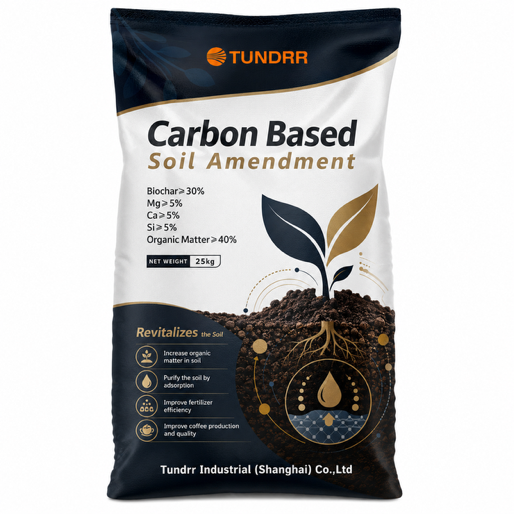
For decades, the mountains of corn stalks, rice husks, and peanut shells left behind after harvests in China were seen as little more than waste—often burned in the fields, sending thick smoke across rural villages. But a quiet shift is underway. Farmers and researchers are turning these abundant agricultural residues into a soil "superfood": carbon-rich amendments that replenish exhausted farmland. Through slow pyrolysis or carefully managed composting with livestock manure, stalks and husks are transformed into materials that lock nutrients and organic matter back into the earth.
In provinces like Henan and Shandong, cooperatives now operate mobile charring units that convert maize stover into porous biochar. Spread onto fields before planting, this black, spongy material acts like a subterranean sponge—holding water during dry spells and creating habitat for beneficial microbes. Farmers who have applied it for two or three seasons report that hard, compacted soils loosen up, earthworms return, and less chemical fertilizer is needed to achieve the same yields. Unlike raw straw that rots quickly, biochar persists for years, steadily improving soil structure.
The benefits extend beyond the farm gate. Diverting residues from open burning cuts the heavy PM2.5 haze that once blanketed harvest season, while reducing outlays on synthetic inputs. Some villages have set up small processing hubs that turn rice husks and peanut shells into nutrient-dense soil conditioners, which they sell to neighboring growers. What was once a disposal headache is becoming a local carbon economy—agricultural leftovers are no longer burned or dumped, but fed back to the soil as a slow-release source of vitality.
What Biochar and Carbon-Based Conditioners Can Do for Root Growth
Biochar's intricate pore network acts like a subterranean apartment complex for roots and microbes alike. Unlike raw organic matter that decomposes quickly, these carbon-rich structures persist in the soil, creating stable micro-niches where fine root hairs can explore without constantly re-tunneling through collapsed channels. The result is a root system that can invest less energy in physical penetration and more in nutrient uptake, leading to denser, more branched architectures in crops like maize and tomato.
Carbon-based conditioners also shift how water and dissolved ions move through the root zone. Char particles with high cation exchange capacity hold onto ammonium, potassium, and calcium loosely enough that roots can access them but tightly enough to prevent leaching during heavy rain. At the same time, the hydrophobic edges of partially oxidized biochar create moisture gradients that encourage roots to grow toward pockets of retained water, effectively training the root system to forage more efficiently under intermittent drought.
A less obvious benefit is the way these materials mediate root-microbe signaling. Biochar amendments often lower the abundance of pathogenic fungi while favoring arbuscular mycorrhizal networks, which extend the effective reach of roots by several orders of magnitude. Over successive growing seasons, this can lead to the formation of water-stable aggregates around char particles, giving roots anchor points that resist compaction. In compacted urban soils or degraded farmland, even a 2% by volume incorporation has been observed to double the depth of penetrating roots within a single season.
Why Natural Soil Amendments Are Gaining Ground Across China
Across China's farmlands, a quiet shift is underway. Growers who once relied heavily on synthetic inputs are now turning to compost, biochar, and fermented plant materials. The reason isn't romantic nostalgia—it's economics and observation. Chemical-heavy routines have left many plots compacted, acidic, or simply less productive year after year. Meanwhile, neighbors using kitchen scraps or livestock manure blended with straw are seeing darker, crumbly soil and fewer pest flare-ups. This ground-level evidence spreads faster than any extension bulletin.
Policy nudges also play a role. Provincial programs promoting "green agriculture" offer subsidies for soil testing and organic matter restoration. But farmers rarely mention regulations first. Instead, they talk about the rising cost of urea and compound fertilizers, and the shrinking margins for rice and vegetables. A truckload of locally sourced sheep manure or a home-built vermicompost pit cuts input bills sharply. Some cooperatives now pool resources to age manure properly, turning a waste problem into a shared asset.
Urban demand adds another push. Supermarket buyers and e-commerce platforms increasingly label produce as "grown with natural amendments," and consumers pay a premium for melons, tea, and leafy greens marketed this way. For smallholders, that price difference can outweigh the convenience of bagged chemicals. As a result, extension agents report that workshops on cover cropping and compost teas now fill faster than those on pesticide calibration—a telling sign of where the countryside is heading.
Simple Ways to Test If Your Soil Needs a Carbon Boost
Grab a handful of damp soil and squeeze it. If it crumbles like stale cake or feels gritty and lifeless, that’s a strong signal your carbon levels are low. Carbon-rich soil tends to hold together in a loose clump, breaks apart with a gentle poke, leaves a dark stain on your fingers, and smells pleasantly earthy rather than sour or flat.
Try the water test next. Dig a small hole about six inches deep, fill it with water, and watch how quickly it drains. Water sitting on the surface for more than an hour often means compacted, carbon-poor ground, while steady absorption within a few minutes points to good organic matter. Another easy check is to count earthworms in a shovel-sized clump of soil—fewer than five usually hints at a carbon deficit.
Finally, pay attention to what’s already growing. Weeds like broadleaf plantain or sheep sorrel often take over degraded, low-carbon soil, whereas a mix of clover, vetch, or deep-rooted grasses suggests improving organic content. If your plants look thin, pale, and stop growing shortly after a rain, that soil is asking for a carbon boost.
Real Stories: How Carbon-Rich Amendments Revived Tired Farmland
For years, Mark Ellison watched the soil on his northern Iowa corn and soybean ground turn pale, crust over after every rain, and demand ever larger doses of synthetic nitrogen just to hold yields steady. After hearing about carbon-rich amendments at a field day, he spread a one-time application of composted wood fines blended with locally made biochar across forty acres. Within two seasons the tilth had changed enough that he could pull a spade out of the ground without prying loose hard clods. Earthworm casts dotted the surface in spring, and his soil organic matter test climbed from 2.1 percent to 2.9 percent. The following dry July, those forty acres stayed green a full ten days longer than his untreated fields, and the yield monitor showed an eighteen-bushel corn bump without any extra commercial fertilizer.
Down in the San Joaquin Valley, Diane Rourke’s almond block had been losing vigor for nearly a decade. Salts from years of shallow flood irrigation had formed a pale crust at the surface, and water ponded for hours instead of soaking in. She worked with a local compost producer to apply a carbon-heavy mix of dairy manure, almond shells, and green waste that had been turned until it smelled like forest floor rather than feedlot. Rather than till it under, she let it sit on the surface under the trees through winter. By the third leaf-out, the yellowing between leaf veins was gone, and irrigation sets that once took fourteen hours now took eight. A mid-summer soil pit showed dark aggregates down to eight inches, with fine roots following old worm burrows into what had previously been a hardpan.
The common thread in these recoveries is not a single miracle product but a shift in how carbon feeds the soil’s biology. Tired farmland often lacks the slow-burning organic matter that fungi, bacteria, and earthworms turn into stable aggregates and plant-available nutrients. Carbon-rich amendments like biochar, mature compost, and humified manure give those organisms something to work with, and the effects accumulate over several seasons. Farmers who stick with modest, well-placed applications often find their ground needs less irrigation, resists compaction after heavy rain, and produces crops that look less stressed during heat spells. These are not overnight transformations, but the stories keep repeating across soil types and regions: once the carbon bank is refilled, the land starts doing more of the work on its own.
FAQ
It's a material rich in stable organic carbon—often produced through pyrolysis or similar processes—that improves soil structure, water retention, and microbial habitat. Unlike typical compost that decomposes quickly, carbon-based conditioners resist breakdown and can persist in the soil for years.
Large areas of arable land in China face degradation from overuse, acidification, and loss of organic matter. Carbon-based conditioners offer a way to rebuild fertility without relying solely on synthetic fertilizers, aligning with broader goals to make agriculture more sustainable and resilient.
Yield improvements often follow from better root development, greater nutrient retention, and more balanced moisture levels. While the immediate effect might be less visible than chemical fertilizers, many field trials report stronger plant vigor and more consistent output over multiple seasons.
Common feedstocks include crop residues like rice husks and corn stalks, forestry by-products, and even some animal manure. These are transformed through low-oxygen heating, which locks carbon into a stable form and reduces waste volume.
Application rates depend on soil condition and crop type, but a common practice is a one-time heavier application followed by lighter maintenance doses every one to three years. Because the material breaks down slowly, its effects accumulate rather than vanish after a single season.
Reputable manufacturers screen raw materials and follow quality standards to keep heavy metals and other pollutants below safe thresholds. Testing before large-scale application is still wise, especially on soils already contaminated.
It supports multiple national targets: reducing chemical fertilizer overuse, cutting agricultural greenhouse gas emissions, and improving soil carbon storage. Many provincial programs now subsidize carbon-based conditioners as part of farmland restoration projects.
Conclusion
In China, farmers are rediscovering a simple truth: the health of soil depends heavily on its carbon content. For years, intensive farming stripped organic matter from fields, leaving ground hard, lifeless, and prone to erosion. Carbon-based soil conditioners, often derived from agricultural residues like rice husks, corn stalks, and straw, are changing that. Instead of burning crop waste, producers convert it into biochar and other carbon-rich amendments that act like a slow-release multivitamin for soil. These materials improve water retention, buffer pH, and create a porous structure that lets roots breathe and spread with less resistance.
The push toward natural soil amendments is gaining ground across China because farmers see clear results: tired farmland becomes darker, looser, and more productive after one or two seasons of carbon inputs. Simple on-farm tests, such as checking soil color, how quickly water drains, or how easily a shovel penetrates, help growers decide when a carbon boost is needed. Real stories from provinces like Shandong and Henan tell of previously compacted orchards and vegetable plots bouncing back after applying biochar mixed with compost. For root growth specifically, carbon-based conditioners reduce soil density and provide habitat for beneficial microbes, which in turn release nutrients slowly. This natural approach aligns with China's broader push toward sustainable agriculture, turning what was once waste into a practical tool for healthier, more resilient soils.
Contact Us
Contact Person: Ellen Zhang
Email: [email protected]
Tel/WhatsApp: +86(21) 2287 6756
Website: https://www.tundrr.com/en/