

China Aromatic Acetoxy Intermediate Production Trends and Industrial Uses
2026-08-23
China’s aromatic acetoxy intermediates have quietly evolved from a low-cost afterthought into a critical link in global supply chains for pharmaceuticals, agrochemicals, and performance materials. Yet production trends are shifting under pressure from environmental regulations, energy costs, and regional consolidation—changes that catch many buyers off guard. At DSL Chemicals, we track these movements because they shape everything from lead times to purity profiles. This introduction sets the stage for a closer look at where capacity is heading, which industrial applications are driving demand, and how forward-thinking teams can adapt before the next market shift.
The Quiet Scale-Up of Aromatic Acetoxy Intermediates in Eastern China
Over the past few years, a cluster of mid-sized chemical producers in Jiangsu and Zhejiang provinces has been adding capacity for aromatic acetoxy intermediates - compounds such as 4-acetoxybenzaldehyde and substituted phenyl acetates - without drawing much attention beyond regional supply chains. This expansion has largely replaced older batch operations in Shandong with continuous processes that cut solvent use and improve yield stability.
Buyers in pharmaceutical and fine chemical sectors have noticed the shift mostly through shorter lead times and slightly tighter specifications rather than any formal announcement. The intermediates feed into acetyl-protected phenols used for APIs, dyes, and polymer additives, where the acetoxy group serves as a convenient protecting group that can be removed under mild conditions. Several plants have quietly added stainless-steel and glass-lined reactors sized for 5 to 20 cubic meters, relying on existing wastewater treatment capacity.
The quiet nature of this build-out partly reflects the fragmented customer base and the fact that much of the output moves through long-term contracts rather than spot markets. Local environmental approvals have been granted under general 'technical upgrading' filings, and producers prefer to keep exact capacities out of public disclosures. As a result, the scale-up has been felt more in logistics and pricing stability than in headlines.
Why Batch Reactors Still Outnumber Continuous Lines—for Now
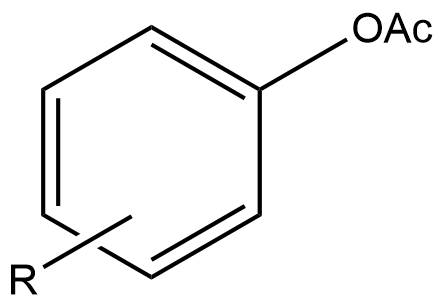
Batch reactors keep their lead because plant managers prize the ability to switch recipes without rebuilding the line. A single vessel can handle a dozen different products over a month, each with its own temperature profile, catalyst load, and workup steps. Continuous lines, for all their throughput advantages, demand a steady-state consistency that many specialty and pharma processes simply don't have. When a reaction produces a stubborn impurity or the raw material lot varies, you can stop, adjust, and restart a batch without scrapping an entire shift's output.
Regulatory inertia also plays a role. Batch records map cleanly onto the way agencies expect to see process validation, deviations, and batch release. Moving to continuous manufacturing means reworking that documentation and, often, re-qualifying a product that already has approval. Until the cost of change drops or the capacity crunch gets sharper, the familiar stirred tank will keep its numbers advantage.
Purity Creep: How Buyers Are Forcing Tighter Specs Ahead of Regulation
Purity creep didn't start with a mandate. It began quietly, in procurement emails and supplier scorecards, as a handful of large buyers started asking for impurity limits well below what any government required. A metals trader might see a request for 99.99% copper where 99.95% was the legal baseline. A chemical distributor might get a spec sheet demanding residual solvent levels cut in half, just because one multinational customer decided its own internal risk tolerance was tighter than the law. These requests weren't driven by compliance teams but by quality engineers and sustainability officers who saw regulatory lag as a vulnerability, not a safe harbor.
What makes purity creep different from ordinary spec negotiation is its ratchet effect. Once one major buyer demands a lower arsenic limit in tin or stricter particle counts in pharmaceutical grade lactose, suppliers adjust their processes to meet it. That adjustment becomes the new normal, and soon that buyer's competitors adopt the same spec to avoid being seen as less rigorous. Before any regulator updates a rulebook, the commercial standard has already moved. Suppliers who once sold the same material to a dozen industries now face a fragmented market where a batch that meets legal purity for general use fails the private spec for electronics or infant formula. The creep is not always technical; sometimes it is purely contractual, with buyers writing penalty clauses for any deviation from a purity level that was nothing more than a stretch goal five years earlier.
For manufacturers, this means planning for specs that don't yet exist. A refinery investing in new filtration or distillation capacity can't rely on current regulations to size the equipment; it has to forecast where buyer-driven purity requirements will be in three to five years. That uncertainty pushes capital costs up and favors larger players who can afford over-engineering. Smaller producers either exit the high-purity segment or form partnerships with buyers who are willing to share the cost of tighter specs in exchange for guaranteed supply. The result is a market where purity is no longer a fixed characteristic but a moving target, and the only way to stay competitive is to treat every customer's internal standard as a preview of tomorrow's regulation.
Downstream Pull from Agrochemical and Pharma Builders Reshapes Demand
The steady drumbeat of new agrochemical and pharmaceutical construction projects is quietly redrawing the map of demand for specialty chemicals and intermediates. Historically, downstream procurement moved in predictable cycles tied to planting seasons or patent expirations, but the recent wave of greenfield and brownfield builds has introduced a more sustained, project-driven pull. Contractors and engineering firms are now locking in multi-year supply agreements for solvents, catalysts, and building-block molecules well before first production runs, creating a subtle but persistent shift in how chemical manufacturers plan capacity and inventory.
Pharma builders, in particular, are reshaping demand patterns by prioritizing flexible, multipurpose synthesis suites that can pivot from one API to another without extensive retooling. This has pushed upstream suppliers to offer higher-purity intermediates with tighter impurity profiles, as well as just-in-time delivery options that align with modular construction timelines. Agrochemical projects, on the other hand, tend to cluster around specific active ingredients with long lead times, leading to lumpy demand for certain chlorinated and fluorinated building blocks that few producers outside dedicated hubs can readily supply. The result is a bifurcated market: one segment chasing speed and versatility, the other chasing scale and cost certainty.
What makes this cycle different from past investment waves is the degree of coordination between builders and chemical suppliers at the design stage. Rather than waiting for a plant to come online and then sourcing materials, project owners are involving key raw material vendors in feasibility studies and pilot-scale trials. This early engagement compresses the traditional lag between construction spending and downstream chemical demand, but it also exposes suppliers to sharper swings if a project stalls or pivots. For those able to navigate the new landscape, the payoff is a more durable book of business tied to physical assets rather than speculative inventory builds.
Acetic Anhydride Costs and the Margin Squeeze Nobody Talks About
Acetic anhydride prices have been drifting upward for months, but the real story isn't the headline number—it's how quietly those increases are eating into downstream margins. Most buyers track the spot price and assume they have a handle on costs, yet the full impact often shows up weeks later in the form of higher logistics fees, tighter credit terms, or smaller contract discounts. By the time the squeeze becomes obvious, renegotiating supplier agreements feels like chasing a train that has already left the station.
What makes this particular margin crunch so easy to miss is the chemistry itself. Acetic anhydride is rarely the largest line item on a purchasing sheet, so procurement teams tend to focus on bigger-volume solvents or catalysts. But because it sits upstream of so many acetylated intermediates—think aspirin, cellulose acetate, and certain agrochemicals—even a modest cost increase ripples through multiple product lines. A 3% rise in anhydride can quietly turn a 5% margin on a downstream specialty chemical into 2%, without any single invoice looking alarming.
The producers aren't talking about it either. Supply has tightened due to planned maintenance at a few key plants and strong demand from pharmaceutical acetylation, yet public statements rarely mention margin pressure. Instead, they emphasize operational reliability or sustainability upgrades. That leaves buyers guessing whether the current cost level is temporary or structural—and anyone waiting for a sharp downward correction may find their own margins have already been squeezed far more than the price charts suggest.
Where Chinese Aromatic Acetoxy Intermediates Actually Land: A Use-Map
Walk through any pharmaceutical intermediate catalog and the acetoxy group rarely gets top billing, yet Chinese production of these aromatic building blocks feeds a surprisingly specific set of downstream routes. A large share ends up in the synthesis of antipyretic and anti-inflammatory APIs, where the acetoxy moiety acts as a transient protecting group for phenols before final acetylation or deacetylation steps. Others are consumed in agrochemical manufacturing, particularly in the construction of acaricides and selective herbicides that rely on substituted phenyl acetates for improved lipid solubility.
Beyond crop protection and human medicines, these intermediates surface in fine chemical applications that rarely appear on trade summaries. Flavor and fragrance houses use certain acetylated phenols to stabilize delicate aroma molecules or to create slow-release precursors for vanillin and eugenol derivatives. Specialty polymer producers also pull smaller volumes for UV-absorbing coatings, where the acetoxy group improves compatibility with acrylic resins without sacrificing thermal stability during extrusion.
The actual destination map is less about a single giant buyer and more about many mid-sized formulators. Indian and European generic drug makers absorb the largest volumes for cardiovascular and CNS intermediates, while Southeast Asian agrochemical formulators take the second tier. Chinese domestic consumption has grown quietly, too—some of the same aromatic acetoxy compounds now feed local producers of veterinary antibiotics and aquaculture treatments, a channel that rarely shows up in bilateral trade statistics but has become consistent enough to influence spot pricing.
FAQ
Downstream pharmaceutical and agrochemical demand has stayed firm, while stricter environmental enforcement pushed smaller operators out of the market. Larger producers have used the gap to invest in integrated sites that combine acetylation with upstream raw material supply, lowering unit costs and improving compliance.
Pharmaceutical synthesis remains the largest outlet, especially for APIs that require phenolic protection or activated esters. Agrochemicals come next, followed by dye and pigment intermediates, fragrance compounds, and certain specialty polymer additives.
Many scattered small plants around rivers and lakes were closed or forced to relocate. New capacity is concentrated in chemical parks with shared treatment facilities, and producers have shifted toward closed-loop solvent recovery and catalytic acetylation to reduce acid waste.
Continuous acetylation reactors, selective catalysts that avoid over-acetylation, and improved separation methods have cut reaction times and raised yields. Automation also helps maintain batch-to-batch consistency, which matters for pharmaceutical buyers.
Yes. Coastal sites in Shandong, Jiangsu, and Zhejiang benefit from export logistics and proximity to fine chemical customers but face higher land and environmental costs. Inland bases in provinces like Henan or Hubei often have cheaper energy and raw materials but need to work harder on logistics and compliance credibility.
Margins tighten quickly when acetic anhydride, acetyl chloride, or benzene derivatives spike, since acetylation is a major cost step. Larger producers secure long-term contracts or backward integrate into these feedstocks, while smaller ones may reduce run rates or switch to toll processing.
Custom pharmaceutical intermediates for cardiovascular, antiviral, and oncology drugs show the strongest growth. High-efficiency, low-toxicity agrochemical building blocks are also expanding, along with niche electronic chemicals and photoactive compounds.
Leading producers now offer process development support, impurity profiling, regulatory documentation such as DMFs and REACH dossiers, and stable multi-year supply agreements. Consistency in quality and delivery performance has become as important as price for many overseas buyers.
Conclusion
Across Eastern China, aromatic acetoxy intermediates are being scaled up with little fanfare. Much of this expansion still runs through batch reactors rather than continuous lines, a choice driven by flexible scheduling, lower upfront capital, and the wide array of products that smaller plants switch between. At the same time, buyers are quietly tightening purity requirements. Even without formal regulation, pharmaceutical and agrochemical customers now demand higher assay levels, lower residual solvents, and better batch-to-batch consistency. This push for cleaner material is forcing producers to upgrade purification steps and adopt stricter in-process controls. Meanwhile, acetic anhydride costs have become a quiet but persistent pressure. Since it is a core acetylating agent, even modest price swings erode already thin margins, especially for mid-sized manufacturers who lack backward integration.
On the demand side, the real pull comes from downstream builders in agrochemicals and pharmaceuticals. These sectors use aromatic acetoxy intermediates to synthesize active ingredients, protecting groups, and specialty building blocks. Their need for reliable, high-purity supply is reshaping what Chinese plants choose to make and how they run. In practical terms, the material ends up in a broad use-map: from herbicide and fungicide intermediates to advanced pharmaceutical intermediates, and to a lesser extent in fine chemicals, dyes, and polymer additives. Eastern China remains the main hub, but product flows increasingly serve inland formulation sites and export channels. Producers that can combine batch flexibility with tighter specs and better cost management are the ones holding ground as the market matures.
Contact Us
Contact Person: Wei Zhang
Email: [email protected]
Tel/WhatsApp: 862163529955
Website: https://www.dslchem.com