

Best Mixing Tank: How to Choose the Perfect Solution for Your Applications
2026-05-20
Finding the right mixing tank is more than just a purchase—it's a decision that impacts your productivity, product quality, and bottom line. With so many designs and materials on the market, it's easy to feel overwhelmed. The trick is matching the tank's capabilities to your unique applications, and that's exactly where DYE excels. Our range simplifies the selection process, combining customization with robust engineering. Ready to discover what makes a mixing tank truly perfect? Let’s dive into the essentials.
Decoding the Mix: Finding a Tank That Matches Your Process
Matching a tank to your process begins with a clear-eyed look at what you’re actually mixing. Every slurry, emulsion, or suspension has its own personality—viscosity that shifts under shear, particulates that settle faster than expected, or a tendency to foam the moment air gets trapped. A high-viscosity paste demands robust agitation and scraped-surface internals to keep material moving, while a low-viscosity solution might only need a gentle, high-flow impeller to avoid dead zones. Overlooking these subtle behaviors leads to inconsistent product, longer batch times, and unnecessary wear on equipment. Before you even think about size or shape, you need to map how your ingredients interact when energy is added, because a tank that works beautifully for one formula can be a bottleneck for another.
The heart of the tank is its mixing system, and that heart needs to pump in exactly the right pattern. It’s tempting to assume a standard pitched-blade turbine will handle everything, but reality is far more nuanced. Some processes thrive on top-to-bottom turnover; others need radial dispersion to break up agglomerates near the wall. The choice of impeller—whether it’s a hydrofoil for energy efficiency, a high-shear rotor-stator for emulsification, or a helix for laminar blending—shapes the entire flow field. Baffles can enhance or hinder mixing depending on their placement and count, and for shear-sensitive products, too much intensity can destroy the very structure you’re trying to build. Sometimes the best match isn’t a single impeller but a combination that creates staged mixing zones, each tailored to a specific step in the reaction or blending sequence.
Beyond fluid dynamics, the tank material and thermal design often tip the scales between a process that runs smoothly and one that fights you at every turn. A stainless steel vessel might be the go-to for cleanliness and corrosion resistance, but exotic alloys or lined carbon steel can save a fortune when acids or chlorides are in play. Temperature control is equally critical—jackets, half-pipe coils, or internal baffle coils all have trade-offs in heat transfer efficiency and cleanability. A jacketed tank works well for gentle heating or cooling, but an agitated vessel with internal coils can deliver faster response when your reaction is exothermic. The goal is a tank that doesn’t just fit your current batch size but also accommodates the thermal demands and chemical realities of the process, so you spend more time making product and less time compensating for equipment that doesn’t quite fit.
The Heart of Your Operation: What Sets a Great Mixing Tank Apart
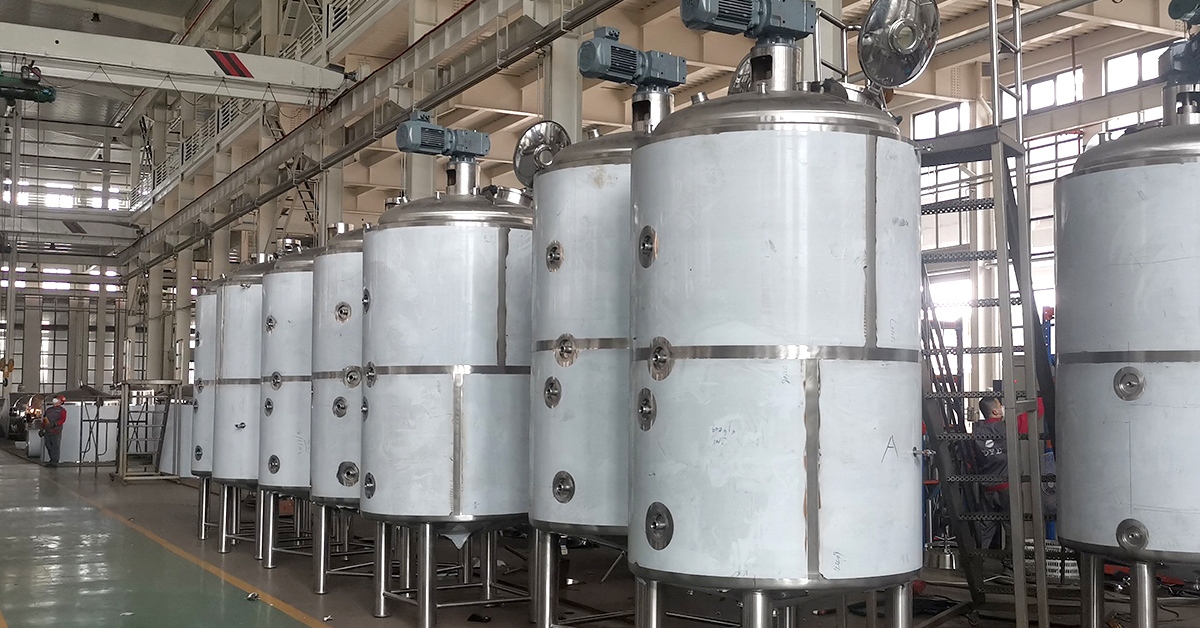
At the core of every efficient production line is a mixing tank that does more than just blend—it becomes the pulse of your workflow. It’s not about flashy extras but rather the quiet, relentless performance that keeps your product consistent from batch to batch. The right tank anticipates your needs: it handles varying viscosities without stalling, maintains stable temperatures when precision matters, and cleans up with minimal downtime so you can pivot quickly between runs. When the design feels almost invisible because everything just works, you know you’ve found the heart of your operation.
That heart beats strongest when the tank adapts to your reality, not the other way around. Look beyond standard specs and consider how easily you can modify agitating speed or swap impellers as your recipes evolve. A tank that lets you fine-tune shear rates without complex recalibration, or one that seals tightly enough to preserve volatile ingredients, reveals a design built by people who understand the pressures of the production floor. It’s these subtle details—the placement of sensors, the slope of the bottom for complete drainage—that separate a commodity from a genuine asset.
Durability and support also play a huge role in earning that trusted place at the center of your facility. Surfaces that resist pitting and corrosion under constant chemical exposure, welds that smooth out to prevent material hang-up, and a manufacturer that stands behind their work with rapid technical assistance—these aren’t bonus features; they’re the quiet guarantees that your tank won’t become a bottleneck. When a mixing tank earns the right to be called the heart of your operation, it’s because every component, from the gear drive to the manway gasket, was chosen to keep your product moving forward without interruption.
Beyond Stainless Steel: Navigating Material Choices
When designing products that require durability and corrosion resistance, stainless steel often tops the list. Yet, there are scenarios where its weight, cost, or thermal properties make it less than ideal. Exploring alternatives like titanium, ceramics, or advanced polymers can unlock performance gains in demanding applications—from aerospace components to medical devices. Each material brings a unique balance of strength, biocompatibility, and weight, challenging the default assumption that steel is always the answer.
The conversation around material selection is evolving beyond just tensile strength. Factors such as fatigue life, chemical compatibility, and even surface finish aesthetics play pivotal roles. For instance, in food processing equipment, the non-porous nature of certain composites can outperform stainless steel in hygiene-critical areas. Similarly, carbon fiber composites offer a strength-to-weight ratio that steel cannot match, but they require careful design to avoid galvanic corrosion when paired with metals. Understanding these nuances helps engineers navigate a broader landscape of possibilities.
Ultimately, the decision hinges on a deep dive into the operating environment and lifecycle costs. A material that excels in a lab setting might falter under real-world thermal cycling or abrasive wear. Prototyping and rigorous testing remain essential, as even subtle differences in alloy compositions or polymer formulations can have outsized effects. By staying curious about emerging material technologies and questioning long-held preferences, designers can craft solutions that genuinely transcend what stainless steel alone can offer.
Size Isn't Everything: How to Pinpoint the Right Capacity
When it comes to choosing the right capacity, it's easy to fall into the trap of thinking bigger is always better. In reality, overshooting your needs often leads to wasted resources and unnecessary complexity. The key is to align capacity with your actual usage patterns—not just peak demands, but the steady state that defines daily operations. Start by auditing your typical workloads, accounting for those occasional spikes without letting them dictate your baseline. This grounded approach avoids the common pitfall of paying for headroom you'll rarely use.
Pinpointing the ideal capacity requires a bit of introspection and honest forecasting. Look beyond top-level metrics and dig into the nuances: how consistent is your traffic, and how much slack can you afford before performance dips? A common mistake is to overestimate growth, hoarding capacity for a future that may never materialize. Instead, aim for a setup that scales gracefully—one that can expand as needed without forcing you into a bloated initial commitment. This kind of right-sizing isn't about cutting corners; it's about making every unit of capacity count.
Finally, remember that capacity planning isn't a one-and-done exercise. Your needs will shift over time, so build in checkpoints to reassess and adjust. Treat capacity as a dial you can turn, not a fixed number you must guess perfectly from the start. By staying nimble and data-driven, you can avoid the twin traps of under-provisioning and overkill. The sweet spot is where your system runs comfortably, with just enough breathing room to handle the unexpected—without carrying the burden of excess.
Niche Needs: Tanks Built for Specialized Tasks
When conventional storage falls short, custom tank designs step in to handle unique industrial demands. These aren't your run-of-the-mill vessels—they're engineered for extremes, from corrosive chemical holding to ultra-pure water systems. Every curve, lining, and port is purpose-built, ensuring compatibility with substances that would degrade standard materials in weeks.
Take the food and pharmaceutical sectors, where sanitation isn't just a preference but a mandate. Tanks here feature mirror-polished interiors, sloped bottoms for complete drainage, and aseptic fittings that eliminate bacterial hideouts. Some even integrate heating jackets or cooling coils, maintaining precise temperatures during critical processing stages without compromising hygiene.
Then there are the mobile problem-solvers—tanks mounted on skids or trailers for on-site deployment. Whether it's emergency spill response, pilot-scale production, or fracking fluid management, these units combine rugged portability with the same customization as stationary installations. Baffles, mixers, and reinforced shells turn a basic container into a highly specialized tool that adapts to the task, not the other way around.
The Long Run: Ensuring Your Tank Stands the Test of Time
A tank isn't just a short-term investment—it's a long-term commitment. The materials and construction must align with what you're storing, whether it's water, chemicals, or fuel. Look for tanks built with high-grade stainless steel or reinforced polymers that resist corrosion, UV damage, and temperature swings. A well-chosen material prevents micro-cracks and leaks before they start, giving you peace of mind decade after decade.
Regular maintenance plays a quiet but crucial role in extending tank life. Simple habits like inspecting seals, checking for sediment buildup, and testing pressure relief valves can catch issues early. Ignoring these small tasks often leads to costly repairs or full replacements down the line. Think of it as a health checkup for your storage system—routine attention keeps everything running smoothly without drama.
Ultimately, longevity comes from matching the tank to its environment and usage patterns. Outdoor tanks need coatings that withstand relentless sun and freezing winters. Indoor tanks must handle humidity variations. Customizing your setup—like adding insulation or choosing a double-walled design—adds layers of protection. It's not about buying the most expensive option; it's about choosing smart, durable features that fit your actual needs, ensuring the tank remains reliable long after you've forgotten about it.
FAQ
Start by clarifying your process needs: the type of materials, their viscosity, required mixing intensity, and batch size. Also note any temperature or pressure requirements. Those details quickly narrow down the tank design, material, and mixer type.
Absolutely. A too-large tank can lead to poor mixing if the impeller doesn't cover the volume properly, while an undersized tank risks spills and inefficiency. Size the tank so your typical batch fills about 70-80% of the working capacity, leaving room for proper agitation.
Stainless steel, especially 316L, handles most corrosive environments well. For aggressive acids or chlorides, you might need alloys like Hastelloy or even lined tanks with PTFE or glass. Match the material to both the chemical resistance and the temperature you'll run.
Round or conical bottoms drain completely and avoid dead zones, making them ideal for high-purity or frequent product changeovers. Flat bottoms suit viscous mixtures where a scraped-surface agitator is needed, though they require more effort to drain fully.
For high-viscosity materials, an anchor or helical ribbon impeller close to the tank wall works best. Pair it with a variable-speed drive to fine-tune shear and flow. Scraped blades on the impeller help prevent buildup on the tank wall and improve heat transfer.
Look for a tank designed with cleanability in mind: polished internal surfaces, minimal internal fittings, and a spray ball or CIP system integrated into the lid. Quick-clamp connections and a drain port at the lowest point make the process much faster.
Yes, if you design for flexibility. A robust agitator with interchangeable impellers, a heating/cooling jacket, and a material that resists the broadest chemical exposure lets you pivot between recipes. Just confirm that the tank geometry suits the worst-case mixing challenge you'll face.
Conclusion
Finding the right mixing tank starts with a clear understanding of your process requirements. Before you even look at materials or capacity, you need to decode what the mixing action actually demands: shear sensitivity, viscosity, temperature control, or perhaps the incorporation of solids. The heart of any effective system is the tank design itself—agitation geometry, baffle placement, and impeller type must work in concert with your specific fluid dynamics. A great mixing tank doesn’t just hold materials; it actively shapes the blend, minimizing dead zones and delivering consistent results batch after batch. This integration of mechanical design and process insight separates a generic vessel from a true solution, ensuring every drop meets your quality standards.
Material selection goes far beyond defaulting to stainless steel. Depending on corrosion risks, hygienic requirements, or cost constraints, you might consider duplex alloys, polymer linings, or even glass-lined carbon steel. Matching the material to your chemistry is non-negotiable for both safety and longevity. Equally critical is sizing: overestimating wastes energy and floor space, while undersizing chokes production. Work closely with suppliers to model your optimal capacity based on real throughput data, not just guesswork. Specialized applications—like high-pressure reactions, vacuum degassing, or ultra-clean bioprocessing—demand purpose-built features that off-the-shelf tanks simply lack. Finally, consider the total lifecycle: robust construction, accessible maintenance points, and a modular upgrade path keep your investment viable for years, avoiding premature obsolescence.
Contact Us
Contact Person: Ada Xu
Email: [email protected]
Tel/WhatsApp: 0577-86806088
Website: https://www.dayuwz.com/