

Best Electronic Expansion Valves for Precise Refrigeration and HVAC Control
2026-11-26
Precision in refrigeration and HVAC isn’t just a spec sheet promise—it’s what keeps a system stable when load and ambient conditions shift quickly. Electronic expansion valves are the fastest route to that kind of control, but not every valve responds with the same accuracy or repeatability. If you’re comparing your options, HONGSEN keeps showing up for a reason. Here’s what actually matters before you lock in a choice.
Where Mechanical Valves Fall Short
Mechanical valves rely on physical contact between sealing surfaces, which means every cycle produces a small amount of wear. In applications where valves open and close thousands of times per day, this wear accumulates quickly, leading to degraded shutoff performance and the need for frequent rebuilds. What begins as a minor weep can turn into a steady internal leak that undermines process consistency and wastes energy.
Another shortcoming shows up when precise flow modulation is required. The spring-and-diaphragm or piston designs common in mechanical valves often struggle to hold a stable intermediate position. Small changes in supply pressure, temperature, or friction within the stem packing cause the actual flow rate to drift. Operators respond by overcorrecting, which introduces oscillation and makes tight control loops difficult to tune.
Maintenance expectations also reveal the gap. Mechanical valves demand scheduled lubrication, seal replacement, and seat lapping to stay reliable. In remote or hard-to-reach installations, these routine tasks become costly and risky. The downtime for service, combined with the need for spare parts inventory, pushes total ownership cost higher than many teams anticipate during initial selection.
Getting Superheat Right When Loads Swing
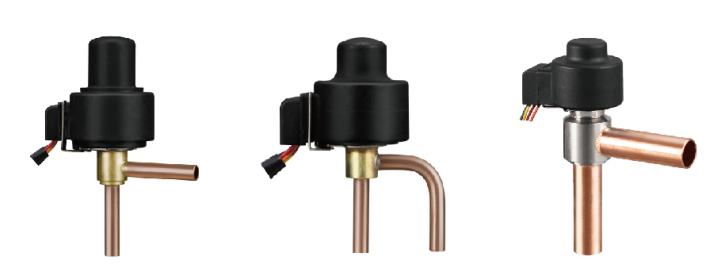
Keeping superheat stable when a system sees wide load swings is less about chasing a single number and more about understanding how refrigerant behaves under shifting conditions. A fixed setting that works at full load can leave the evaporator starving or flooding once the load drops or spikes. The first step is to watch the trend, not just the snapshot: short logging intervals reveal whether the thermal expansion valve is overcorrecting or lagging too far behind the actual heat load.
Valve selection plays a larger role than tuning alone. A valve sized for peak capacity may hunt badly at part load, while one sized for the minimum will choke when demand rises. Balanced port designs, electronic expansion valves, or a properly set mechanical valve with the right charge in the bulb can smooth the response. Pay attention to the bulb location and contact, because poor thermal coupling will make the control loop react to the wrong signal, especially during sudden load changes.
Finally, verify the system has enough refrigerant distribution stability before fine-tuning superheat. Uneven airflow, a partially blocked distributor, or oil logging can mimic a superheat control problem. Correct those mechanical issues first, then adjust superheat in small increments while cycling the load between high and low. The goal is a setting that stays within a safe range at both ends without constant manual correction.
Sizing Mistakes That Quietly Waste Energy
Oversized equipment rarely gets called out the way undersized units do, but the inefficiency is just as real. A compressor that cycles on and off in short bursts never reaches the steady-state efficiency it was rated for, and each start-up draws more current than the running load. The waste hides in plain sight because the space still reaches setpoint — it just gets there clumsily, with more wear and more kilowatt-hours than the load actually requires.
The same logic applies to pumps, fans, and air handlers that were sized with a safety factor stacked on top of someone else's safety factor. Run a 50-horsepower motor at 60% load and the service factor might cover it, but the efficiency curve usually drops off a cliff below 70% load. Designers often treat the nameplate rating as a target instead of a ceiling, and the resulting part-load penalty shows up month after month on the utility bill without ever triggering an alarm.
Ductwork and piping are quieter culprits. Oversized ducts slow the air down below what the diffusers need for proper throw, so occupants crank the thermostat to compensate — and then the system runs longer to chase a comfort problem that was really a velocity problem all along. Check the actual operating point against the design curve once in a while, because the fix is usually a smaller impeller or a trim on the valve, not a bigger budget for energy.
Stroke Control and Step Control Under Sudden Load Shifts
Sudden load shifts tend to expose how fragile a stroke-control loop really is, especially when the position error and the disturbance arrive at nearly the same time. Instead of forcing the axis to hold its original speed, a more practical approach is to briefly relax the velocity command while a feed-forward term handles the expected load step. That keeps the integrator from winding up and lets the drive absorb the shock without overshooting the target.
Step control under the same conditions is less about raw speed and more about keeping each increment reliable. A sudden load can cause a missed step during acceleration or a hard overshoot near the end of the move, so fixed acceleration ramps become a liability. Adjusting the step frequency and current reference on the fly, based on the actual position lag and load feedback, gives the controller room to ride through the disturbance without losing count.
In practice the two modes often share the same axis: stroke control covers the long travel, then step control takes over for the final positioning. Under a sudden load shift, that handoff should not be rigid. Shortening the stroke phase while increasing holding torque during the step phase usually produces a cleaner settle than chasing the original trajectory with more gain.
Low-GWP Refrigerants and the Precision Trade-Off
Low-GWP refrigerants are often framed as a straightforward swap, but the reality in the field is messier. Many of these blends come with noticeable temperature glide, so the evaporator no longer sits at a single, predictable saturation point. For systems built around tight discharge air tolerances or narrow fluid temperature bands, that glide translates into control drift, especially at part load. The result is a quiet compromise: what the environment gains in reduced direct emissions can be lost in process stability if the controls are not retuned for the new refrigerant's pressure-temperature curve.
The precision hit also shows up in the hardware. Valves, sensors, and metering devices that were sized for older high-GWP refrigerants rarely behave the same with lower-density or mildly flammable alternatives. Slight shifts in superheat response, oil return, or seal compatibility can widen the deadband enough to matter in pharmaceutical cooling, data center thermal management, or precision manufacturing. Designers end up adding correction factors or more sophisticated controls just to recover the stability that used to come almost free.
There is no universal answer, but the more honest conversations acknowledge the trade instead of hiding it. A low-GWP refrigerant may lower the carbon footprint on paper while demanding tighter commissioning, better charge control, and more attentive maintenance to hold temperature within the same limits. In some applications that premium is acceptable; in others, the operational risk outweighs the environmental benefit. The choice becomes less about picking the "greenest" fluid and more about matching refrigerant behavior to the precision the process actually needs.
Spotting a Valve That Is Fighting the System
A valve that is fighting the system seldom hides it. Watch the downstream pressure long enough and the pattern becomes obvious: the gauge sags, recovers, and sags again while the control loop keeps chasing a setpoint it can't quite hold. The stem may twitch in short, uneven bursts, and the usual smooth response turns into something closer to a mechanical argument. In some cases the trim chatters just enough to be felt through the pipe wall before it becomes loud enough to hear.
Temperature can give the struggle away before the noise does. A valve working against the system often runs hotter or colder than the adjacent piping because the fluid is doing more work in the restricted space near the seat. The vibration, when present, tends to pulse with the system rather than hum steadily. It is strongest around the body and softer at the flanges, which points less to simple wear and more to an operating point the valve was never meant to hold.
Actuator response tells a similar story. Give the positioner a small step change and observe whether the stem hesitates, overshoots, or moves in a lazy lurch. That delay is not always friction; it can be the actuator losing a pressure battle against an upset in the line. Instead of reaching for a replacement, look first for a bypass left open, an isolation valve partly seated, or a load change that pushed the whole system into a region where the valve's installed characteristic no longer works.
FAQ
A thermal expansion valve relies on bulb pressure and spring tension, so its response is relatively slow and limited to a narrow range. An electronic valve reads temperature and pressure sensors continuously, adjusts opening by stepper motor pulses, and holds target superheat even when loads shift quickly. That means fewer hunting issues and tighter temperature control.
Systems with wide load swings gain the most, such as blast chillers, refrigerated display cases, heat pumps, and multi-evaporator racks. Low condensing pressures in cooler weather also favor electronic valves because they can operate with lower head pressure without starving the evaporator.
Use the valve manufacturer's capacity tables rather than nominal tonnage alone. Match the valve's rated capacity at your evaporating and condensing temperatures, then check the minimum and maximum pressure drop. Oversizing causes poor modulation at low load; undersizing starves the coil during pull-down.
The controller fixes the target superheat and adjusts valve opening based on sensor feedback. A good controller includes adaptive logic for defrost and startup, plus limits on minimum opening and maximum opening. If the sensor placement or PID settings are off, even a high-end valve will overshoot or hunt.
Yes, largely because they maintain stable superheat and prevent liquid floodback during load changes. That reduces oil washout, liquid slugging, and repeated starts under wet conditions. The result is less wear on valves, pistons, and bearings, especially in systems with frequent defrost cycles.
Mounting the sensor too close to the distributor or after a bend gives a false temperature reading. Forgetting to install a sight glass before the valve lets debris score the seat. Running cables next to high-voltage lines causes signal noise. Also, some technicians reuse old liquid line sizing from a thermal valve, which creates excessive pressure drop.
You generally set a lower, steadier target instead of the wide band used on mechanical valves. Start around 5 to 7 K at the evaporator outlet, then watch response after defrost and pull-down. Make small changes to the controller's PID or step rate rather than cranking the static superheat spring, because overshooting on an electronic valve can be much faster.
Conclusion
Mechanical expansion valves tend to work well only inside a narrow band of conditions, and once the load moves away from that band the evaporator feed becomes either starved or flooded. An electronic expansion valve changes that behavior because it can read superheat continuously and adjust flow in real time, keeping the coil close to its ideal operating point even when case loads swing, ambient temperatures shift, or compressors cycle. That kind of control is especially valuable in food retail, cold storage, and comfort cooling applications where temperature drift shows up quickly as product loss, moisture problems, or wasted compressor runtime. Rather than accepting the compromises of a fixed-orifice or thermostatic design, systems built around electronic control respond to actual demand instead of reacting late to a pressure signal.
The difference between a good install and a troublesome one often comes down to sizing, valve type, and how well the valve matches the refrigerant. Oversized valves may hunt at part load, while undersized valves restrict capacity during pull-down or hot-gas defrost recovery. Stroke control and step control do not behave the same under sudden load shifts, and low-GWP refrigerants frequently narrow the margin for error because their pressure-temperature behavior can make superheat harder to hold with older mechanical hardware. In the field, a valve that is fighting the system usually gives itself away through erratic suction pressure, unstable superheat, or a coil that never seems to settle. Choosing the right electronic expansion valve, then setting it up for the actual operating envelope, avoids the quiet energy waste that comes from running slightly wrong for thousands of hours a year.
Contact Us
Contact Person: KOPASS HO
Email: [email protected]
Tel/WhatsApp: 8613606566112
Website: https://www.hongsenref.com/