

Best Direct Expansion Air Handling Unit for Consistent Indoor Comfort
2026-10-17
When indoor comfort feels like a moving target—rooms too warm, others too cold, energy bills creeping up—the culprit is often an air handling unit that wasn’t built for consistent performance. Direct expansion AHUs can solve this, but only if they’re selected and configured with real-world conditions in mind. That’s where shairko comes in: designing units that hold temperature and humidity steady without constant adjustments. In this post, we’ll break down what makes a DX air handling unit genuinely dependable for everyday comfort.
Nailing the Temperature Sweet Spot Without Constant Tweaks
The first step to locking in a stable temperature is to stop chasing the thermometer. Most devices have thermal lag: when you adjust the dial or controller, the actual temperature at the cooking surface or inside the chamber doesn't respond instantly. Instead of making a series of small corrections, run your equipment at a fixed setting for 30–60 minutes with a probe placed exactly where your food or material will sit. Record the difference between the setpoint and the measured temperature at steady state. That offset becomes your one-time calibration. From then on, set the device to the setpoint plus or minus that offset, and leave it alone.
Physical stability does more than active adjustments. Add thermal mass—such as a thick stone, steel plate, or a water pan—to absorb and release heat slowly, smoothing out the swings caused by the heating element cycling on and off. Check seals, gaskets, and insulation; even a small gap can create drafts that force you to keep tweaking. If your environment holds heat well, the temperature will stay within a narrow band without any intervention. Preheat until all surfaces, not just the air, reach the target. A fully saturated chamber recovers quickly after you open a door or lid, so you won't feel the urge to crank the heat.
Learn your equipment's baseline behavior under normal conditions. Keep a simple note of ambient temperature, humidity, and the setting that works. On a cold or windy day, you might need to start one step higher, but that's a single initial decision—not a constant back-and-forth. If you do need to make a change, wait at least 15 minutes before judging the result. Quick adjustments stack on top of each other and create oscillation. A patient, fixed-setting approach almost always outperforms rapid manual corrections.
Energy Bills That Don't Spike With the Seasons
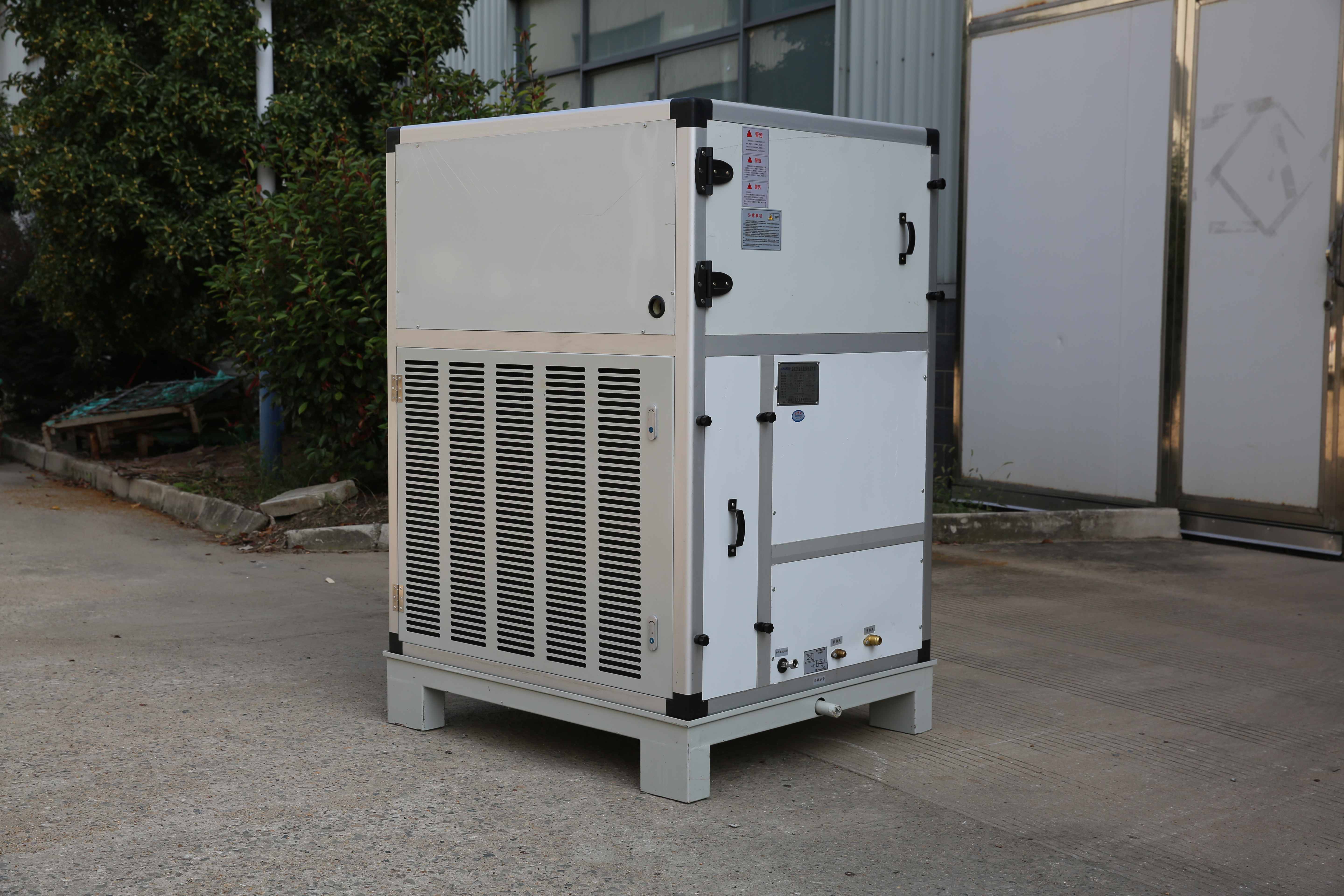
Most seasonal bill swings trace back to heating and cooling demand. A ground-source heat pump flips that pattern by pulling from soil that stays around 50 to 60 degrees year-round, so the system isn't fighting a 95-degree afternoon or a 10-degree night. That alone removes the sharp peaks many households see in January and July.
Pairing solar panels with storage takes the edge off even further. Instead of drawing grid power when air conditioning pushes rates higher, a battery bank discharges stored daytime generation through the evening. Homes with tight air sealing and upgraded insulation need less conditioned air in the first place, which keeps the baseline load low and prevents small temperature swings from turning into big cost swings.
For those not ready for a major retrofit, fixed-rate plans and budget billing smooth out the monthly amount, but they don't change underlying consumption. The real shift comes from making the house less responsive to outdoor conditions. When heating and cooling draw less power overall, even a harsh season barely moves the needle on the bill.
A Quiet Unit That Lets You Forget It's There
It barely registers on the edge of hearing. You'll catch yourself leaning in just to check if it's actually running, and that's when the realization hits: this thing has slipped into the background so completely that your brain stopped filing it under "appliances." No low hum creeping through the floor, no intermittent click or whir announcing its cycles. Just the soft, steady push of air that could easily pass for a window left open on a calm night.
That silence changes how a room feels. You stop bracing for the compressor to kick on during a movie, stop turning up the volume in the kitchen, stop noticing the device at all. It becomes furniture in the best sense—something useful that never demands your attention. Even at night, with everything else switched off, the sound is so minimal it folds into the ordinary house settling, not a mechanical presence but a lack of one.
What makes it possible isn't one dramatic breakthrough but a series of thoughtful choices: dampening materials in the right places, a fan blade shape that doesn't chop the air, and a compressor tuned to short, gentle cycles. The result feels less like engineering and more like a magic trick—a unit that works hard while politely pretending not to exist.
Fits Into Tight Mechanical Rooms Without Sacrificing Output
Engineers often assume that a compact footprint means settling for less heating capacity, but this unit flips that logic. The heat exchanger is arranged vertically and the burner sits coaxially above it, trimming the overall width to just under 24 inches. Even with that narrow profile, it delivers its full rated BTU output at altitudes up to 2,000 feet without derating. That means a mechanical closet in an older apartment building or a retrofit corner next to an elevator shaft can house the same performance as a full-size boiler room.
Service access doesn't disappear with the smaller casing. The front panel lifts off with two latches, exposing the burner assembly, gas valve, and control board without needing side clearance. Installers have placed it behind louvered doors, under stairwells, and in converted janitorial closets where the previous model couldn't fit. The venting can exit from the top or back, so the flue routing adapts to the tight space rather than forcing the room to adapt to the unit.
Maintenance Made Simple Enough for Any Facility Team
Keeping a facility running smoothly often falls on the shoulders of people who already have a dozen other priorities. That's why maintenance shouldn't require a dedicated engineer or a stack of manuals. The most effective approach strips away unnecessary complexity—clear checklists, simple schedules, and tools that anyone can pick up in minutes. When tasks are written in plain language and organized by priority, even a team with no technical background can spot issues before they become expensive repairs.
The key is to match the maintenance routine to the reality of your staff. Instead of overwhelming them with jargon or rigid protocols, focus on the few things that keep equipment safe and functional: visual inspections, basic cleaning, and reporting anything unusual. A simple color-coded board or a shared digital note can replace complicated software. When people understand why a task matters—like how a loose belt can lead to a burned-out motor—they take ownership without being micromanaged.
Finally, remember that consistency beats perfection. A facility team that does ten simple checks every week will outperform one that attempts a hundred detailed procedures and quits after a month. Build routines that fit naturally into daily workflows, celebrate small wins, and adjust based on what the team actually experiences. Maintenance becomes simple not because it's dumbed down, but because it's designed around the humans doing it.
Cleaner Air Delivery for Occupants Who Notice the Difference
Most ventilation systems move air, but few manage to deliver it in a way that people actually feel. The difference comes down to how thoroughly the air is conditioned before it reaches the room. Instead of pushing air through a single coarse filter and calling it done, this approach treats the entire airstream with layered filtration, careful humidity control, and a steady, low-turbulence flow. Occupants often notice it first as a lack of stuffiness, even in rooms that used to feel stale by mid-afternoon. It is not a dramatic blast of wind; it is the quiet sense that the air itself has been changed.
What separates this from generic air handling is attention to the small irritants that standard systems ignore. Fine particulates, cooking odors, off-gassing from furniture, and uneven temperature pockets are all addressed before they become noticeable. The system does not just dilute indoor air with outdoor air; it actively removes the particles and gases that cause that lingering, slightly used smell. Over time, people with mild allergies or sensitivity to dust report fewer complaints, and even those without explicit symptoms tend to describe the space as feeling fresher for longer. This is not a marketing claim about perfect purity, but a practical difference that shows up in daily comfort.
In practice, the effect is most apparent in transitional moments: walking in from outside after rain, returning to a room after cooking, or spending an entire afternoon in the same space without needing to open a window. The air remains neutral and breathable, without the sharp swings in temperature or humidity that make conventional systems feel either drafty or suffocating. For occupants who have learned to tolerate mediocre indoor air, the change is subtle at first, then impossible to un-notice.
FAQ
The key is precise control over coil temperature and airflow. A DX AHU uses refrigerant directly in the cooling coil, so changes in compressor capacity translate quickly to supply air temperature. When paired with variable speed fans or staged compressors, it holds room conditions within a narrow band without large swings.
Look for an electronic expansion valve rather than a fixed orifice, plus hot gas reheat to manage humidity without overcooling the space. Multi-stage or inverter-driven compressors help match part-load conditions. A draw-through configuration with proper filter placement can also keep coil face velocity even, which reduces temperature stratification.
A chilled water system has thermal mass that smooths out fluctuations, but response can be slower when load changes suddenly. A DX unit reacts faster because the refrigerant loop is shorter and directly coupled to compressor operation. For smaller to mid-size zones, that often means tighter control and less overshoot, as long as capacity staging is well designed.
Keep the evaporator coil clean and check refrigerant charge at least once a year, because even slight undercharge or overcharge changes coil temperature and dehumidification. Replace filters before pressure drop gets high and inspect condensate drains to avoid carryover that can disturb humidity. Also confirm the expansion valve and sensors are calibrated so the control loop does not hunt.
Yes, many units include a heat pump reversing valve or electric/hydronic backup, plus hot gas reheat for neutral air. The trick is smooth changeover logic and well-tuned supply air temperature reset. If staging and airflow remain stable during transition, occupants rarely notice the switch between cooling and heating.
Light commercial spaces, clinics, server rooms, classrooms, and small office floors benefit because load diversity is limited and the unit can be matched closely to zone demand. Retail stores and restaurants also see fewer comfort complaints when a dedicated DX air handler avoids the distribution losses and control lag common in long chilled water loops.
Watch for temperature swings that match compressor cycling, elevated indoor humidity on mild days, or cold drafts near diffusers. Those often point to oversized capacity, low airflow, or a failing expansion valve. Checking superheat and supply air temperature stability under low load can reveal whether the unit needs capacity control adjustments or mechanical repair.
Conclusion
Finding a direct expansion air handling unit that holds a steady indoor temperature without constant adjustments comes down to how well the coil, compressor staging, and controls work together. The right unit reacts to small load shifts before anyone notices a drift, so there’s no midday fiddling with setpoints or complaints from occupants. Seasonal swings don’t turn into runaway energy costs either, because the cooling output tracks actual demand instead of cycling hard and wasting power. That same measured operation keeps the unit from becoming a background annoyance—sound levels stay low enough that it fades into the mechanical room rather than leaking into offices or patient areas.
Compact footprints matter just as much when chases and closets are tight, but a smaller cabinet should not mean giving up airflow or leaving dead zones. The best units move enough conditioned air to keep every corner even while fitting into spaces other equipment cannot. Maintenance is also less of a burden: lift-off panels, easy coil access, and common filter sizes let facility teams finish routine work without specialized training. Finally, cleaner air delivery shows up in fewer stuffy afternoons and less dust settling on surfaces, which occupants notice even if they cannot name the reason. Taken together, these details separate a true direct expansion champion from a basic box that merely cools.
Contact Us
Contact Person: Crystal
Email: [email protected]
Tel/WhatsApp: 8613524235353
Website: https://www.airkohvac.com