

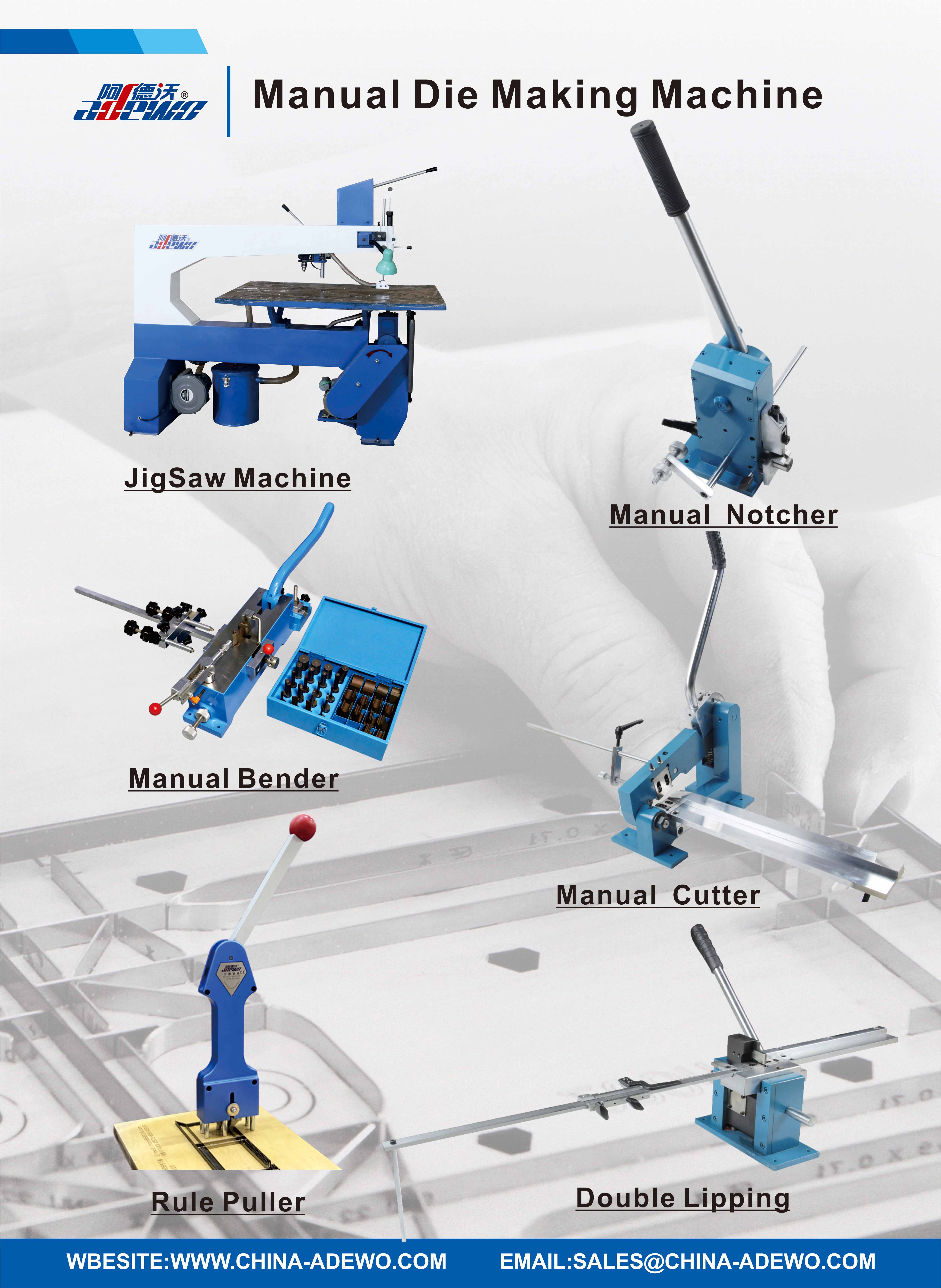
Advanced Die Making Steel Rule Manual Bender Techniques for Accurate Rule Bending
2026-11-02
If you've ever felt a steel rule snap back just as you thought the bend was perfect, you know precision isn't optional—it's the entire job. This guide breaks down advanced manual bender techniques that separate clean, repeatable bends from costly scrap. Whether you're refining complex die layouts or pushing for tighter tolerances, ADEWO gives you the control to bend with confidence.
Choosing the Right Nose Bar for Tight Radius Bends
Tight radius bends put a lot of stress on the nose bar, so the first thing to check is the bar's profile height. A lower profile lets the chain wrap around smaller radii without the bar digging into the track or throwing the chain. For most tight-radius applications, a nose bar with a smaller diameter and a well-supported sprocket tip will track better than a standard bar. You also want to look at the nose attachment method—bolted-on noses can shift under heavy side load, while solid nose bars hold their shape but may wear faster if the chain is running too loose.
Material and hardening matter more on tight bends than on straight cuts. A nose bar that flexes slightly under load will cause the chain to wander and create an uneven kerf. Look for bars made from a single piece of high-grade steel, or at least a nose section that is induction hardened rather than just surface coated. If you are cutting hardwoods or frozen timber, a bar with a narrower kerf and more precise nose geometry will reduce binding. Keep in mind that a nose bar designed for plunge cuts or carving often has a tighter effective radius, so matching the bar to the intended cut style is half the battle.
Finally, pay attention to the chain pitch and gauge compatibility. A tight bend forces the chain to articulate more sharply, so any mismatch between the bar nose and the chain's drive link profile will show up quickly as rough cutting or premature bar wear. A nose bar with a slightly relieved heel and a smooth transition from the bar body to the nose will feed more predictably through tight arcs. If you are frequently cutting curves with a radius under six inches, consider a dime-tip or quarter-tip nose bar—they are built specifically for that kind of work and will outlast a standard sprocket nose in those conditions.
Calculating Springback Before You Lock the Angle
You won't find a universal springback number that works across every job, so stop hunting for one. The amount a bend relaxes after the punch lifts depends on yield strength, sheet thickness, radius-to-thickness ratio, and even the direction the sheet was rolled. Ignore any of those and the angle you lock on the controller becomes a guess.
Start with a short test piece from the same lot as your production run. Bend it to the nominal angle, release the pressure, and measure the actual angle with a protractor or angle gauge. Subtract the intended angle from the measured angle—that's your springback. To hit a 90° finished bend on material that springs back 2°, the ram needs to stop at 88° before release.
Keep a simple log near the brake. Record material, thickness, die opening, and the springback you observed. The next time that job comes around, you can lock the angle confidently instead of running another round of test pieces. It takes two minutes of extra work now and saves a pile of bad parts later.
Using Sequential Bends to Avoid Kinking Narrow Sections
When routing a narrow section through a tight space, a single sharp bend can create a stress point where the material folds inward, causing a kink that restricts flow or damages the structure. By splitting the turn into a series of smaller, sequential bends, you distribute the angular change more evenly along the length. This prevents any one point from exceeding the critical buckling angle, allowing the inner wall to compress gradually instead of collapsing abruptly.
The key is to keep each individual bend shallow enough that the material's natural flexibility handles the deformation without permanent creasing. For metal tubing, this often means keeping each bend under 15 to 20 degrees, spaced at least two to three diameters apart. For softer materials like plastic or braided hose, the allowable angle per bend may be even smaller. A gradual arc made of multiple gentle bends also reduces the tendency for the narrow section to ovalize under pressure, which is a common precursor to kinking.
In practice, you can form sequential bends by hand using a series of small, controlled pushes against a rounded mandrel or by working the material back and forth over a curved form. The result is a smooth, wave-like transition that hugs the required path without sharp corners. This technique is especially useful in automotive brake lines, medical catheter routing, and custom cable management, where a kink would compromise both function and safety. Planning the bend sequence from the fixed end toward the free end also helps maintain alignment and reduces the chance of accidentally introducing a twist.
Handling Hardened Rule Without Cracking the Edge
Hardened steel rules hold their accuracy for years, but the very hardness that preserves their markings also makes the edges brittle. Sudden contact with carbide tools or dropping the rule onto a concrete floor can send tiny fractures through the edge. Keep a dedicated sleeve or a wooden rack slot for each rule, and avoid stacking other metal instruments on top of it.
When measuring against a machined surface, let the rule's flat side rest naturally instead of pressing down hard on the thin edge. Many users crack the edge by using the rule as a light pry bar or by scraping off dried coolant. A soft brass brush and a wipe with light oil are enough to clean the graduations without stressing the hardened edge.
If the rule has a beveled edge for fine readings, pay extra attention to the tip. That sharp corner is the first place cracks appear. Store the rule with the bevel facing up, or use a magnetic strip with a non-marring cover. Small habits like setting the rule on a clean rag rather than directly on a rough workbench will keep the edge intact far longer than expected.
Custom Jigs That Keep Complex Profiles Repeatable
Getting a complex profile to repeat perfectly from one workpiece to the next isn't just about skill—it's often about the setup. Custom jigs take the guesswork out of positioning odd angles, tight curves, or irregular stock. Instead of re-measuring and re-clamping for every piece, the jig holds the part in the exact same relationship to the cutting tool each time. This turns a tricky one-off profile into a simple, repeatable operation.
The real value shows up when you're running a batch. A well-built jig for a complex profile can cut setup time dramatically and keep tolerances tighter than hand positioning ever could. The jig doesn't have to be elaborate—sometimes a few precisely placed stops and a dedicated clamping point are all it takes. What matters is that the profile is locked in, so the operator focuses on feeding and cutting rather than fighting the geometry.
Making a custom jig also forces you to think through the profile's critical features. You'll identify where the stock needs support, where it can flex, and which edges must remain untouched. That upfront analysis pays off in fewer scrapped parts and less time spent chasing variations. For complex profiles, the jig isn't just a convenience; it's what keeps the work consistent from first piece to last.
Fine-Tuning the Bender’s Gibs for Zero Play
Achieving zero play in a bender’s gibs isn’t about cranking every adjustment bolt to the same torque—it’s about reading the machine’s personality. Start by loosening the lock nuts and backing off the gib screws until you feel a faint, even drag when sliding the ram through its full stroke. Then, tighten each screw in tiny increments, alternating between the high and low wear zones. The goal is a whisper of resistance, not a dead stop. If you chase absolute tightness, thermal expansion will punish you with binding and scored ways.
A practical trick is to use a strip of thin shim stock as a feeler gauge. Slide it along the gib gap while the ram is mid-travel; you want contact that kisses the shim without clamping it. If the shim slides freely at the ends but snags in the middle, you’ve found the classic wear pattern from repeated short-stroke jobs. Rather than compensating with more overall preload, hand-scrape or lap the high spots so the gib sits flat again. Remember: zero play doesn’t mean zero clearance—it means the clearance is so uniform that the ram can’t yaw or chatter under off-center loads.
Finally, after every adjustment cycle, run a scrap piece through the bender at full tonnage and listen. A well-tuned gib setup produces a low, consistent hum, not a rhythmic click or groan. Check the ram’s return stroke for hesitation—any sticky spot indicates uneven gib pressure that will show up as banana bends on long parts. Keep a log of each screw’s turns and the ambient temperature; gibs breathe with the shop, and what’s perfect on a cold Monday morning may need an eighth-turn back by Friday afternoon. The difference between a bender that fights you and one that disappears into the work is rarely the frame or the hydraulics—it’s those small, overlooked wedges of metal doing their quiet job.
FAQ
It mostly comes down to feel and anticipation. A seasoned operator reads the rule's springback before making the final bend, adjusts pressure in small increments, and knows when to compensate for material hardness without overworking the metal.
You need to support the inner edge with a dedicated nose piece or form, work in gradual passes, and avoid forcing the rule past its minimum bend radius. Pre-heating is rarely needed if the tooling radius matches the stock thickness and hardness.
Even within the same specification, minor differences in hardness, tempering, and surface finish shift the elastic recovery. Checking a test piece from each new coil or bundle lets you dial in the overbend angle before production runs.
Mount a simple angle gauge or digital protractor near the bending head, set clear stops for repeatable positions, and log the settings for each rule profile. Small adjustments at the stop are more reliable than trying to eyeball every bend.
Replace them as soon as you see flattening, grooving, or any shiny wear marks that change the contact point. Worn tooling rounds off the inside corner and forces you to overbend, which leads to inconsistent angles and early rule failure.
Work from a marked layout on the rule surface, bend from the center outward when possible, and use the bender's back gauge or stop system to locate each bend. Re-check the cumulative length after every two or three bends to catch drift early.
A light wipe of vanishing oil or a dry film lubricant on the bending pin can reduce galling, but keep the rule surface clean so layout lines stay visible. Avoid heavy grease because it collects metal fines and makes the rule slippery in the clamp.
For short runs and custom profiles, yes—if the operator uses proper stops, measures frequently, and understands the material's springback. CNC excels at high-volume repeatability, but a careful manual setup can hit tight tolerances without the programming overhead.
Conclusion
Precision in manual steel rule bending starts well before the first bend. Selecting the right nose bar for a tight radius means matching the bar’s profile to the rule’s thickness and hardness, not simply grabbing the smallest available nose. Once the tooling is set, springback becomes the main variable: test bends on scrap strip let you measure the actual return and adjust the angle lock accordingly, so the final curve holds without repeated correction. When working with narrow sections, sequential bending is far safer than forcing a single sharp bend. By stepping the bend along the rule in small increments, kinking is avoided and the steel flows more evenly, preserving the edge and the cross-section.
Hardened rule demands a different approach. Instead of fighting the material, reduce cracking risk by using a larger nose radius where possible or warming the rule slightly if the shop practice allows, then bend in a single controlled move to limit work hardening. For complex profiles, custom jigs are worth the time: they hold the rule at exact reference points and make every repeat part land within tolerance without relying on operator memory. Finally, fine-tuning the bender’s gibs removes slop that can cause wandering bends or uneven pressure. Tightening the gibs to zero play, while keeping the slide moving smoothly, gives the manual bender the repeatability of a much more expensive setup and keeps corners crisp across long production runs.
Contact Us
Contact Person: KAELYN LEE
Email: [email protected]
Tel/WhatsApp: +86 15012673758
Website: https://www.china-adewo.com